


Alright – so today we’ve got the honor of introducing you to Maggie Liaboe. We think you’ll enjoy our conversation, we’ve shared it below.
Maggie, thanks for taking the time to share your stories with us today Was there a moment in your career that meaningfully altered your trajectory? If so, we’d love to hear the backstory.
As a pediatric physical therapist, one of the most defining moments you can experience is witnessing the transformation of a family throughout their journey. Parents can be hesitant to start therapy, to be vulnerable enough to accept help for their developing child and to take advice for their family from a stranger. It takes time, trust, and connection to cultivate a relationship and build rapport with a family.
Oftentimes, I become vulnerable myself with parents to let them know this is a judgment-free space, with the main goal of supporting both the parents and the child. As the family progresses on their journey, they begin to see the value I can provide through physical therapy, and they become believers.
As a provider, you can be a source of support throughout their journey, through many appointments, tests, and deeper discoveries regarding their child’s health. You become someone in their corner, almost like a family member. Frequently, parents come in with a goal of, “I just want my child to crawl,” and they leave with their child running around, exclaiming, “What did we do?! I can’t keep up with them!”
When it’s time for the child to graduate from PT, some families are hesitant because therapy has become such a seamless part of their lives. When I give parents a pep talk that their child is, in fact, thriving and will do wonderfully without my services, that’s when I feel it. I rode the waves with the family from the stage of “not needing me” all the way to “you are family, can we please stay in touch?”
Experiencing the transformation of the child’s mobility, the parents recognizing the value of therapy, and the growth of trust and rapport gives me goosebumps. Those are defining moments when I know I have chosen the right field, the right path, and the right niche.

Maggie, love having you share your insights with us. Before we ask you more questions, maybe you can take a moment to introduce yourself to our readers who might have missed our earlier conversations?
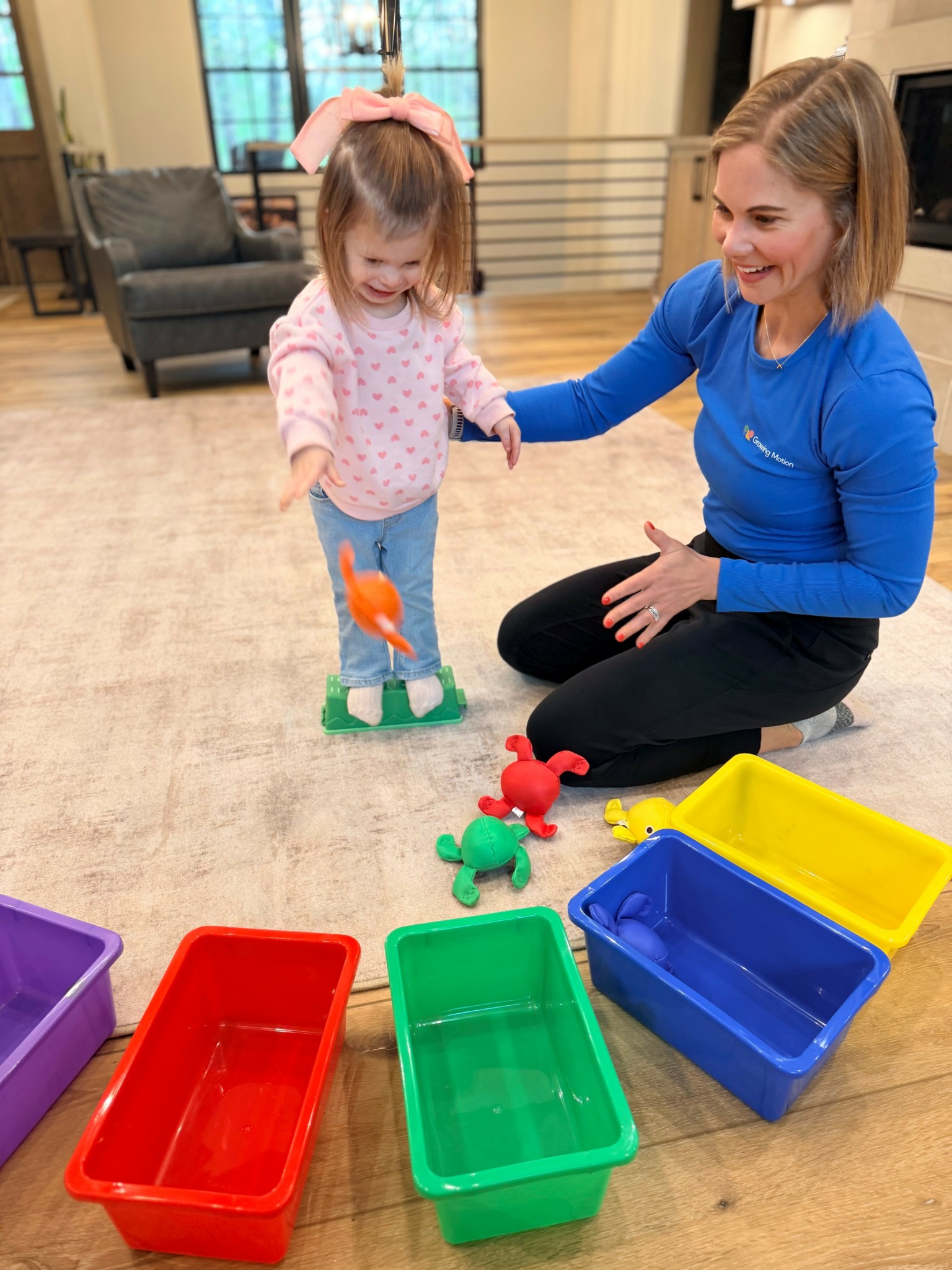
Hello, I’m Maggie, a pediatric board-certified physical therapist who created Growing Motion to make life easier for busy families. Growing Motion was born from a simple truth: families deserve support that fits their lives -not the other way around.
After years in outpatient care, I watched parents rush from work, daycare, and school to squeeze in therapy appointments, often while carrying the emotional and logistical weight that comes with supporting a child with developmental delays or special needs. As a parent myself, I felt that strain alongside them, and I knew there had to be a better way.
Growing Motion offers a different path by bringing high-quality, compassionate pediatric physical therapy directly to your child- in your home, daycare, or natural environment. This not only reduces stress for families, but also supports learning where children feel safest. Parents thrive when therapy becomes an integrated, seamless part of their day.
My mission is simple: to enrich and nurture children’s growing bodies and to empower parents with the knowledge, clarity, and confidence to support their child’s development. At Growing Motion, we celebrate each milestone together, building strength, independence, and brighter futures -one meaningful movement at a time.
Pediatric physical therapy focuses on helping infants, toddlers, and children develop movement skills, strength, balance, and coordination. Services support children with developmental delays, movement challenges, or injuries while empowering families with tools they can use at home.
We support families starting with newborns just days or weeks old through toddlerhood, childhood, and adolescence, meeting each child where they are in their development.
Therapy can take place right in your child’s home, where they feel most comfortable and confident. Working in familiar surroundings allows therapy to fit naturally into daily routines and real-life activities.
Services may also be provided in the community: at your child’s daycare while you’re at work, a playground, a ball field during a sibling’s practice, or even during your child’s own activities. This flexibility helps therapy meet your family where life happens.
Areas we address in all ages:
Developmental delays
Gross motor challenges
Preferences for one side of the body
Limited movement on one side of the body
Muscle tightness, low muscle tone or stiffness
Strength, balance, coordination or frequent falls
Support with transitions or functional mobility
Pain, discomfort, or movement changes after injury
Concerns related to posture, walking patterns or endurance
Support by age
Infants & Toddlers:
Flat spots on back of head or head turning preference
Tummy time struggles
Rolling, sitting, crawling or walking delays
Toe walking or unusual movement patterns
child
Preschool & School-Age:
Difficulty keeping up with peers on the playground
Frequent falls or poor coordination
Challenges with running, jumping, or climbing
Fear of movement (swings, slides, balance activities)
Development-delays
Children with Diagnosed Delays or Medical Conditions:
Developmental delays affecting gross motor milestones
Neurological or genetic conditions impacting mobility
Post-surgical rehabilitation
Building independence in movement and navigation
What distinguishes my practice is a mobile, family-centered model of care that allows me to meet you and your child in the place that works best for your family. I am Dubuque’s only board-certified pediatric physical therapy specialist, with advanced training focused specifically on helping children grow, move, and thrive. I am most proud of recognizing the need for parents to have a better model of care and launching Growing Motion to serve that need within my community.
Compassionate Care. Right Where Your Child Grows.

Other than training/knowledge, what do you think is most helpful for succeeding in your field?
Success in pediatrics requires far more than the skills and knowledge of a general practitioner. Clinical expertise is essential, but just as important is the ability to connect with children and build genuine rapport with their families. Trust is often the foundation of progress.
Because you may only see a child once or twice a week, meaningful change depends heavily on what happens between visits. Parents need to feel confident in the recommendations they receive and empowered to carry them over at home. That consistency is far more likely when a strong therapeutic relationship has been established.
It is also critical to view the family as a whole system. The most effective recommendations are those that fit naturally into a family’s daily life, routines, space, equipment, pets, siblings, and overall dynamics. If suggestions are not practical or realistic for the home environment, they are less likely to be helpful or sustainable.
That is one reason I value providing therapy in the child’s home or daycare setting. It gives me unique insight into the child’s everyday world and allows me to create strategies that are individualized, functional, and truly workable for the family.
Finally, being a parent myself brings an added level of empathy, patience, and understanding for the joys and challenges of raising children. I believe in assuming positive intent, parents are doing the best they can. Approaching families with that mindset creates a more supportive partnership and ultimately leads to better outcomes for everyone.

What’s a lesson you had to unlearn and what’s the backstory?
In pediatric physical therapy, there are times when you must have difficult conversations with parents about their child and the concerns you may have. While these discussions can be challenging, they also create an opportunity to provide support, demonstrate compassion, and become part of the family’s circle as you help their child reach the highest level of independence possible.
Earlier in my career, I sometimes believed it was better to protect parents from difficult topics or avoid hard conversations about their child’s future. While it is incredibly important to remain positive and optimistic, I have learned that honesty is an essential part of this profession. Avoiding difficult conversations does families a disservice and falls short of the standard of care they deserve.
Although these moments are never easy, I now see them as opportunities to show families that I care enough to provide an honest and thoughtful clinical assessment, while standing beside them with guidance and support.
Contact Info:
- Website: https://www.growingmotiontherapy.com/
- Instagram: Growingmotionpedspt
- Facebook: Growing Motion Pediatric PT
- Linkedin: Growing Motion and Maggie Liaboe


Image Credits
I took and own the rights to all these photos. My brand photo is an original image that I own the rights to.