

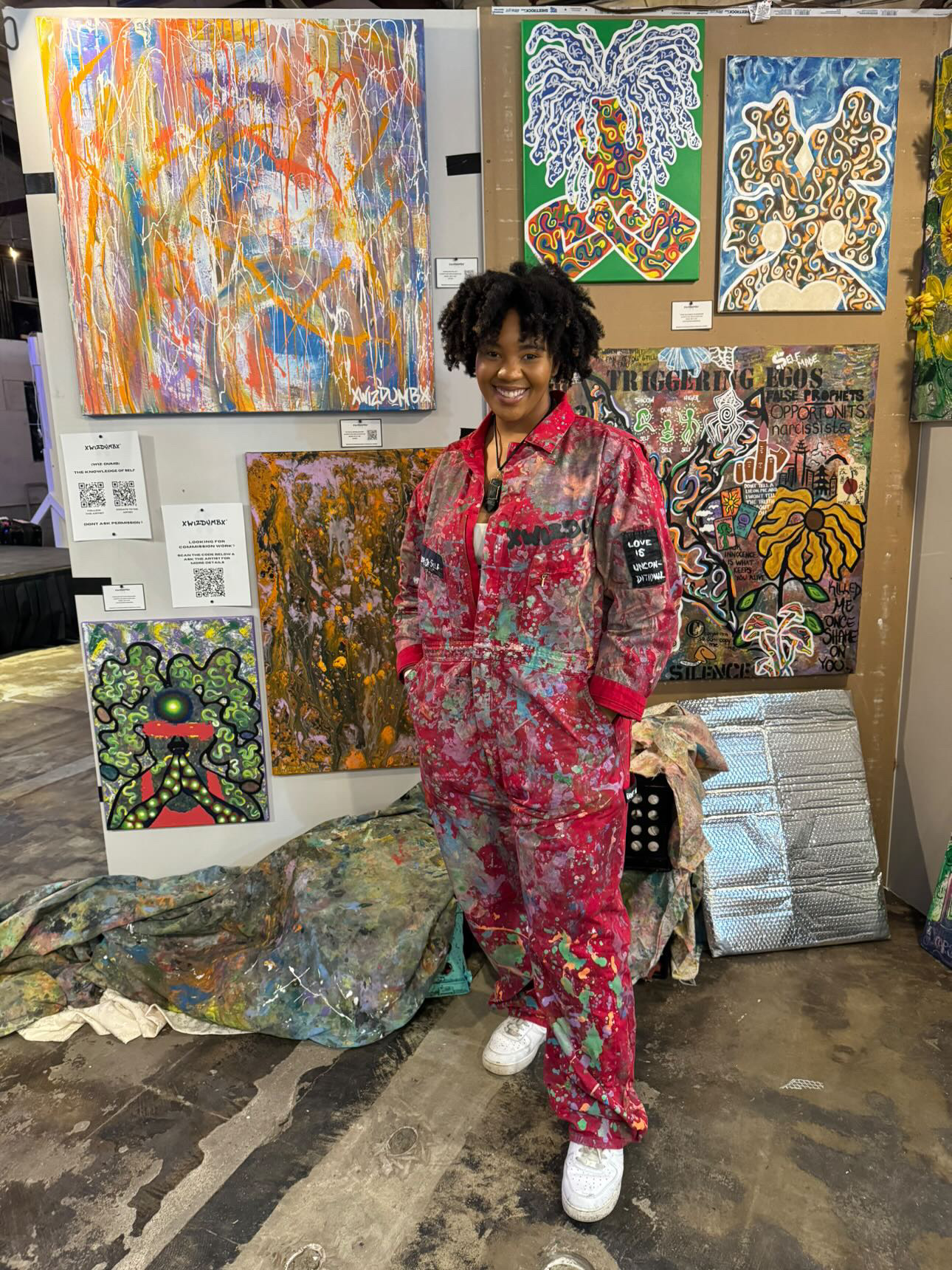

Alright – so today we’ve got the honor of introducing you to Madison Hines. We think you’ll enjoy our conversation, we’ve shared it below.
Hi Madison , thanks for joining us today. We’d love to hear about when you first realized that you wanted to pursue a creative path professionally.
My journey to realizing art was my professional path wasn’t a single lightning-bolt moment, but a series of experiences that built upon each other from different stages of my life. Looking back, I can identify core memories that laid this foundation. During my formative years, I was fortunate to attend a Magnet School that offered me exposure to various art forms. This environment nurtured my curiosity and laid the groundwork for my early exploration as an artist. An experience that stands out around this time was attending an art show that presented the work of many young artists, including my older sister. The event was curated by a local community college to display and reward their talents, and I was truly mesmerized by the work I saw. Not knowing what being a “professional artist” entailed, I felt a deep-seated declaration that my creations were meant to be seen by others in the same light.
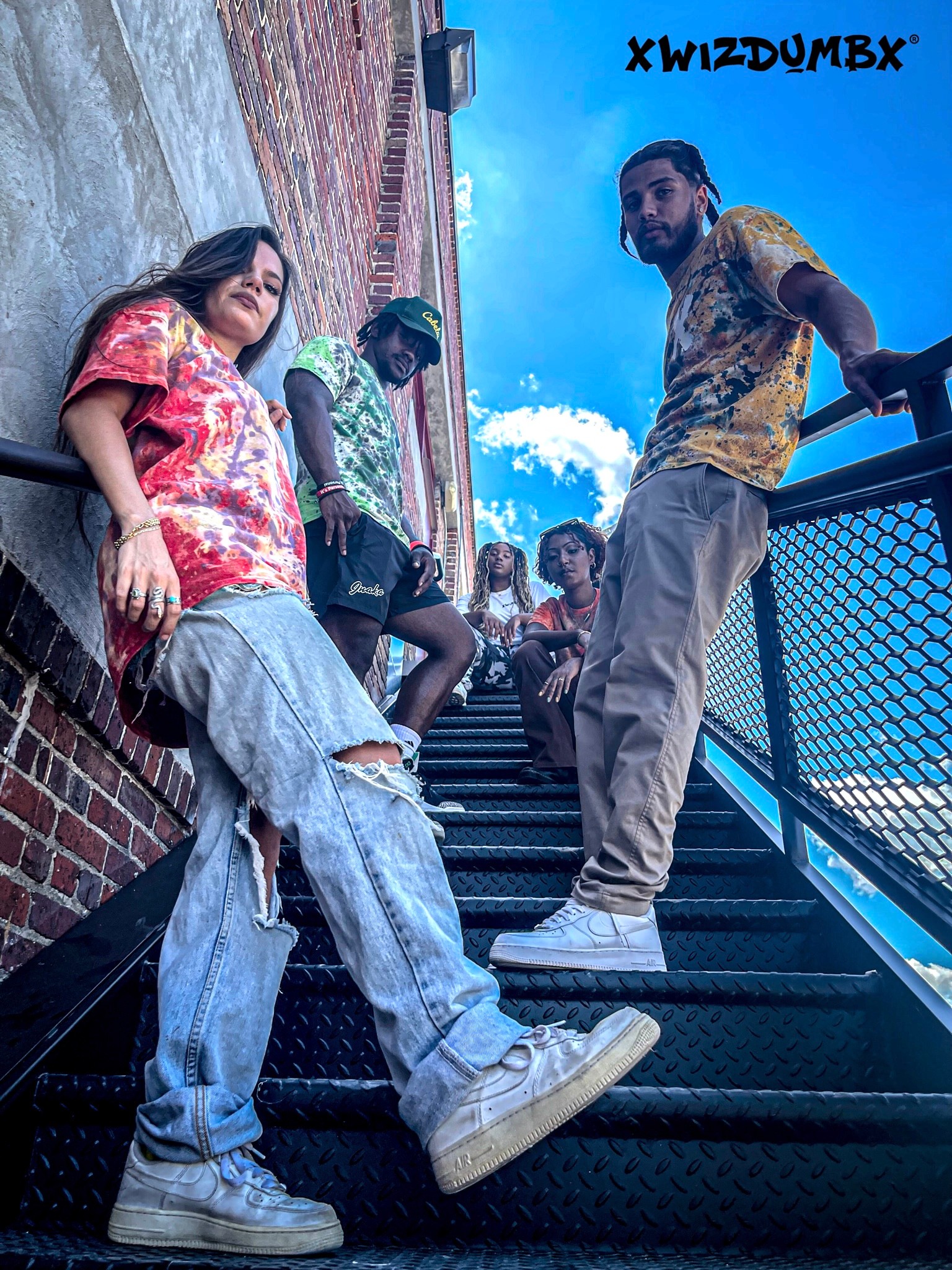
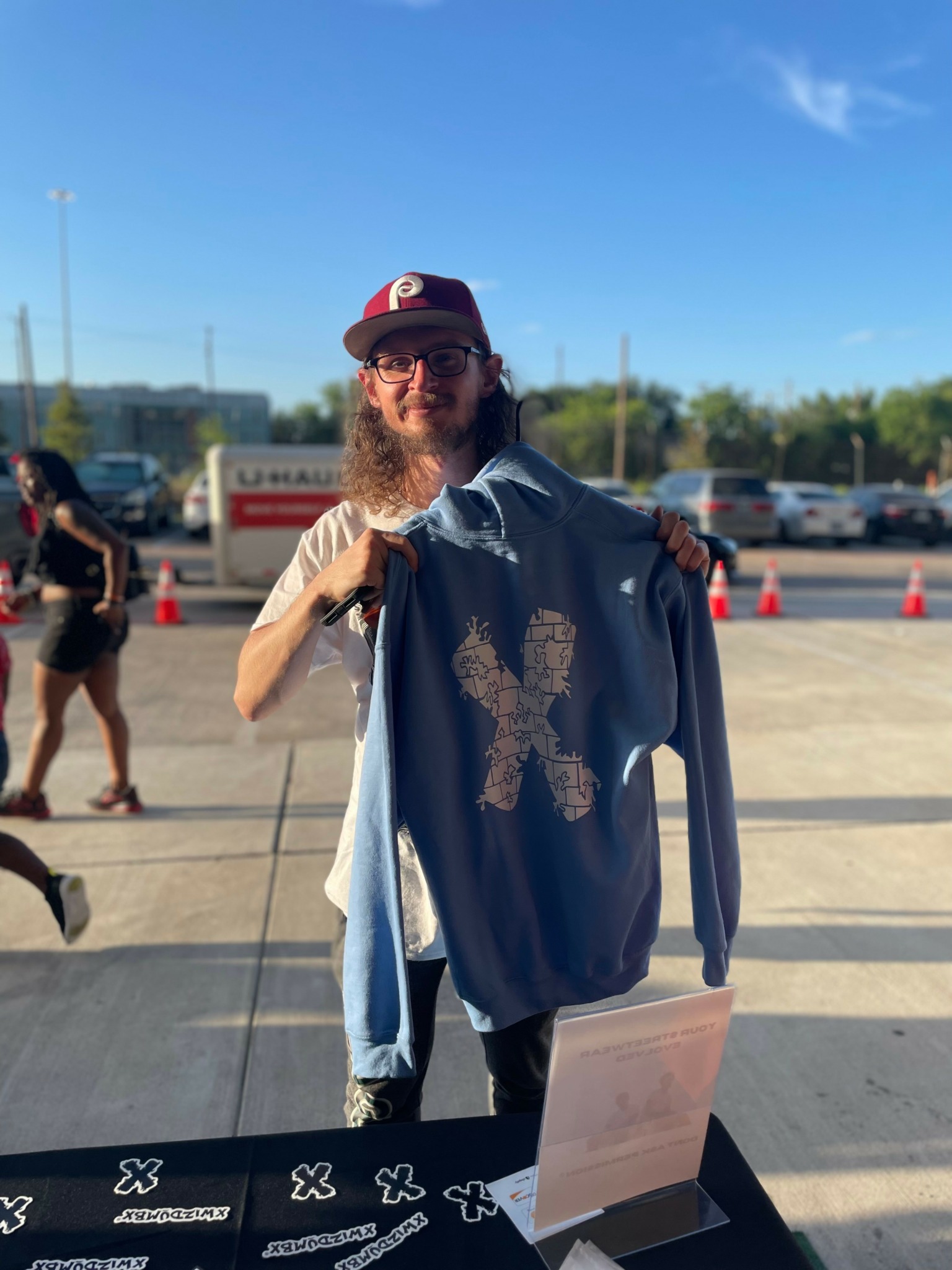
The desire to create and showcase my work only grew as I got older. During my high school years, I was also influenced by the music industry and considered a career in audio engineering. Determined to carve a distinct name for myself, one that would ensure my work received recognition, I embraced the name “XWIZDUMBX” (wiz•dumb). Having always been called “wise beyond my years,” the name was fitting for my artistic identity. When I started my brand, it began as a personal outlet. I’d spent a day making a custom shirt, and when I wore it the following school week, the response was overwhelming. Classmates wanted their own, and I started taking commissions. Being in high demand, I spent weekends designing hand-painted shirts in my parents’ backyard. From working with acrylics, spray paints, and custom stencils, I would tease new shirts on social media and sometimes sell out before the next school week. At the time, creating custom apparel became a way for me to make my own money and have something that was truly my own.
After graduation, I committed to an engineering degree, but quickly discovered a deeper passion for the kinesthetic, hands-on aspects of creation. A business management class prompted me to return to my first love, and the positive feedback I received from classmates and professors was a catalyst, illuminating how much I had been holding myself back. Realizing I had already discovered my purpose was a pivotal shift. I immersed myself fully in my artistic practice, learning about website design, photography, printing, and creating tech packs. After examining the issue of overconsumption in the fashion industry, I began adopting a sustainable approach, repurposing scraps and thrifting materials. This led to my next revelation: if I could translate my art onto fabric, why not express it on canvas?
The moment that I knew I was all in, that this was my non-negotiable path, came in the spring of 2022 with the passing of my grandfather. Being with him during that time and witnessing the challenges he faced was a reminder of how precious and fleeting life is. It ignited a fierce urgency in me to truly live my life. That summer, I had already planned to announce a new collection and showcase the new line at a market event, but I was struggling deeply with my grief. One day, I found myself sitting on my bedroom floor with leftover paint and fresh canvases, and created three pieces to honor how I felt. A piece, in particular, I called “Righteous Rage.” It was all about the anger I had felt, from the way he passed to expressing feelings of being helpless while he was in need.
Later that year, I did my first-ever trunk show at a brick-and-mortar space. “Righteous Rage” was the first physical canvas I ever sold. The response from strangers—not just to my custom apparel but to this raw, emotional piece of my soul—was liberating and inspiring. That sale was the extra confirmation I needed. It was the moment I knew I could sell not just art on a shirt, but art on any surface; that my feelings and my story had value and resonance. This experience was the final, aligning moment that being a professional artist was my chosen career and a part of my purpose. From that point on, I committed to trusting this feeling and embracing whatever came next.
Awesome – so before we get into the rest of our questions, can you briefly introduce yourself to our readers.
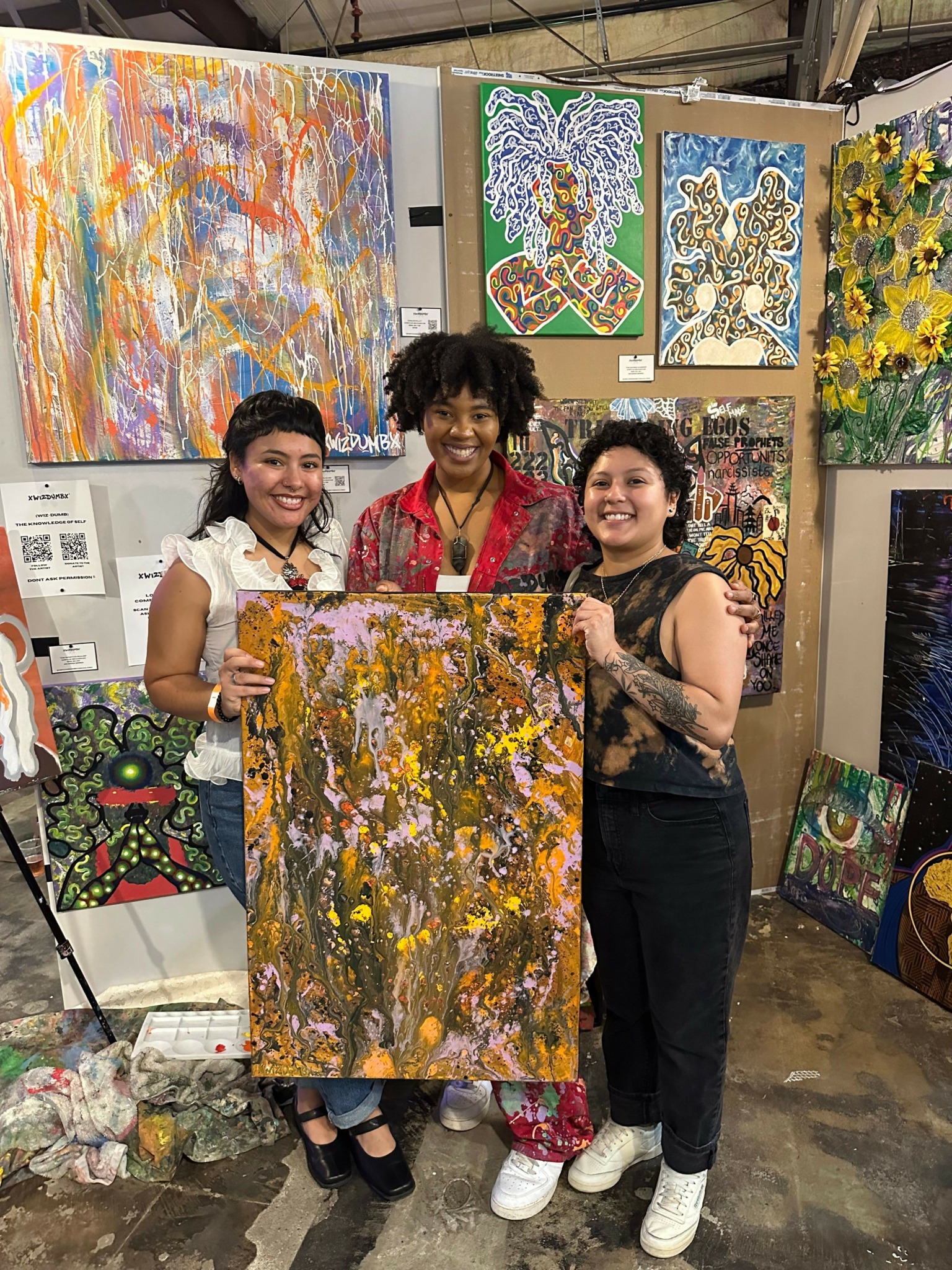
I’m Madison Hines, though most know me artistically by the name XWIZDUMBX (wiz•dumb). I am a self-taught abstract and mixed-media artist born and raised in Houston, Texas. My work is a sacred, three-way dialogue between my present self, my inner child, and my ancestors expressed through the use of acrylics, fabrics, and recycled materials. In 2016, I established my brand, XWIZDUMBX, which reflects upon identity and self-awareness. It’s defined by the “knowledge of self, representing one tapping into their highest power and not needing anyone to validate who they are and what they represent.” It’s an encoded language where “WIZ” is the archetype of all-encompassing knowledge and heightened consciousness, while “DUMB” signifies those who persistently underestimate me, challenging my truth. Embodying the duality of perspective and the power of owning your story.
Since establishing my brand and artistic identity, XWIZDUMBX has become its own creative ecosystem. From creating original artworks, client commissions, custom apparel, and limited edition prints, my journey as an artist is a continuous evolution, marked by a commitment to growth. Beyond my art, I curate workshops and offer 1:1 mentorship to children and emerging artists. I teach them how to scale their creative businesses, connect with their artistic identity, and provide activities designed to strengthen authenticity and self-awareness. I design exercises that help identify their mental blocks and explore how their mental and spiritual well-being directly influences their creative output.
As an extension of my art, I showcase my creative process through live painting on social media and through digital storytelling. I share my journey through process videos, behind-the-scenes content, and actionable steps designed to help artists unleash their full creative potential. In this approach, my work serves as an invitation to explore one’s inner world, and I’ve been able to create a diverse and growing community for those who are underrepresented and feel confident in narrating their own story.
My primary goal as an artist is to empower individuals to cultivate their own identity, rather than relying on others to define or validate who they are—or should be. I want my audience to engage with my work emotionally, provoking them to reflect on their own lives and experiences. To remind them that even in the midst of chaos, life is meant to be embraced with joy and freedom. My creations are intended to serve as mirrors, encouraging viewers to explore the connections between themselves and the concepts presented in my pieces. To not merely glance at a piece and move on, but to fully inhabit the moment, cherishing the conversation they are having.
My work sets apart because it stems from the relationship I have with myself. I create to heal the parts of myself that seek liberation, giving voice to my inner child’s freedom and my ancestors’ unspoken language. My work demonstrates this power by creating a balance between lightness and darkness, pain and celebration, ultimately alchemizing these energies into purpose. Through a mixture of symbols, patterns, and intuitive mark-making, my process draws from film, music, poetry, documentaries, ancestral texts, and indigenous folklore. Each element contributing to the depth and complexity of the stories I tell.
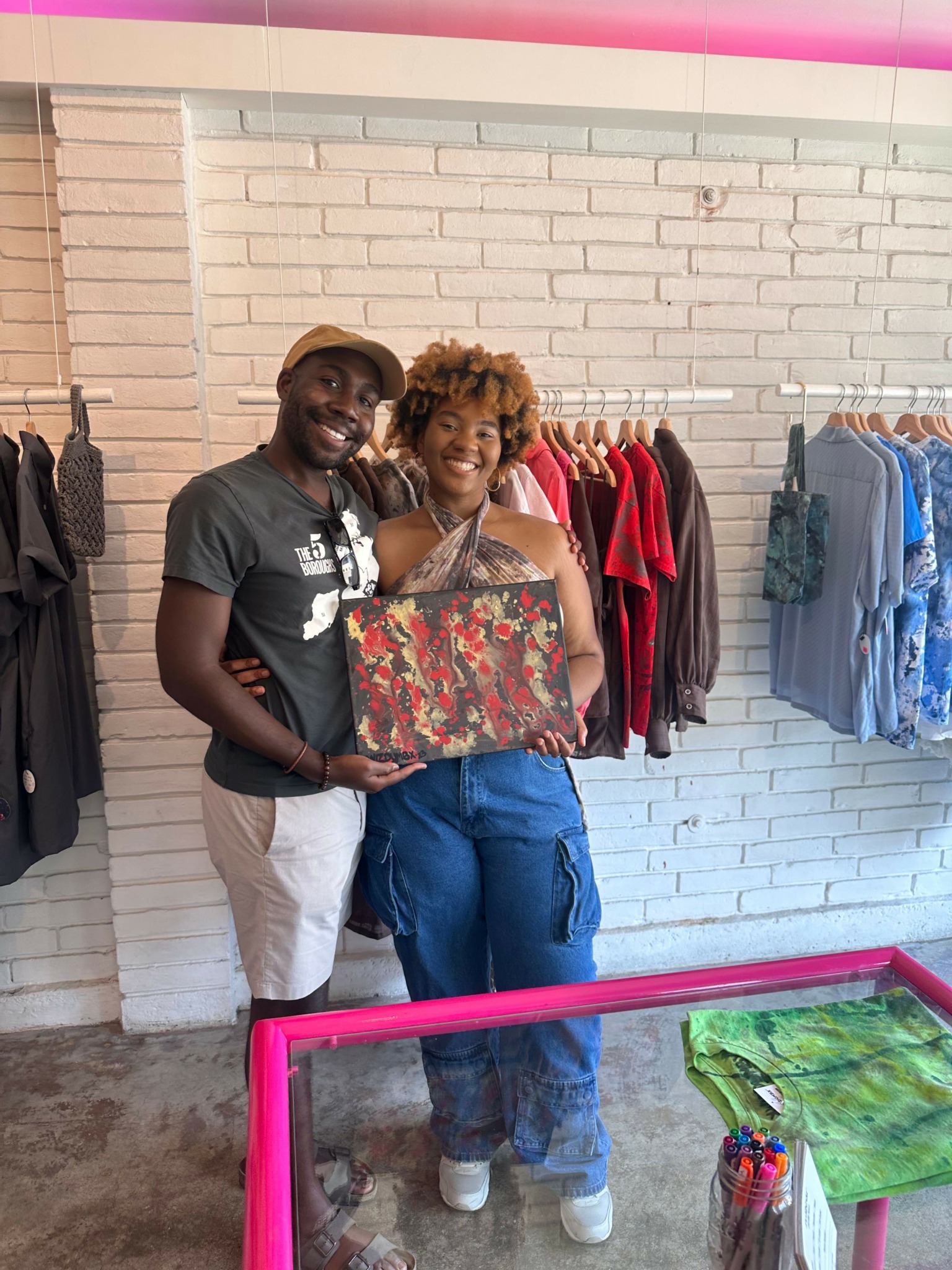
Is there something you think non-creatives will struggle to understand about your journey as a creative?
Many may struggle to understand that I don’t have it all figured out. I feel it’s important to say that I am still learning and have no problem being a sponge when it comes to both my art and my business. This isn’t to take away from how resourceful and knowledgeable I already am, but I have struggled with feeling I have to choose between being professionally successful and emotionally fulfilled.
It’s about not venturing too far to one extreme, but finding a middle ground between what I want to create for pure enjoyment and what I can create to share with others. This approach requires careful decision-making, so I naturally spend more time with my projects, ensuring they feel right before sharing them with the public. For example, I’m always considering which artworks are just for me and which I am willing to sell. I refuse to be confined to creating art that’s just for trends or profit. For me, creation comes from an emotional and spiritual place, and I make an effort to find a price point that not only works for a buyer but also truly values the materials, labor, time, and energy I put into any piece.
Honoring both my tangible, business-minded side and my emotional, creative side is a challenge, though I am learning to become more comfortable with this process and use it to my advantage. I have built systems within my business to honor this balance, prompting me to think before I act—unless I feel intuitively called to act on such decisions without hesitation.
This challenge also connects to my personal life. I’ve been creative since I could walk and talk, yet I still had to learn to listen to that inner voice telling me I was in the right place—that my ideas weren’t crazy, and that I shouldn’t fall into the trap of society’s stamped definition of success. It was a battle to find my balance, both at home and in getting others to understand the path I always knew was mine. For a long time, I struggled to fully accept that being a full-time creative was my calling.
The world will tell you everything, but it won’t tell you to look within yourself for the answers you already have. For years, I tried to conform to spaces that met only half my needs, and I was undervalued in the spaces where I was needed most. I soon realized those spaces didn’t allow me to access my fullest potential, creatively or financially. I’ve been in positions where I was wonderful at my job but still not paid enough, or the job paid enough but left me with no energy for myself or my own projects. XWIZDUMBX was the treasure I already had access to. It allowed me to create what was missing in my career. From building my own schedule, producing products and services, to being limitless in my ideas, and charging a rate I knew I was worthy of.
Everything I do in my business is intentional. Whether I’m proposing a workshop, creating a painting, or applying to my next art show, I’m always planning for the next phase of my journey. I’ve learned the importance of soaking up whatever interests me in different seasons and using it as fuel for my creative growth, next business venture, and mentoring more emerging artists.
“My art is my happiness, and when you’re deeply connected with your soul’s calling, nothing else outside of you matters.”
For years, I’ve had an ongoing internal conversation—asking myself what true happiness looked like. I knew it did not consist of being overworked, underpaid, or spending my energy elevating others’ or their businesses when they couldn’t reciprocate. I had to be the one to help myself, to see myself through a different lens—not as someone who only works behind the scenes, but as someone who can also present themselves out in front for others to genuinely connect with.
Initially, I felt an intense amount of pressure. I didn’t know if things would work out, and I thought I needed to sacrifice my own happiness because society said the dream I was living was a delusion, not a reality. I thought it was too much to ask to be seen and valued, which is why it took me a while to feel comfortable on social media. It required me to build a new relationship with myself—one rooted in knowing how to shield, protect, and honor the person I truly am. Building that relationship before putting myself fully on camera laid the foundation; it ultimately made it easier for me to make content, use my voice, and show my face on screen.
My art has given me the freedom to see myself in my own light, to recognize my own gifts, and to create freely. There were moments when I was convinced that my aspirations were distant and unattainable. That I had to work myself to the point of burnout just to feel close to them. My success as an artist has not happened overnight. It’s been built through the many nights I spent developing ideas, painting shirts in 30-degree weather, building websites, and taking pay cuts because I had full faith in what I was pursuing. It’s all the work I did before people started paying attention that has gotten me to this point.
Now my eyes are fully open. I see that younger version of myself—the one seeing all those artworks on display, having fun finger-painting with her favorite teacher—she knew who we were destined to be. She knew what lit her up and inspired her to do more, to stay curious and authentic. She asked all the challenging questions and already had an idea in her mind about where we would end up. I had to allow this version of myself to speak proudly, and I shifted my mindset from conforming and working for others to believing I could explore freely and invite this new life into my reality.
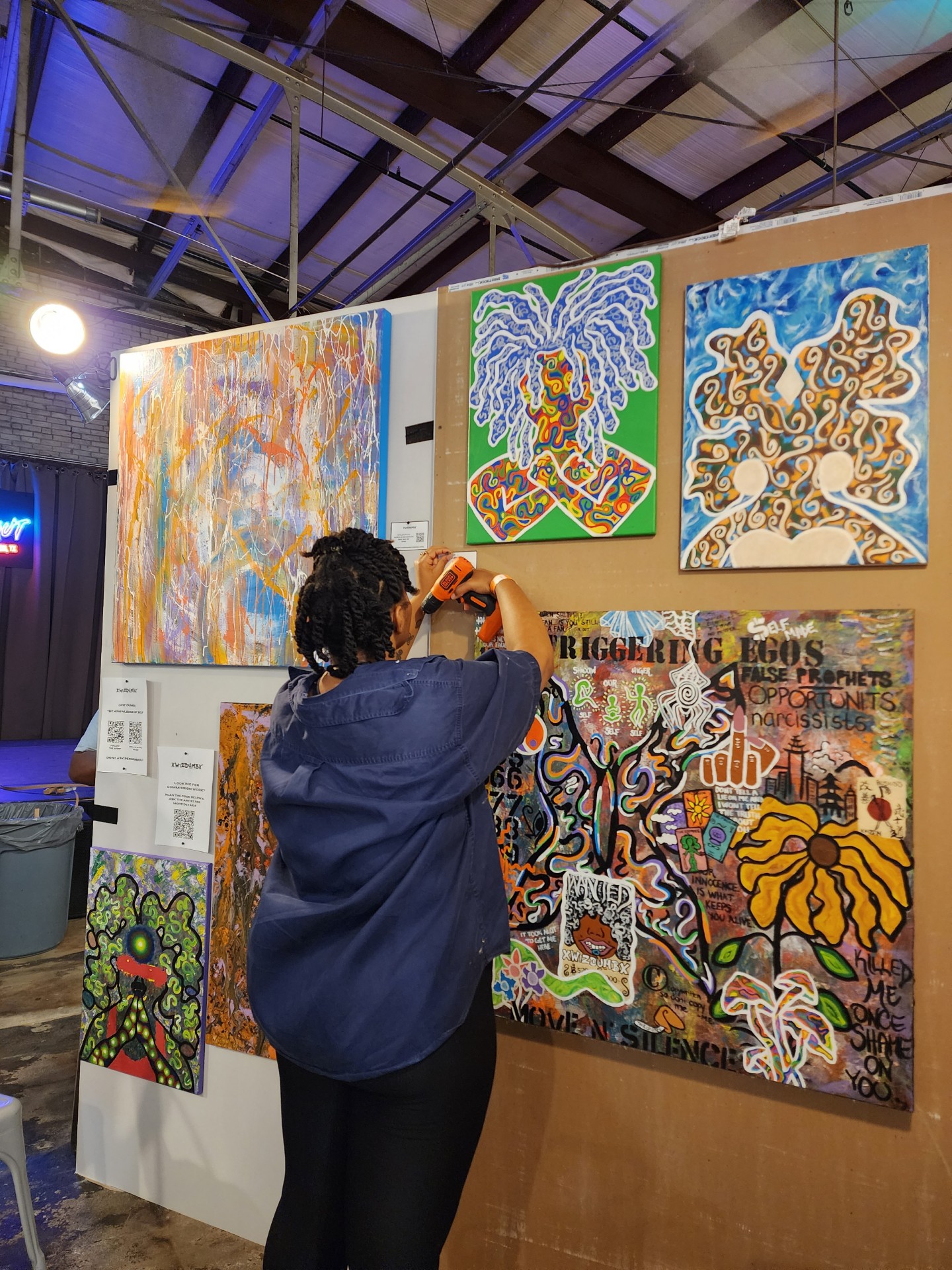
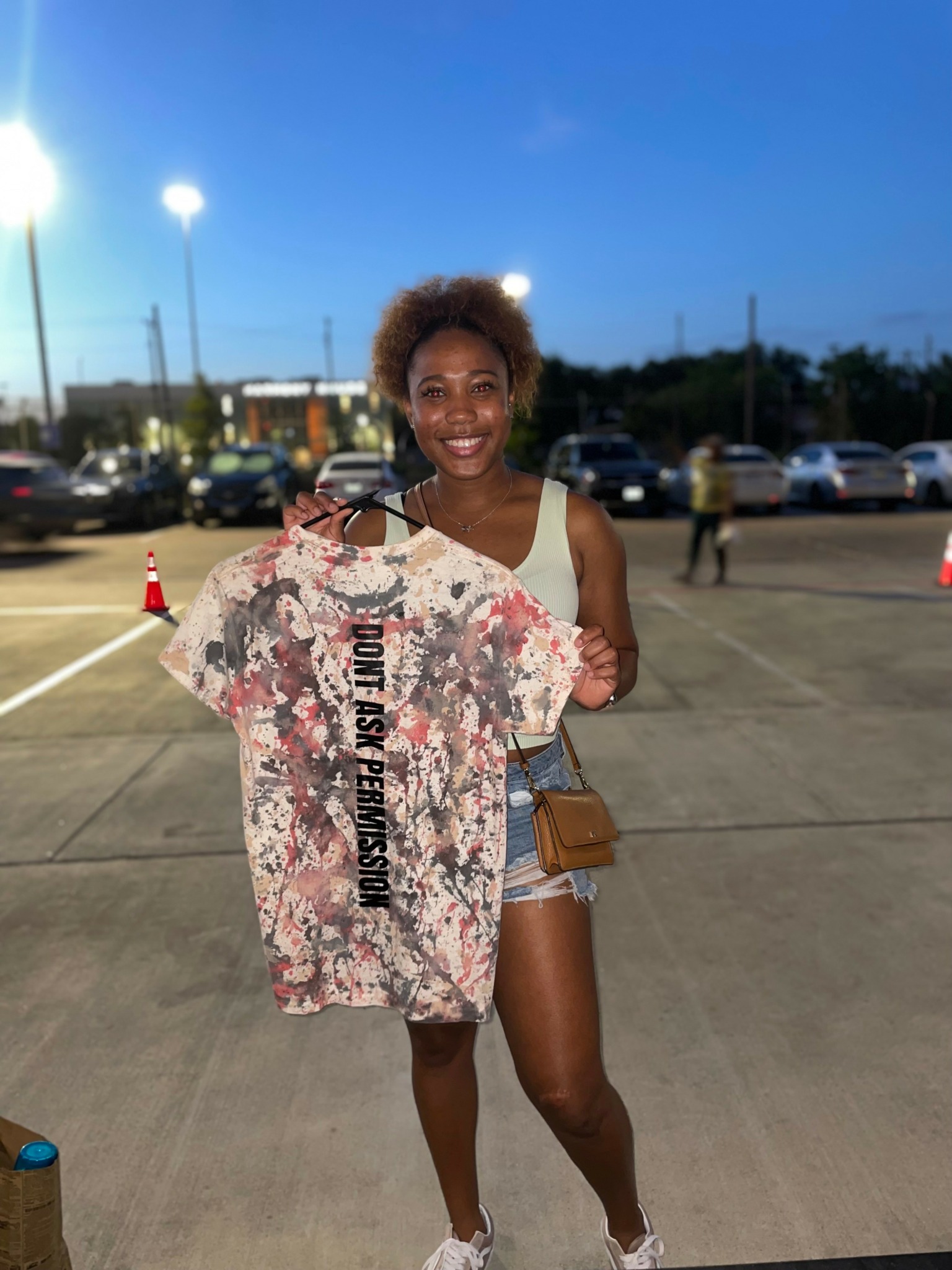
How can we best help foster a strong, supportive environment for artists and creatives?
I believe society can support artists by first changing its perspective on how it views art. Art is not fast fashion—a commodity for temporary consumption and instant gratification. If artists did everything solely for profit, we would work a lot faster. The production of art is not meant to be rushed, and it’s often hard for the general public, even within the art space, to understand this. More specifically, art is not a trend; it is an investment in a story, an emotion, and a piece of a legacy. There shouldn’t be an expectation for artists to produce at an unsustainable rate. Instead, we need to recognize that their art and practice are the outcome of a deep, spiritual, or intuitive process—one born from a commitment to personal connection. The value isn’t just in the physical materials, but in the energy, time, and vulnerable self-exploration invested in its creation.
When society understands the relationship an artist has with their art, the level of respect and admiration for the creative process deepens. Supporting artists doesn’t always require a large financial commitment; the most powerful support is free and rooted in genuine engagement. The simplest yet most impactful way is to actively share our work through word-of-mouth and on social media. Every share, comment, and save amplifies our reach and validates our voice in a crowded digital space. An artist gains more recognition by simply being mentioned in the rooms they are not in.
The next tier of support involves more direct investment. This can be making small donations to artists you believe in, purchasing their work, investing in their workshops, or commissioning pieces. If you truly understand an artist’s mission, you’re not just buying a product—you’re investing in their story. Beyond monetary support, providing access and resources through your community and network is invaluable. An introduction to a gallery owner, an invitation to a networking event, or even offering a space for a pop-up show can open doors that are otherwise difficult to unlock. This kind of support helps us build a vital ecosystem. It lets us know that our community is truly invested in our journey, not just as creators of products but as essential contributors to our cultural spaces. This belief from our supporters allows us to focus more on creating meaningful work and less on the exhausting cycle of simply trying to be seen.
This brings me to one of the biggest components for an artist’s long-term growth: community. This means helping artists connect with other creatives in their fields, networking with neighborhood leaders and company partnerships, providing referrals to patrons and collectors, or simply discussing how an artist has influenced you and your own practice.
These days, social media has been a powerful tool for artists to connect and build community. However, I feel mainstream trends, and even some galleries and curators, have developed a superficial view of artistry. This has masked the real challenges we face, putting only the success out in front, versus capturing the journey of an artist’s work. People often only want to see the finished product, not how it develops over time. We’ve built a skewed relationship with finished products and sales numbers, and the spotlight stays on artists who have already gained significant recognition. Meanwhile, emerging artists creating incredible work are still not being represented in the same spaces or offered similar opportunities, collaborations, accreditation, or monetary value for their work.
Making money is great for any artist at any stage of their journey. However, I feel society often rewards what can be controlled or manipulated. The story, the vision, and the behind-the-scenes process are just as valuable. Having more eyes on this part of the journey would help an artist’s overall reach and build the confidence needed to stay focused. The act of creating is an investment in itself. Film is a wonderful example of this—through imagination and storytelling, it gives creative ideas the space to develop. That process is worth investing in. If society starts looking at the investment in art from this perspective, we can create a more harmonious relationship between artists, the art business, and creation itself.
Contact Info:
- Website: https://xwizdumbx.square.site/
- Instagram: https://www.instagram.com/xwizdumbx
- Youtube: https://www.youtube.com/@XWIZDUMBX
- Other: TikTok: https://www.tiktok.com/@xwizdumbx
Patreon: https://www.patreon.com/XWIZDUMBX?utm_campaign=creatorshare_creator
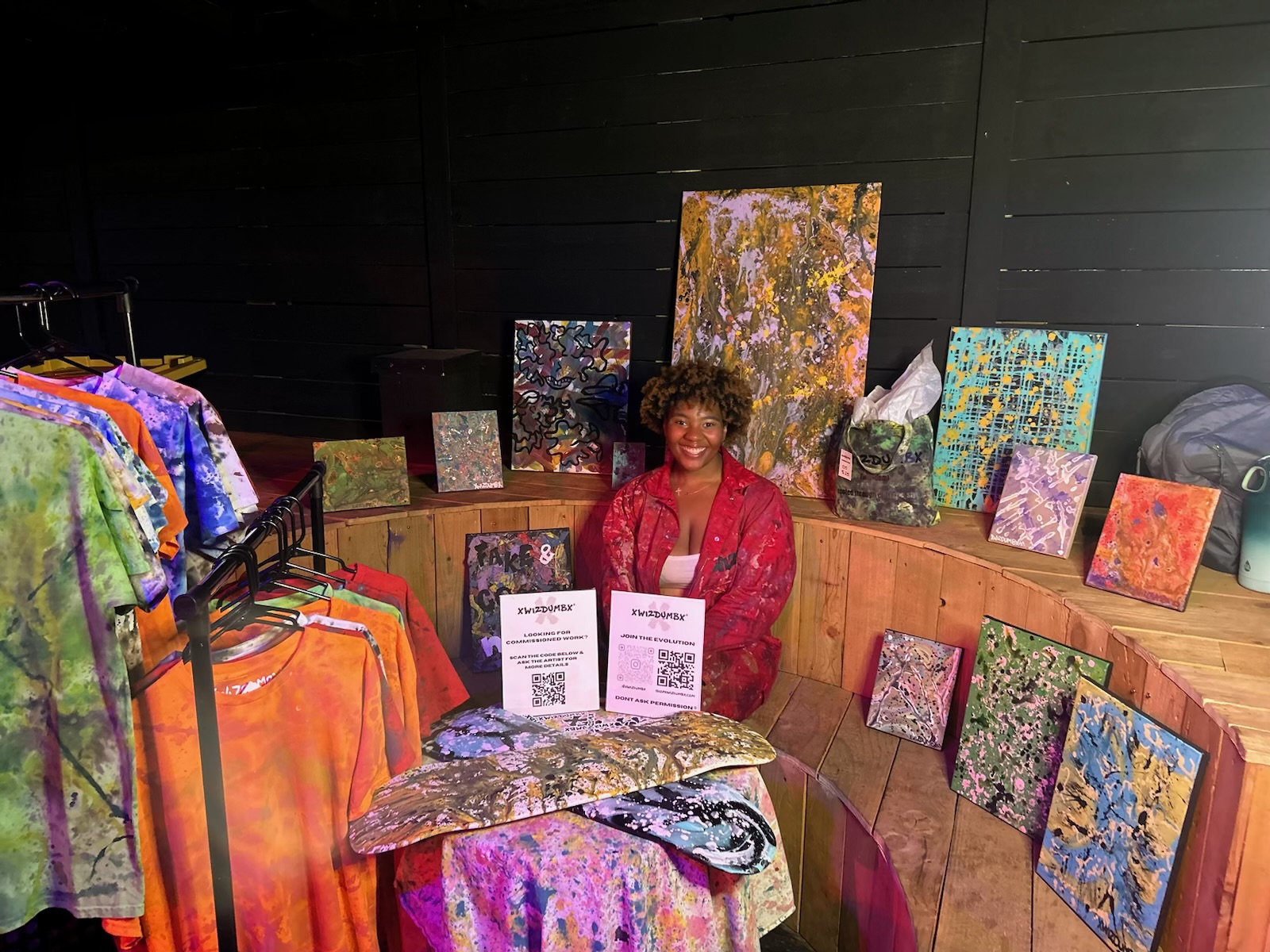
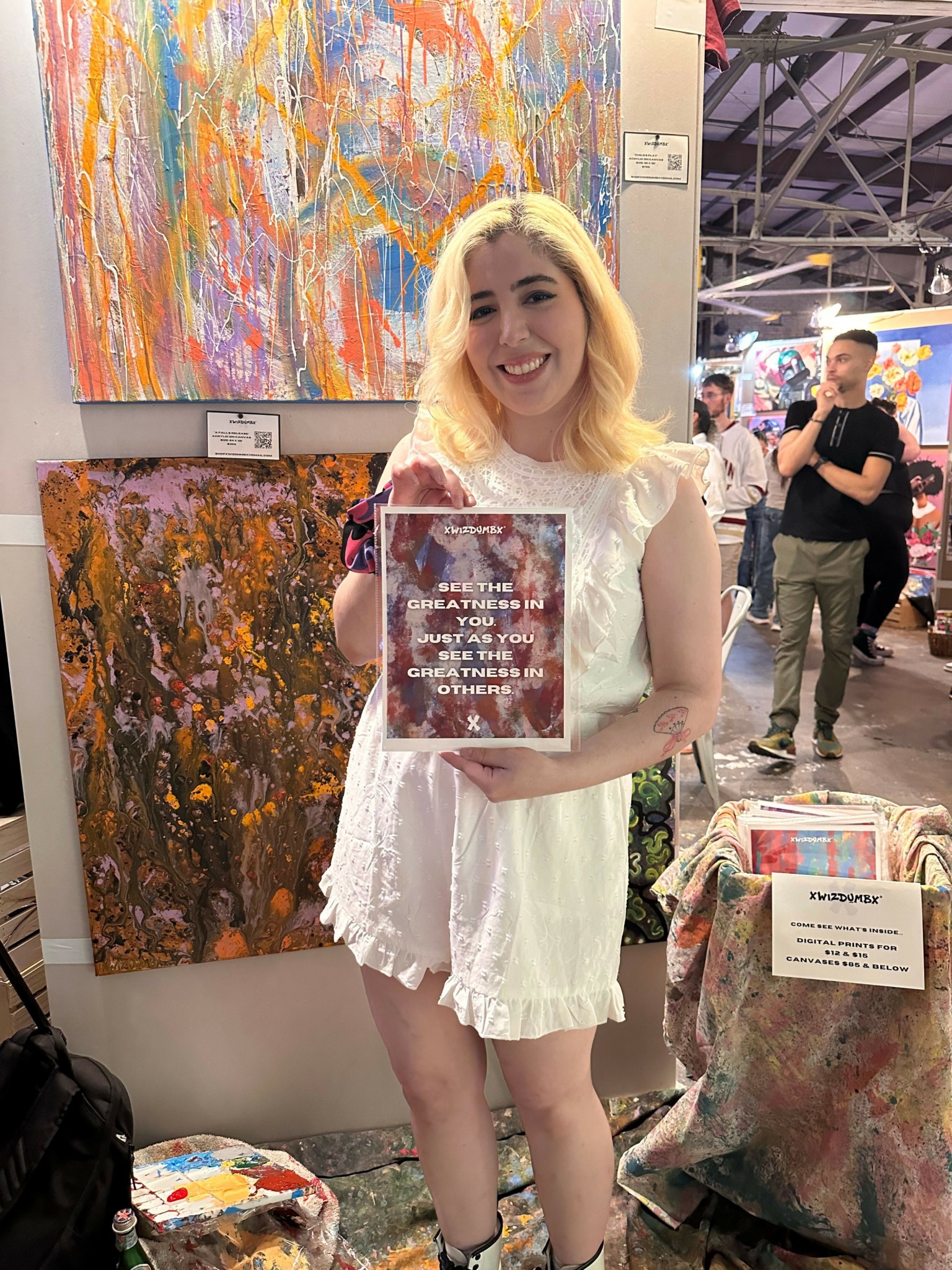
Image Credits
Madison Hines, Melanie Hines, Michelle Rumman