We’re excited to introduce you to the always interesting and insightful Maclovio Cantu Iv. We hope you’ll enjoy our conversation with Maclovio below.
Maclovio , appreciate you joining us today. Learning the craft is often a unique journey from every creative – we’d love to hear about your journey and if knowing what you know now, you would have done anything differently to speed up the learning process.
I am a Printmaker and Professor of Printmaking. The road to where I am today was a long process that took many hours of practice and understanding of the process and techniques. My start came from working with my mentors Dr. Gilberto Cardenas for my academic background and Joe Segura for my artistic background. I met Gilberto when I was about 19-20 years old when I began volunteering at the Institute for Latino Studies at the University of Notre Dame. I quit my job at a bookstore when I walked into el instituto and seeing Chicano art on paper in all its glory on the gallery walls walking into the office. I wanted to be a part of this. Dr. Cardenas was the first Chicano I had ever met that had a Doctorate degree and was the director of the Institute.
I did something right working hard to learn the rope and I was hired on as a student worker even though I went to the smaller university on the other side of town Indiana University South Bend. Two years had passed and I was asked to pick up a good friend of Gil from the airport, I picked up a soft spoken bearded man by the name of Joseph Segura. In the van on the way back to campus Joe says
“Gil said you make art?”
“Yes sir”
” I would be interested in seeing your work sometime”
A month or two passed anad Joe asks if I wanted to come over and he could critique my work. With no hesitation I say YES!It was the most intense critique I had ever had but by the end I passed the test. Joe asked if I wanted I could have him as a mentor.
Over a few months I worked with Joe and he says
“If you want to be an artist there is going to be a meeting of the Coñsejo Grafico in South Bend that year and if you want to be an artist I would like you to be there for everything we do.”
The Coñsejo is the largest consortium of Chicano talleres (print shops) in the country and all of these artist were coming to my hometown. I didn’t know this would change my life. I was beginning to familiarize myself with the expansive collection of Chicano/a prints in Gilberto’s collection and I was going to be face to face with many of the most prolific artists in the collection. Part of this week was to cut a linoleum block and print it. I had never cut a block before and didn’t have tools but I was sitting next to Juan R. Fuentes and he offered to let me use his brand new set of McClain’s Japanese carving tools. right there he offered me a private lesson on how to carve.
Jesus Barraza one half of Dignidad Rebelde a screenprint workshop based in the Bay area and one of the the members of the Coñsejo tapped me on the shoulder and told me how epic that I am being taught by the master himself. Melanie Cervantes the other half of Dignidad Rebelde snapped a photo of this moment.
The end goal of cutting these blocks were to have a pop up Guerrilla Gallery at the end of the week. I also didn’t know how important this moment was going to be either in my life. I was in my first group show with Juan R. Fuentes, Sandra Fernandez, Poli Marichal, Marcos Dimas, Jesus Barraza, Mellanie Cervantes, Ramiro Rodriguez, Francesco Siqueiros this star studded event changed my perception on what I was wanting to do with my life. I was a Printmaker. Listening to scholars Tomas Ybarra Frausto and Amelia Malagamba speak about the old days and contemporary Chicano/a work my head was spinning.
I think the skills that helped me the most was I began after that week working every day on Printmaking day and night I eat, drink and sleep Print. I tried all the processes and learned them to the furthest extent. I listened to my mentors advice at every step. Whether it be on public relations or artistic practice. There was many failures along the way in my work and risk taking but by using it as a learning experience I kept forward and I didn’t keep my eye off of wanting to be a Printmaker and then I decided that I wanted to be a professor. I wanted this after the positive change and helping me recognize my potential Joe and Gil helped me to achieve. Me being a first generation college student I wanted to help other young minds accomplish their dreams.
Maclovio , before we move on to more of these sorts of questions, can you take some time to bring our readers up to speed on you and what you do?
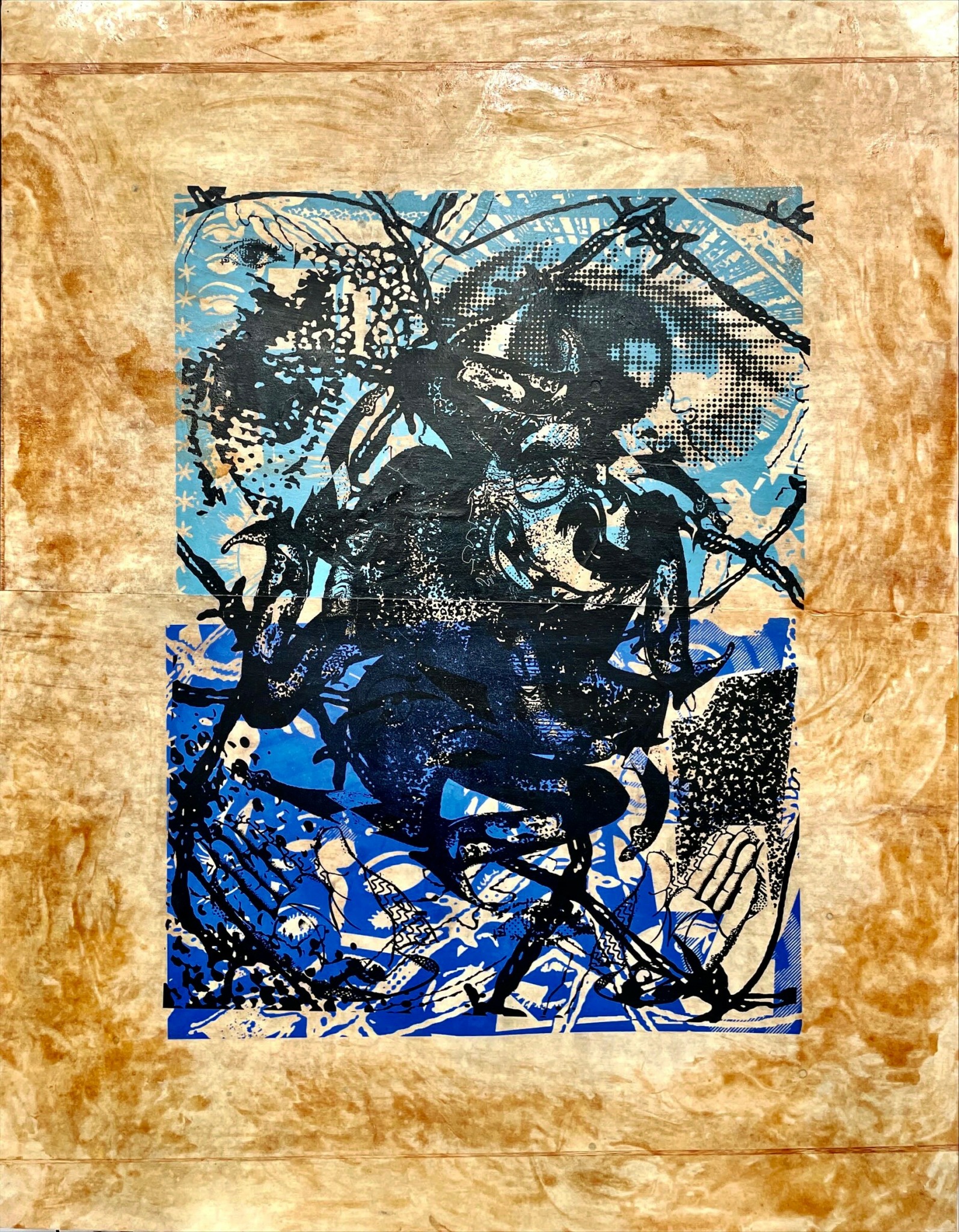
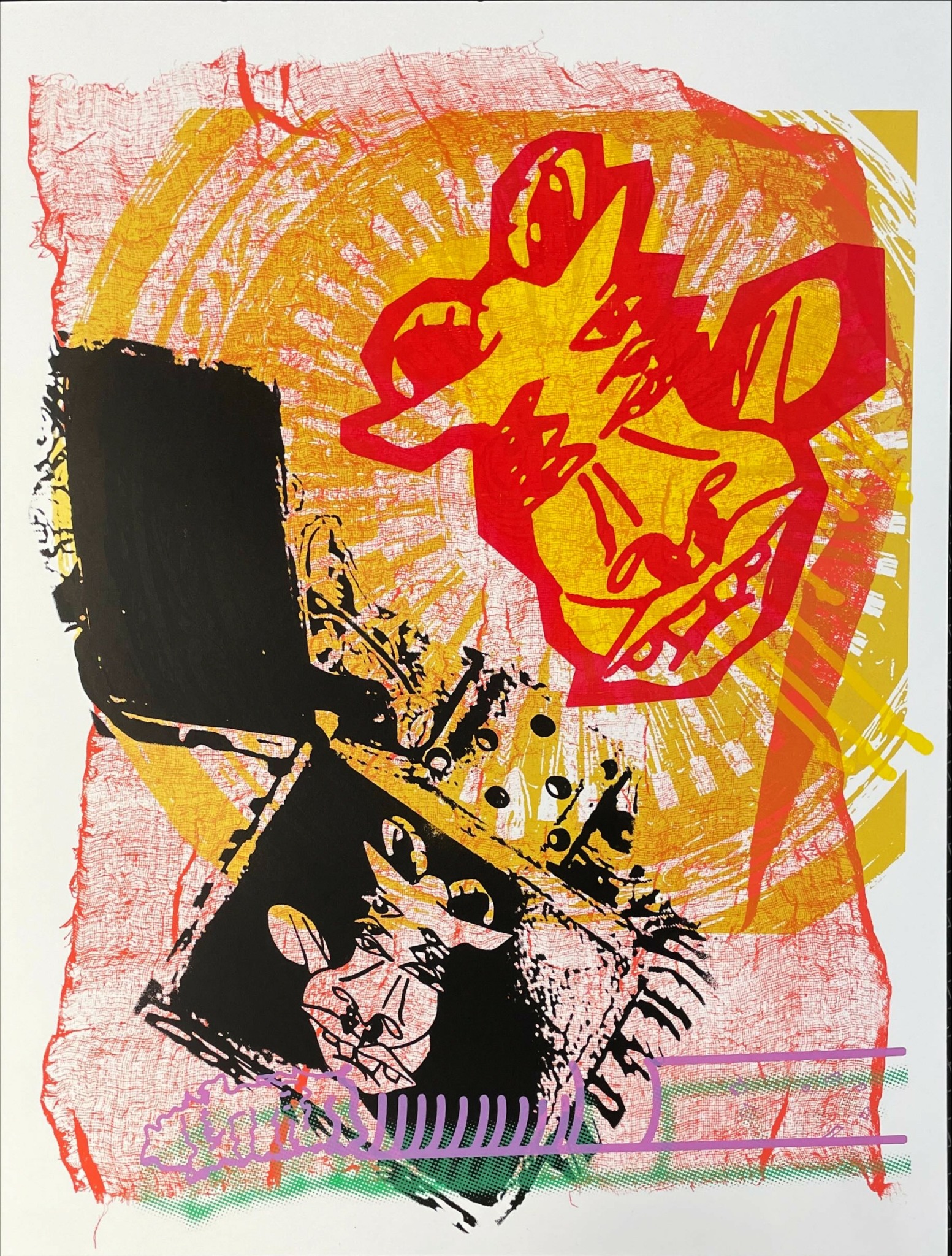
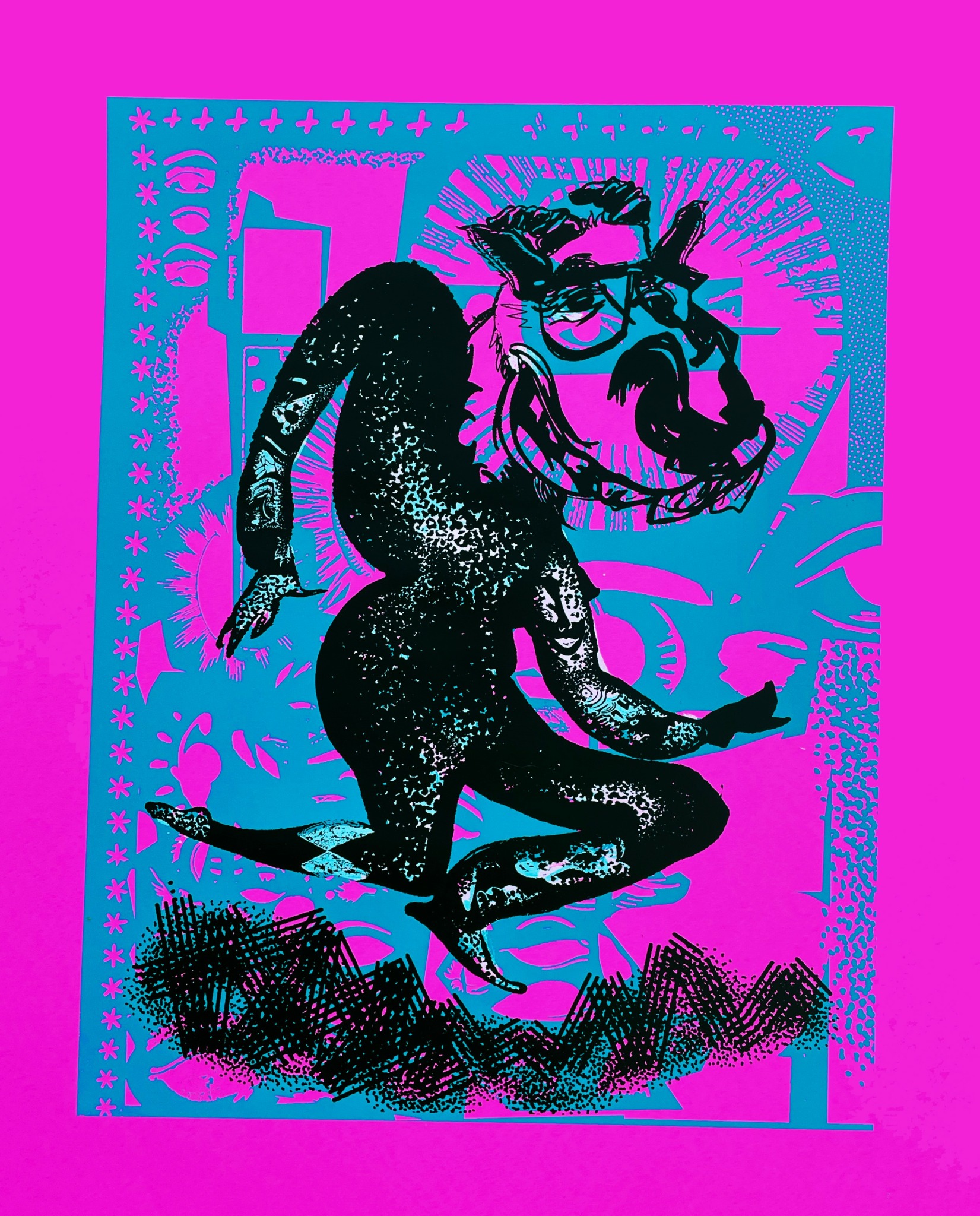
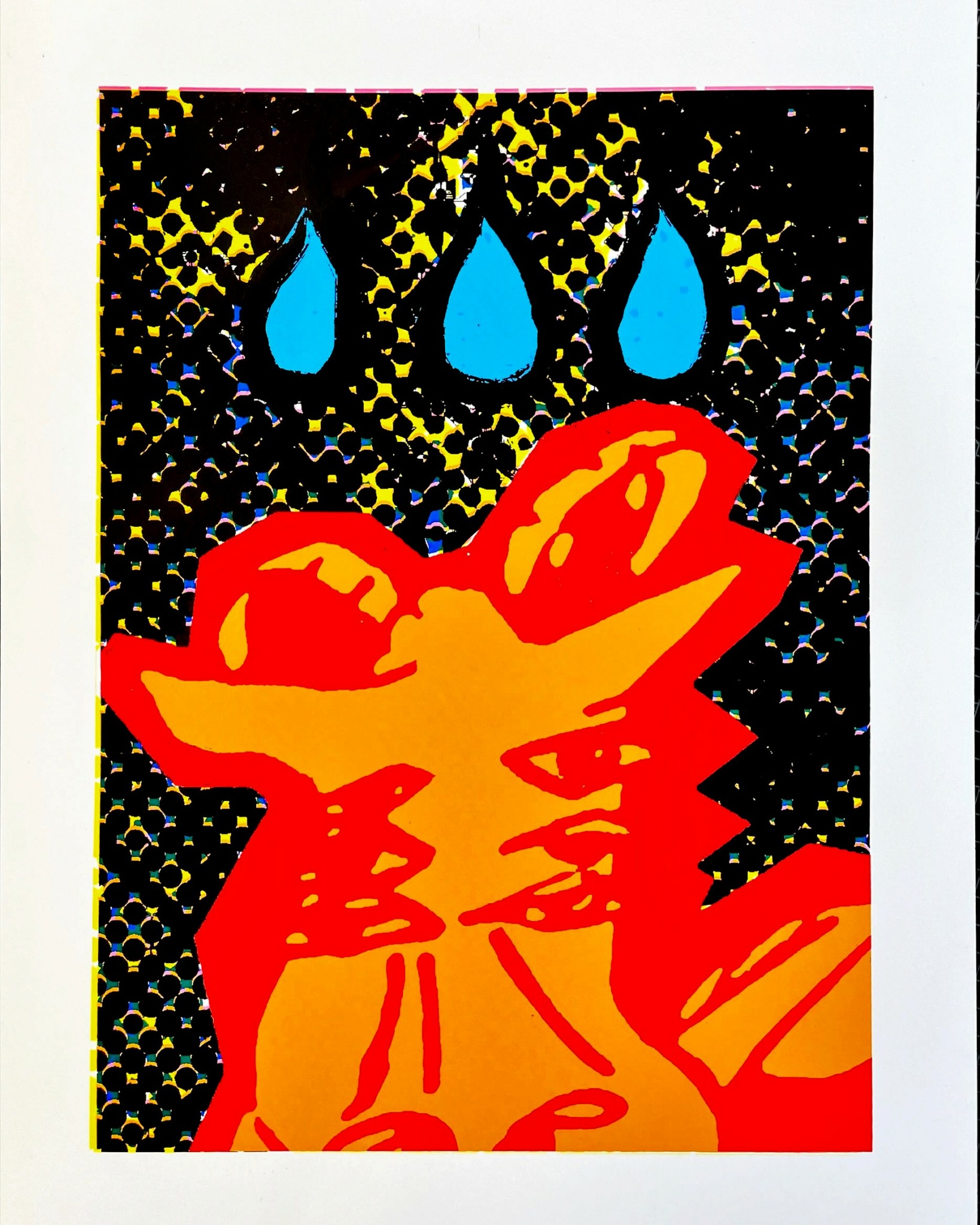
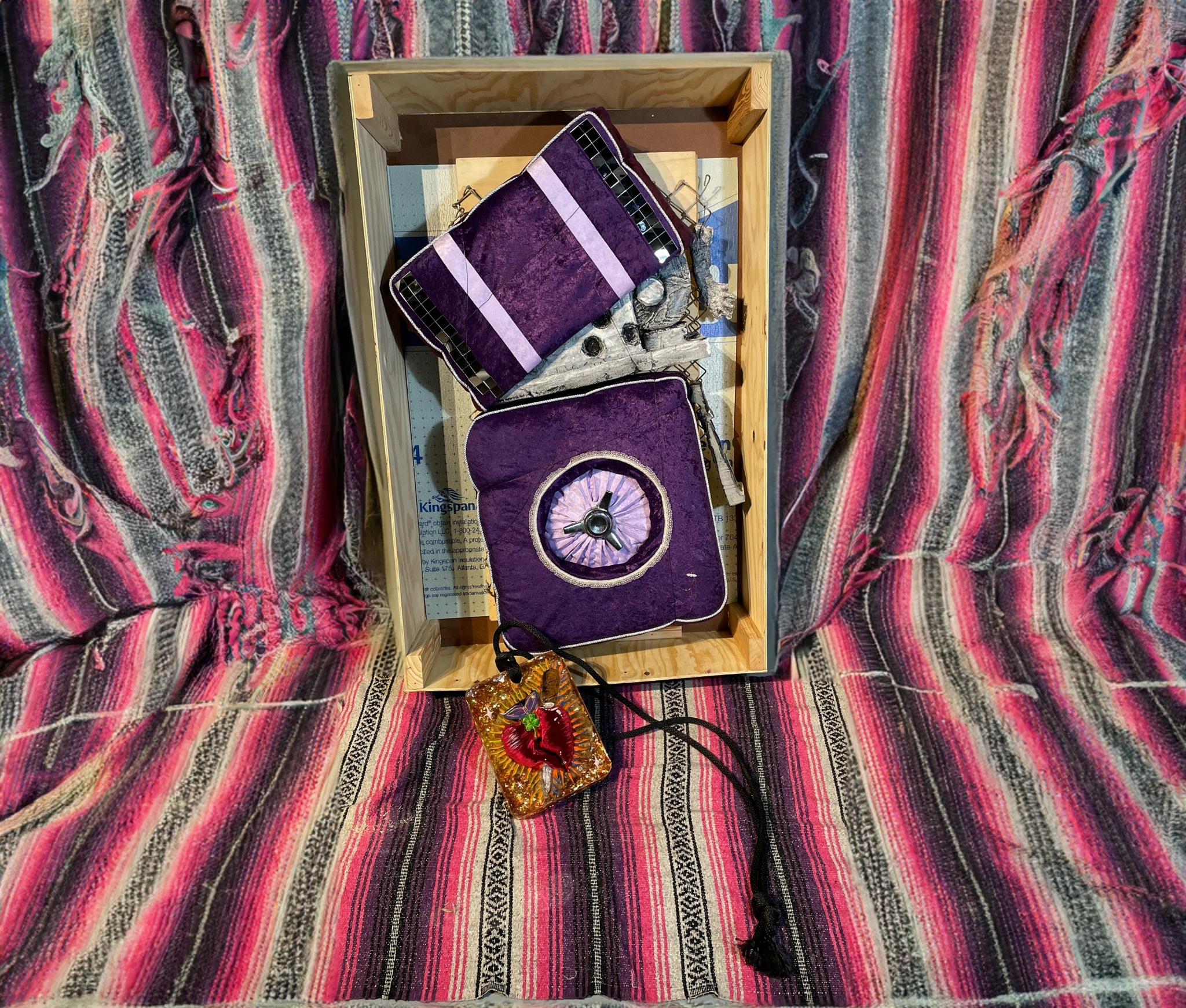
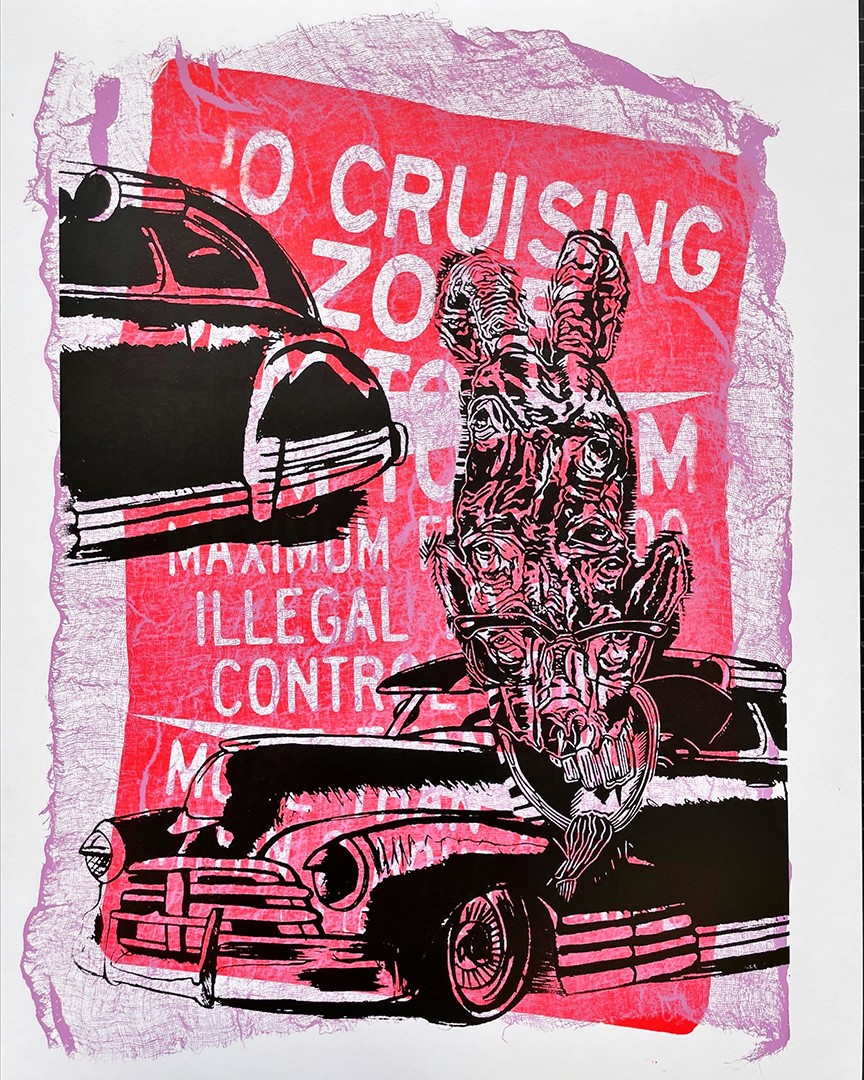
I am from South Bend, Indiana and I remember seeing my father’s pen drawings when I was super young. He worked at a steel mill and unloaded the trains and there was down time in the overhead crane he drove and he would use ink pens to draw portraits and cards for my mother. My own work I would draw cars when I was around kindergarten but I didn’t start taking it seriously when I started doing graffiti when I was like 11-12. I didn’t really know I could be an artist by profession until I was about 18 when I started working at the Institute for Latino Studies at Notre Dame. Probably one of my first big influencers ouside of the home was this graffiti artist in my hometown that was from L.A. named PLUS ONE he racked up like 1.2 million in damages to the city tagging EVERYTHING. I was like 10-11 when I started seeing his tags and it was inspiring how it was everywhere. This really got me interested in art in general as a brain shift to art everywhere. My work is heavily influenced by Rasquachismo, Lowriding, Kustom Kulture, and as of late I have been working in Screenprint and Relief printmaking.
I am most proud of these humble beginnings. I am a first generation college graduate that had no concept of University and because of life choices in my teen years had no college prep and lived on the other side of the law. With this background I work to help students and young professionals recognize their potential.
For you, what’s the most rewarding aspect of being a creative?
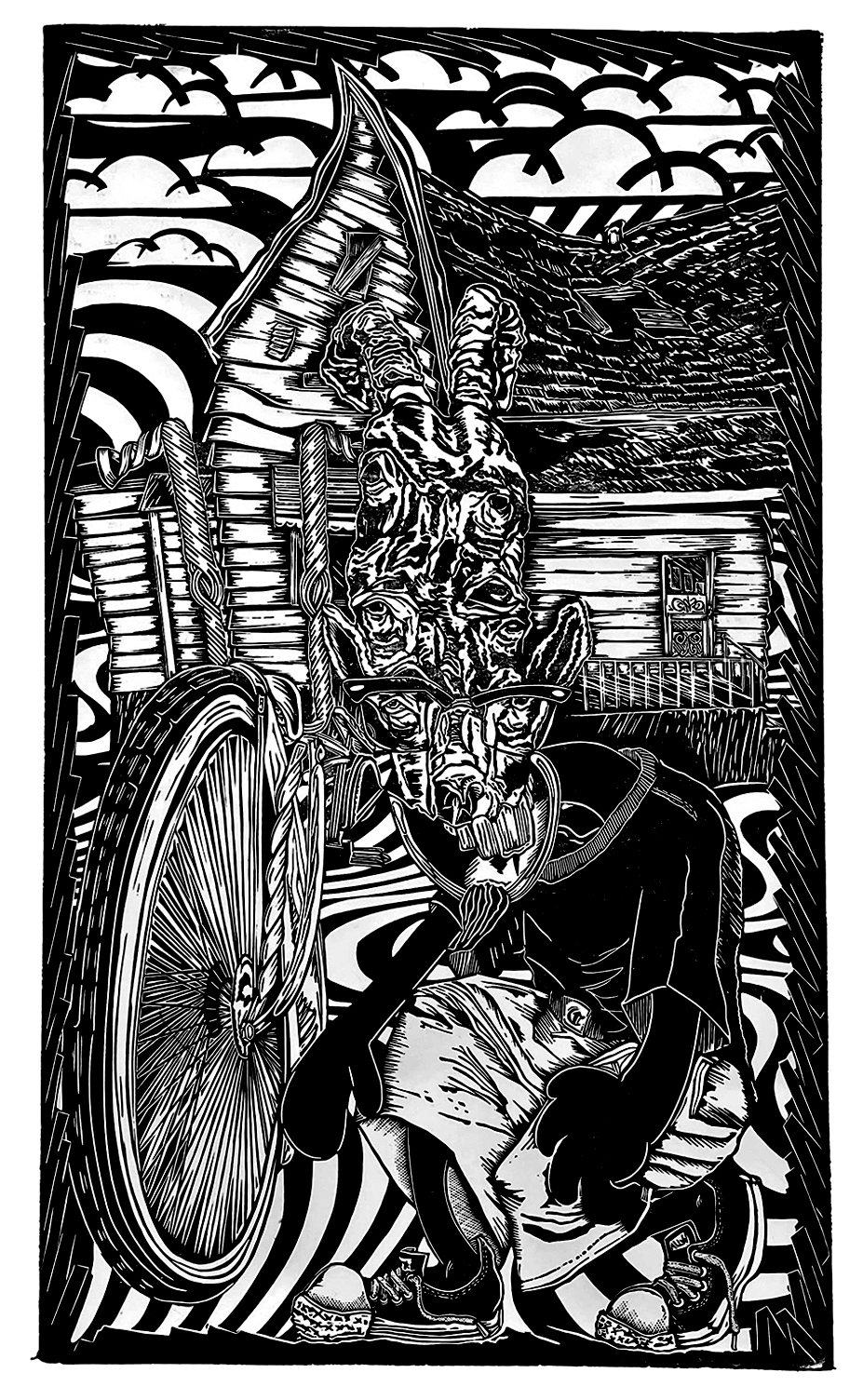
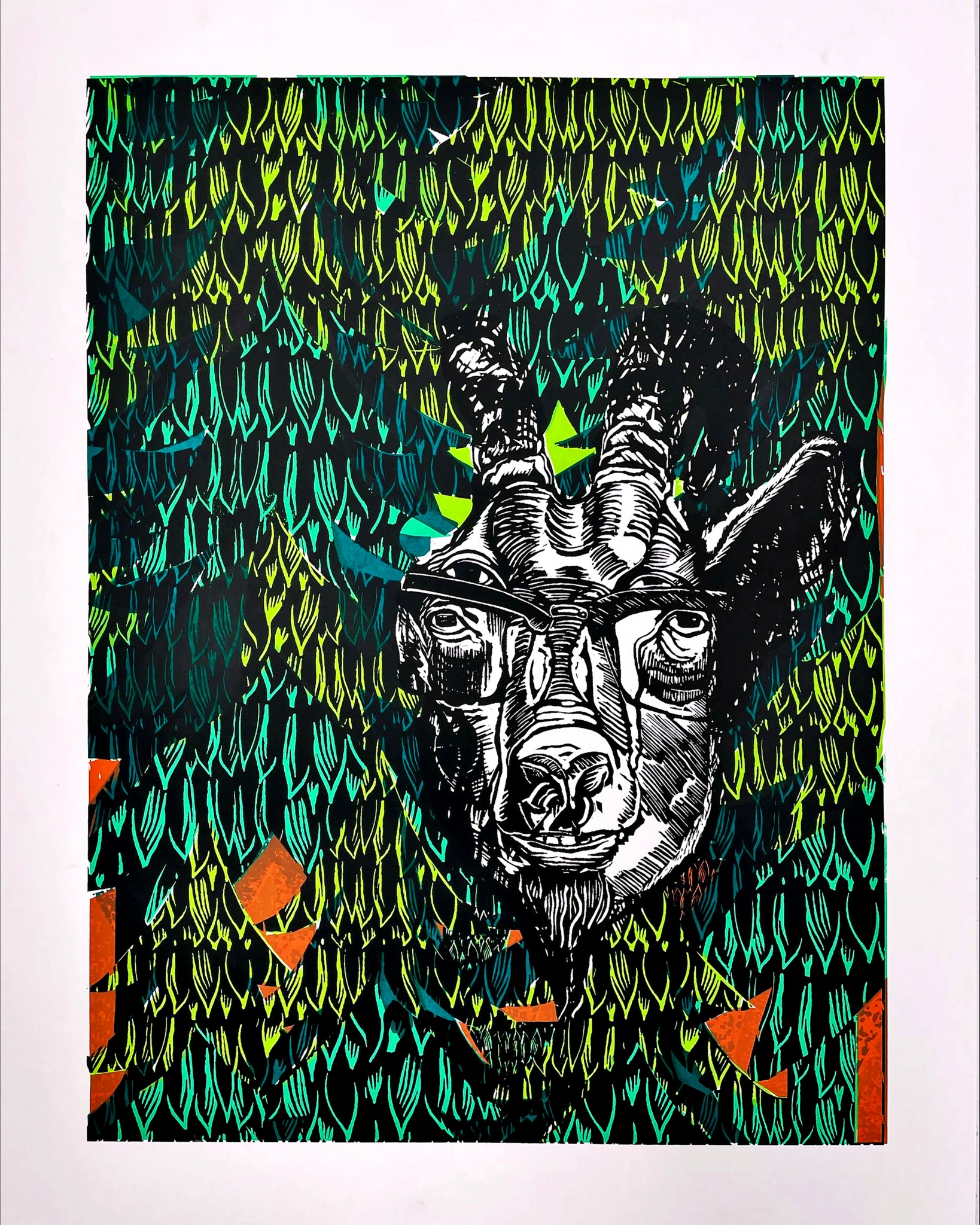
I feel that having the opportunity to bring my ideas to reality is the most rewarding part. I think that creatives have the privilege of being able to see the world in a unique way that the energy of the universe grants us. Every idea is a gift that breaks the chains of the mundane and creates a light in the otherwise bleak world in which we live. Being able to have the Flow state of mind and transporting an idea from the electricity in the brain through the blood that fills the muscles in the arm down to the finger tips out on to the matrix in which we choose. Being able to close my eyes and live in the world I create where goats can drive cars, dots can make pictures and the cosmos isn’t just something I read about I am living in it. I embrace the moment I get a new idea. Breathing in deeply and exhaling slowly asking cooperation from my body and mind to bring life to the project.
Is there a particular goal or mission driving your creative journey?
I was raised and am a Chicano. My father instilled Chicanismo in my brain at a very young age with the belief that education is the way that the youth can make a better future. My parents sacrificed so much to make sure that my sister and I got the best education that they could afford. This put us hovering above poverty for much of my life where beans, rice, and sharing a pork chop was common. My work ebbs and flows on different topics in Chicanismo from Barrio Culture, to my current body of work that is talking about the mental gymnastics it can be being a Chicano Assistant Professor in the country which is one of the smallest groups in academia today. It is difficult at times living far away from my family and friends in a new city but my students are very appreciative and are happy in their growth and I think that in teaching and staying true to my roots of Chicanismo that I am continuing what my family and I believe in.
Contact Info:
- Website: https://macloviocantu4.com
- Instagram: @maclovio4