

We recently connected with Ly Tran and have shared our conversation below.
Ly, thanks for joining us, excited to have you contributing your stories and insights. Setting up an independent practice is a daunting endeavor. Can you talk to us about what it was like for you – what were some of the main steps, challenges, etc.
In 2016, I began taking steps to start my own group counseling practice. A lot of groundwork had to be laid to launch the business. I had to recruit a team, cast vision, negotiate compensation, and secure office space leases—all the things. At first, it was mostly dreaming, but pretty quickly, the reality of how much work it would take hit hard. Looking back on those early days, I think the most important thing we did was establish our “why.” Our purpose and mission set the DNA of what we were building and what we were working toward.
When you’re starting from scratch, everyone around you is putting in extra effort to lift the thing off the ground. There has to be something meaningful and compelling about what you’re doing and why everyone is pulling so hard in the same direction. If it’s just about selling more widgets or doing more of what others are already doing, that’s not enough to get you and your team out of bed in the morning—or to stick with it when things get hard. Because they will.
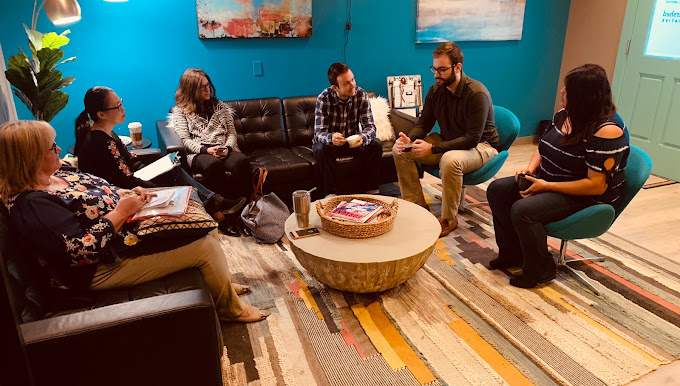
Ly, love having you share your insights with us. Before we ask you more questions, maybe you can take a moment to introduce yourself to our readers who might have missed our earlier conversations?
I’d say I’m a mental health professional by training, an entrepreneur by interest, and a minister at heart. I started off doing IT consulting at Deloitte back in 2002, but I quickly realized I preferred talking to people about the problems they needed to solve rather than sitting behind a computer. So I went back to school to earn my degree in counseling and began developing my craft as a therapist.
But the entrepreneurial itch never left. I started launching businesses wherever I could—first in real estate, then in food retail. Eventually, I took a full-time role as a pastor at my church and served there for several years. Over time, I found myself collecting passions and interests, each one adding to a broader vision I couldn’t yet see clearly. All those experiences eventually culminated in the launch of my own mental health practice—a space where I could finally bring all those parts of myself together in ways that felt both authentic and meaningful.
It’s fun to think back on those years before we started WELD. You couldn’t have convinced me then that flipping houses, scooping gelato, working as a therapist, and serving as a pastor would all fit together one day. But life has a way of weaving things together—often in ways that don’t make sense at the time… until they do.
If I had to name what I’m most proud of, it would be that our group focuses on three things—and we do all three with excellence.
First, we’re a practice committed to developing the next generation of therapists. We started with a team of six, and eight years later, we’ve grown to a team of sixty and counting. I love watching our clinicians grow. Some of my current partners are therapists I supervised when they were just starting out. We invest heavily in the ongoing personal and professional development of our team.
Second, we aim to be a meaningful resource for churches. One of our mission statements is to make the church one of the best and first places people turn to for counseling. Many people reach out to their faith communities before ever considering therapy. We want to equip churches to be a trustworthy and reliable place for people to get the help they need.
Finally, we’re deeply committed to making mental health services accessible to those who have traditionally been unable to afford or access them. Through our nonprofit arm, we’re reaching individuals and families who might otherwise never have the chance to receive therapy—and we’re seeing lives transformed as a result.
Have you ever had to pivot?
About six years into the business, I went through what I can only describe as a mental breakdown. To be completely honest, a big part of it was the stress of running a business—but even more than that, the stress exposed things in me that needed healing and attention. The irony isn’t lost on me: I’m a mental health professional running a group counseling practice, yet I found myself struggling in ways I didn’t fully understand until I was in the thick of it.
Still, that season was one of the hardest of my life—not just because business is hard, but because of what it reveals within you. I wish I could share more about that journey, because I believe most business owners go through a season like this. And when it happens, it helps to know you’re not alone.
From a business perspective, one of the key lessons I learned is that growth is painful—because it inevitably involves loss. We grew quickly. Too quickly, in hindsight. The systems I built to support a team of ten just didn’t hold up when we became a team of fifty. The failure, the weight of disappointing people you lead, the feelings of inadequacy—these are all rites of passage for any founder. I knew that intellectually going in. But emotionally? You’re never quite prepared.
That said, if you’re truly committed to your mission and to the people you lead, you’ll be stretched in ways you never imagined. And in that stretching, you’ll discover things about yourself—and grow into the kind of leader your business needs.

Can you share a story from your journey that illustrates your resilience?
Resilience is always tested at the point of failure. I just shared a story of feeling that failure during a season of rapid change in my business. But perhaps the greatest test of my resilience came before I even opened up shop.
Ten days before closing on the business loan that would fund the launch of WELD, my wife and I lost our 4-month-old son, Aaron.
Losing a child feels like someone takes all your inner parts, shatters them into a million pieces, stuffs them back inside you, and waits to see what will come of it. In the meantime, you’re left completely disoriented—massive holes gaping within you—and you wonder if you’ll ever again be able to get up in the morning and find the strength to do what you did before.
My wife and I had to decide, almost immediately, whether we were still going to go forward with launching this business. And to be honest, I didn’t want to. I had lost my sense of direction and hope. Most of me just wanted to sit in a dark room and cry—which I did, often.
But I also knew that when your world falls apart, it’s not the time to make major life changes. So, instead of pivoting, we chose to stay the course. Not because my heart was still in it, but because this was the path we had set out on. And in the absence of anything else, we would keep moving forward, one step at a time, even though all I really wanted was to have my son back.
This isn’t a story of resilience that wraps up with a happy ending. It doesn’t come with a neat bow or a triumphant “this is how everything turned out better.” Because the truth is—it didn’t. Not in the way people expect.
For me, resilience has looked like a long journey of faith: choosing to keep going, one day at a time, not because everything feels good or hopeful, but because moving forward has become an act of obedience and trust. Trust that even though things don’t make sense today and life isn’t what you thought it would be, that one day the fog dissipates and things become clear.
Over the last eight years, some might say it’s incredible what we’ve accomplished. I look back and simply see what happens when you keep pushing through the days, even when you’re hollow, until—slowly—you find your way back again. Until you find meaning. Until hope reemerges.
Hold on tight to your “why.” It’s your North Star. It’s what will guide you in the seasons when you feel lost. Because those seasons will come.
Contact Info:
- Website: https://weldgroup.org
- Linkedin: https://www.linkedin.com/in/ly-tran-d-min-lpc-s-6657916b/