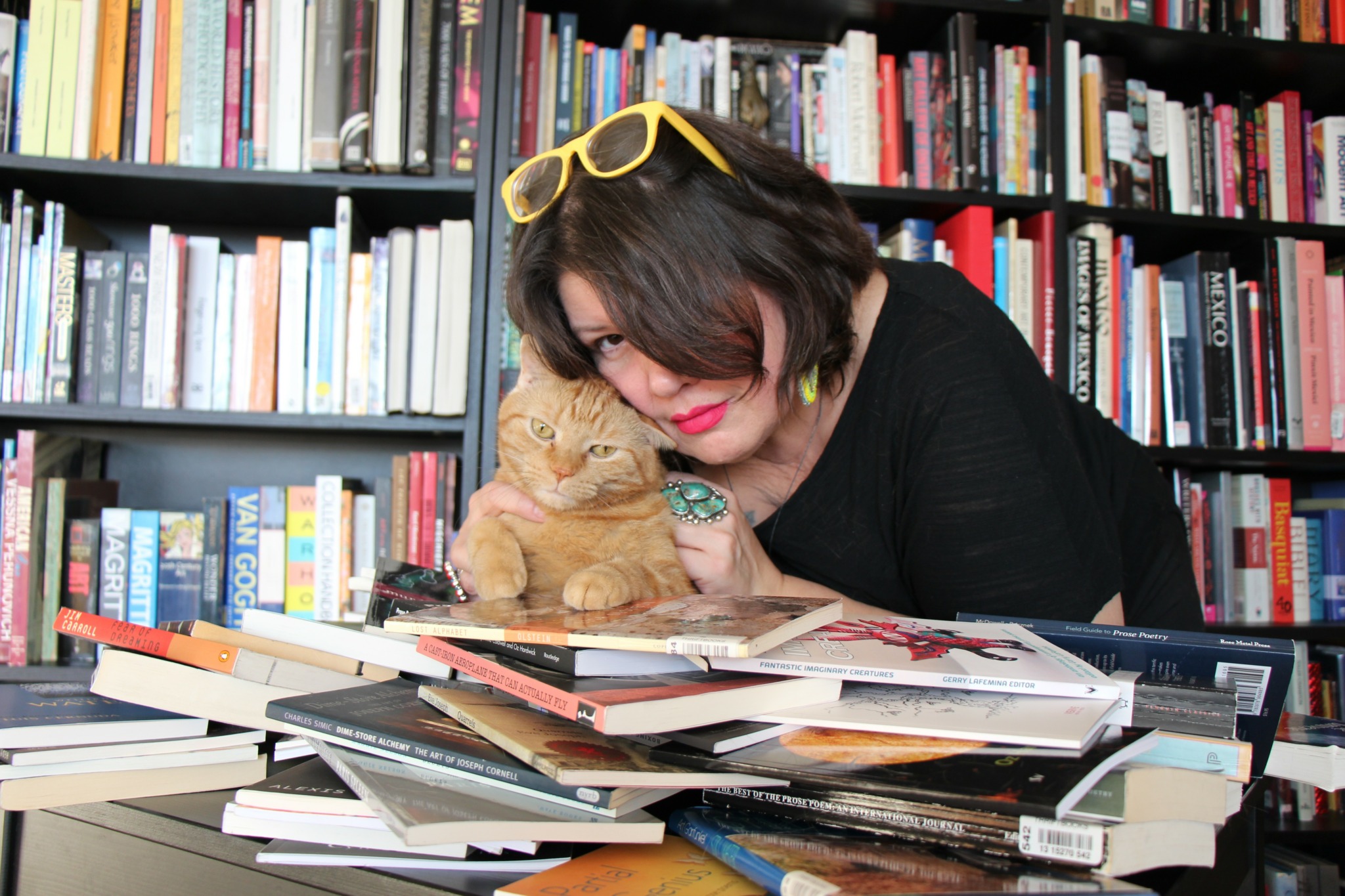

We caught up with the brilliant and insightful Lorette C. Luzajic a few weeks ago and have shared our conversation below.
Lorette C., looking forward to hearing all of your stories today. Are you happy as a creative professional? Do you sometimes wonder what it would be like to work for someone else?
There’s no question that being an artist and writer is the most fulfilling and meaningful life for me. I’m not sure it is a question of happiness, even, but a matter of following my calling and the core of my identity and purpose. It is simply who I am. Perhaps the issue is rather how best to manifest that destiny in a way that works as work. Because even if I was doing something else, I would still be who I am. I believe that other kinds of work are also very important, and it could be easier to work in a traditionally stable profession, because I would still be an artist and writer no matter what!
Many years ago, I cut out a quote from Byron, the Romantic poet. “I doubt sometimes whether a quiet and unagitated life would have suited me. Yet I sometimes long for it.” A part of me longs constantly for stability, security, and routine. But it is not what I have made, and not what I have been given. I believe everyone’s life is a matter of fate and a matter of decisions and consequences. It’s a precarious blend of both and the whole point of life is the game of balancing these. It may seem odd to point to the song “The Gambler” by Kenny Rogers, but the storytelling of this song epitomizes, perhaps, that game. We are all gamblers in a sense. There are the cards we are dealt, and what we do with them, a blend of will and chance or fate, and our skills in this juggling act improve as we play.
While this question of wondering whether a different role could have provided structure, stability and sanity comes up constantly for me, perhaps the most dramatic illustration of fate having its own plans is when it came to choosing my education. I have always been an independent learner, through reading and writing. I was messy and lost when I was a young woman and didn’t go to university right away. I desperately wanted to study either art history or the history of poetry, but decided that a more pragmatic choice for me, one that would bring more stability, and still use my writing, was journalism school. I envisioned writing stories about other creatives and their work. But journalism is not really about writing. It is about short pieces, most often on business, politics, or bad news. I detest politics, the mainstay of news media. I felt as if the program was a big, expensive disaster for me. I graduated at a time that the whole industry was changing dramatically, too, with the decline of print media and the rise of the Internet. I was lost again, and wondered what kind of mistake I had made. To distract myself from the anxiety of it all, I immersed myself in making collages and continued writing poems and stories.
That was 25 years ago, and the years show that it was the best mistake to happen to me. Journalism school was like the army for a free-floating soul like myself. The rigid deadlines and productivity of the program were what I needed to arm myself in the creative world. No more waiting for the muse. I had been initiated into “doing the perspiration” of creativity rather than waiting for inspiration. My DIY attitude became hands on rather than ethereal. I learned everything by trial and error. Book layout, building a web site, art marketing, running a literary journal. And of course, through all of that, I never stopped learning about poetry or art history. I read and look and learn all day every day, and those things all merged in founding the journal The Ekphrastic Review ten years ago, a literary journal of writing inspired by visual art. Poetry and art history fuel both my own writing practice and my visual art practice. I couldn’t be more blessed than I am, working on my own creations, and engaging with the creative community, with the opportunity to share and promote the work of others as well as my own.


Great, appreciate you sharing that with us. Before we ask you to share more of your insights, can you take a moment to introduce yourself and how you got to where you are today to our readers.
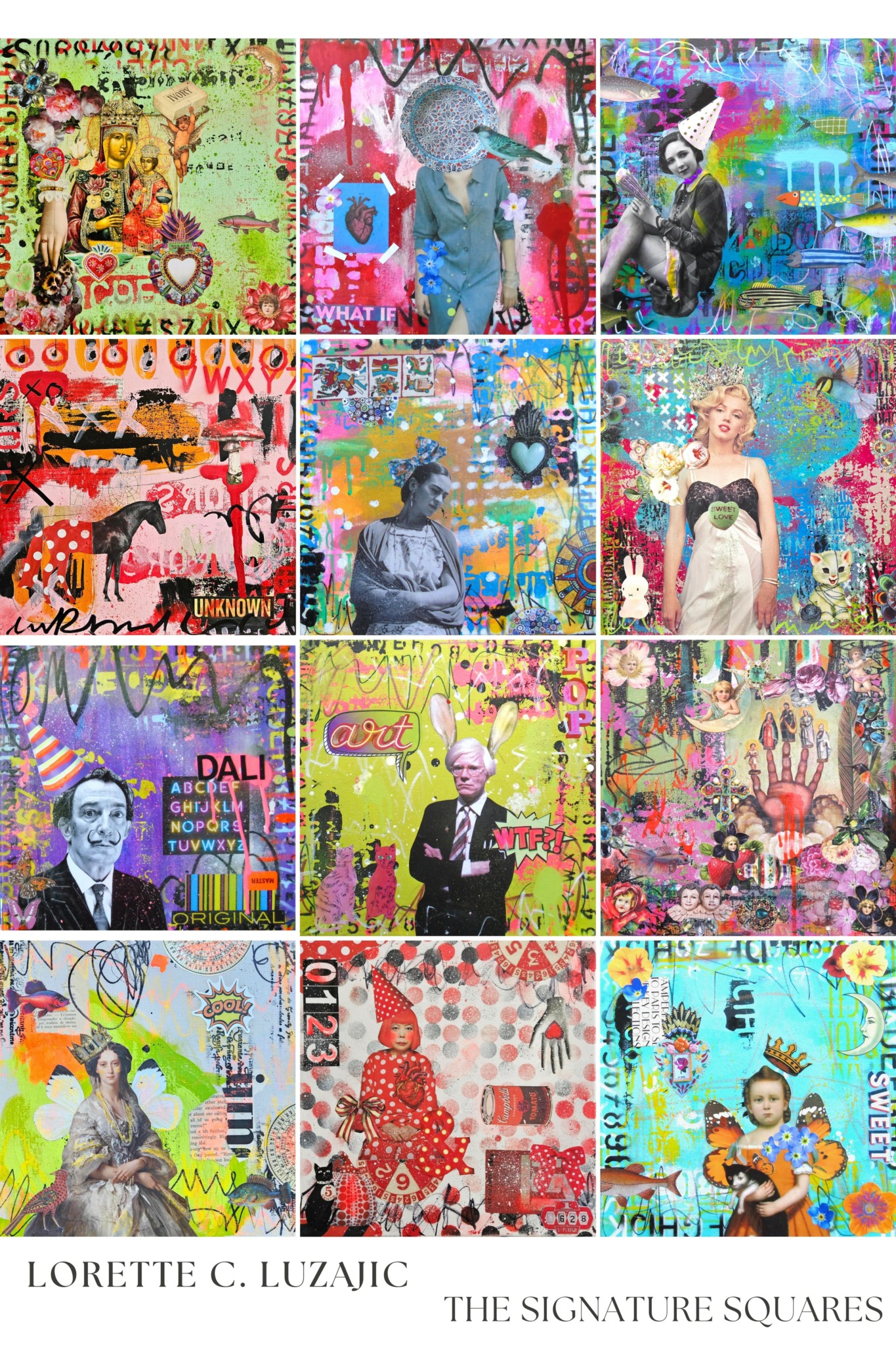
I’m a writer of poetry and very short stories, almost always inspired by art history. I publish widely in literary journals, anthologies, and beyond. I’m also an award-winning mixed media artist, working with collage, abstraction, and expressionism. I constantly exhibit my art locally and afar, and have collectors in at least forty countries so far. My work has also appeared in literary journals, on textbook covers, on a billboard in New Orleans, in real estate stagings, as props in film and television, and in an ad campaign for Carrera y Carrera, a luxury jewelry company in Madrid. These twin passions culminated for me in 2015 when I founded The Ekphrastic Review, a journal of literature inspired by visual art. The Ekphrastic Review has become the flagship journal of ekphrasis, publishing thousands of works by authors all over the world. I teach mixed media at the Centre for Addiction and Mental Health in Toronto, and love empowering clients with creativity and the inspiring stories of artists and their work. I also teach creative writing, poetry, flash fiction, and especially, ekphrastic writing. I’ve been invited by zoom to do presentations, workshops, and lectures at universities, writing clubs, literary festivals, and other kinds of organizations, on ekphrastic writing, mixed media art, flash fiction, and art appreciation. The Ekphrastic Academy grew out of The Ekphrastic Review, and holds a variety of zooms on different aspects of art history and creative writing. While this seems like a more than full plate, I don’t see these roles as being separate, rather, they are all connected.


Can you share a story from your journey that illustrates your resilience?
One thing I have learned is that resilience is my middle name. Life is not easy. Being human is a wild, heartbreaking experience, full of terrifying initiations and constant ups and downs. We all have battle scars that come from family dysfunction, economic struggles, emotional and physical illness, betrayals, disappointments, and complicated love stories. Art and literature are an age old weapon to help us battle all of these things. We use stories and the magic of creation to process our experiences and to connect with others through time who have shared them. Classical mythology, fairy tales, art history, folklore and other forms of creativity all give voice to the complexity of the human journey, with its personal and political wars and challenges. It helps us make sense of them and making beautiful things from our pain gives us purpose and helps us see beauty and blessings.
I grew up severely impacted by mental illness, in an extremely dysfunctional and abusive environment. I was very young when I understood that reading poetry and looking at paintings offered, not so much escape, but connection and unity with others who had shared these trials. Through times of great peril and grief, the arts have been a lifeline, allowing communication from me and from others in history to me, where and when I needed it. I have managed the fallout from all these things, and my journey with bipolar disorder, with therapy, medication, nutrition, exercise, and faith, as well as with art and literature. The power of creation is incredibly important for healing and for growing confidence and connecting with the world beyond yourself.
The most recent example of resilience for me came in the past handful of years when I struggled with several serious illnesses. In my mid-40s I developed a disabling, mystery disease that left me in terrible pain and at times completely immobile. I also had a failed knee surgery that left me, probably permanently, in worse shape than I was going in. The icing on the cake was finding out I had breast cancer. These were very dark years for me. I am through the trial by fire, in a new normal, with a battered body but stable and in remission. During these times, I had no idea how I would be able to exhibit, travel, or even leave the house. I was not mobile at all. It was terrifying to think how I could support myself. My partner helped me learn to use Zoom and teach from this platform, so that I could slowly grow a role teaching art history and writing from home. I had only wanted to share my passion through the written word, but now I am passionate about teaching. And the unexpected blessing here has been being able to meet so many other people interested in learning more about art history and talented writers. The whole world is my community. What a blessing to be able to exchange knowledge and support and resilience with others over the internet.
In your view, what can society to do to best support artists, creatives and a thriving creative ecosystem?
The most important thing every person can do is to support the arts with their pockets. While the state can and should sponsor the arts, don’t leave it up to them. Every single person can reap untold benefits just by shopping. We all love art but many of us leave buying art to someone else. You don’t have to be a rich collector. Simply choose to buy original artworks, handicrafts, handmade jewelry, local clothing designers, etc. Choose the original over cheap prints at Home Sense. There are always small works, new artists, signed prints, or other ways that can work with your budget. Or ask an artist you like about a long-term payment plan. Buy a few copies of a book by a writer you love and give them as gifts. Treat yourself and go to a ballet or travelling dance troupe or the opera. Go and see a local band, or buy tickets for someone else as a surprise gift. Support a small theatre by going to a couple plays each year. When you go to an art fair, don’t just look. Buy something. It does not have to be a ten thousand dollar painting. Be conscious about switching from cheap manufactured things that don’t bless you or the maker. Everything- holiday ornaments can be precious cultural handicrafts that you purchase on your travels. Better to have a few meaningful ones than a tree full of dollar store baubles. All of us can buy art inside of our budget, and make room to support each other. We often feel we are “splurging” or “wasting money” if we indulge in handmade beauty. But when you consume heart-made, hand-made artworks or see a performance, you support the maker but your life is more magical, too.
Contact Info:
- Website: www.mixedupmedia.ca www.ekphrastic.net
- Instagram: https://www.instagram.com/lorette.c.luzajic/
- Facebook: https://www.facebook.com/lorette.c.luzajic/
- Other: my personal site is www.mixedupmedia.ca
The Ekphrastic Review is www.ekphrastic.net