

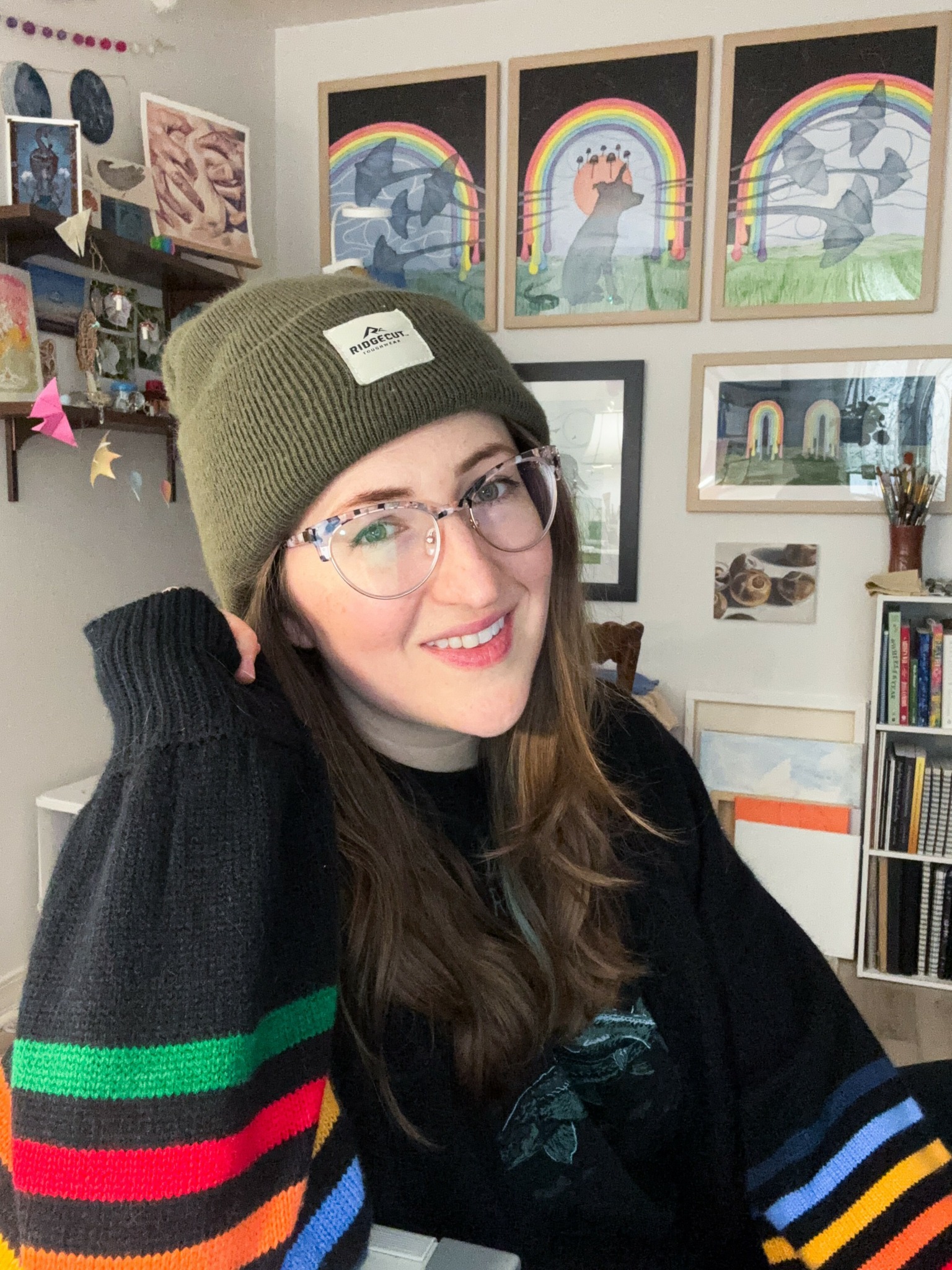

We recently connected with Liz Darling and have shared our conversation below.
Alright, Liz thanks for taking the time to share your stories and insights with us today. Learning the craft is often a unique journey from every creative – we’d love to hear about your journey and if knowing what you know now, you would have done anything differently to speed up the learning process.
Like a lot of other artists, I started making art as a kid and just never stopped. I had a great art teacher around middle school who introduced me to watercolor as a medium, and it just clicked. I loved the fluidity of it, and the way I was able to control the paint. I went on to pursue an art degree in college, and learned oil painting, but I returned to watercolor later on as an accessible way to paint at home without fumes or too much mess. I think what I could have done to speed up my learning process overall would have been to let go of perfectionism. As a teen/young person, I felt like every painting had to be a masterpiece. That was a really misguided mindset. It is okay to make “bad” art, and in my opinion, it’s a necessary step to become more free as a creator. If you’ve only made 100 paintings, it feels very important to your ego for all of them to be “good”…. but make 1,000, and it matters far less. Or maybe that’s just part of the humility gained by age and experience – lots of things seem to matter less.
Awesome – so before we get into the rest of our questions, can you briefly introduce yourself to our readers.
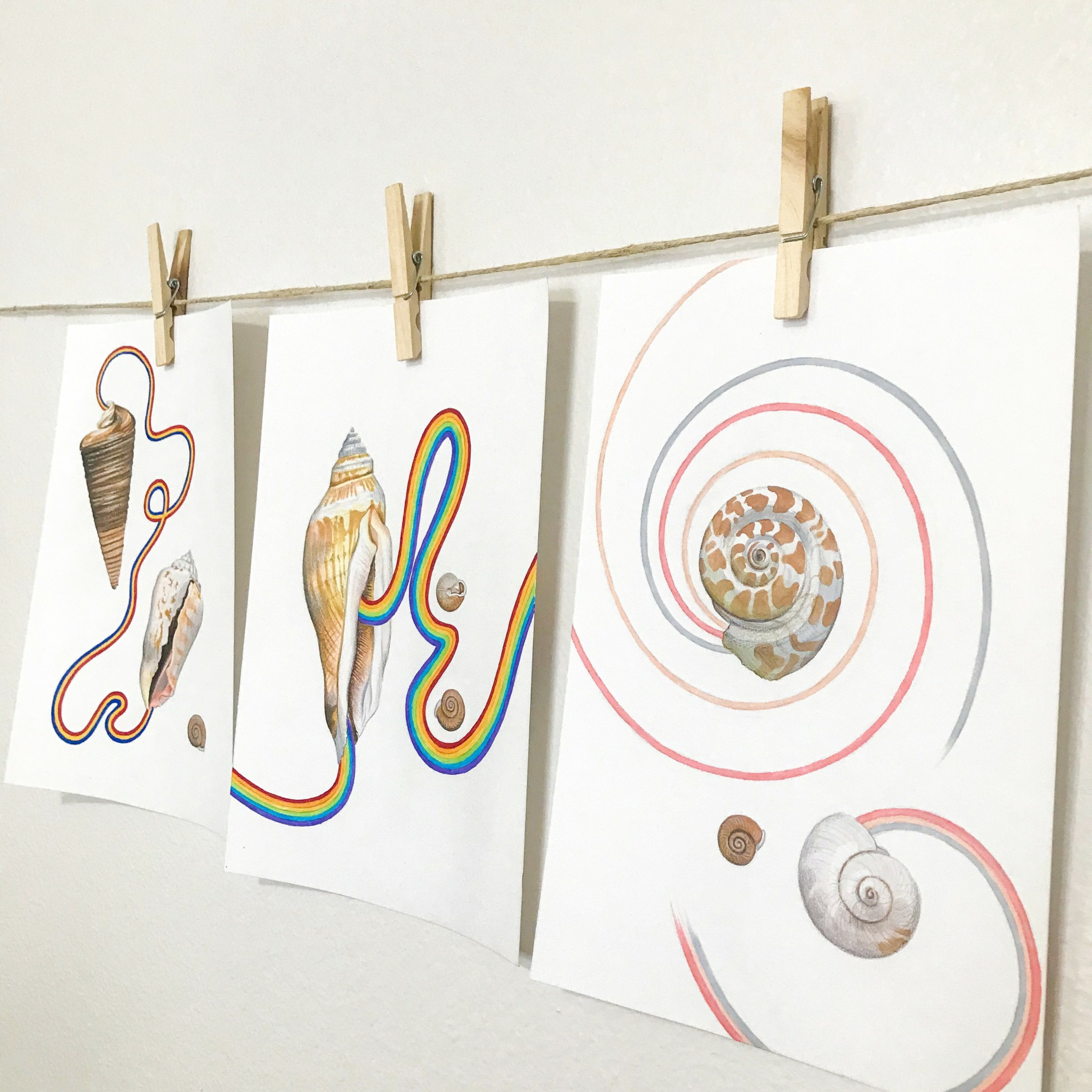
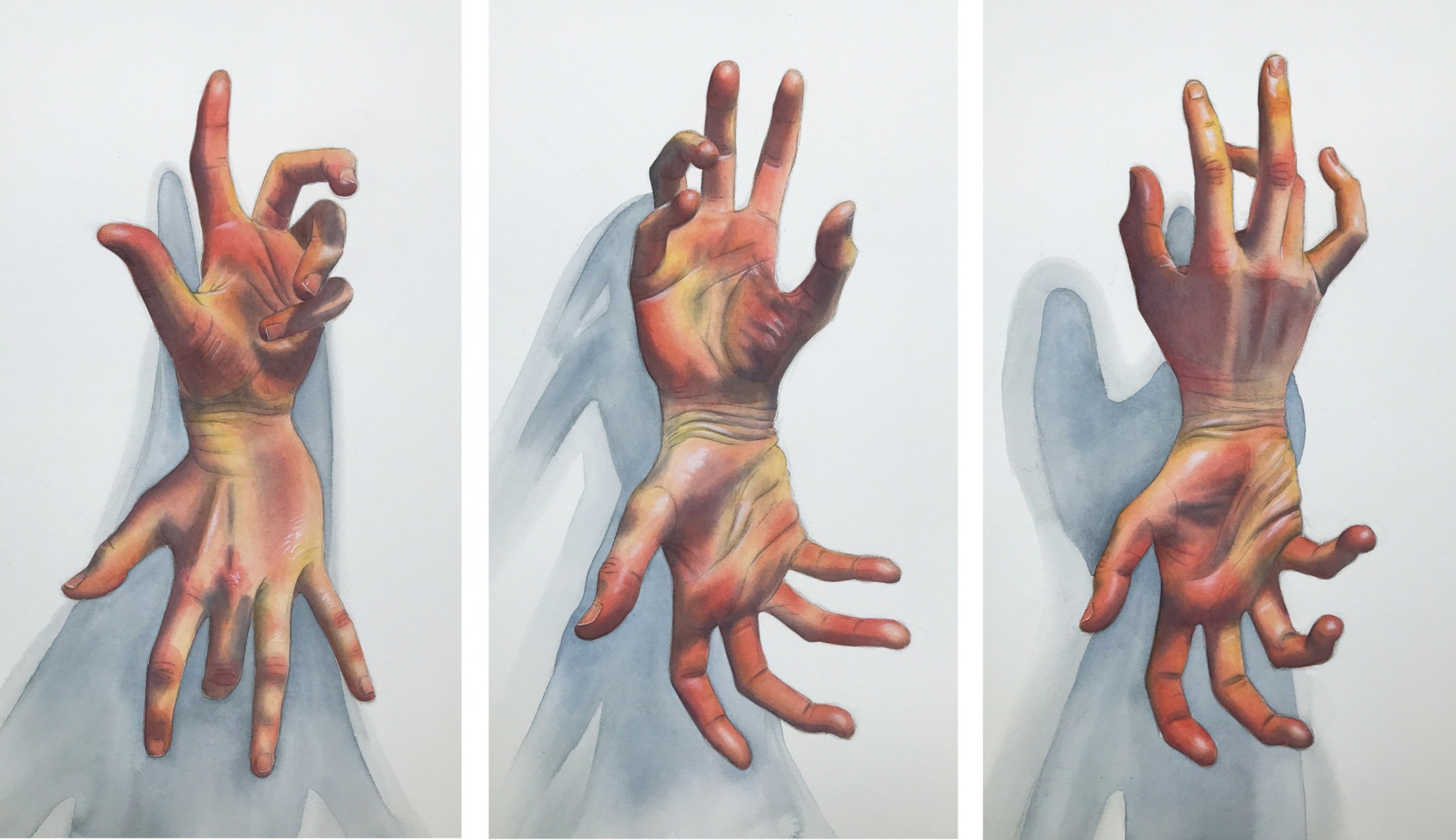
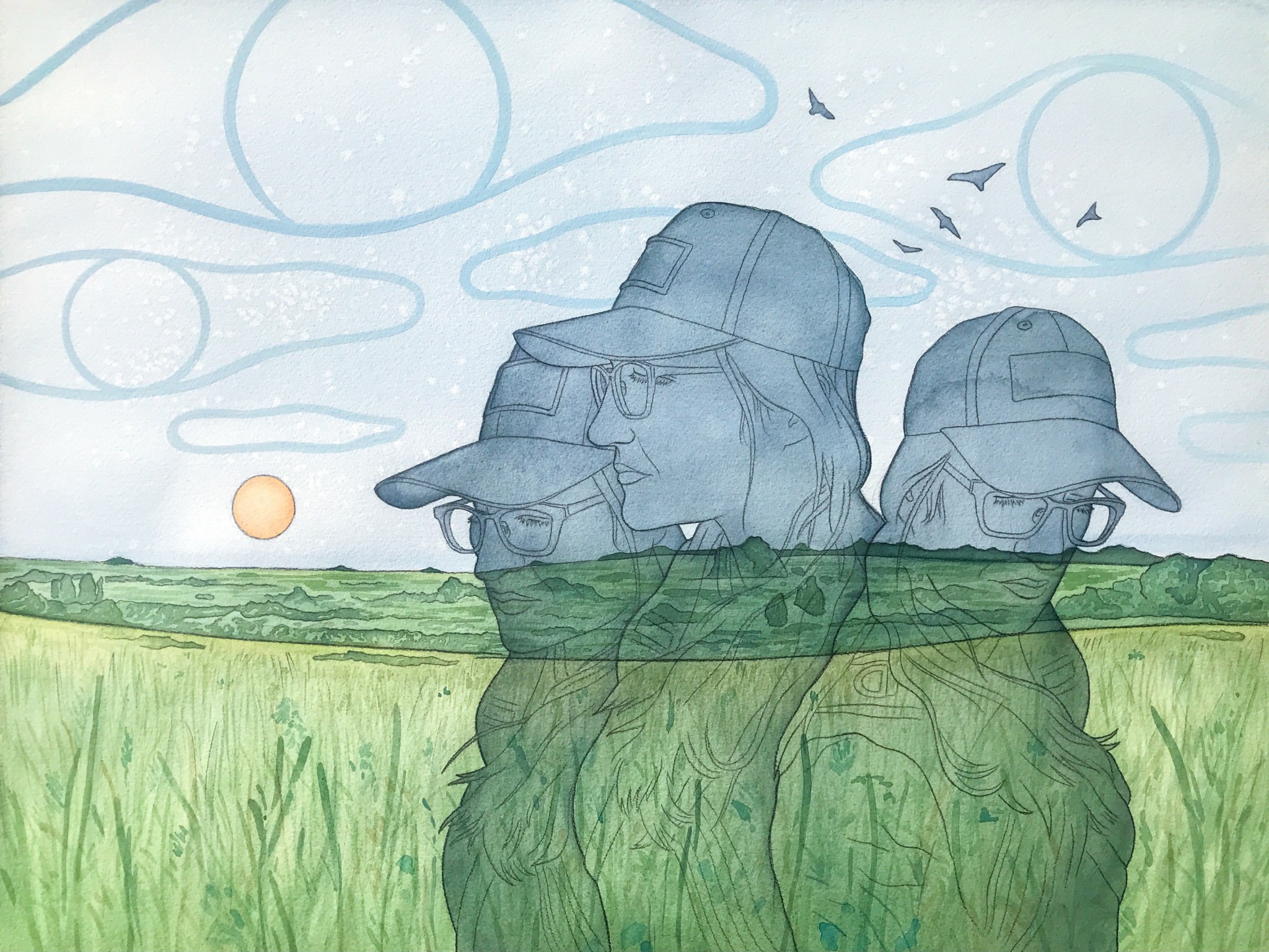
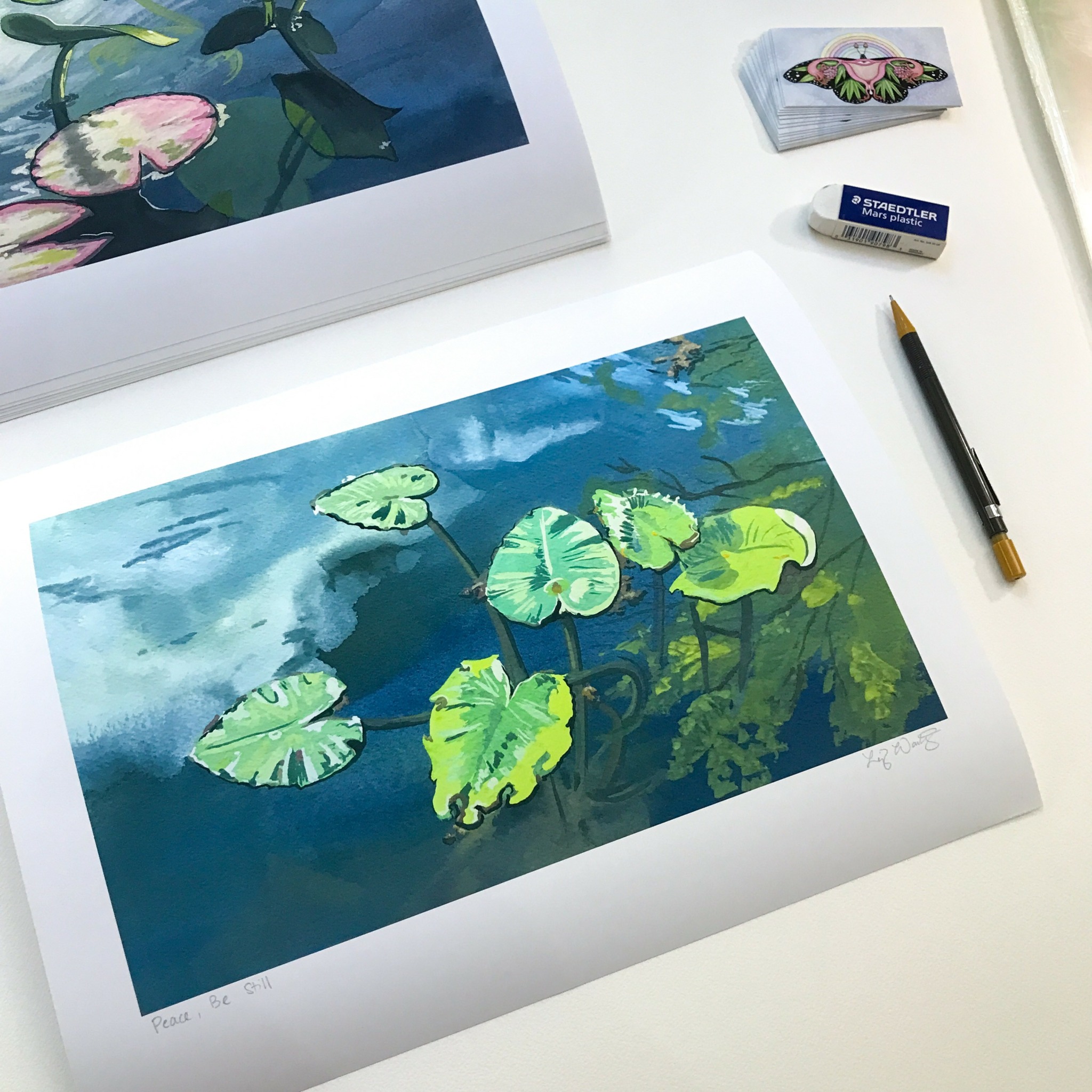
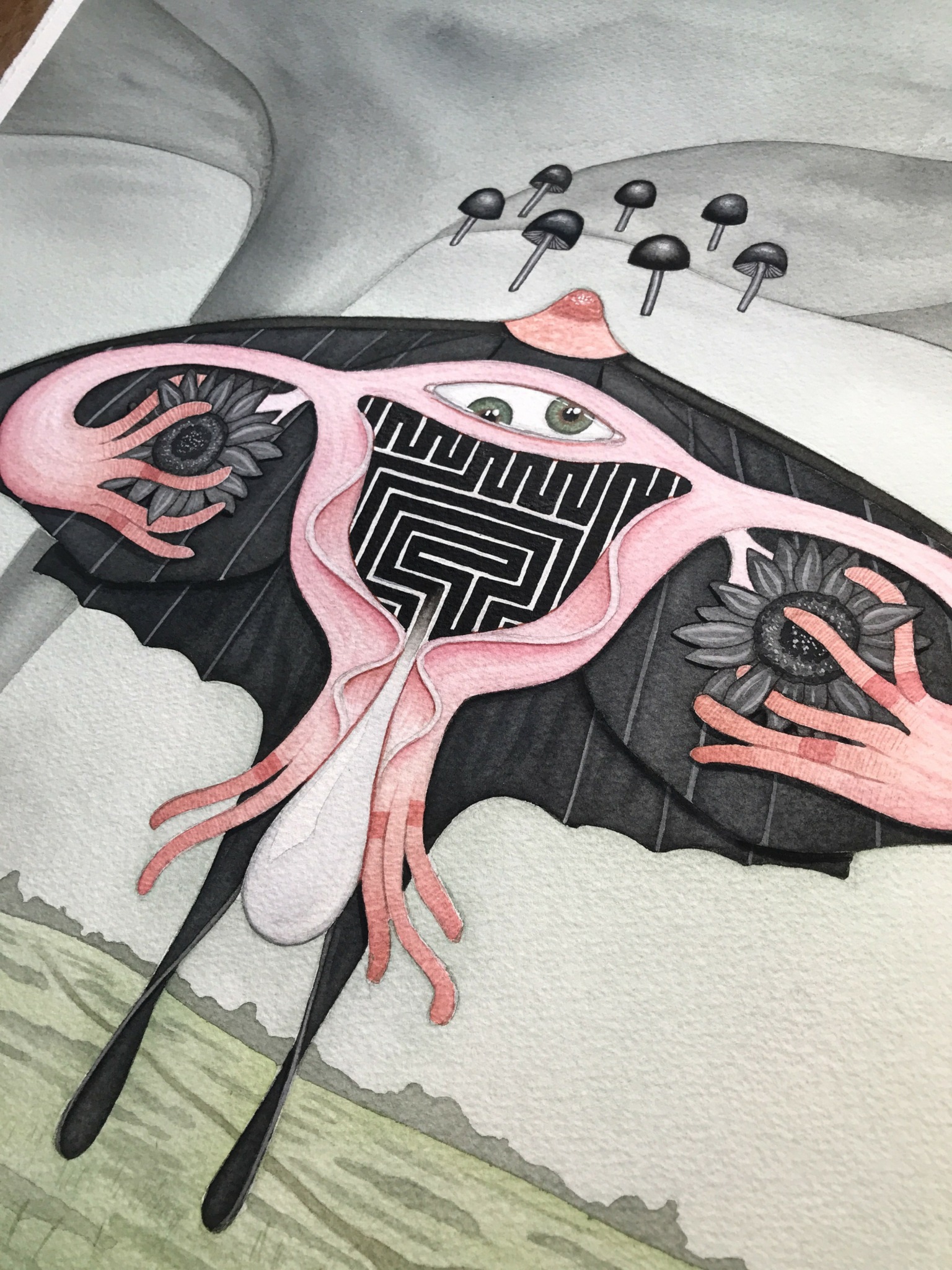
I’m a visual artist from Pittsburg, KS. I make paintings that span across different mediums – watercolor, ink, gouache, oil, embroidery, and digital media. My work explores the dissolution of boundaries between the body, the natural world, and the unseen.
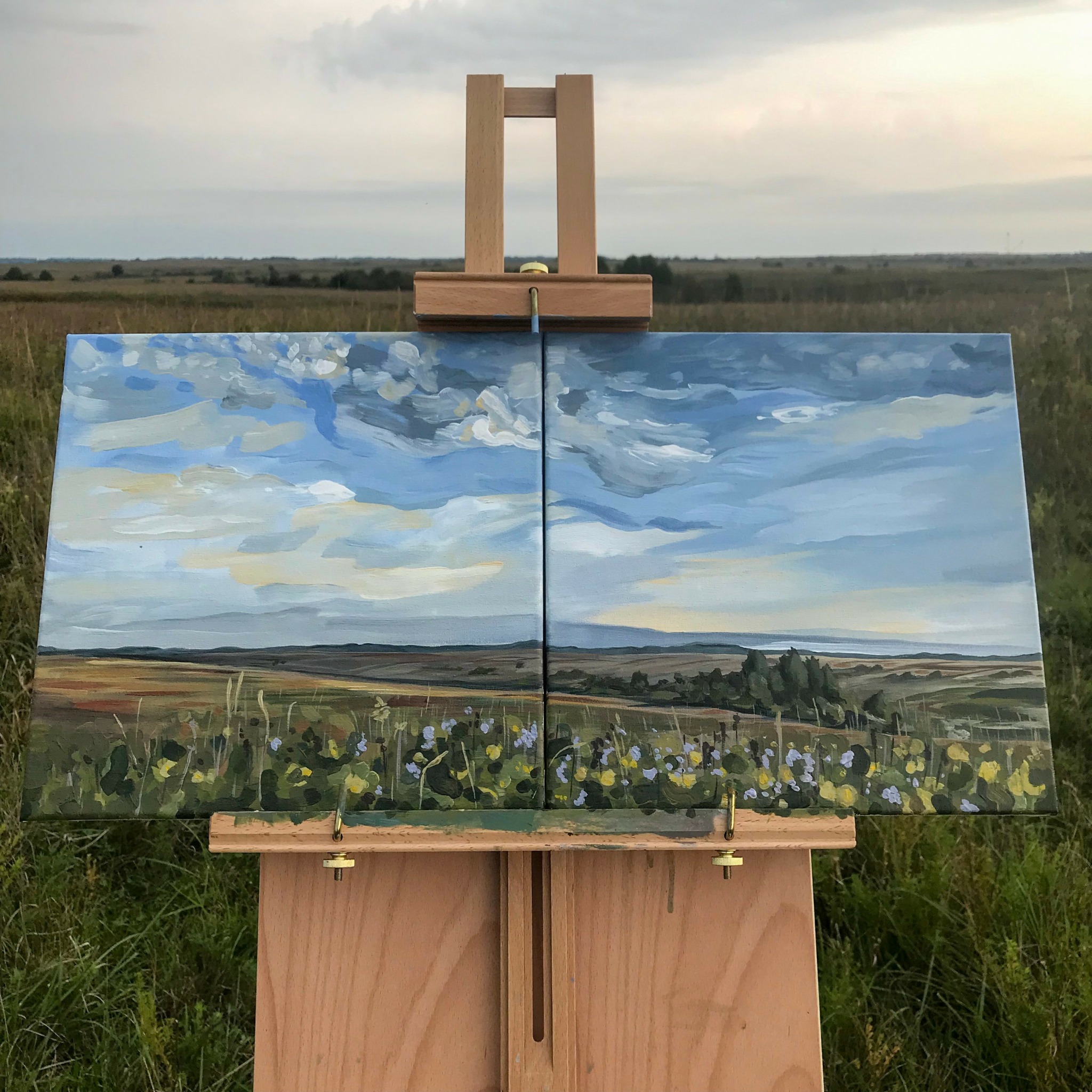
Over the years, my practice has become not just a creative outlet but a form of meditation and spiritual inquiry. Being in nature is a huge part of my process, inspiration, and spirituality overall. I spend as much time as I can hiking in the woods and intentionally connecting to the environment. I live close to the prairie, and it’s become one of my favorite places to paint. The prairie in particular gives me a sense of the interconnectedness of everything. A few years ago, I also started incorporating plein air (painting outdoors) into my painting practice. Plein air really helps you experience a location in a more intimate way – slowly noticing and intentionally recording what you see rather than taking it in instantaneously, as we’re all sort of unintentionally being groomed to do by our quick media landscape and devices that encourage speed and efficiency, often at the cost of sustained attention. I think spending regular time outside also helps in noticing the nuances of change – how a place can look and feel so different at different times of the day and year, due to all sorts of factors.
I think what sets my work apart is its refusal to be just one thing. Experimentation is a huge driver of my work. I believe in experimentation for experimentation’s sake. I’m less interested in making art that caters to algorithms or creating a marketable brand (yet I totally understand why many artists find that approach necessary) and more interested in following where the work wants to go and exploring what it means to see, feel, and remain in relationship with the world around us, especially when that world feels increasingly unstable.
What do you find most rewarding about being a creative?
There is a quote by Anaïs Nin on this topic that really speaks to me:
“I could not live in any of the worlds offered to me — the world of my parents, the world of war, the world of politics. I had to create a world of my own, like a climate, a country, an atmosphere in which I could breathe, reign, and recreate myself when destroyed by living. That, I believe, is the reason for every work of art. The artist is the only one who knows the world is a subjective creation, that there is a choice to be made, a selection of elements. It is a materialization, an incarnation of his inner world. Then he hopes to attract others into it, he hopes to impose this particular vision and share it with others. When the second stage is not reached, the brave artist continues nevertheless. The few moments of communion with the world are worth the pain, for it is a world for others, an inheritance for others, a gift to others, in the end. When you make a world tolerable for yourself, you make a world tolerable for others.”
Do you think there is something that non-creatives might struggle to understand about your journey as a creative? Maybe you can shed some light?
I don’t care for the phrase “non-creatives” because I believe everyone has the capacity for creativity. Creativity takes many forms. That being said, I will acknowledge that some people haven’t had creativity nurtured in them, or haven’t nurtured this quality in themselves.
I experienced this at work one day when one of my “non-creative” colleagues was watching me doodle in a meeting and whispered something like, “How do you know what to do next?”
That comment was an eye-opener that made me realize that not only do we not all share the same skill sets, but some people struggle to even let their minds wander while creating imagery.
There’s a fluency of self-expression that I’ve cultivated over years of practicing art that I sometimes take for granted, and it’s something I wish everyone could embrace in their own way, in whatever way serves them, on whatever level that may be. For some people, this may feel like reconnecting with their inner child and silencing the inner critic. Engaging in artmaking is such a nourishing, fulfilling part of being human.
Another thing some people struggle to understand is that art can be contributive and collaborative—it doesn’t necessarily have to be competitive. In our capitalistic society, where the dominant paradigm is competition, the idea of art as a shared experience might feel unfamiliar. But for me, creative work is about connection and contribution, not comparison.
Contact Info:
- Website: https://www.lizdarlingart.com
- Instagram: https://www.instagram.com/lizdarlingart/
- Facebook: https://www.facebook.com/lizdarlingart
- Other: https://www.etsy.com/shop/lizdarlingart/
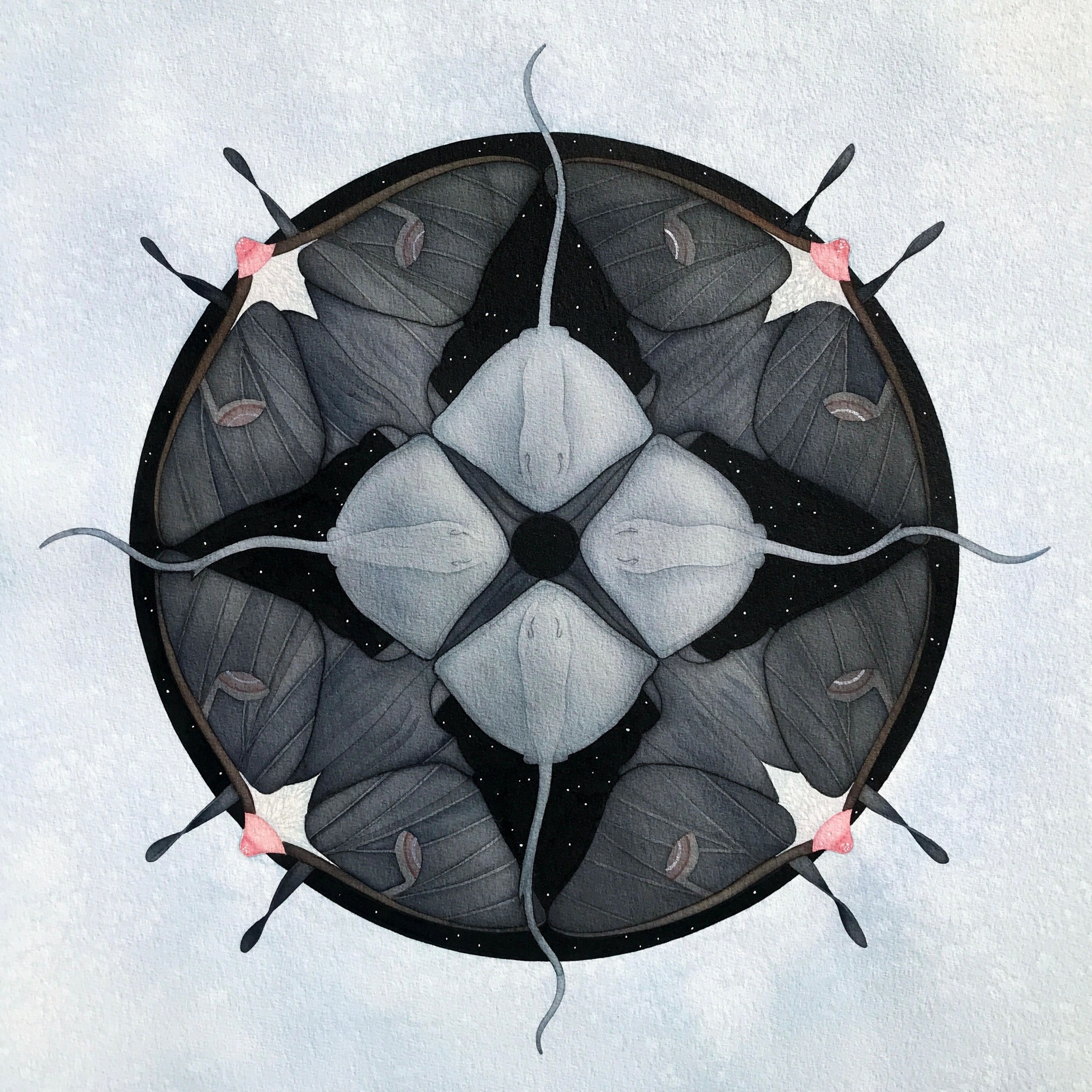
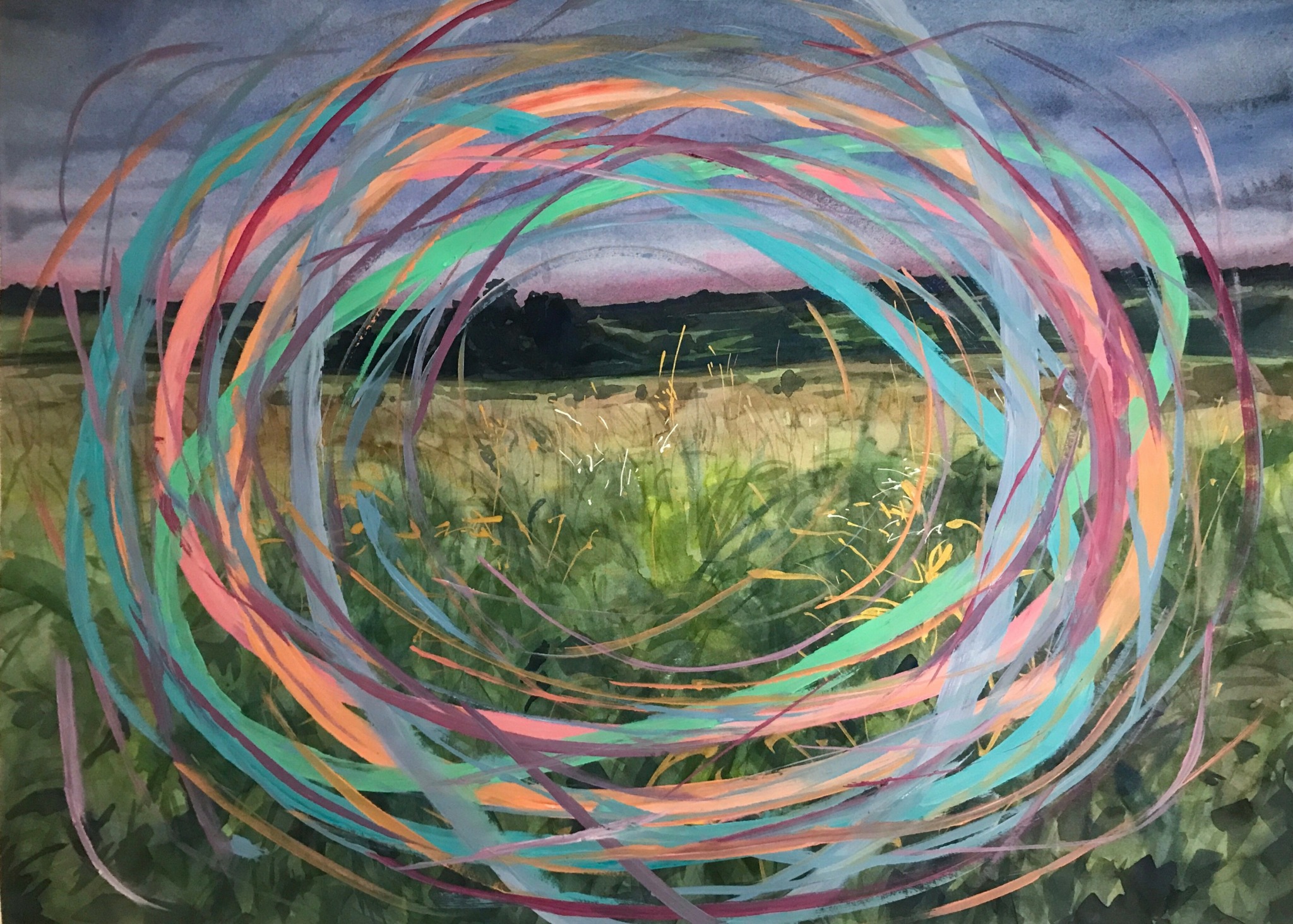
Image Credits
All images are my own