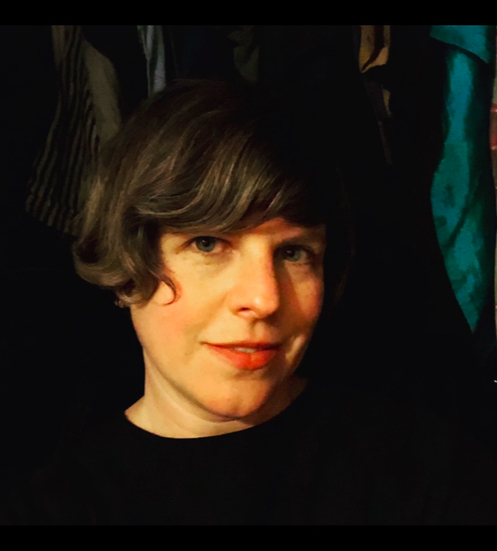

We’re excited to introduce you to the always interesting and insightful Liz Asch Greenhill. We hope you’ll enjoy our conversation with Liz below.
Liz, appreciate you joining us today. How did you learn to do what you do? Knowing what you know now, what could you have done to speed up your learning process? What skills do you think were most essential? What obstacles stood in the way of learning more?
As a teenager, I witnessed the queer adult world in peril from the AIDS crisis. The virus was so horrific in the way it attacked peoples’ bodies. Mental-emotional suffering was also extreme, from the physiological suffering and also from alienation by family members, and stigma from society, and lack of support from the government. I watched from afar, as a kid who was quite isolated from it in suburban North Carolina, but was hoping, or, expecting, to join this community when I came of age. In eleventh grade, I started volunteering with a local non-profit focused on HIV education and support for people and families and I started a club at my high school to spread awareness. We were met with resistance from the administration and I didn’t let that stop me. I admire the teen I was then, who had chutzpah and bravery to stand up for what she believed was right. As I got older, I found that harder to do. In my twenties, I tended to get overwhelmed by the enormity of it all, and I found it too daunting to take a public stand. I changed my approach and went to acupuncture school to get an education on one-on-one care. Chinese Medicine recognizes that shame, trauma, and hurt get stored in our bodies and contribute to illness. Eastern medicine is resilience-based and non-stigmatizing, teaching pattern recognition and protocols to address layers of suffering. This was revelatory and resonant. I knew that my calling was in working on these multi-faceted levels. I wasn’t just meant to help people feel less pain in their bodies, I could, with training, help them step into patterns of healing, and in doing so, feel more comfortable in themselves and in the world. This was the healing I needed too.
Great, appreciate you sharing that with us. Before we ask you to share more of your insights, can you take a moment to introduce yourself and how you got to where you are today to our readers.
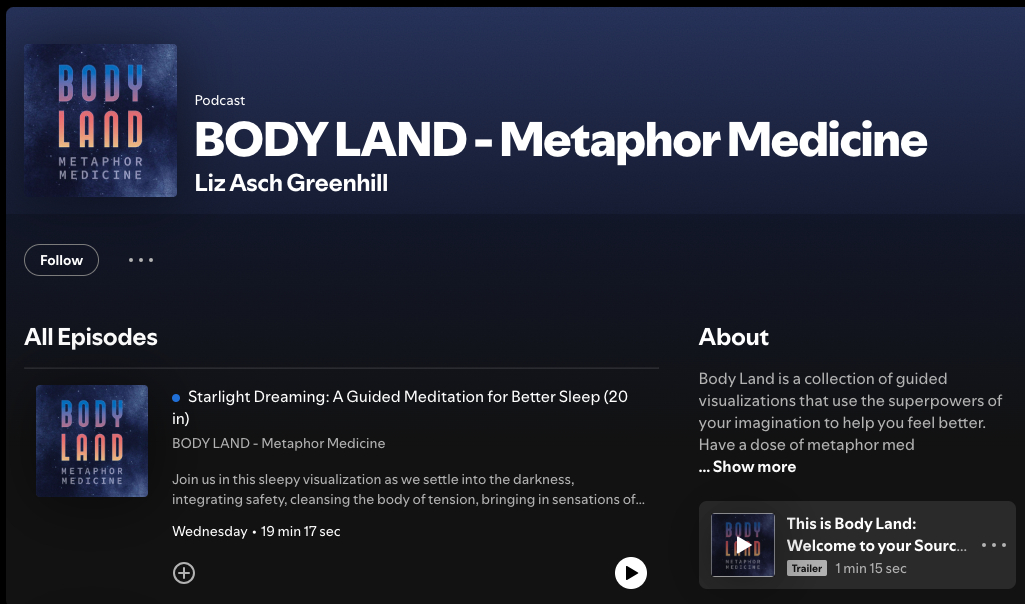
As I worked with people, I noticed that when our walls are up, we impose a resistance to the natural order of healing. These walls are made of language, stories we tell ourselves about our own faults and frailties, narratives that ingrain us with a constant sense of danger even when we are fortunate enough to live in relative safety. In essence, these stories make us take a lot for granted including our own talents and strengths. I noticed this tendency in myself and also in my patients. I got curious about changing the narrative. Influenced by EMDR therapy, which helped me a lot in my twenties when I suffered greatly with anxiety and depression, and inspired by magical realism and Surrealist art, in which we believe unrealities because they are composed with recognizable objects and places, I started studying how our imaginations can change the way we feel. I began to create what I call Salutary Storytelling and to integrate these stories into my sessions, and found that, for some, that wall of resistance magically dissolved when that listener began to embody notions of safety and belonging. Back then, I recorded some of the stories onto CDs to give to my patients, and now they have grown into Body Land Metaphor Medicine, a collection of Surrealist guided meditations informed by acupuncture theory and language-based somatic treatment for trauma. The podcast has are over 50 visualizations in English, 4 in Spanish, and they are all free on the podcast apps. I have this passion to help people realize that the language we use in our minds affects our bodies, and our own imaginations are incredible tools to practice nervous system regulation and build resilience, which are essential components of healing.
Can you share a story from your journey that illustrates your resilience?
Last year, as Oregon made history, I went through a certificate program to become one of the country’s first psilocybin facilitators. Renowned for reducing the symptoms of PTSD, magic mushrooms, as I have witnessed, help mend not just our bodies and mental-emotional wellbeing, but also our spirit, or soul. This most etheric layer of our being is recognized in Eastern Medicine and many pre-modern medicines as the part of us that gets damaged by trauma. When the soul is ripped, broken, or torn, it throws our whole self out of alignment. As a society, we have very few resources that help us mend our souls. Many of us share outrage for the many reasons we live in a soul-sick society, and compassion for the suffering people experience. I got curious about this auxiliary method and dove in to get the degree. It holds so much potential!
This Fall, after twenty years of study and hands-on patient care, at a chapter change in my life, sending my only child off to college, I followed through with a promise to myself, and took a leave of absence from my clinic. It seemed near impossible: to halt my practice, to prioritize myself, to stop earning an income. But I’d felt for a long time, that old calling, deep in my bones, to work on a collective level again. I needed time to shift my thinking and intentions and to slow down and catch my breath. I had promised myself that I would take a break if I needed it when I went through this life change and if I didn’t, I felt I would betray myself.
Learning and unlearning are both critical parts of growth – can you share a story of a time when you had to unlearn a lesson?
Somehow, the pieces magically fell into place. A colleague has been able sub for me as a stand-in practitioner. A few of the artists residencies and grants I had applied for came through. I downsized my living situation to reduce my expenses. I followed my heart, and my soul, and that sensation of flow that I feel when I enter the magical realm of salutary storytelling, or, what I call, metaphor medicine. In Chinese Medicine, we pay a lot of attention to lifestyle, and the balance of yin and yang. We live in a yang dominant culture, where productivity and effort and progress are valued much more highly than the yin, which is rest, hibernation, restorative practices, stillness, and reflection. It’s up to each of us to sometimes rebel or stand up to claim our yin for ourselves.
As I take my time off, I have projects I attend to between walks and retreats. I am continuing to write the book version of the guided meditation podcast and beginning to work with groups using psilocybin therapy. I am discovering less in the quiet hours of the day and that’s what I need. This is my act of rebellion and reclamation. To do what is counter to productivity, live in the yin, and float, as changes for my future come into focus. For me, building a new next chapter just couldn’t be done amidst the hustle and grind of daily working life. I had to stop the merry-go-round so that I could get off and wander, to be open to the next set of stories for my life, and see what presents itself in the flow.
Contact Info:
- Website: www.lizasch.com www.nightskyacupuncture.com
- Instagram: metaphor_rx
- Linkedin: https://www.linkedin.com/in/liz-asch-greenhill-a030a652/
- Twitter: metaphormedicine.bsky.social
- Other: Body Land Metaphor Medicine on
Apple: https://podcasts.apple.com/us/podcast/body-land-metaphor-medicine/id1490808299Spotify: https://open.spotify.com/show/3U299rQp2Id0g4SpOCEyTu?si=-FPhxCW5SZSOj14MOJ3pDQ&nd=1&dlsi=c2d6041607184d1f
Amazon: https://music.amazon.com.mx/podcasts/f4e803b3-5c5c-4fc7-b6d4-3c72cf747654/body-land—metaphor-medicine
or directly on the Night Sky Acupuncture website: https://www.nightskyacupuncture.com/bodyland