

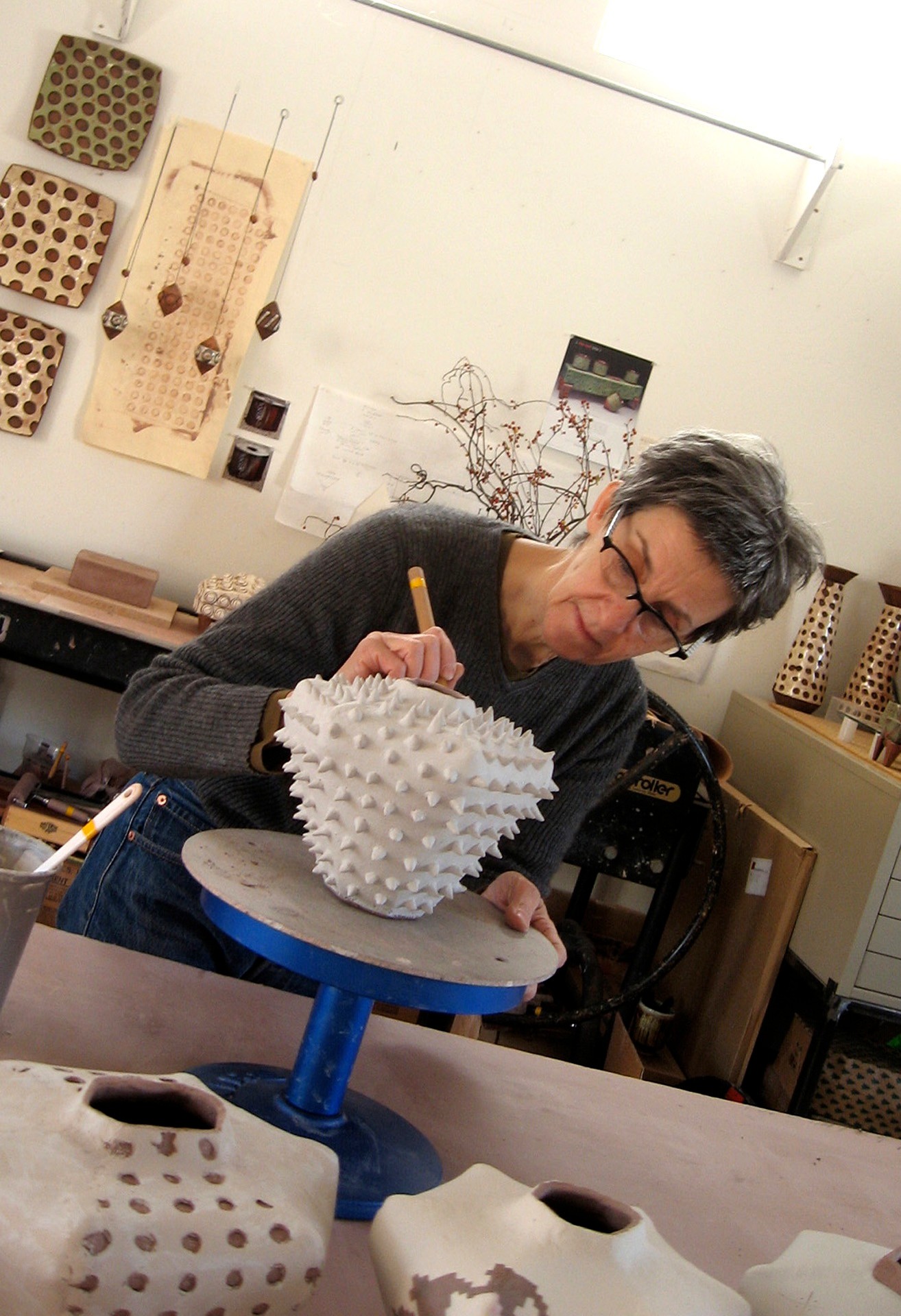

We caught up with the brilliant and insightful Lisa Pedolsky a few weeks ago and have shared our conversation below.
Alright, Lisa thanks for taking the time to share your stories and insights with us today. Can you talk to us about how you learned to do what you do?
I’ve been on a great journey as an artist. As a kid I identified as an artist, or perhaps as someone who loved “doing art.” Clay, my medium for the past 25 years, appeared on my radar when I was only five years old and I was wowed. By the time I was a teen I was involved in ceramics in school and also in private classes. I had the clay bug, as they say.
My formal art education took place in the 1970’s at California College of Arts and Crafts (now California College of the Arts) and at University of California, Berkeley. In the 1950’s there had been a revolution in clay in Southern California where a group of artists challenged the conventional view of clay as a craft medium. They began exploring scale, abstraction, and sculptural forms, ultimately elevating the status of works in clay to works of art that found their way into galleries and museums. They changed the face of mid-twentieth century American ceramics. Peter Voulkos, founder of the California Clay Movement, and Viola Frey, another luminary, were teaching in the Bay Area by the 1970’s and I had the good fortune to study under both of them. By the time I graduated I had a strong foundation as well as an expansive view of the possibilities in ceramics.
Changes were afoot after receiving my art degree and clay went on the back burner for a time. There was international travel, relocating to the Southwest and the need to make a living by whatever means necessary. These events didn’t take me from making art but the lack of access to any kind of ceramics studio kept me from clay.
Ultimately, I built a studio and once I had this dedicated space I was able and ready to return to clay. Diving in after a long pause meant relearning my craft. I had a studio to set up with equipment and materials, and there were some big decisions to be made. What clay body would I work with – earthenware, stoneware, porcelain? What about firing method? I needed to decide on a kiln. The first thing to do, I decided, was to head off to an immersive, two-week ceramics workshop. There, I had enough of my questions answered that I was set to get in motion upon my return and I hit the ground running.
As it had turned out, that first workshop far exceeded my expectations and so over the next several years I continued to travel to workshop intensives and studied under some of the most accomplished ceramic artists in the field. Essentially, between long stints of hard work in the studio I was heading off to continue my education.
I researched. I looked at countless images of ceramic works – historic and contemporary – and learned about who made them. I worked and cultivated my skills and my voice. The ceramics community is a generous one and I contacted artists far and wide for guidance and advice when I needed it. Refinement came and I began applying to juried shows and art festivals, and approached galleries. I made connections, got feedback, found success and disappointment and kept forging on.
There’s no substitute for diligent work and as the years have gone by my skills have become fine-tuned and the work has matured. I now teach workshops like those I once enrolled in and I learn from these experiences, too. I have clarity in what I want to convey through the work. I’m willing to take risks, knowing that if I fail I can try again and that there’s always something to be learned from failure. I will continue to learn my craft.

Great, appreciate you sharing that with us. Before we ask you to share more of your insights, can you take a moment to introduce yourself and how you got to where you are today to our readers.
I am a career artist working primarily in ceramics. The creative path has always been a strong suit for me, going all the way back to childhood. In elementary school the highlight of every week was the hour spent in the art room and I was astonished to learn that not all of my peers shared this passion! Spending my first eighteen years growing up in and around New York City provided an abundance of opportunity to participate in the arts. I was also fortunate to have a family who supported and encouraged my interests, whether it was by providing me with crayons and paints, visiting museums, or going to the ballet. There was a robust arts curriculum in the public schools I attended and by the time I was in high school I was enrolled in every art class available to me. University meant pursuing an art degree without having to think twice about it. I think it was both nature and nurture that set me on my path as a visual artist.
After getting my art degree in California my art path became somewhat circuitous. I had some fulfilling years working in restaurant kitchens, discovering that culinary arts could easily have been a chosen path. Years later, after a move to Southwest Colorado, my child began elementary school and I got involved in teaching art voluntarily in the classroom. There were no art teachers in the elementary schools at that time and I decided that these kids would get art even if it meant doing it myself! I collaborated with some great classroom teachers and really loved the experience. During this time I became aware of a state-funded program where professional artists could be brought into the schools. I wrote two grants to get such artist-in-residence programs in place over two years, and facilitated those programs as well. Paid opportunities to teach children’s art workshops both in the public schools and privately followed and after several years I acknowledged that it was time to shift my focus back to my own work.
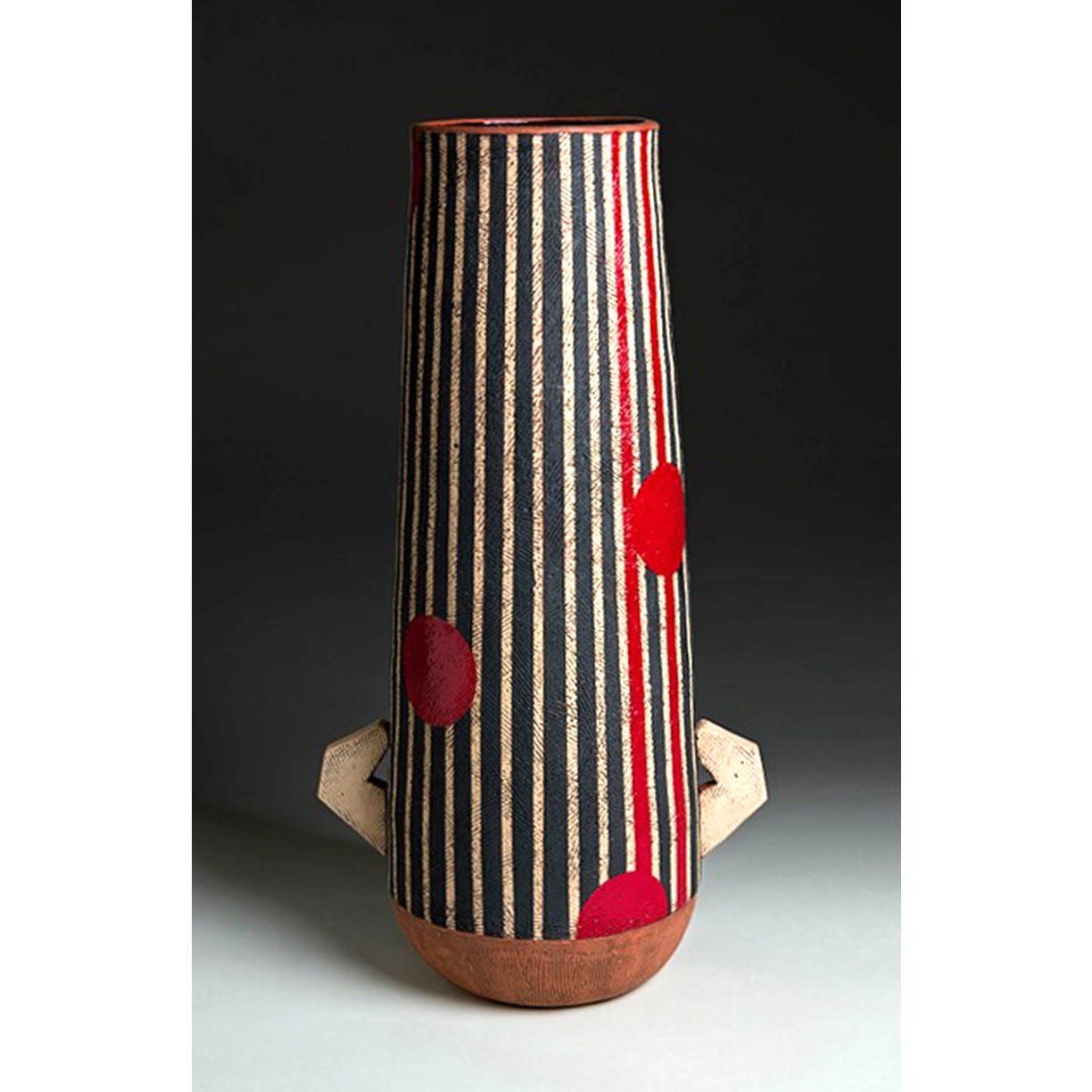
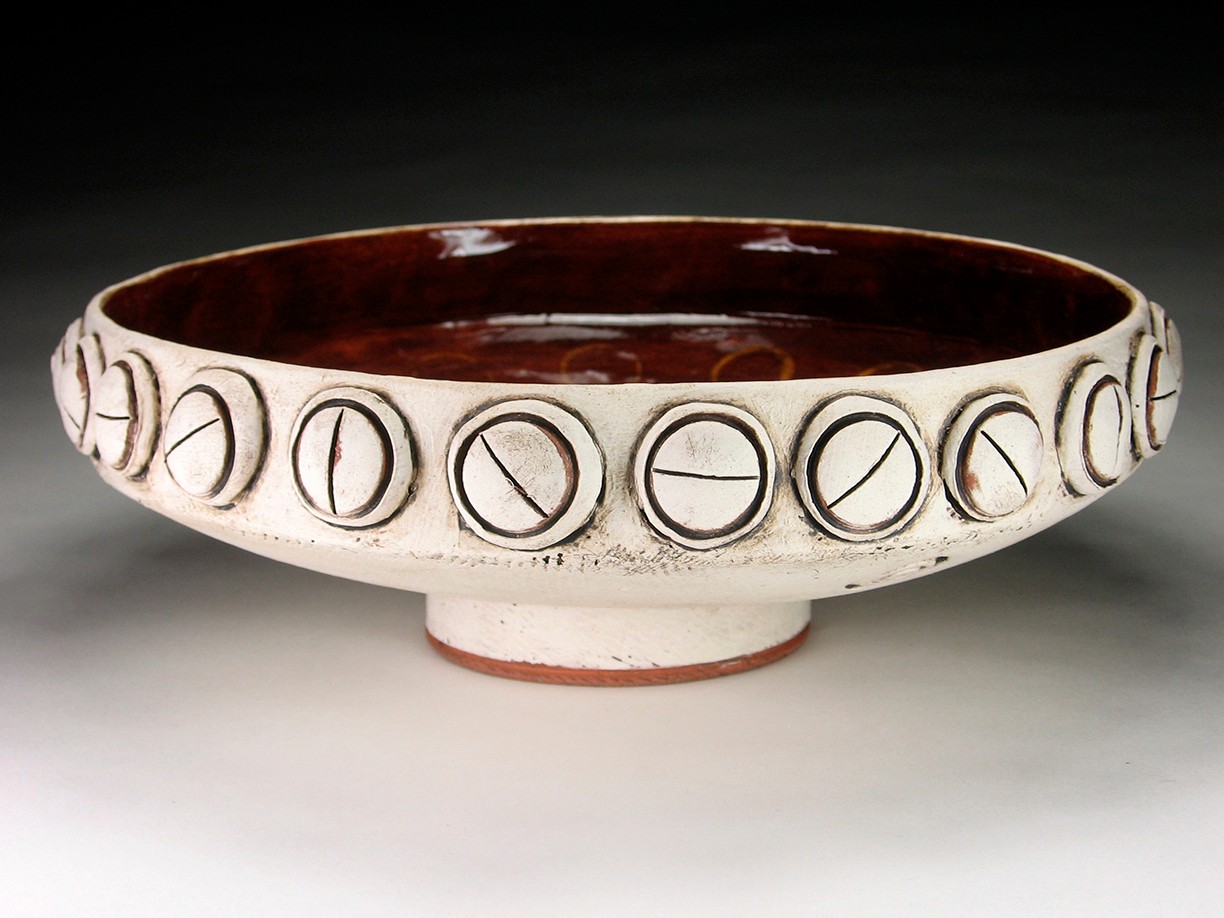
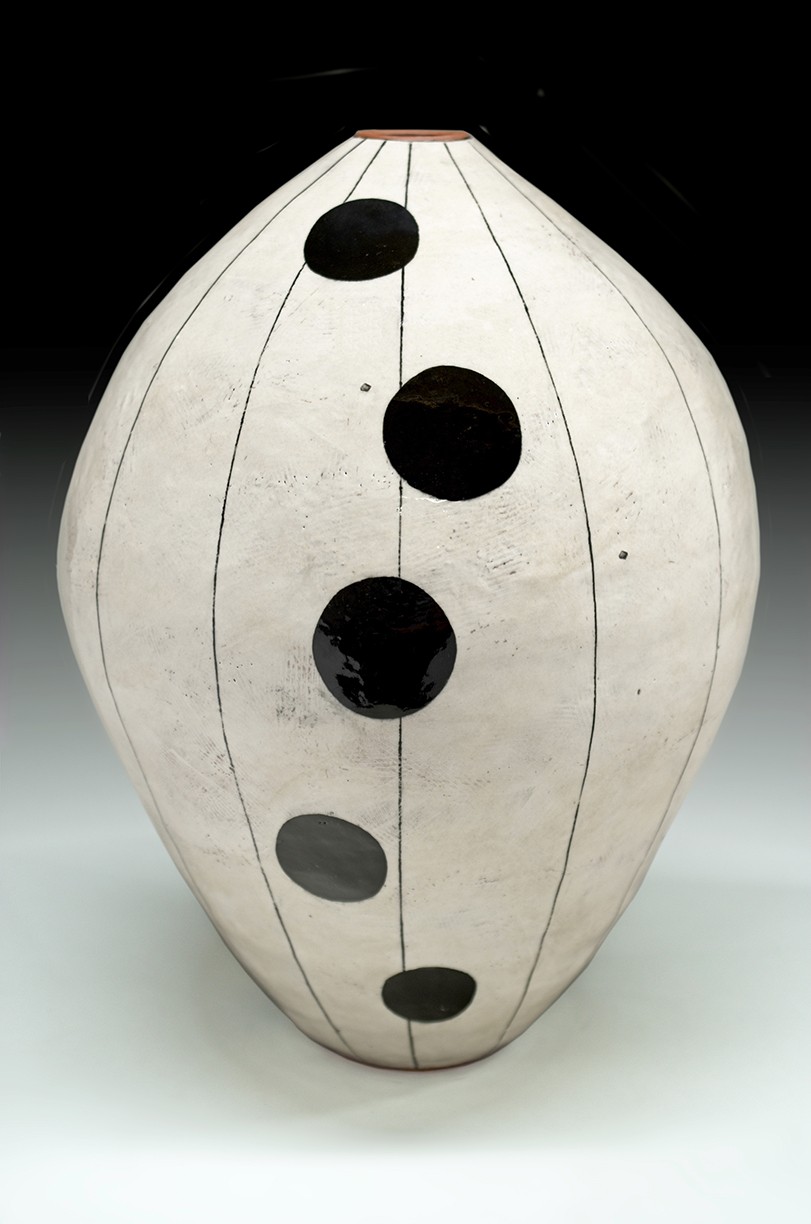
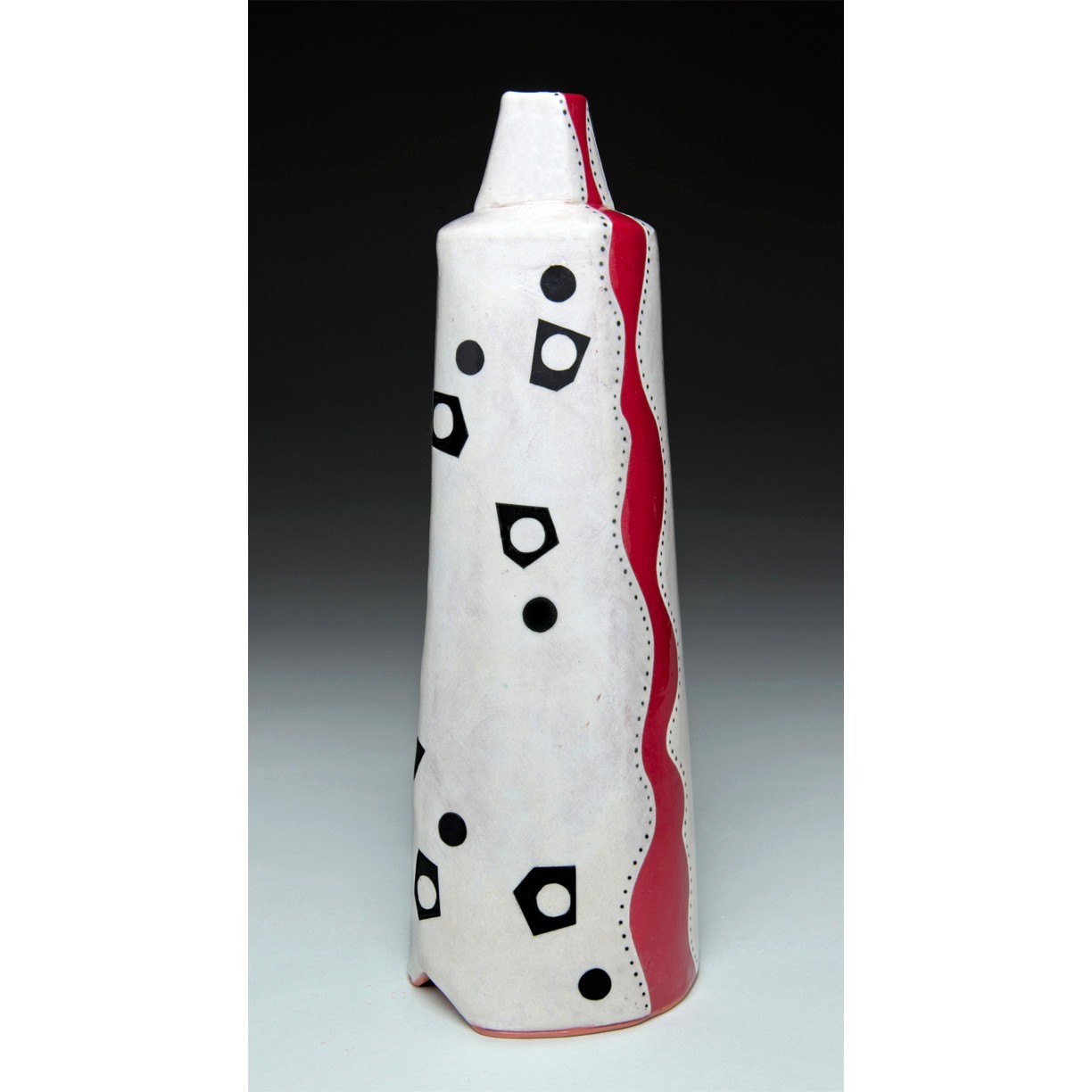
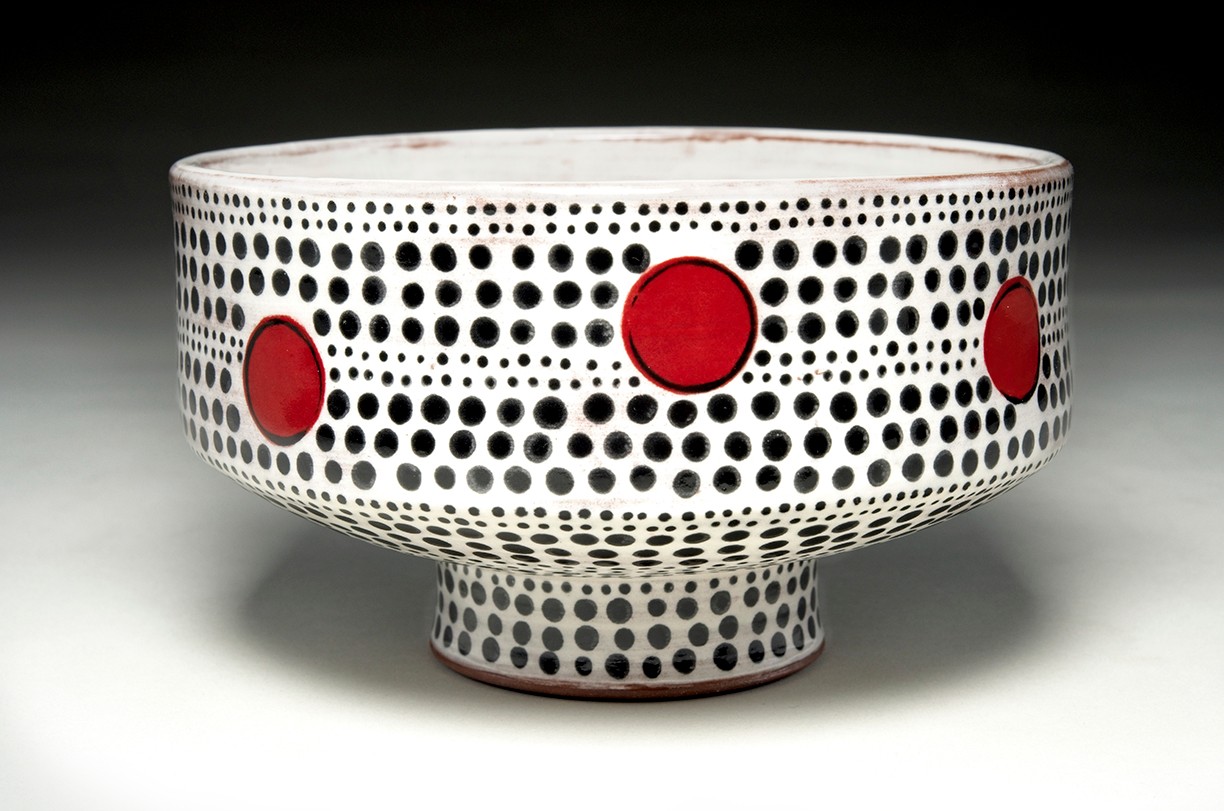
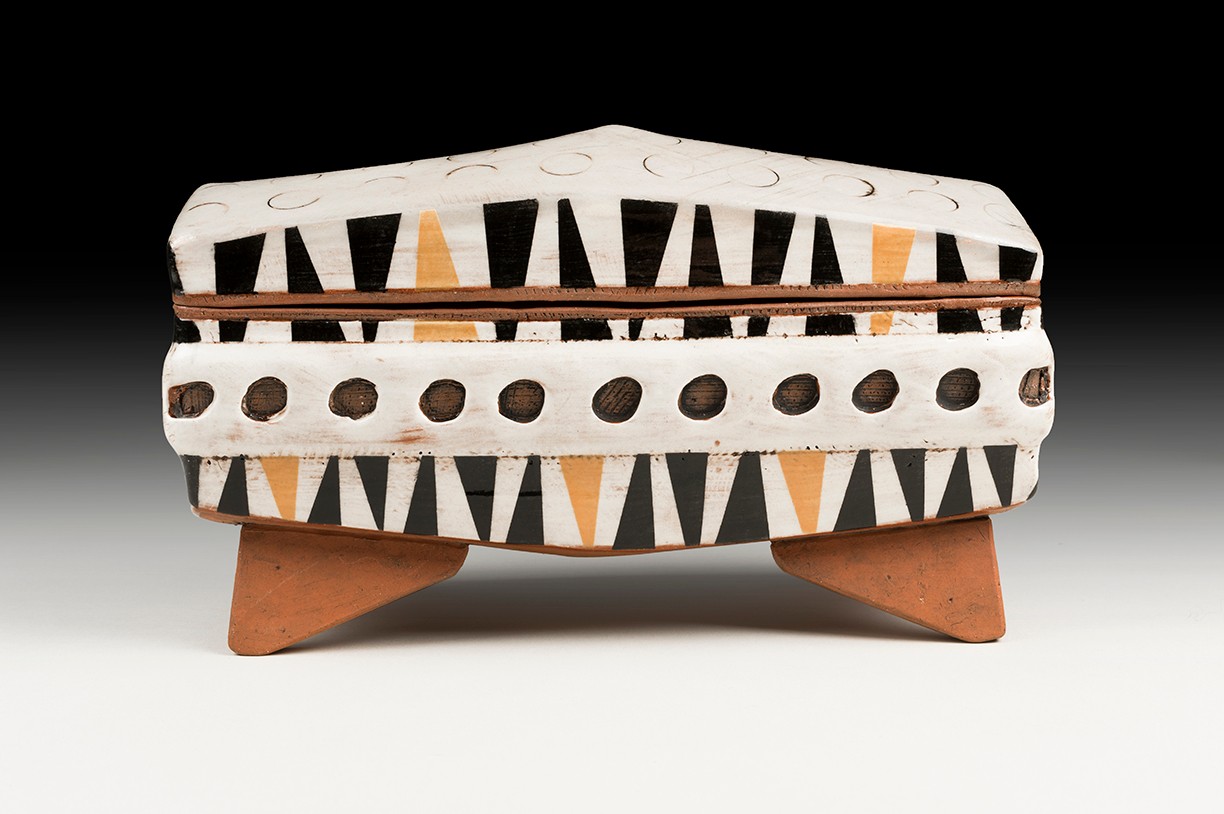
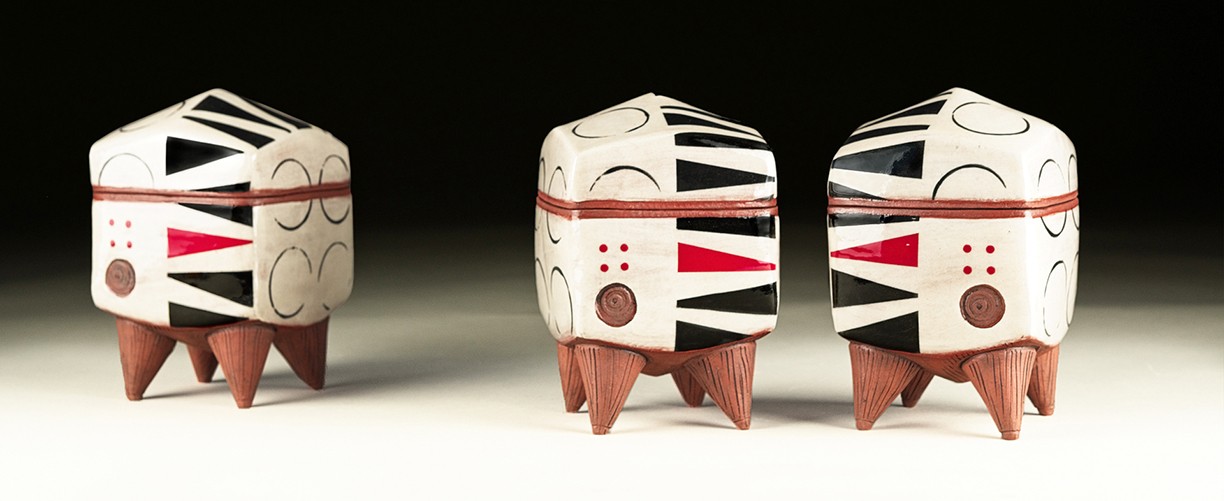
My formal education in fine art has contributed greatly to the way I approach my medium. The hand building methods I employ are similar to package design and dressmaking, contributing to the distinctive style of the work which straddles the line between fine craft and art object. With every piece, I consider form, surface and functionality. I approach the work like a sculptor to create the three-dimensional form; like a painter where the surfaces act as my canvas; and like a designer or engineer, ensuring that the perceived function of a piece works precisely in that way.
A number of years ago I made the decision to market my work exclusively through galleries and have forged some wonderful working relationships. This allows me to focus most of my time and energy on my studio work. My motivation is to express myself through the creation of ceramic art that will find its way out into the world where it can then be discovered by others.
In addition to ceramics, I’m self-taught in hand bound books and I also work in mixed media and collage.
Do you think there is something that non-creatives might struggle to understand about your journey as a creative? Maybe you can shed some light?
This is a great question that I’d like to turn on its head for the sake of challenging those who identify as non-creatives and offer a different view. In so doing I hope to provide some understanding of my creative journey as well.
I would argue that each of us is creative, but not necessarily in ways that we might typically think of. A definitive source on this topic is a fantastic book called The Element: How Finding Your Passion Changes Everything. The author, Ken Robinson, describes what it’s like when each of us is in our “zone,” whether it’s making art, playing a sport, solving a math problem, or mapping a billiards strategy. When we’re in the zone the awareness of the passage of time often falls away and we’re singularly focused, with no other thoughts traversing our mind. In my studio this experience is neither all the time nor every day but those moments of getting lost in my work are not only deeply satisfying but often open me up to discovery and the things that inspire and motivate me. It’s a matter of getting out of my own way, consciously or not, and it seems to get better with practice. These magical moments of great focus punctuate the less glamorous aspects of my work which are also part of the package.
I love getting to know how the creative minds of others work. (Remember, that’s all of us.) Three who come to mind are: a friend who is an avid international traveler and has an uncanny knack for connecting authentically with people, place and culture wherever she goes; a car mechanic who thinks so deeply about his work that it feels as though we are talking art together; and a baker who I consider adventurous and courageous in the way she approaches her craft. I’m inspired by these people and I can relate to their passion, commitment and openness to think outside the box. Essentially, we are all creatives working in different mediums.
Because my creative path is also my business path, I have two concerns to keep in balance. I take great care in managing my business responsibilities and remaining accountable to those I conduct business with. At the same time, I continually remind myself that my prime motivation is the ceramic work itself. It’s my form of self-expression and for the work to remain authentic I must stay true to that mission.
Is there a particular goal or mission driving your creative journey?
There is a saying, the journey is the destination, and every day when I walk into the studio I arrive to see what happens. In each new piece I make there is some exciting discovery, whether it’s tapping into life’s stories that find their way into the work, opting for a change in plans if I’m either stuck or struck by a different approach, or cultivating my technical skills. The cyclical nature of my work involves designing, constructing, glazing and firing. Finished work is sent off to galleries and I then begin anew. Rather than a mission driving my creative journey, my mission is the creative journey. My continued development as an artist is paramount and the potential for learning and growth is infinite. Therefore, there is also no final goal because there is no end to the possibilities.
Contact Info:
- Website: www.lisapedolsky.com
- Instagram: @lisapedolsky_twofishstudio
Image Credits
Waldemar Winkler