

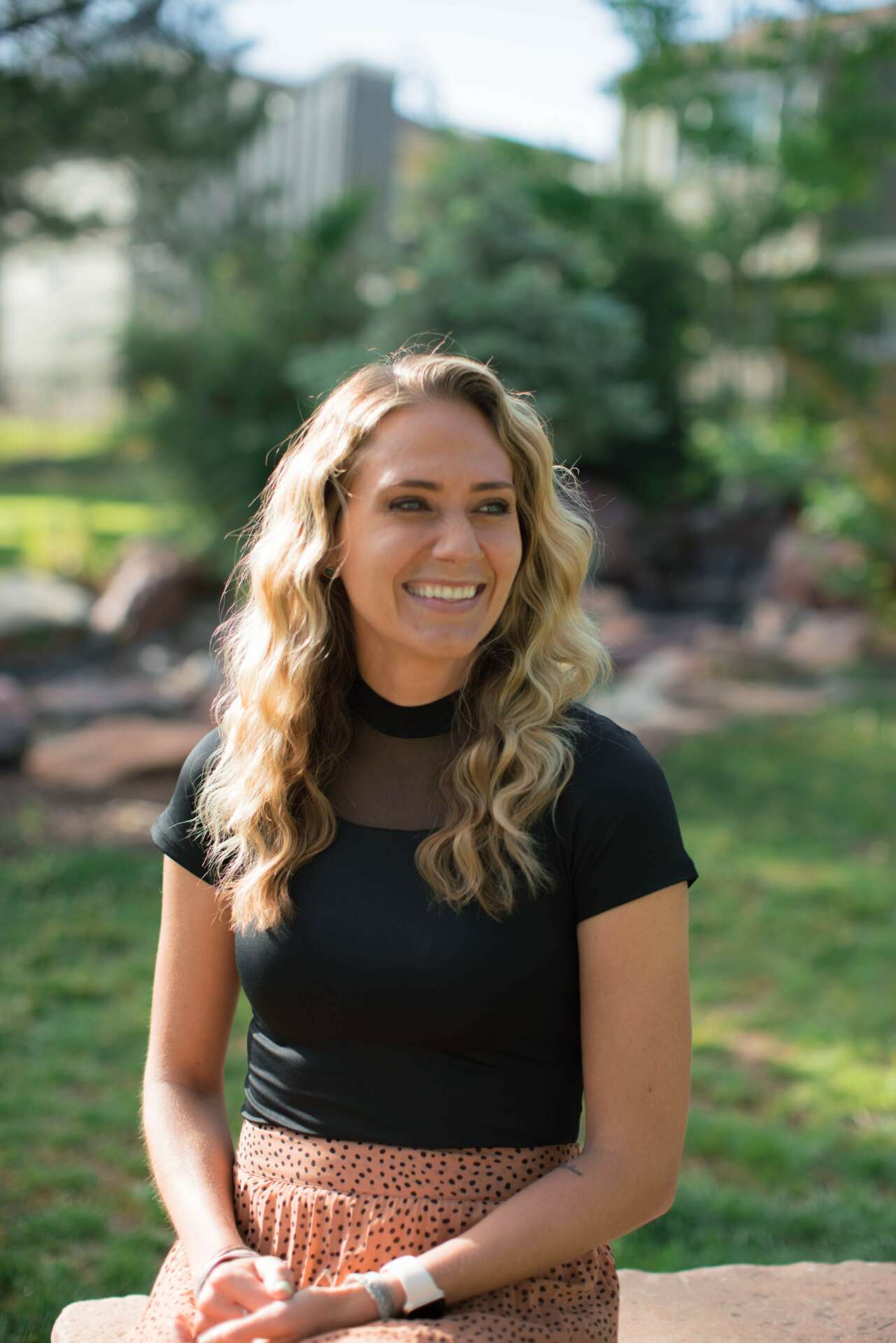

We caught up with the brilliant and insightful Lisa Forbes a few weeks ago and have shared our conversation below.
Hi Lisa, thanks for joining us today. As always, we appreciate you sharing your insights and we’ve got a few questions for you, but before we get to all of that can you take a minute to introduce yourself and give our readers some of your back background and context?
My name is Lisa Forbes, and I am an assistant clinical professor at the University of Colorado Denver. I teach in the mental health counseling program which gives me opportunities to teach masters level students to be counselors, supervise clinicians, do research and writing, and engage in my own clinical practice. I am a Licensed Professional Counselor as well as a Registered Play Therapist. Currently, my clinical practice is doing Play Therapy with young children which is mental health counseling for kids. I am a co-founder of a global faculty group called Professors at Play. Professors at Play is a platform to for faculty to learn and share about the practice of play in adult learning in higher education. Play is not only more effective at teaching concepts, but it also challenges norms of academia. So basically, I do a lot of different things but I guess underlining all of it is advocating for people, promoting human growth and wellness, and interrogating norms and status quo’s.
Have you ever experienced a time in your career that felt like it was taking a U-Turn?
A U-turn that I’ve experienced in my professional career actually wasn’t that long into my career. I was three years into my current position as a university professor, and I had already become disillusioned by academia. I am a Neurodiverse learner, and so schooling over the course of my life has been an unforgiving and dehumanizing journey. Traditional forms of education are not made for people like me. Somehow I found myself as a university professor, probably to put myself in a position where I can subvert the system. But when I first started, I had lost sight of that because I’ve learned that status quos are powerful, influential, and in most cases, invisible. We often don’t realize we are subjected to the status quo because they are so normalized, we don’t even think to question them. So when I first got to academia, I fell into the status quo as a faculty member. But it wasn’t fulfilling for my soul so I quickly became fatigued and disillusioned by my job. The U-turn came when I went to a conference session on Fun in Higher Education. I’ve never heard anyone talk about those two concepts together. The playful side of me started to come alive when I heard that talk. It completely changed how I saw my job and it allowed me a structure or base to challenge the traditions of higher education to explore how else it could be. I’ve been on this journey of infusing play and playful pedagogy into my teaching and academia for several years now and it has absolutely created a U-turn in my career. I find more joy in my job, but I also get a certain type of pleasure out of challenging traditions and status quos which I don’t think benefit everyone. I guess what I’ve found is that U-turns in life and career are less of a U-turn and more about finally becoming in line with the “right” direction for who you are and what aligns with your soul.
What sets you apart from others in your field?
It’s hard for me to fully understand what sets me apart from other people in my field partially because I am my own norm, therefore, in some ways, I am invisible to myself. But I believe something that makes me different in my field is that I’m constantly questioning “what is,” and trying to figure out new and innovative ways to be more effective. I think in a lot of industries there’s a tendency to revert back to norms or get complacent. I actually find joy in challenging status quos, which probably drives some people crazy, but it might be something that sets me apart in some ways. The thing I’m most proud of in my work is the faculty group that I co-created called Professors at Play. I’m proud of it because the foundation of the group is play and playful learning. That way of teaching and learning is not all that common, so I enjoy the rebellious aspects. I’m also proud of it because as a platform, we have around 800 faculty from across the globe who are a part of our Professors at Playgroup. It feels really good to have a platform that can support so many people, and simply provide a platform for people to talk, ask questions, and share the playful things they are doing. It feels like a community of practice in a lot of ways. A lot of people talk about the importance of community but Professors at Play is actually doing that and providing that opportunity for people. The other thing that makes me proud of Professors at Play, and all that it’s become is that as a faculty member, there are certain things that I need to complete for my job, and while I get to report Professors at Play, as something I do in my job on my annual merit review, I don’t *have* to do professors at Play. It’s something that I do out of a desire to do it. It’s really a passion project of mine and in life, I think it’s easy to get too busy that I could easily just do the bare minimum or focus my time on other things that I don’t find as meaningful. But I spend time on this project because it’s important to me and I think it’s important to those that use our services. One thing I’m hoping to do is expand Professors at Play beyond higher education and play in learning, and become another voice in the general play community advocating for play in adulthood in general. We’re starting to work on some of those things but that’s the ultimate goal.
We’d love to hear a story of resilience from your journey.
Sometimes I struggle with this idea of resilience. Not because being resilient or overcoming struggle is a bad thing, but sometimes I think the culture in which we live creates an unnecessary struggle for individuals to then overcome. So, I’ve had many instances where I’ve been resilient, but I often just wonder if we shifted our focus from expecting people to be resilient to changing the systems in which we live so people can function more effectively without as much struggle. So, for example, I’m a neurodiverse learner, and formal education was not made for my brain and the way that I think or the way that I learn. The system is broken, not my brain. But because my brain learns differently than traditional education teaches, I was put in a position where I needed to call upon my resilience to overcome struggling in school, to overcome some pretty low self-esteem and confidence issues as a result of feeling dumb. So I did that because I had to. I struggled through it. I figured out different coping skills or study skills that work for me. I figured out that once I found a passion, many of my barriers to learning were lessened because my focus was more fine-tuned. I learned that medications do wonders for my ability to focus, organize, and block out external and internal stimuli that are distracting. I thought my way through 12 years of college and graduate work to get to the place that I am today with a Ph.D. So in that sense, I showed great resilience to overcome those learning struggles and barriers, but my issue is — why do we put people through that struggle when we can just change the systems to better support differences within people? Not to say that I’m not proud of the hard work that I put in and not to diminish the fact that I become a stronger more confident person – but that was because I was able to overcome that by myself. I wouldn’t take any of that back because it’s made me who I am today. But it raises a larger question and issue of our social tendency to put the onus of well-being on individuals to have to be resilient to survive. It’s great for people to overcome and be resilient on a personal level but what if we help them out by adjusting the systems in which they live that are biased or unfitting for them?
Training and knowledge matter of course, but beyond that what do you think matters most in terms of succeeding in your field?
What I think is most helpful for succeeding in any field has little to do with professional skills or training. I think those things are important and useful but I think what’s more important is maintaining a playful mindset and outlook as adults. Play is often minimized in adult culture. There’s this belief that play is a waste of time and is only for silly kids. That narrative then restricts adults from being playful because we want to be professional, to be taken seriously, and not waste precious work time. Yet, when we stop playing our brain actually reshapes itself to be less playful and more serious. But without a playful brain, we struggle to do some very important things in our life and in our work. With a more playful brain, we can approach life and work in a different way. Playfulness has been described as approaching life in a more lighthearted way, it evokes benefits of personal and relational well-being. It helps us reduce stress and improve coping. It helps us reframe situations to see them from multiple perspectives or from a flexible viewpoint. Playfulness helps us experience things as interesting or stimulating instead of boring or stressful. Those with a playful mindset tend to be more lively and experience, more joy, even in the mundane moments of life. People describe playful people as gregarious, energetic, and open to new ideas. Playful people tend to be less constrained by norms and one way of thinking, which opens up the possibilities of new ideas. This is a huge factor for life but also for a career because when we’re more playful, we’re more flexible, creative, and more likely to have innovative ideas. Those are the things that anybody needs in any line of work, and the benefits of those things go way beyond any formalized training or professional scale one to learn.
Contact Info:
- Website: www.professorsatplay.org
- Instagram: @professors.at.play
- Facebook: Professorsatplay
- Twitter: @PlayProfessors
- Youtube: https://www.youtube.com/@ProfessorsatPlay/featured
- Other: The link to our book. There’s a free download: https://press.etc.cmu.edu/books/professors-play-playbook
Image Credits
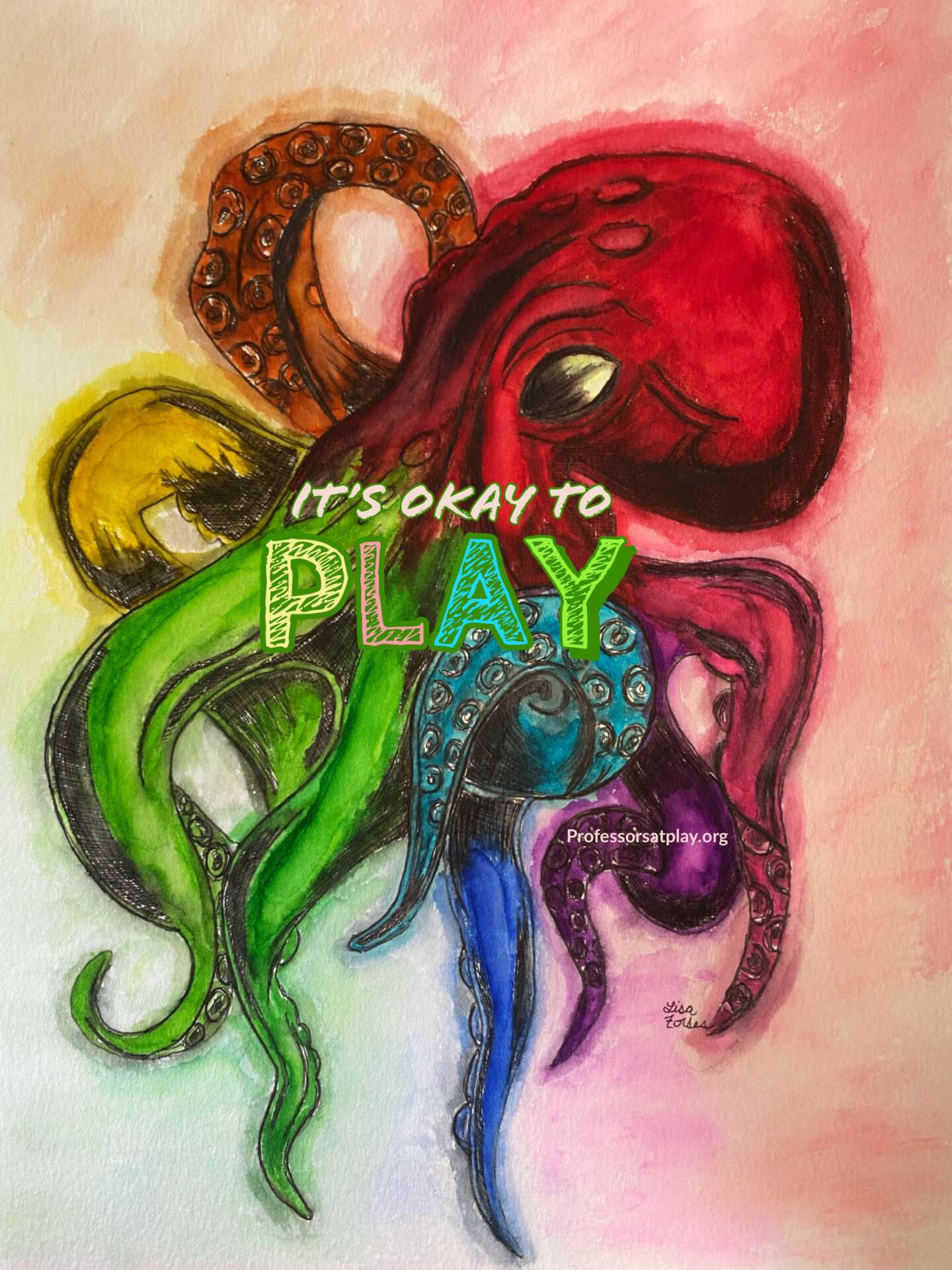
I drew and painted the picture of the octopus. It’s one we turned into a Professors at Play sticker and it’s the cover of our Playbook. The professional photos were taken at my work at CU Denver. They give to us to distribute as needed.