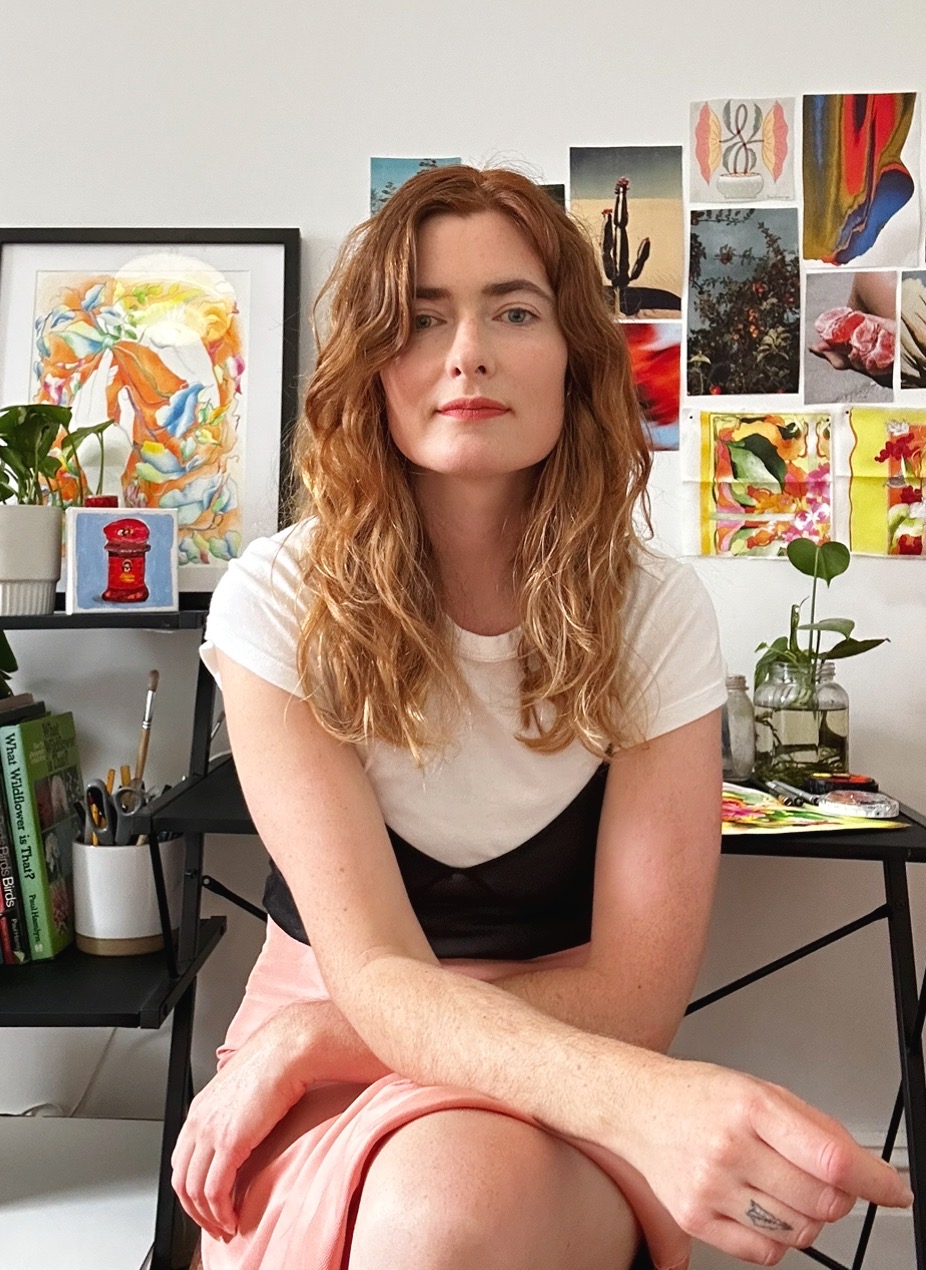

We were lucky to catch up with Lilly Platt-hepworth recently and have shared our conversation below.
Lilly, thanks for taking the time to share your stories with us today Let’s start with important influences in our lives. Is there a historical figure you look up to?
Full disclosure: Florence Broadhurst is sort of known for her questionable character. A natural-born performer, she spent the early 1900s traveling the world, reinventing herself wherever she went. Her final and perhaps most successful reinvention was her Sydney-based wallpaper business, which peaked in popularity during the 1960s and 1970s. Her designs, though created by lesser-known in-house artists, were sold under her name and were featured in luxury homes, hotels, and commercial spaces worldwide. While her work is now viewed with more scrutiny and her ethics are in question, I’ve always admired her tenacity and boldness to live loudly and unapologetically—qualities I aspire to. She never seemed to doubt her ability to achieve greatness something that has always fascinated me.
As a child, like many creative kids, I was taught that “art” wasn’t a viable career. I often heard more about what I couldn’t achieve than what I could, and while those lessons in realism had their place, they made it hard to envision a future in the area of work I was most interested. It wasn’t until I was 23 that I pursued Graphic Design at university, and only years later did I find my way to textile and surface design, where I now focus most of my work. Though I’m settled in this field, it took years to center myself as both a creative professional and an individual. It’s only recently that I’ve found a bit of the boldness to put myself and my work out into the world and to be confident in doing so. Had I been as daring as Broadhurst (fraudulence aside), perhaps it wouldn’t have taken so long to let myself shine a little.
Florence was known for constantly reinventing herself with each career shift—new name, new story, new look, new project, even new hair. She fully embraced each character she created, doing whatever she wanted without fear of doubt or criticism, especially at a time when society didn’t so easily allow women that freedom. I think about that often. While her methods and authenticity as a designer were questionable, she stands as a symbol of shedding self-doubt and doing whatever you damn well want in a world that urges caution.
Lilly, love having you share your insights with us. Before we ask you more questions, maybe you can take a moment to introduce yourself to our readers who might have missed our earlier conversations?
I’m an independent Australian Designer and Illustrator specializing in fabric print designs for the fashion market.
My journey began while working full-time at a small design and print shop in a town west of Sydney, Australia, where I grew up. After studying Graphic Design, I spent my days working on mind-numbing real estate marketing and funeral booklets, and at night, I’d obsessively draw flowers whenever I had the chance. A chance encounter with talented textile designer and Illustrator Edith Rewa made me realize I could actually put my floral illustrations to good use. Not long after, I landed a job at the well-established print studio Longina Phillips Designs in Sydney, which happened to need my specific drawing style at the time. I really knew nothing about textile design beyond how to draw flowers and use photoshop, so I attribute most of what I know to the time I spent working there alongside incredibly talented designers who guided me through those crucial learning steps.
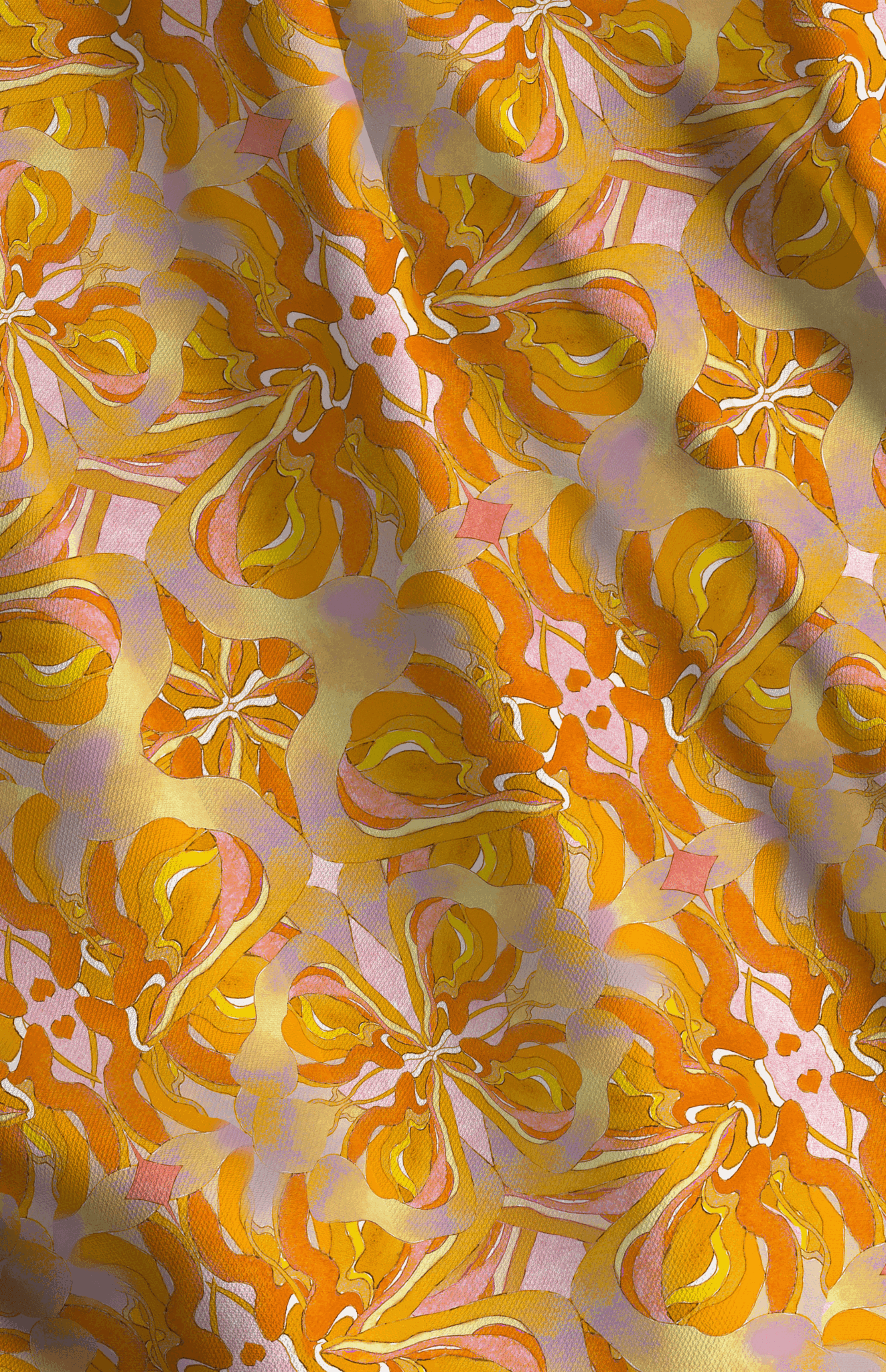
That experience, along with my time at a London print studio and working in-house for the swimwear brand Seafolly, paved the way for my current freelance career, where I sell designs primarily to women’s fashion brands, take on illustration and personal commissions, and collaborate on high-end fashion projects.
Today, I find a lot of satisfaction in working across different areas. I love the balance between the problem-solving involved in commercial print design versus the playful self-expression of creating illustrations and art pieces. I once thought it was important to “pick a lane,” but as I’ve progressed, I’ve come to appreciate the flexibility of pursuing multiple avenues and the fulfillment that comes from satisfying both sides of my creativity.
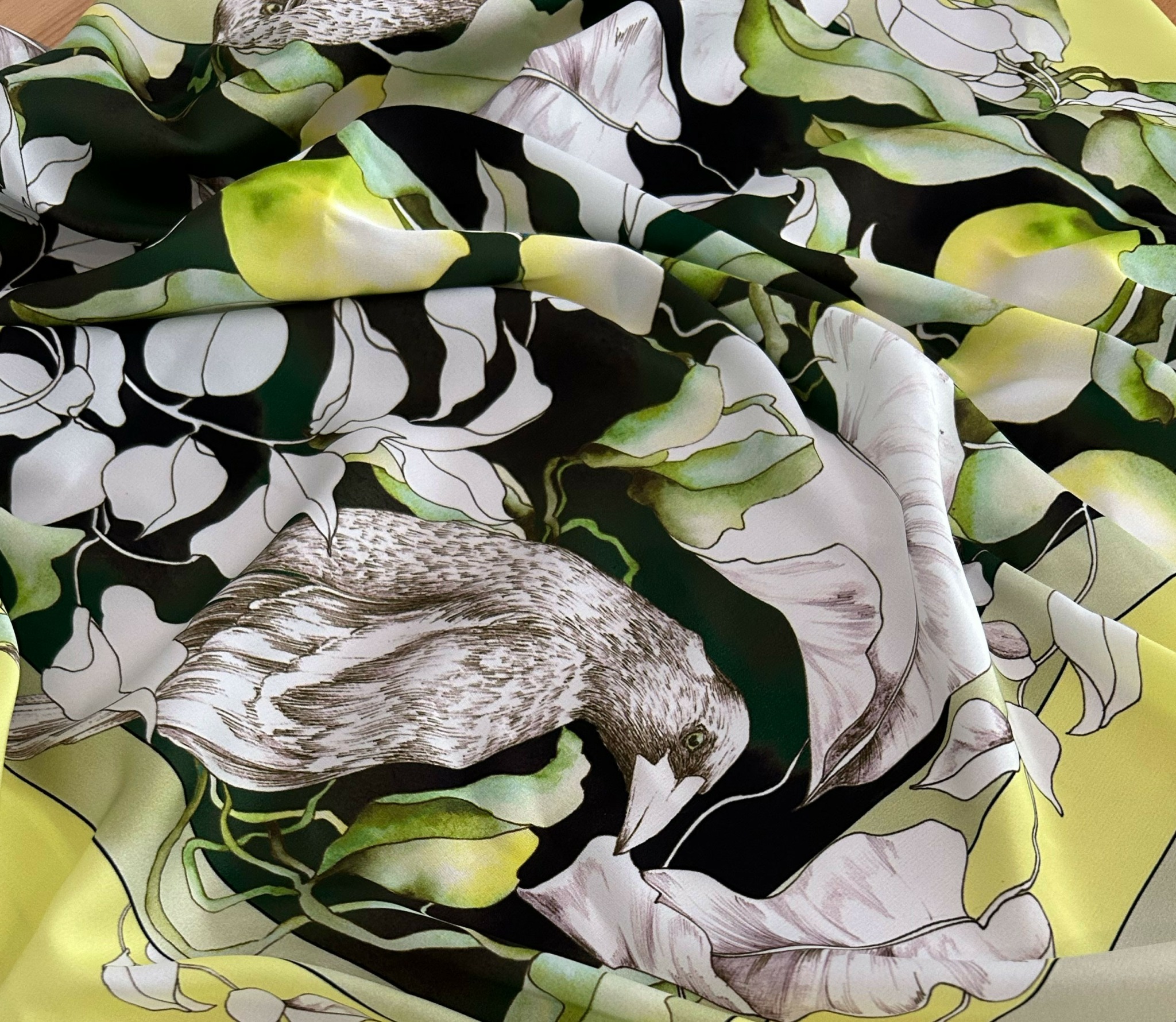
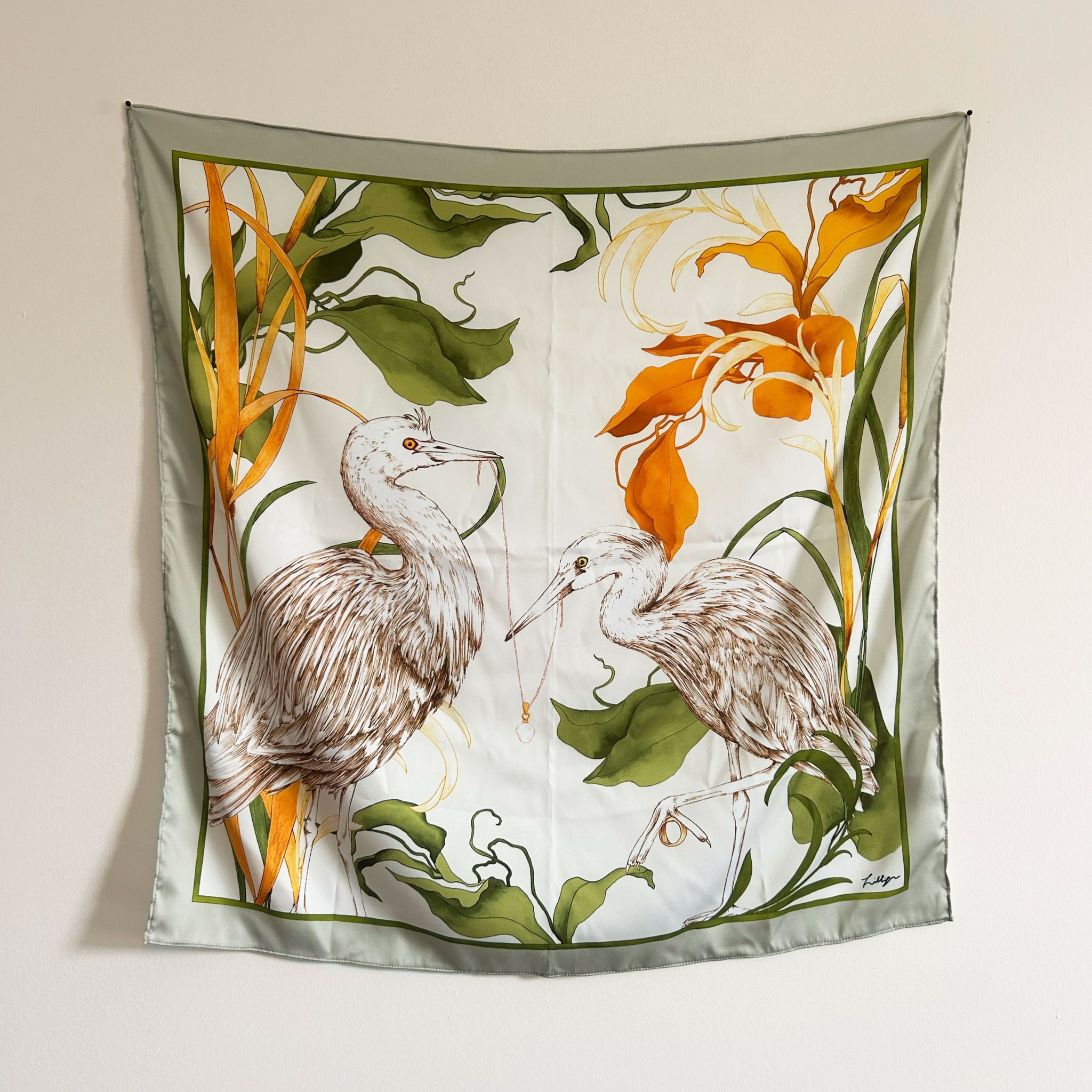
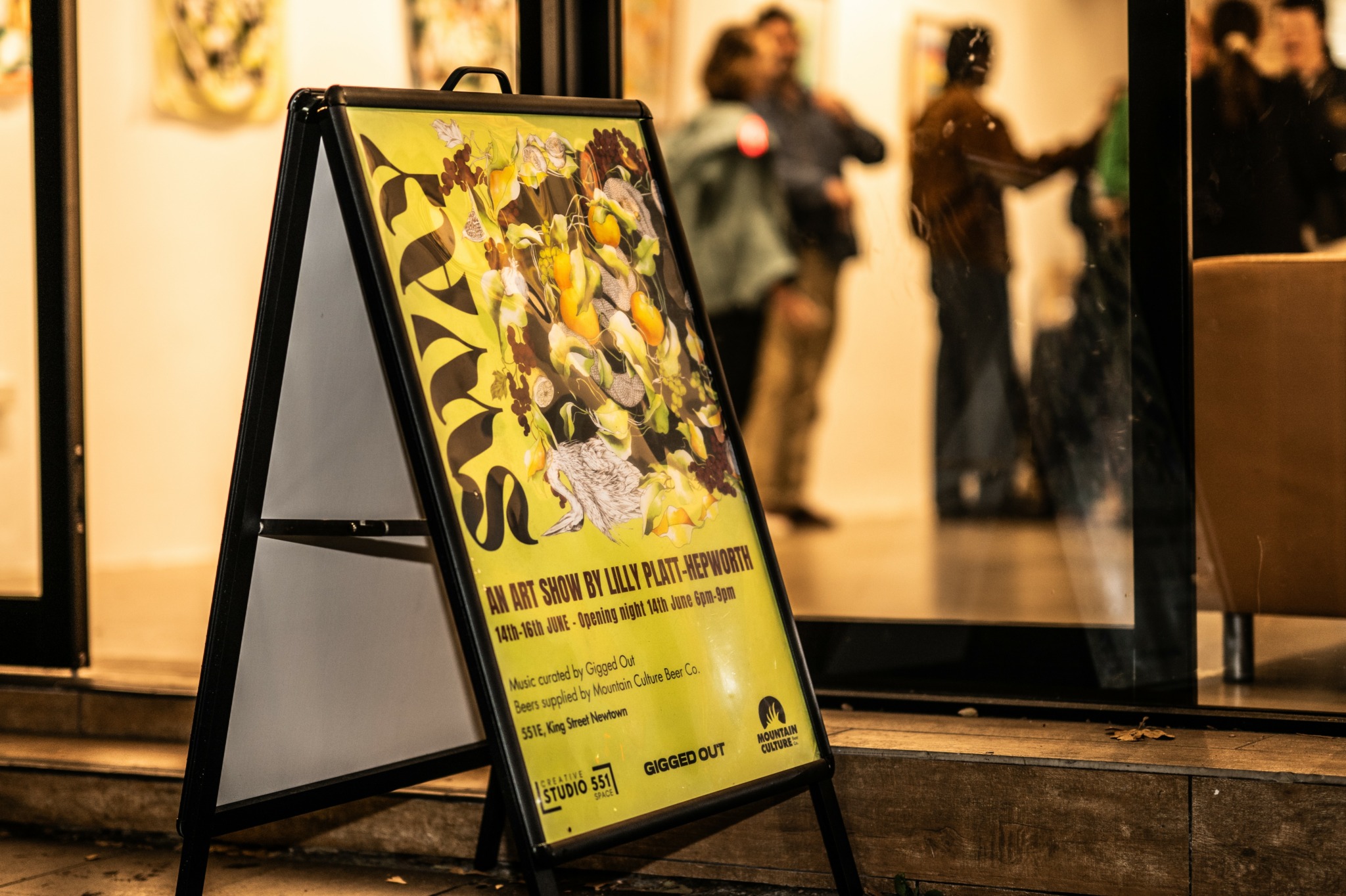
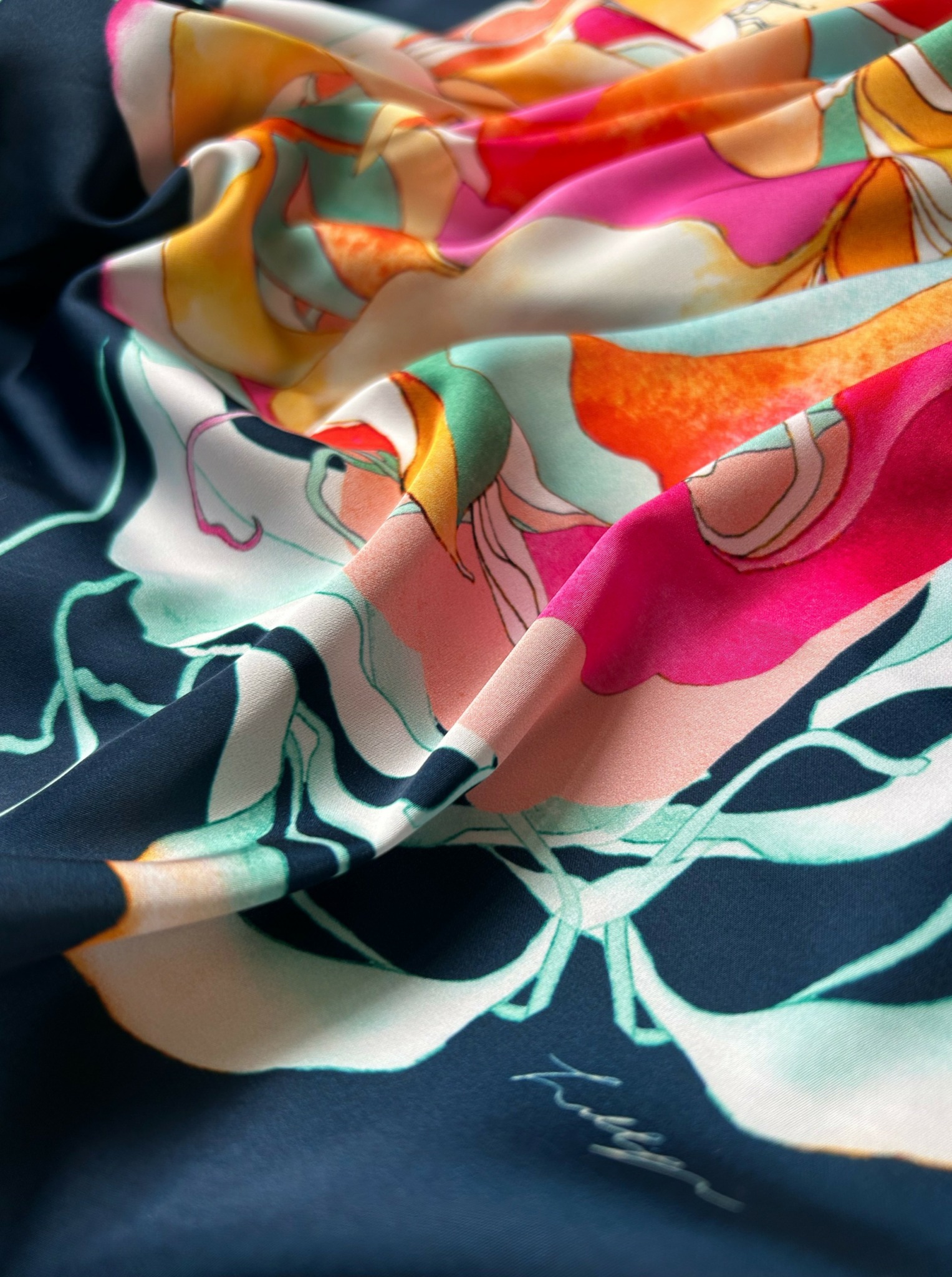
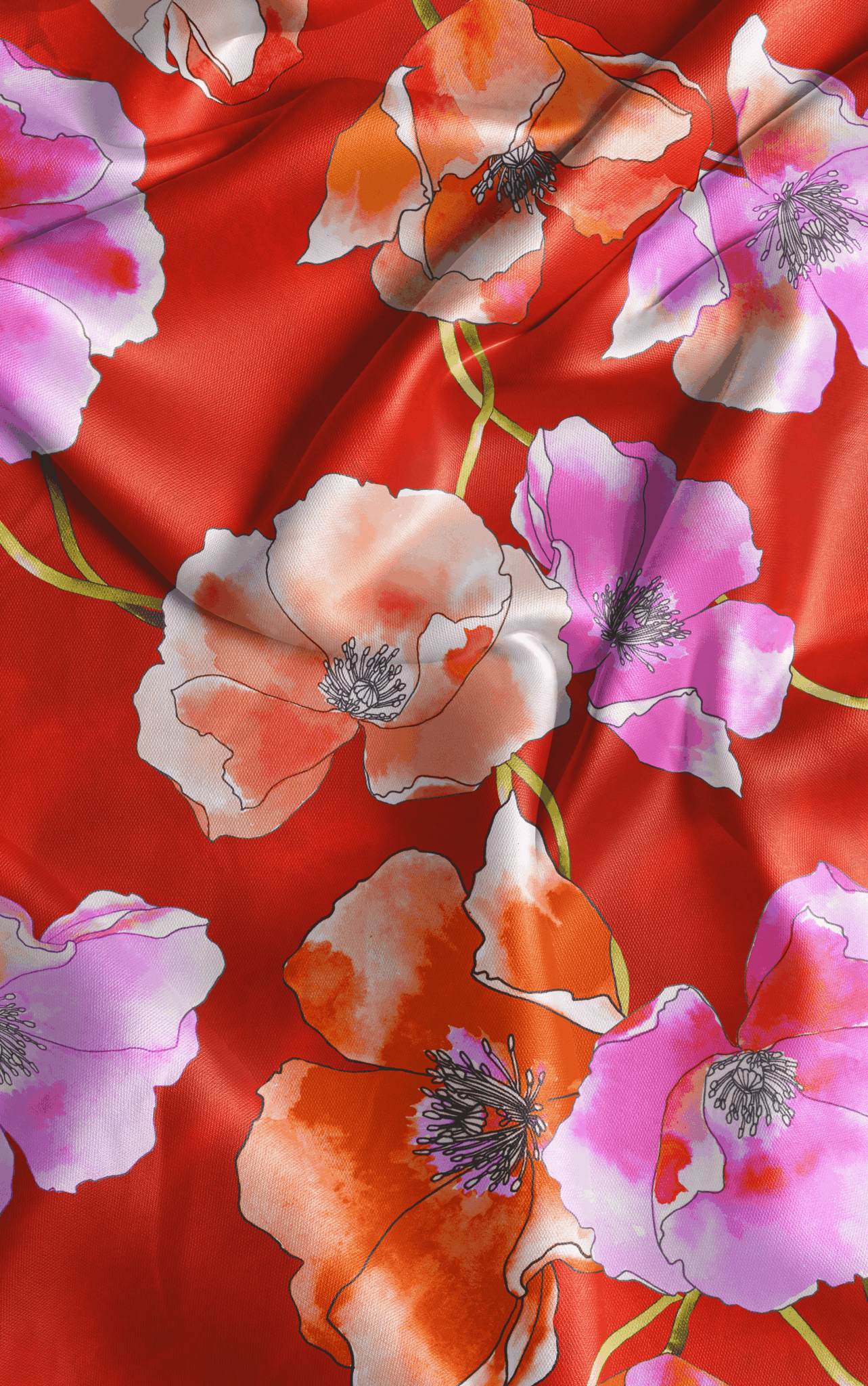
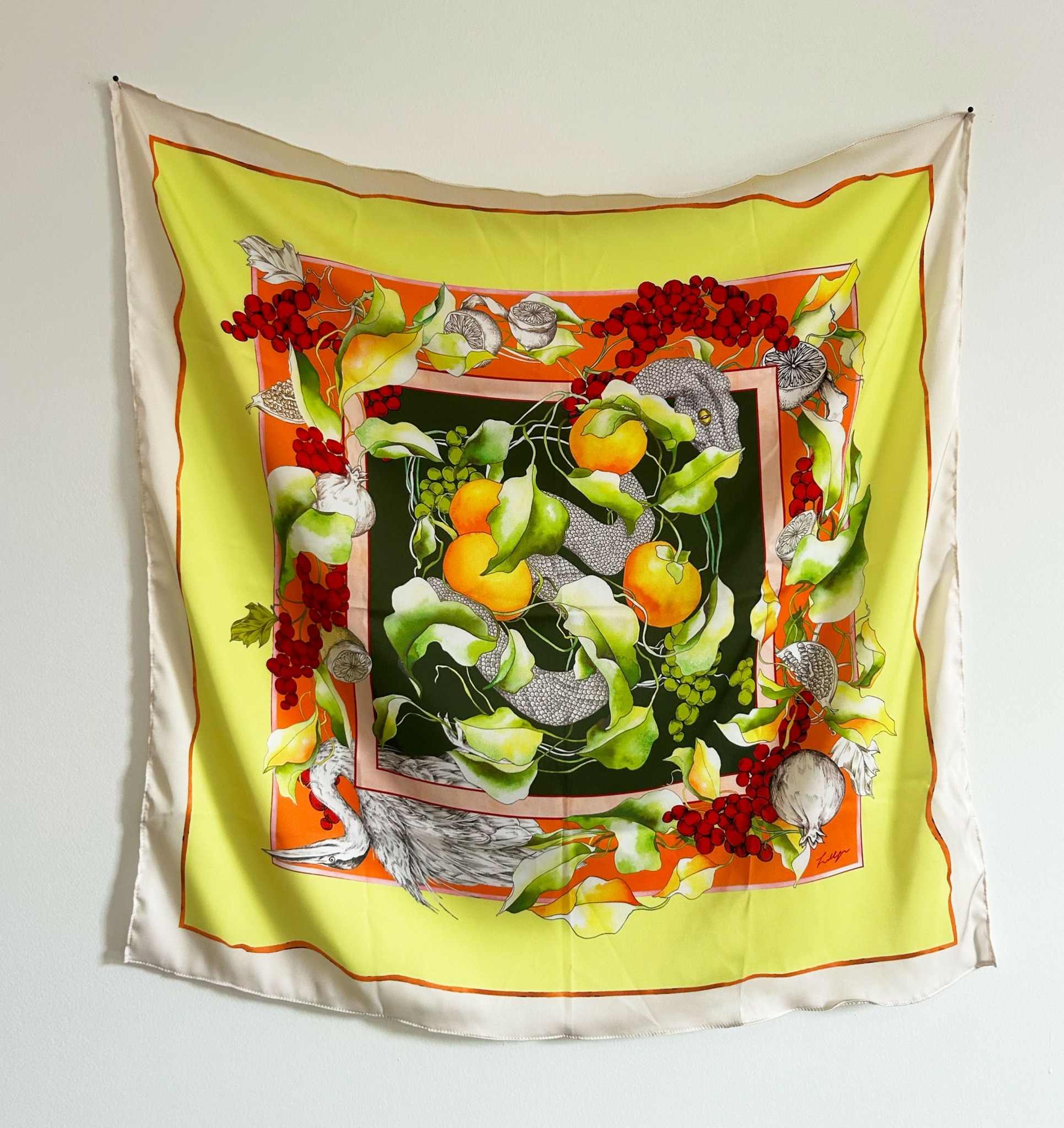
While the commercial fashion market demands versatility that can sometimes limit artistic expression, I still thoroughly enjoy the challenge of creating all kinds of designs that sell but also hopefully resonate on some level emotionally with people—enough for them to want to wear them on their bodies for (ideally) years to come. In contrast, my personal art allows me to fully experiment. I showcased some of this work in a recent exhibition in Sydney, where I displayed a collection of silk scarves and paintings inspired by nature, playing with color and movement, with the intention of celebrating the harmony that can emerge from chaos outside of commercial constraints.
For me, success in the textile print design industry lies in finding the balance between creating unique, emotionally resonant designs and meeting the fast moving demands of the fashion world. Because of the nature of the commercial fashion market, It’s easy to lose sight of originality in the pursuit of sales but I believe that whether it’s on a canvas or a shirt, people really want to be wowed by something unique—something that clearly has heart behind it. The real skill is finding a way to do that while staying relevant in the market. And I think bringing myself back to the roots of it all in my art and in nature is what actually helps the most. It reminds me to enjoy the process, to find the playfulness even in the work that might feel un-fun and to always keep my eyes open to new inspiration beyond the trends. Because it could be anywhere. A vine climbing up a wall, an old shop sign. There’s always something there that could be helpful to make our work better whatever you’re designing for. We just have to make sure we’re paying attention.
Is there a particular goal or mission driving your creative journey?
Growing up, my dad had a small wholefoods manufacturing business, born out of his passion for health and well-being. Though it was never a big thriving business, his devotion to it left a lasting impression on me, and I always imagined working for myself one day. Interestingly, both of my older siblings have also run their own businesses at some point. While this inspired me, it didn’t necessarily equip me with the confidence or skills to run a successful business—there’s still so much to learn, and I hear the challenges never really go away. But there’s something deeply satisfying about creating something of your own. Whether it’s art or a business, having that freedom is incredibly fulfilling.
That’s not to say working for a company isn’t admirable—there’s immense value in the lessons learned and the potential for growth in that path. But for me, the excitement lies in seeing how far I can go on my own, building relationships with clients and industry peers directly, and watching things evolve. Even if it doesn’t lead to great financial success or I struggle along the way, knowing I built something of my own will be enough of an achievement. So while I create art and design in the spirit of human enjoyment and to celebrate the act of creative expression, everything I’m doing here at the end of the day honestly I think is in the pursuit of my own selfish satisfaction. And being able to say to myself – “Hey cool, I did a thing” and imagining 90 year old me being pleased with her time.
Can you tell us about what’s worked well for you in terms of growing your clientele?
Honestly, it’s mostly been about being friendly and putting in the time. I think it’s common when things aren’t moving as quickly as we expect them to to hit points of disillusionment in our careers and question whether we’re on the right track. Instead of letting the impatience and self-doubt of this continually slow me down as it has in the past I’ve come to realize that this uncertainty is just part of the process of finding stability and confidence in yourself and your value as a creative. Things take time, there’s really no way around that.
I’m also lucky that the print design industry isn’t huge, and it’s a pretty supportive community, so building friendships and connections over the years has felt natural and not difficult. Being kind, open to sharing skills and knowledge, and staying connected with people while patiently and consistently working away at your craft are I think, the things that really matter, no matter what industry you’re in but I think these are the building blocks that ultimately supported me when I transitioned to freelance work. Some of my network grew organically through connections but some involved reaching out and having the above under my belt meant I was reaching out with some confidence in my abilities and a real solid understanding of the industry.
Contact Info:
- Website: https://www.lillyplatthepworth.com/
- Instagram: https://www.instagram.com/lilly.platthepworth/