



Alright – so today we’ve got the honor of introducing you to Lethia Owens. We think you’ll enjoy our conversation, we’ve shared it below.
Alright, Lethia thanks for taking the time to share your stories and insights with us today. Let’s go back in time a bit – can you share a story of a time when you learned an important lesson during your education?
One of the most important lessons I ever learned in school actually came during a time when I wasn’t in school at all—because I had dropped out.
At 15, I was a teen mom who had just walked away from high school. I’ll never forget the moment I told my homeroom teacher, Mr. Wilder, that I was leaving school. He looked me square in the eye and said, “You’ll never amount to anything. I wouldn’t be surprised if you ended up on welfare or worse.” Those words were a gut punch, but they lit a fire in me.
That moment, as painful as it was, became one of the most powerful learning experiences of my life. It taught me that people will try to define your future based on your current situation—but you get to decide whether that prediction becomes your reality.
I went back to school and became a straight-A student. I started selling Blow Pops out of my locker to support my daughter—my first taste of entrepreneurship. My boyfriend at the time, who’s now my husband, challenged me to study for the SAT. I didn’t think I had a future in college, but he believed in me more than I believed in myself. He even had me record Greek and Latin root words on a cassette tape and listen to them on the school bus—while my friends were jamming to the latest hits.
Eventually, I took the SAT—because he paid for it—and sent my scores off to colleges. Weeks later, I was pulled out of class by the principal, not for selling candy, but because a rep from Albany State was there to offer me a full-ride scholarship.
That moment in Mr. Wilder’s classroom taught me the most important lesson I’ve ever learned: Your current circumstances don’t define your destiny—your mindset and movement do.
I learned that it’s not always the big leaps that change your life—it’s the small, intentional, daily steps. Studying on the bus. Selling lollipops. Listening to someone who believed in me when I didn’t yet believe in myself. Those little decisions created a ripple effect that led me to college, to corporate leadership, to entrepreneurship, and to becoming one of the world’s top 30 brand strategists.
That’s why I teach others to own their brilliance, to redefine what’s possible, and to stop waiting for permission to rise.

Great, appreciate you sharing that with us. Before we ask you to share more of your insights, can you take a moment to introduce yourself and how you got to where you are today to our readers.
If there’s one thing I know for sure, it’s this: you can build a wildly impactful, profitable business without compromising your values or your vision. I’ve done it twice.
I went from being a high school dropout and teen mom—told by my teacher I’d never amount to anything—to becoming an international keynote speaker, tech CEO, brand strategist, and one of the world’s top 30 branding gurus. But beyond the accolades and accomplishments, what I’m most proud of is this:
I get to help bold, visionary leaders build businesses that shake the planet.
I help my clients stop playing small, reclaim their brilliance, and create category-defining brands and automated businesses that amplify their message, multiply their impact, and attract the clients they were called to serve.
My journey didn’t begin in a boardroom—it started in survival mode. I was a teen mom with a fierce determination to rewrite my story. After clawing my way back to high school and earning a full-ride scholarship to college, I went on to earn a degree in Computer Science and spent several years in IT at Fortune 500 companies.
But even in tech, I was always obsessed with transformation. What makes people rise? How do some leaders become unforgettable while others remain invisible? Why do some brands shake industries while others struggle to get noticed?
Those questions led me to launch two companies:
– Game Changers International, where I serve as a leadership speaker and strategist helping organizations future-proof their people, culture, and influence in the age of AI.
– Next Level Biz, my digital marketing and AI automation agency that helps entrepreneurs scale through automation, personal branding, and smart marketing strategy.

How did you build your audience on social media?
When I started building my audience on social media, I wasn’t focused on vanity metrics like followers—I was focused on building influence. My goal was simple but powerful: position myself as the go-to solution by decoding discoverability and dominating visibility—not just on social platforms, but in search and more recently in AI results as well.
And let me tell you, that required a mindset shift.
Most people approach social media like it’s a popularity contest. But I saw it as a search engine—a place where people go to find answers, solutions, and trusted voices.
So instead of just posting to be seen, I posted to be searchable and strategically positioned. I optimized every caption, keyword, headline, and hashtag so that my content didn’t just perform in the moment—but showed up long after I hit publish.
I built my audience by treating social media like a living brand library. That meant:
• Showing up with clarity: I didn’t try to be everything to everyone. I chose a lane—leadership branding, business automation, and game-changing influence—and built a clear message around it.
• Creating “forever content”: I crafted posts that answered the questions my ideal audience was Googling or asking ChatGPT. That meant using phrases like “How to future-proof your brand,” “AI for small business growth,” or “Game-changing marketing strategies for experts.”
• Optimizing for discoverability: I paid attention to SEO on social. That meant front-loading keywords in captions, naming my videos intentionally, and turning my best-performing posts into blogs, carousels, and YouTube shorts so I could show up everywhere.
• Leveraging AI and automation: As an AI strategist, I don’t just post—I systematize. I built automated content repurposing workflows using tools like n8n, GHL, and ChatGPT so I could create once and distribute everywhere consistently.
• Creating community, not just content: From my Game Changers Collective to my AIA FoundHERs group, I made sure I wasn’t just talking to people, but building spaces with them. That’s how I turned followers into clients, clients into collaborators, and collaborators into ambassadors.
And in today’s noisy world, visibility without positioning is wasted potential. So don’t just show up—stand out. Become the brand that AI platforms recommend. The name that search engines highlight. The voice your industry trusts.
That’s how you go from invisible… to inevitable.
How do you keep your team’s morale high?
Managing a team and maintaining high morale isn’t just about checking boxes or hosting the occasional team-building event. It’s about creating a culture where people feel seen, supported, and significant. And that starts with one word: leadership—not just in title, but in tone, trust, and truth.
Here’s what I’ve learned after building multiple businesses and leading both in the corporate world and in entrepreneurial spaces:
1. Lead with Vision, Not Just Tasks
People don’t just want a to-do list—they want a reason. A mission. A why.
The most powerful morale booster is meaningful work. So I don’t just assign tasks—I cast vision. I help each team member see how their contribution connects to the bigger picture and remind them often: “You’re not just doing a job. You’re building a business that shakes the planet.”
When people feel like they’re part of something bigger than themselves, morale becomes momentum.
2. Honor the Human, Not Just the Role
I’m a systems and automation strategist, but people aren’t systems—they’re souls. I make it a point to know my team—not just their KPIs, but their kids’ names, their dreams, and their stressors.
Morale rises when people feel like more than a resource.
That’s why we lead with empathy and care is part of the culture—not a perk.
3. Create Psychological Safety
Your team will never innovate in a place where they’re afraid to make mistakes. I tell my team: “I’d rather you take a bold step and fail than stay silent and play it safe.”
Because failure isn’t final here—it’s feedback.
High-performing teams thrive in environments where it’s safe to grow. That’s why we celebrate experiments, not just excellence.
4. Recognize, Reward, Repeat
Morale doesn’t run on motivation—it runs on meaningful recognition.
I make it a habit to call out wins in real time, highlight effort publicly, and reward both results and resilience. Whether it’s a Slack shoutout, a handwritten note, or a team lunch, I honor the people who make the vision work.
5. Pray, Prepare, Pour In
As a woman of faith, I don’t lead alone. I pray for my team, I prepare for meetings with intentionality, and I pour into them with both strategy and spiritual wisdom when needed.
I’ve learned that the health of your leadership determines the health of your culture.
And when morale is high, productivity is not just better—it’s brilliant.
Bottom line?
If you want to lead a team that’s engaged, loyal, and excited to show up…
Don’t just manage their work.
Magnify their worth.
Contact Info:
- Instagram: @LethiaOwens
- Facebook: @LethiaOwens
- Linkedin: @LethiaOwens
- Twitter: @LethiaOwens
- Youtube: @LethiaOwens



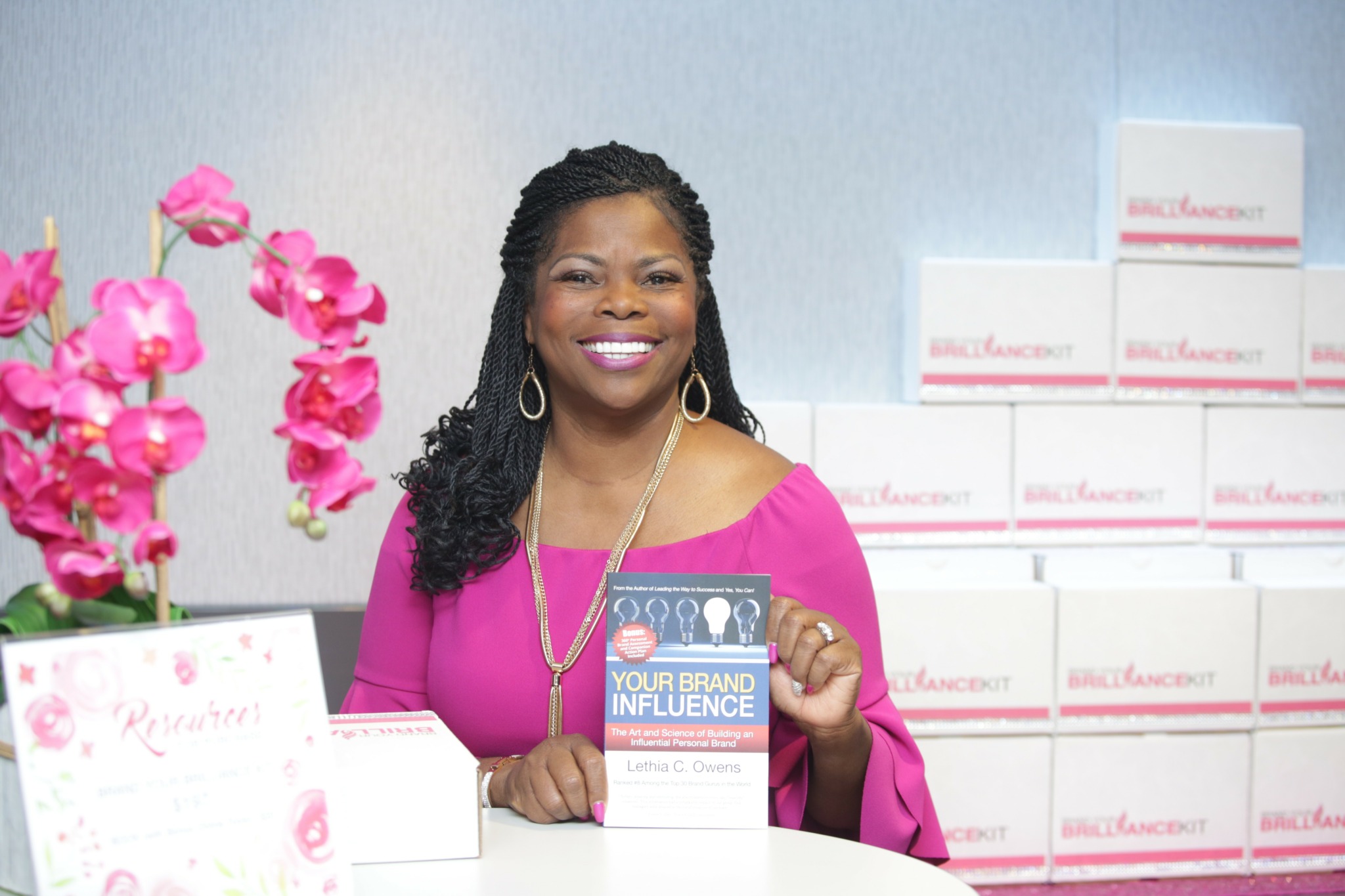
Image Credits
Photographers: Carlos Mendez, Jill Gray, and Danijela Kandera