



We caught up with the brilliant and insightful Leslie Benitah a few weeks ago and have shared our conversation below.
Alright, Leslie thanks for taking the time to share your stories and insights with us today. Can you talk to us about a project that’s meant a lot to you?
Without question, the most meaningful project of my career has been The Last Ones. This initiative, born out of urgency and a deep personal connection to Holocaust survivors, has shaped my life in profound ways. It’s more than a project—it’s a mission to preserve the stories of those who lived through one of humanity’s darkest chapters, ensuring their voices are heard long after they’re gone.
The inspiration for The Last Ones comes from my grandparents, all Holocaust survivors, who never shared their stories with me. Growing up, their silence felt like an impenetrable wall, and as a journalist, I was determined to uncover what had been left unsaid. For years, I pieced together fragments of their lives through research, travel, and interviews, driven by the realization that so many survivors leave this world with their histories untold.
Four years ago, I decided to take that determination further and document the stories of survivors around the globe. The urgency was clear—these individuals were in their 80s and 90s, and time was running out. I’ve traveled to places as far as Venezuela, where I faced dangers as an American citizen, and as close as local neighborhoods to sit with survivors, sometimes for hours, guiding them gently through their memories.
Each story is unique, yet collectively, they reveal the extraordinary resilience of the human spirit. Some interviews have been emotionally overwhelming, like the time a survivor forgot the camera was running and recounted traumatic events unrelated to the Holocaust, trusting me with her most painful truths. Others have been uplifting, as survivors shared how they rebuilt their lives and families from nothing.
The Last Ones is meaningful to me because it’s about more than preserving history—it’s about ensuring that these voices inspire action, empathy, and understanding in future generations. I’ve had the privilege of sharing these stories in classrooms, museums, and online platforms where they’ve reached millions, proving the power of storytelling to connect us all.
This project isn’t easy; it requires emotional resilience, adaptability, and a constant balancing act between honoring the past and pushing forward. But it’s deeply fulfilling. Every time I film a survivor, I feel the weight of responsibility and the honor of being entrusted with their legacy.
For me, The Last Ones is a way to ensure that “never again” is more than just words—it’s a promise, a lesson, and a call to action for humanity. It’s the project I’m most proud of and the one that will always define my journey as a journalist.


Leslie, before we move on to more of these sorts of questions, can you take some time to bring our readers up to speed on you and what you do?
I’m Leslie Benitah, the granddaughter of four Holocaust survivors, and my life’s work has been deeply influenced by their stories. I was born in Paris, France, but French wasn’t the only language we spoke at home. At home, we spoke Yiddish, German, and Polish—the languages of my grandparents, Survivors, who carried with them a history of both survival and silence. My grandparents never told me their stories—not a word. I had to investigate for years, traveling to Poland and piecing together fragments of their experiences during the Shoah. Since they didn’t tell their stories, I decided to tell them for them.
I hold a Ph.D. in Journalism from the Sorbonne. Why journalism? Because it gave me the official right to ask questions. Growing up, I wasn’t allowed to be curious, let alone question anything. I believe that’s what ultimately drove me to become a journalist. Curiosity is my craft—it’s at the heart of who I am and what I do.
A few years ago, I co-founded The Last Ones to document Holocaust survivors through short, impactful videos. It started as a way to preserve these vital testimonies for future generations, but over the years, the project has grown into something much bigger. Today, The Last Ones includes documentaries, educational tools, and upcoming creative works, like The Last Ones of Auschwitz, a book that compiles survivor testimonies, and a geolocated app that allows users to experience survivor stories tied to specific locations.
Through this work, I aim to solve a critical problem: the loss of memory as we lose the last living survivors. My mission is to ensure these stories remain vivid, accessible, and personal—not just as history, but as lessons that shape our understanding of humanity.
What sets The Last Ones apart is our commitment to storytelling. These aren’t just historical accounts; they’re deeply human, emotional stories that connect the past to the present. It’s about resilience, survival, and the enduring hope that comes from remembering.
For anyone just getting to know me, I want them to understand this: storytelling is my way of honoring those who came before me, those who couldn’t tell their stories themselves. It’s a mission I take seriously, not just to preserve memory, but to inspire empathy, understanding, and a more compassionate world.


Let’s talk about resilience next – do you have a story you can share with us?
Resilience is at the core of what I do, and working with Holocaust survivors—many of whom are in their 90s—requires an extraordinary amount of patience, adaptability, and emotional strength. Filming these testimonies is never straightforward. There are countless times when interviews have been canceled last minute because the survivors were too unwell, or worse, had passed away. Even when we proceed, there are challenges—some survivors struggle with severe hearing loss, requiring me to raise my voice to a near shout just to communicate. Others, grappling with memory loss or confusion, need gentle guidance to tell their stories point by point. It’s not uncommon for a single 17-minute video to require eight hours of filming.
One experience from last year stands out as a profound test of resilience. In March, I traveled to Caracas, Venezuela, despite numerous warnings about the dangers for an American citizen like me. I had several survivors lined up to film, but two canceled at the last minute due to poor health. Determined to make the most of the trip, I proceeded with an interview with a charming elderly woman.
From the start, it was clear this would be challenging—her hearing was much worse than anticipated. I found myself literally shouting to be heard, which in itself was exhausting. The interview lasted nearly four hours, during which she switched between Spanish, French, and Yiddish, making the process slow and mentally taxing. But the most unexpected moment came at the very end when I asked her one of my final questions: “What was the hardest part for you during the war?”
Her response left me speechless. She said, “The war was hard. But It was afterward that was worse.” She then placed her finger to her lips in a shushing gesture, as if to say, don’t tell anyone, and began to recount something she had never shared before. She described how, after five years apart, her father had found her after the war. Her mother had been killed in Auschwitz, and she had grown into a young woman. For the next ten years, her father repeatedly assaulted her until she finally escaped by getting married.
I was in shock, not just because of the sheer horror of her story, but because it had nothing to do with the purpose of my work on The Last Ones. She had forgotten the camera was running and had asked me not to share what she revealed. After hours of filming, I knew this was footage I could never use.
That moment tested every ounce of my emotional resilience. I had gone into the interview prepared for stories of war, survival, and loss, but I was completely unprepared for the weight of what she entrusted to me. I left the session shaken, exhausted, and disoriented. Yet, I understood that resilience isn’t just about enduring—it’s about continuing, even when things don’t go as planned, even when the weight of the stories feels almost unbearable.
That trip to Caracas taught me a great deal about what it means to truly listen, to adapt to the unexpected, and to hold space for someone’s pain, even when it falls far outside the scope of my work. It reminded me that while I can’t share every story I hear, every story deserves to be honored in its own way. Resilience is finding the strength to keep going after moments like that, staying committed to the mission of preserving the stories that can be told, and respecting the dignity of those that cannot.


Is there a particular goal or mission driving your creative journey?
The driving force behind my creative journey is the urgent need to preserve memory and humanity through storytelling. As the granddaughter of four Holocaust survivors, I grew up understanding how vital it is to ensure the voices of those who lived through unimaginable atrocities are not lost to history. My mission is to bridge the gap between the past and the present, creating a dialogue that fosters empathy, understanding, and a commitment to “never again.”
Through The Last Ones, my goal is not just to document history but to humanize it—to make it accessible and deeply personal. Each testimony I capture is a legacy, a piece of a mosaic that, when assembled, tells a story of resilience, survival, and the indomitable human spirit. I want to ensure that future generations see these stories not as distant, impersonal events but as lessons that directly shape who we are today and who we want to become.
What drives me every day is the understanding that time is running out. We are at a critical juncture where the last survivors are leaving us, and with them, their firsthand accounts. My goal is to preserve their voices, not just for remembrance but as powerful tools to combat antisemitism, prejudice, and apathy.
My creative journey is also about connection—between generations, cultures, and communities. It’s about building a bridge between the unimaginable horrors of the past and the hope for a more compassionate future. Every story I tell is a reminder that even in the darkest times, there is light to be found.
Ultimately, my mission is simple but profound: to ensure that these stories outlive us all, standing as a testament to the resilience of the human spirit and a call to action for the world to remember, reflect, and never forget.
Contact Info:
- Website: https://www.thelastones.org
- Instagram: Thelastones
- Facebook: Les Derniers
- Linkedin: Les Derniers_The Last Ones
- Twitter: Les Derniers / The Last Ones
- Other: TikTok : Les Derniers / The Last Ones
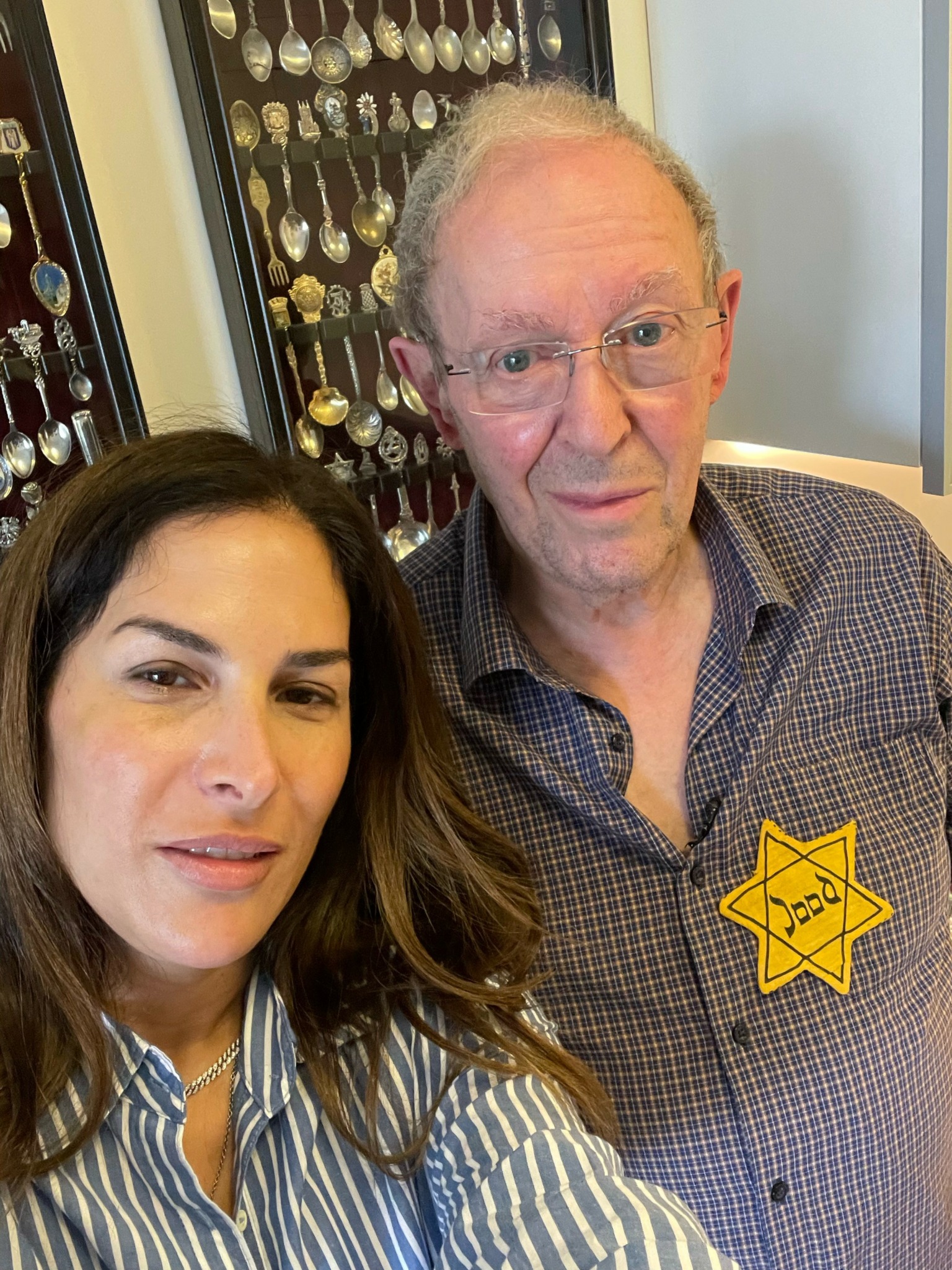

Image Credits
Youri Fatianoff & Xavier Liberman