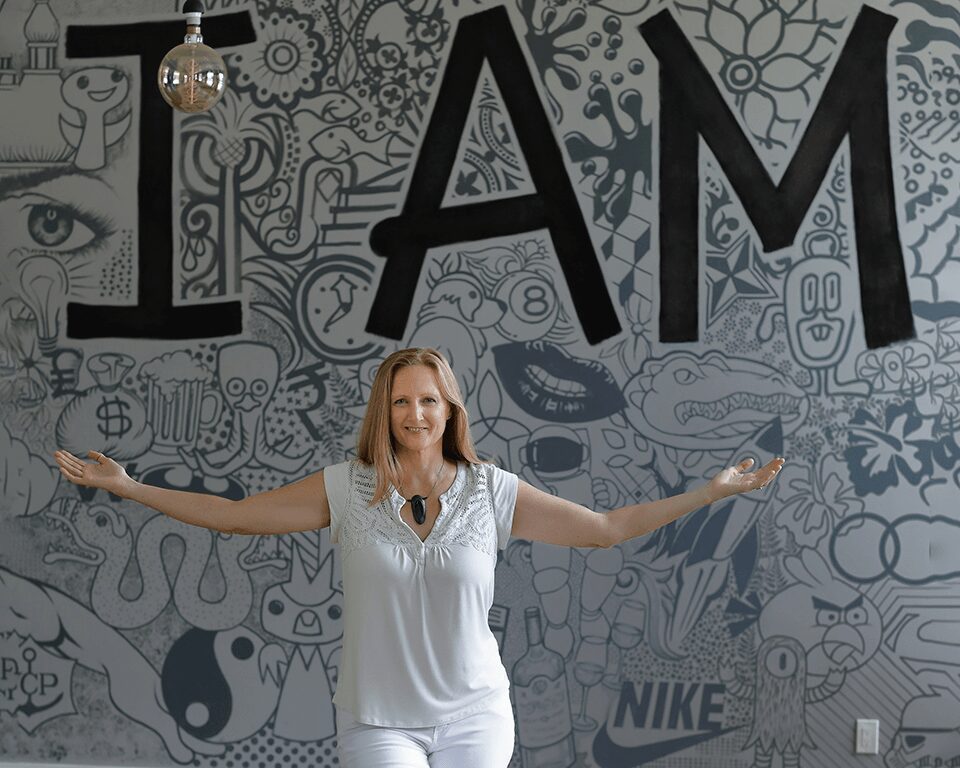
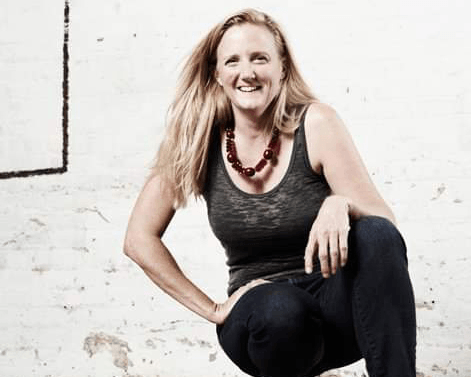
We recently connected with Leah Benson and have shared our conversation below.
Leah , appreciate you joining us today. Have you ever experienced a times when your entire field felt like it was taking a U-Turn?
There’s a paradigm shift going on in the world of psychotherapy. The 21st century science of brain function and emotion has completely flipped the idea of how we experience reality on its head.
Rather than passively seeing and “taking in” reality and reacting to it as was thought to be the case for millenia, we instead create reality in our own brains and look for evidence of our beliefs about reality in the world.
In other words, we pre-emptively generate perception and action based on what we’ve learned from past experience. And this is done in the service of maintaining a dynamically balanced and thrifty “energy budget” in our body, which is the job of all brains.
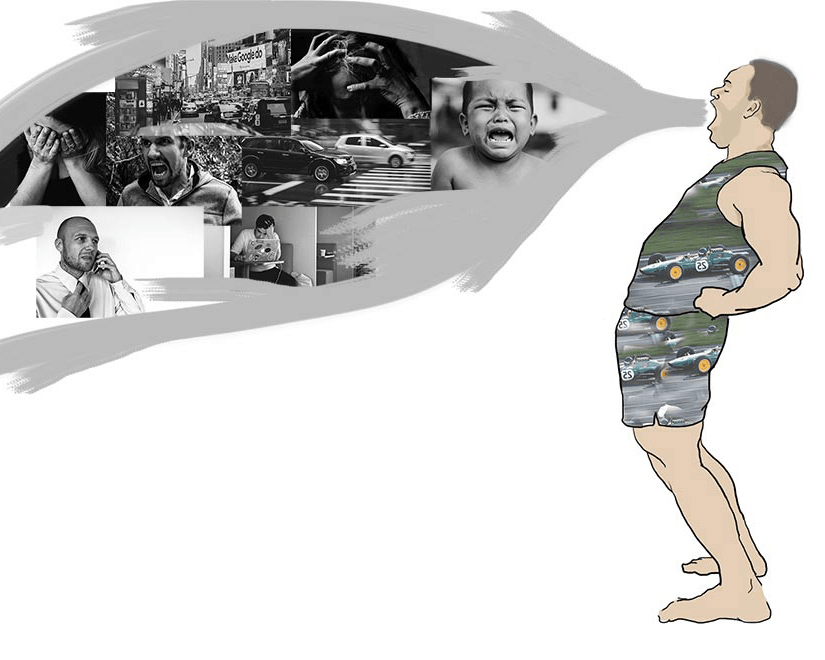
The short story of what that that means to psychotherapy is that, contrary to popular belief, emotions are not “triggered.”. (In other words, cute as it is, the movie Inside Out is completely WRONG in its explanation of how emotions work.) Instead, emotions and actions are constructed in the brain and body prior to the alleged “trigger” event. And this actually happens in the same predictive manner that every mental experience is constructed by the brain.
There are many psychotherapists and coaches out there who have not been taught this 21st century understanding of brain function and emotion because the most popular post-graduate therapist educators are teaching outdated science to their students.
The importance of the paradigm shift cannot be overstated.
Reliance on the old model creates victimhood for clients. This is because the outdated, but still pervasive, view of reactive brain function characterizes some behaviors as mental illness or narcissism when they are actually perfectly rational as seen from the point of view of 21st century brain function.
The U-Turn here is that once we have reached adulthod and are completely responsible for what we expose ourselves to, we are also completely responsible for our emotional lives. There are no primitive, irrational beasts lurking inside out brains that can overwhelm us in stressful moments.
Mental health care and psychotherapy is about updating the model you carry around inside of you so that you generate better percpetions and actions for the moments you are in, not about about learning to “overcome” the emotional beasts inside of you.

Great, appreciate you sharing that with us. Before we ask you to share more of your insights, can you take a moment to introduce yourself and how you got to where you are today to our readers.
Leah Benson is a licensed psychotherapist in the Tampa Bay area.
Leah graduated from the University of Texas at Austin in 1994 with degrees in French and Journalism.
In
1999, Leah moved to New York City, where she earned both an EdM and an MA in counseling psychology from Columbia University. During her graduate studies, Leah helped adults, adolescents, and children in both psychiatric hospital and outpatient settings to overcome a broad range of personal, relationship, and work challenges.
Before her training in bioenergetic analysis (which encompasses the techniques of a vast number of other body-based therapy methods), Leah studied a wide range of psychoanalytic theories, concepts, and methods. This variety included Freudian psychoanalysis, character analysis, object relations theory, self-psychology, relational and intersubjective theories, and ego psychology. She has been certified in neurolinguistic processing, forensic mental health evaluation, and integrative mental health counseling.
At present, Leah’s work is at the vanguard of two major trends. The first: The mental health field’s tectonic shift away from triune brain theory-based ideas about mental function and towards scientific models based on predictive brain function and the Theory of Constructed Emotion. The second: The psychedelic renaissance. Leah’s second book, The Beginner’s Guide to Ketamine Therapy for Mental Health, is her contribution to public awareness of psychedelics’ role as powerful tools for facilitating the process of therapy.¹
Leah’s personal journey through psychotherapy includes ten years of psychoanalysis, as well as ongoing bioenergetic therapy experiences via workshops, individual sessions, and training materials. She completes approximately two hundred hours of continuing education each year.
Leah’s ongoing work as a therapist and client has enabled her to empower others with the knowledge and skills to achieve emotional satisfaction and a happy life. This, more than anything else, is what she wants to pass on to others through her exceptional and exclusive clinical practice.
We often hear about learning lessons – but just as important is unlearning lessons. Have you ever had to unlearn a lesson?
How Therapists Like Me Were Duped into Believing Polyvagal Theory
No one is exempt from the marketing game, not even psychotherapists. So, buyer beware.
Let me begin by admitting that I, too, was under the spell of outdated pseudoscience for a while.
I had completed my required training and my own 10-year psychoanalysis. I was out there in the wilds of private practice, working to acquire clients without joining an insurance company network.
I think we can all hold hands here and admit that I needed to promote myself. And I do mean myself, not necessarily my professional services. Because in the work I do, I am the instrument that accomplishes the desired effect.
Yes, the 10 years of psychoanalysis I went through is what makes me good at my job. Ditto for my years of case consultation with seasoned analysts. Double ditto for the ongoing personal work I still do on a regular basis.
But, at least at the time I started out, training and experience weren’t effective sales pitches. Especially when the therapy I do was—and often still is—the butt of nearly every therapy joke out there.
Psychodynamic psychotherapy, aka psychoanalysis, is generally considered a long-term therapy—even if it doesn’t always last 10 years, like mine did.
When cognitive-behavioral therapy (CBT) rose to prominence in the 1970s, long-term, psychodynamic psychotherapy started to fall out of favor.
All of a sudden, CBT was the cool new popular kid in school, simply because it’s “evidence based.” This means that, as in any other scientific study, there’s a documented protocol that can be repeated by anybody—even those who aren’t seasoned, experienced professionals.
CBT is also quick. Completing the protocol (at which point the “problem” is “solved”) only takes 8 to 12 sessions, according to the studies that proved CBT’s efficacy.
If you’ve ever come across the phrase “evidence-based practice,” that’s what we’re talking about here: Instruction manual therapy that can be performed by any “therapist”.
When this short-form therapy was popularized by scientific studies and legitimized by science jargon, therapists had to tell everyone that they were providing “evidence based” therapy to signal that they knew their s**t.
Truth is, most therapists weren’t following the protocols closely or at all. They just claimed they provided “evidence-based treatment” to market themselves. And there are more than a few still doing this today.
For the past few decades, insurance companies and pharma have been running the show. It’s obvious to anyone in private practice that “science” is the smart way to sell your services.
So there I was back in 2005, building my private psychodynamic psychotherapy practice on a method that was known to change people’s lives. With tons of anecdotal evidence on my side but no formalized research studies on the method, I had no way to signal that my work was legitimate.
It didn’t help that this was the beginning of people finding their therapists through internet searches. To win that game, you need keywords on your team. You have to publicly say the things that will send you to the top of the rankings.
I didn’t actually follow an instruction manual in my practice, so I didn’t feel comfortable saying that I offered CBT. People are more complicated than any list of instructions. Not to mention, people weren’t coming to me to change 1 or 2 symptoms. They wanted their lives to feel better overall, every day.
I was a prime target for the allure of polyvagal theory and other outdated science like it.
The seduction
It’s 2009/2010. I’m deep in the throes of learning how to market myself. I’m becoming more and more aware that many people on my couch doing this “talking cure” with me were not accessing the “feeling parts” of therapy that I knew were essential.
I started searching, and ran across ideas like “molecules of emotion” and “the biology of belief.” For a while, I even considered getting licensed as a massage therapist.
Then I found polyvagal theory. Finally, I had some “science” on which to hang my marketing!
That was great, but I still didn’t have a concrete way to bring the body into therapy. (All the “clinical application of the polyvagal theory” certification courses didn’t exist yet.)
So I kept searching. As luck would have it, in 2013 bioenergetic analysis fell into my lap.
Finally, I had found the therapy modality that brings the body into therapy, exactly as I had wanted to do for years.
Best of all, it was a natural outgrowth of the psychoanalytic tradition I was already practiced in. Bioenergetic analysis was the perfect fit. Plus, I had the polyvagal theory to give me some scientific-sounding marketing language. Then, in my second year of bioenergetic-analysis training, The Body Keeps the Score hit bookshelves. In a few hundred pages, this Harvard psychiatrist legitimized body-based psychotherapy and destigmatized the idea of going to therapy in the first place.
This. Is. Awesome!
I was training in how to bring bodily and energetic awareness into “the talking cure.” The “science” supported what I was doing every day.
In 2020, it all came crumbling down.
During the pandemic lockdowns, it seemed like everyone else in the world was discovering The Body Keeps the Score and jumping on the polyvagal bandwagon.
Meanwhile, I was smacking face-first into information that undermined everything I “knew” about the “science” that validated those ideas.
As 2020 wore on, it slowly dawned on me. I couldn’t reconcile this new information about brain function with the polyvagal idea and with the rational/emotional/primitive brain ideas that are commonplace in the field of psychology.
Man, was that a blow. Imagine spending the better part of a decade marketing your professional services with the language of outdated pseudoscience. Frankly, I felt like a real dope.
And I was desperate to tell everyone in the body-based therapy world.
But Guess What?
They didn’t want to hear it. Unfortunately, a lot of them still don’t want to hear it. They think the current science is “just a new way to say the same old stuff.”
But the 21st-century science of brain function isn’t just a better framework for understanding your mental health.
It’s a better way of understanding how therapy helps you.
The updated science empowers you in a way the old frameworks simply do not. In fact, in those frameworks, you’re the victim of a primitive, emotional brain and of a body that’s always “betraying” you. None of that is true.
To add insult to injury, we now know that when you believe these ideas, you’re much more likely to remain a victim in your own life story. Because that’s how brains actually function. They look for evidence proving the beliefs they already have.
So, Client Beware.
Your therapist may be encouraging you to solidify your most unhelpful beliefs. If you don’t want that—and why would you?—stay well away from them and their outdated science.
Find a mental-health professional who understands predictive processing. Or find yourself a good old-fashioned, modern-day psychoanalyst. Their method has proven to be effective for 120 years, and this 21st-century science of brain function flawlessly explains how—and why.

What do you think helped you build your reputation within your market?
Learning to market, which therapists are notoriously bad at doing. Being able to to communicate complicated scientific things simply.
Contact Info:
- Website: https://leahbensontherapy.com
- Instagram: https://www.instagram.com/leah_benson_therapy_coaching/
- Facebook: https://www.facebook.com/LeahBensonTherapy
- Linkedin: https://www.linkedin.com/in/leahbensontherapy/
- Twitter: https://x.com/LeahBTherapy
- Youtube: https://www.youtube.com/channel/UCi66RzMiF4gD2TExOUE54tQ
- Yelp: https://biz.yelp.com/biz_info/_bXSwlmCqqXe6LGrRtfBHg