

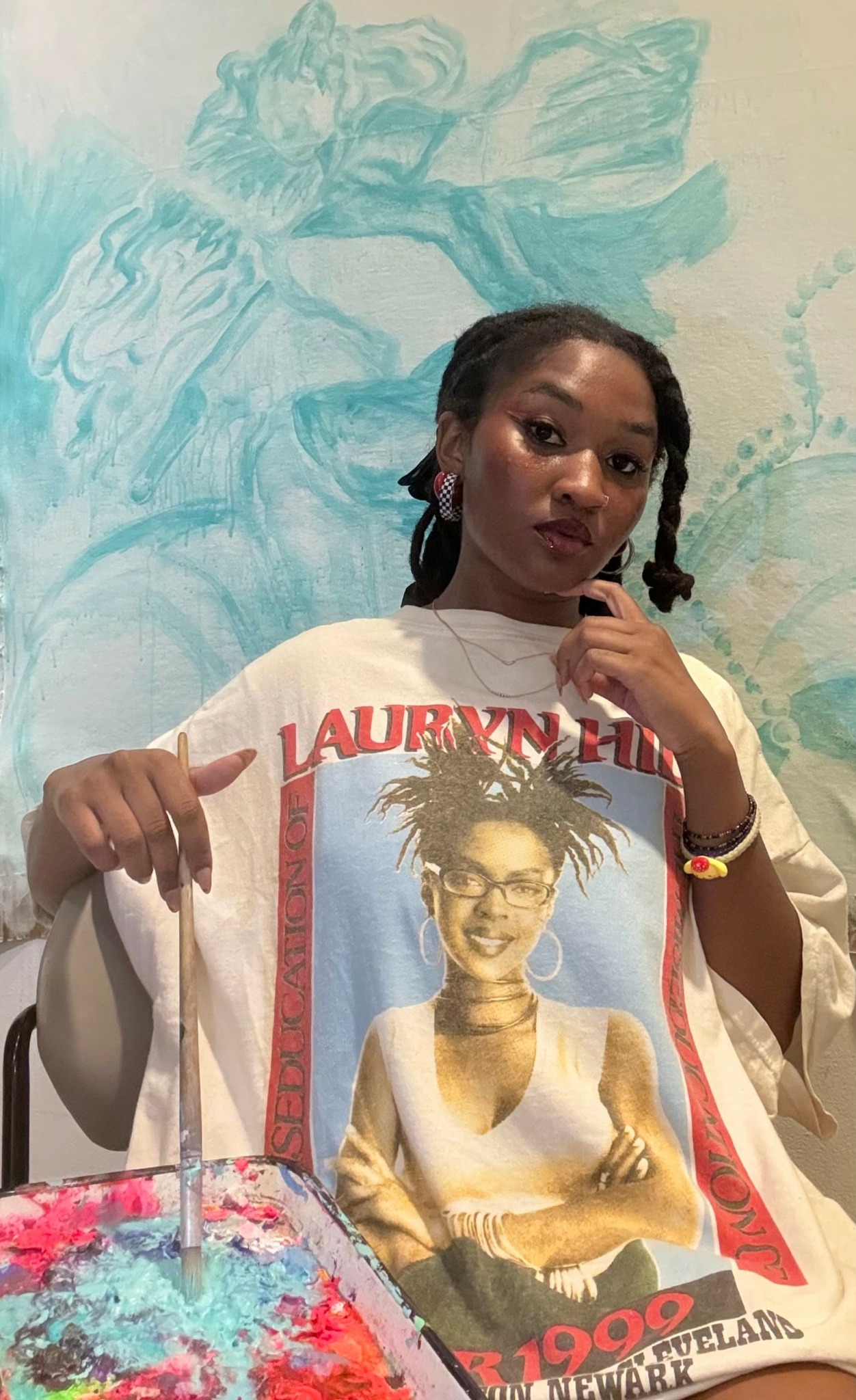

Alright – so today we’ve got the honor of introducing you to Lauryn Levette. We think you’ll enjoy our conversation, we’ve shared it below.
Lauryn , appreciate you joining us today. Learning the craft is often a unique journey from every creative – we’d love to hear about your journey and if knowing what you know now, you would have done anything differently to speed up the learning process.
As a child, I started by drawing my favorite cartoons. I always doodled on notebooks, homework, church pamphlets, any piece of paper I could find. I would put a piece of paper to the tv screen and trace cartoons, as I grew older I learned how to draw characters from step by step books and YouTube videos. This helped me learn the fundamentals of world building and character design. I remember bringing drawings of Pokémon and Vegeta to compare with my classmates. Eventually I started drawing my own comics and selling them on the playground.
In Junior High, I loved sketching anime characters which lead me to drawing and painting from life. During high school, I received a scholarship for figure drawing classes at Moore College of Art and Design. Learning the basics of composition, proportions and perspective allowed me to begin to develop my own visual language.
I set the foundations of my studio practice in college. It felt like few people understood me or my work. Often, my critiques were silent, instilling a bit of imposter syndrome in a prestigious program. I overcame that by blocking out voices of doubt, focusing on my passion and creating the work I wanted to see. Sometimes I would spend the entire day creating sketches then executing them on canvas.
Overall, fear was my biggest obstacle that kept me from learning these fundamentals, channeling it into curiosity is what helped me flourish in to the artist I am today. While I don’t regret any part of my artistic journey, I wonder what my practice would be like if I learned to let go of my fear of failure sooner.
Awesome – so before we get into the rest of our questions, can you briefly introduce yourself to our readers.
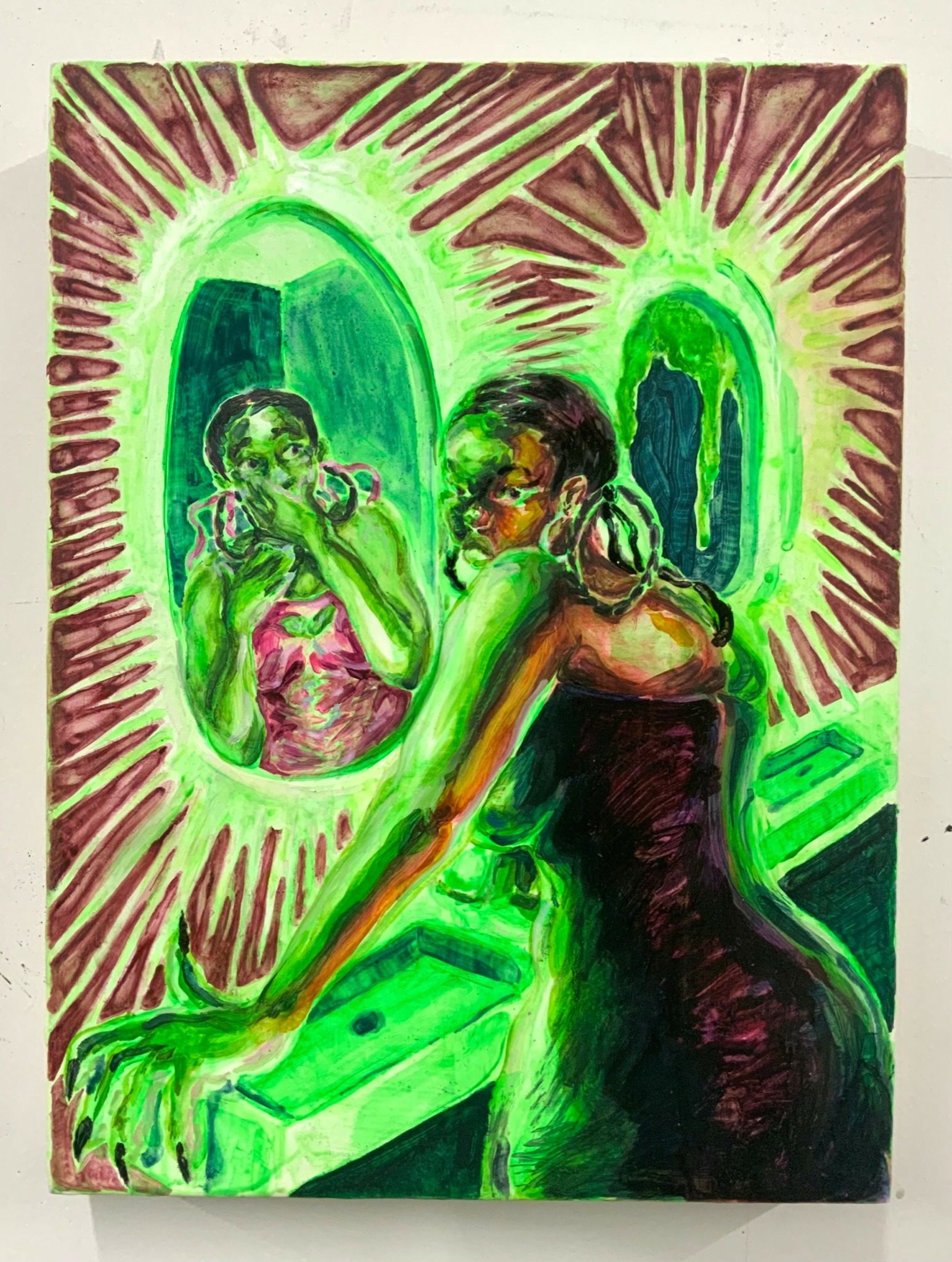
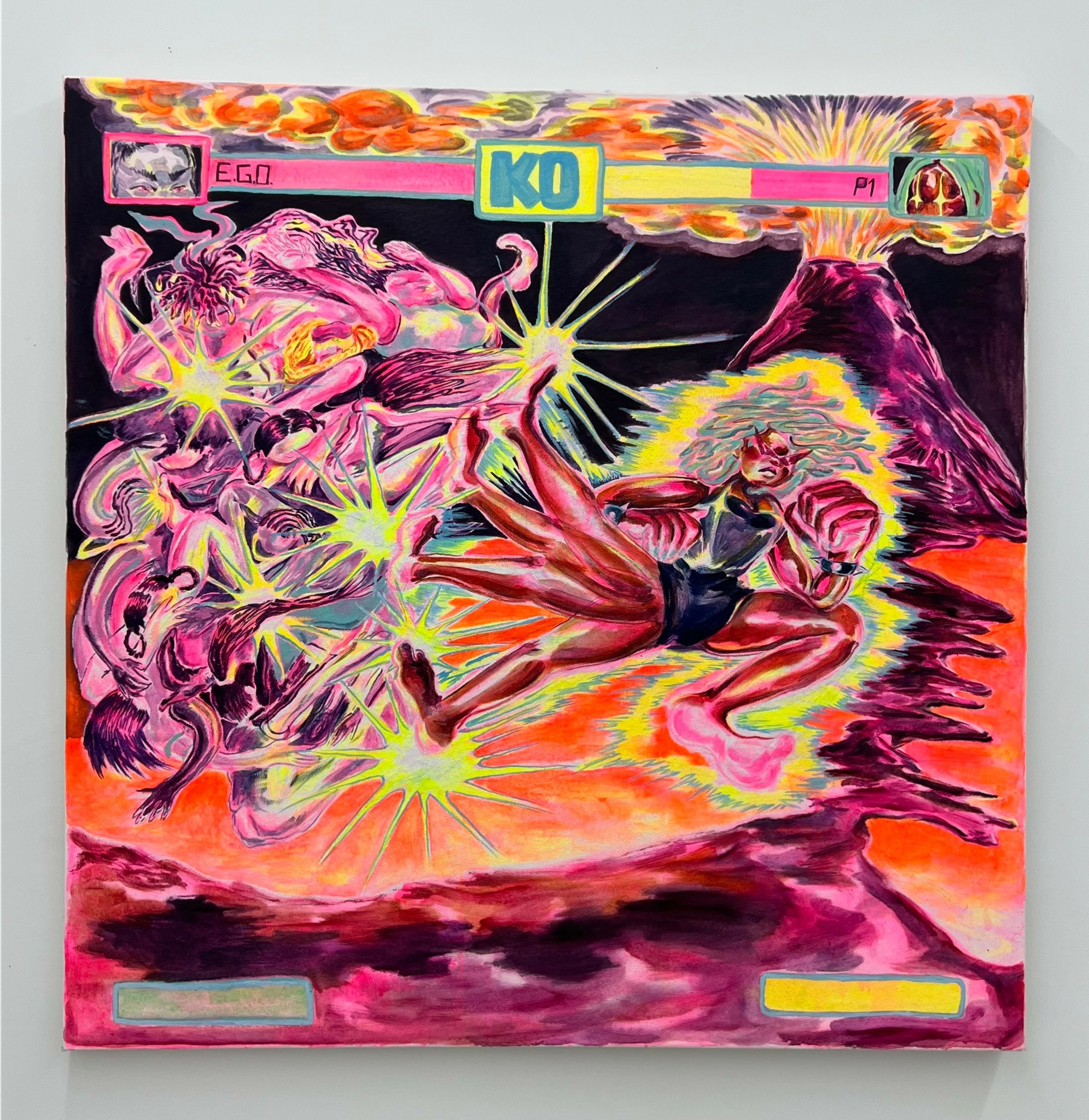
My studio practice is deeply introspective, I explore multiple mediums to portray the various psychological states that I exist in. Sourcing from myself, pop culture Black Feminist literature and queer theory, I paint primarily women who deviate from the societal expectation of docility. Color is a major component of my work, I use a vibrant palette to enhance the dreamlike state and loud quality of each piece, no matter the scale. I am intentional about the visibility of the women I paint. While some are revealed in darkness, others exist boldly in the spotlight, and all have an awareness of the viewer.
Originally, I wanted to be an animator which influences the semi-realistic nature of my figures. However I fell in love with the tactile, immediate quality of painting in high school. I remember seeing Frida Kahlo and Dali’s works at the Philadelphia Museum of Art as a child with my family. While it terrified me, I was fascinated by the surreal portrayal of everyday life in their paintings. On the other hand, the only Black painters I knew were Basquiat and Faith Ringgold from children’s books my parents read to me as a child. Few were taught to me during art history class in school, so I started to explore on my own with my interests in expressionism and surrealism in mind.
The 2020 global Pandemic and political unrest was a major catalyst to my practice. Rhode Island School of Design’s campus inevitably shut down, I relocated my studio to my apartment in Providence. I began recording my dreams which became increasingly vivid. My paintings utilize Afrosurrealism to portray the complexity of the Black lived experience. I used social media to share my work and discovered a community of artists beyond my collegiate bubble. By my senior year of undergrad, gallerists, curators and collectors began to inquire about my work and my career took off from there. Since then I have exhibited works in several countries and featured in various publications including but not limited to: Artsy, Juxtapoz Magazine and RISD Museum
We’d love to hear a story of resilience from your journey.
Lately, I believe in creative alchemy as a driving force behind my practice. Transforming pain, trauma and grief into passion for my craft helps me elevate as an artist and maintain my momentum. I faced doubt about the possibilities of an art career from a young age, yet I persisted in the face of adversity.
During my time at the RISD, I internalized my Blackness, silent critiques and lack of connection with my classmates as a sign that maybe I did not belong there. I was afraid to go to the studio, avoiding constant surveillance from my peers until my junior year. It took heavy introspection for me to understand that in order for me to succeed, I must show up unapologetically. So I spent every waking second I could in the studio to improve my craft, creating paintings that challenged the insecurities I was riddled with at the time.
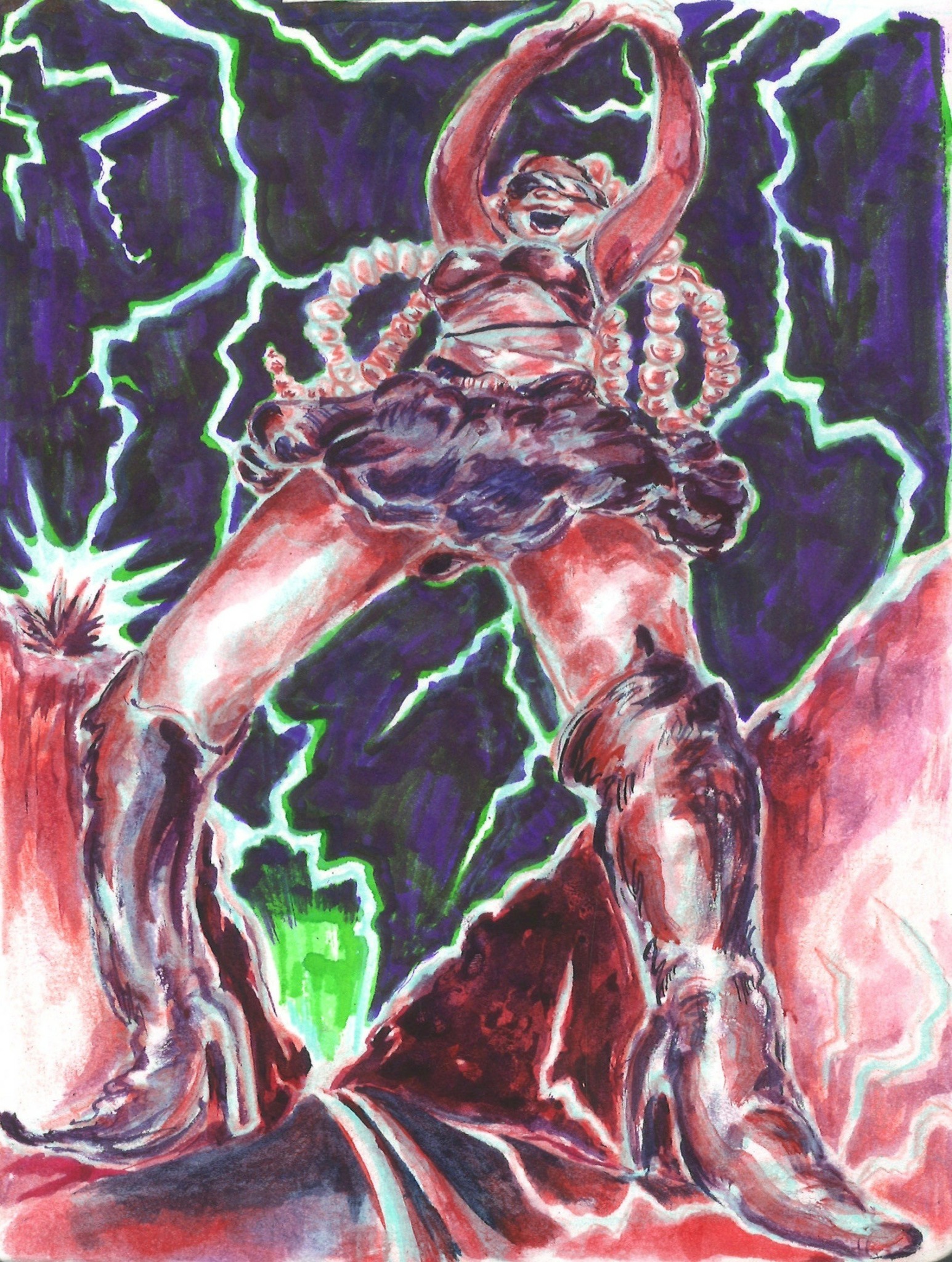
My pain is a pathway to positive growth, the canvas became a method for me to resist these strict societal expectations of me as a Black woman. I viscerally remember when I was constantly put down and called “a lost cause” by someone I loved deeply, which put my belief in self in question. If I spoke up for myself, I was punished. Then I wondered if I was deserving of life, love or even the career I worked so hard for. Painting granted me space to meditate, envisioning a life where I am free to be Lauryn Levette, I wanted to manifest that for myself. It allowed me to journey back to myself, persisting out of spite. I think that’s part of why I create pieces that portray women as humans with power and agency, rather than fragile and/or submissive. We empower each other by recognizing our imperfections, finding strength in vulnerability in a world that is learning to value it.
Is there mission driving your creative journey?
My goal is to empower myself and women, mainly Black women and queer people. I want my art to show the inherent beauty and nuance of our existence. We are taught to shrink ourselves, to conform in order to be palatable, and to compete for the validation of the oppressor. Yet still, that is not enough for our very being as marginalized people, and we can’t change that. We are living in a time of active erasure of marginalized voices and rights. As an artist, it is my job to respond, I mean, my visibility is political in itself. So my art is loud, bright, chaotic as a form of resistance. I hope that when I show up authentically I can inspire others to do the same, challenging the systems put in place to silence us.
Contact Info:
- Instagram: https://www.instagram.com/blvckbobross
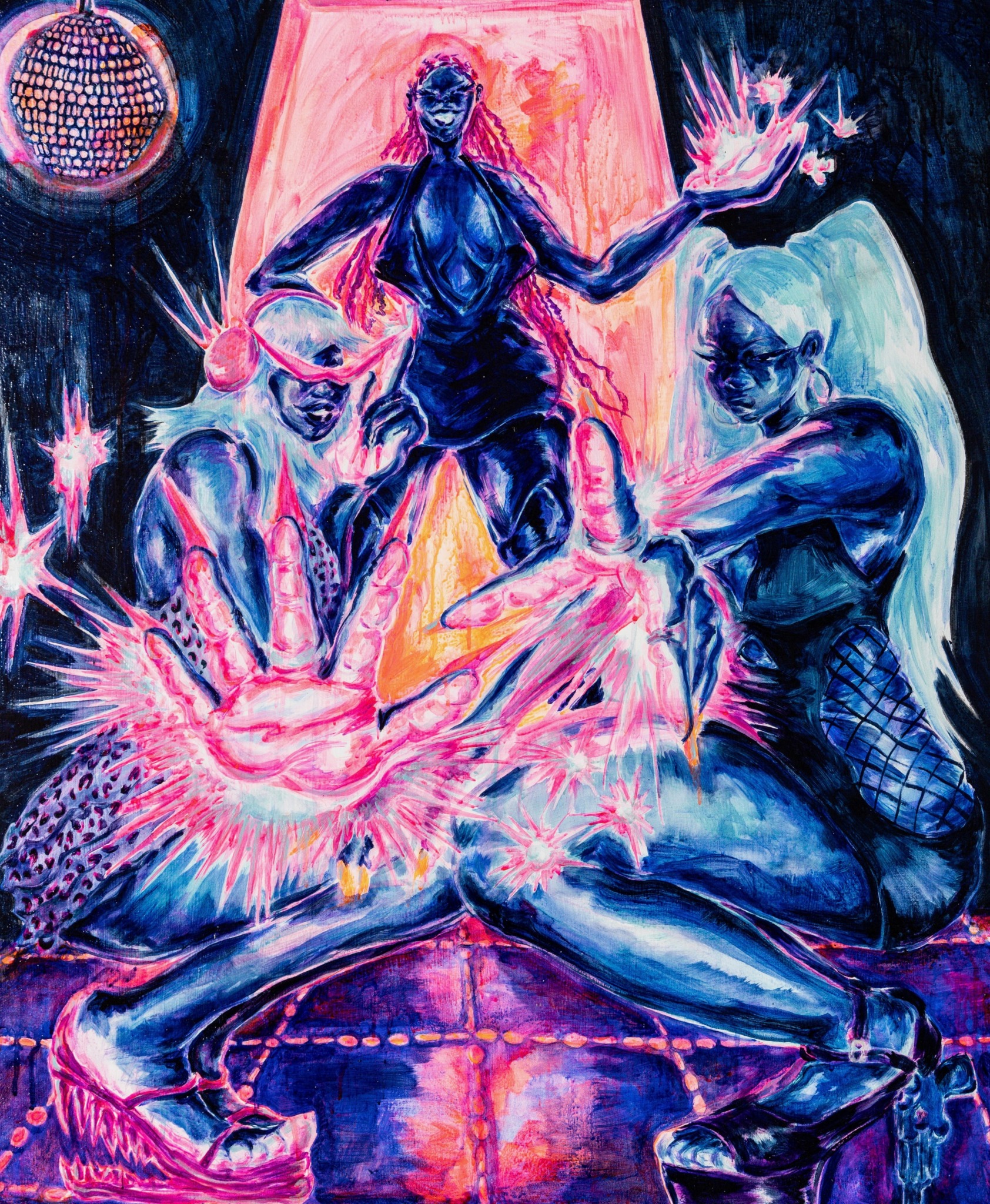
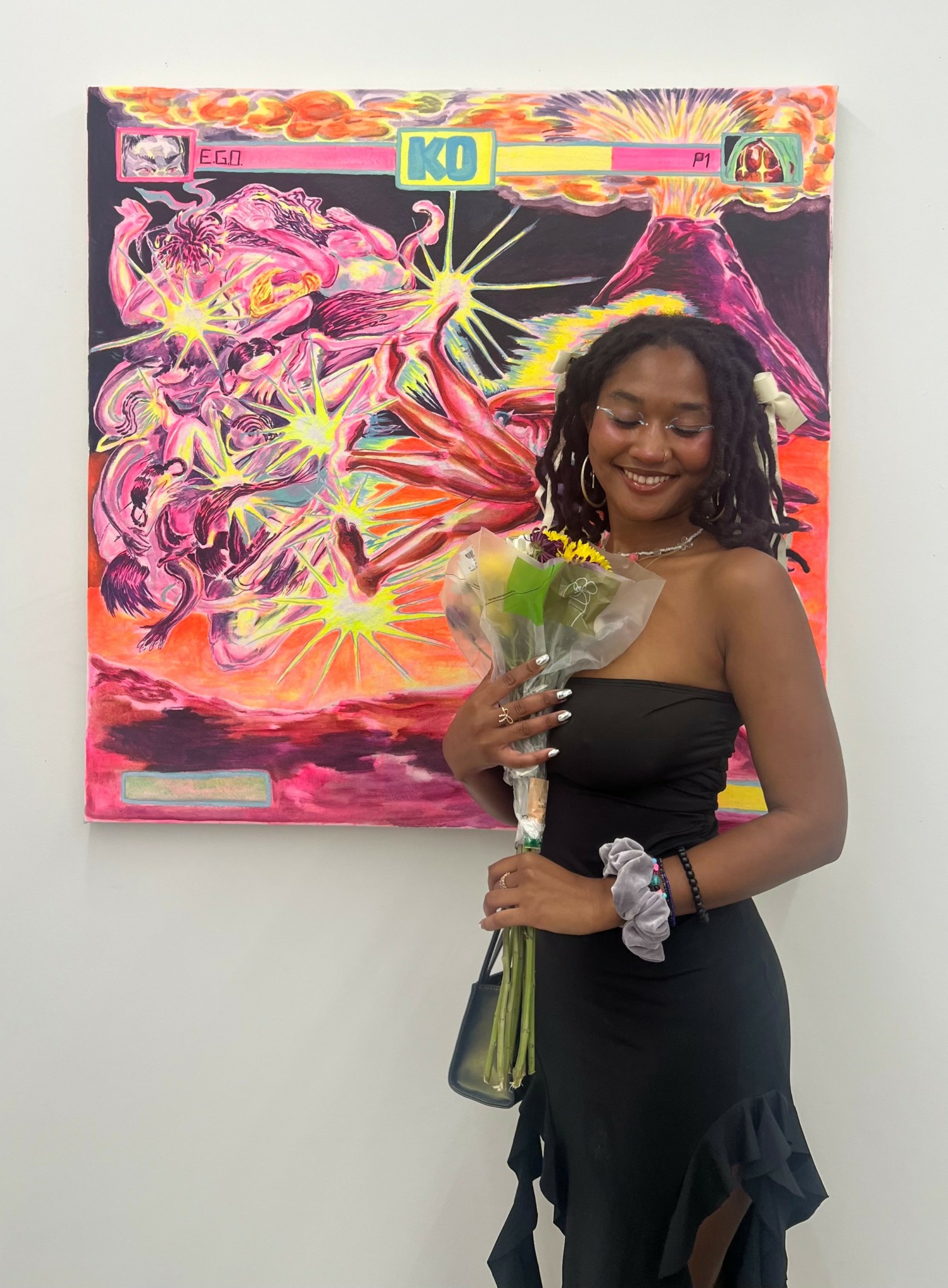
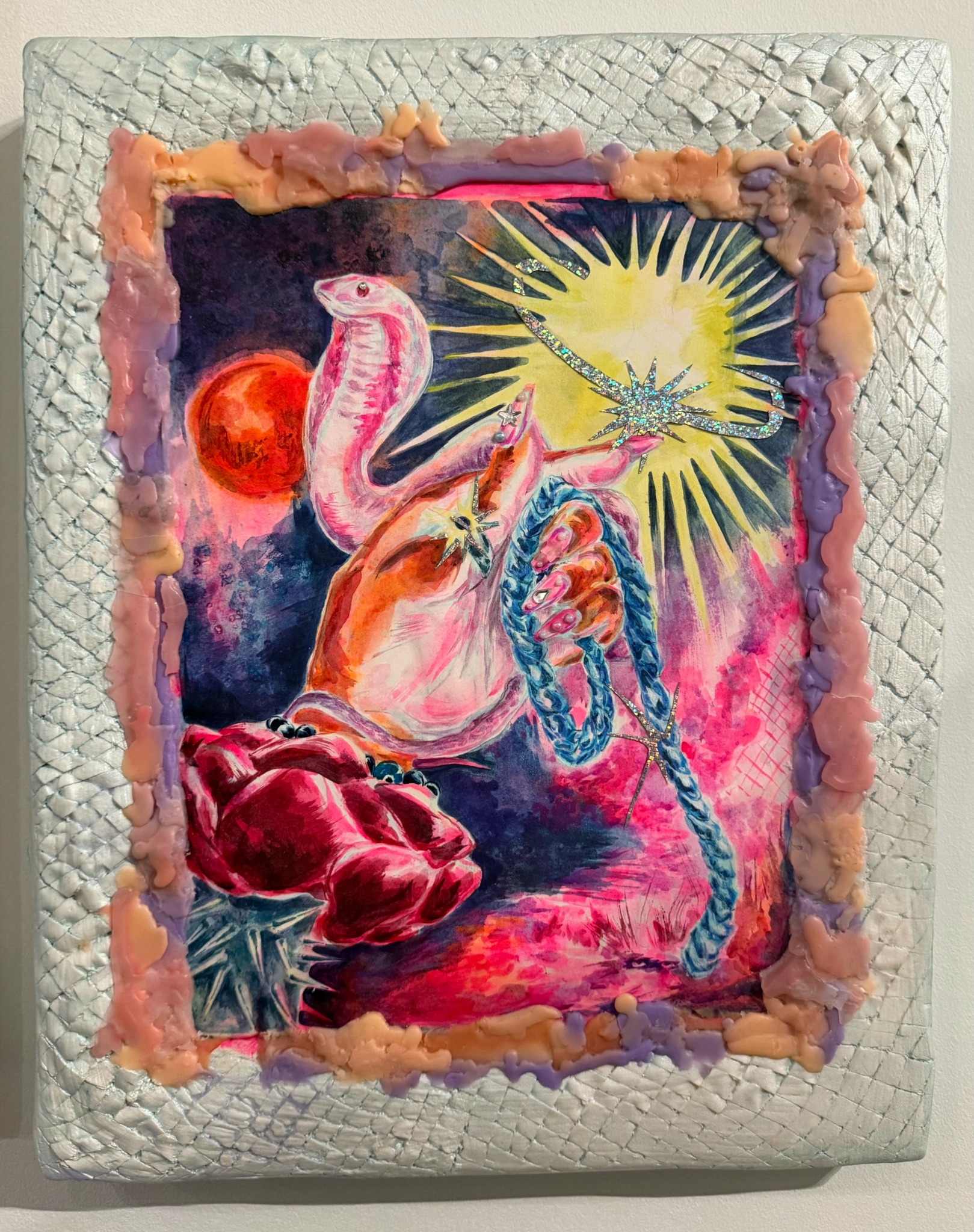
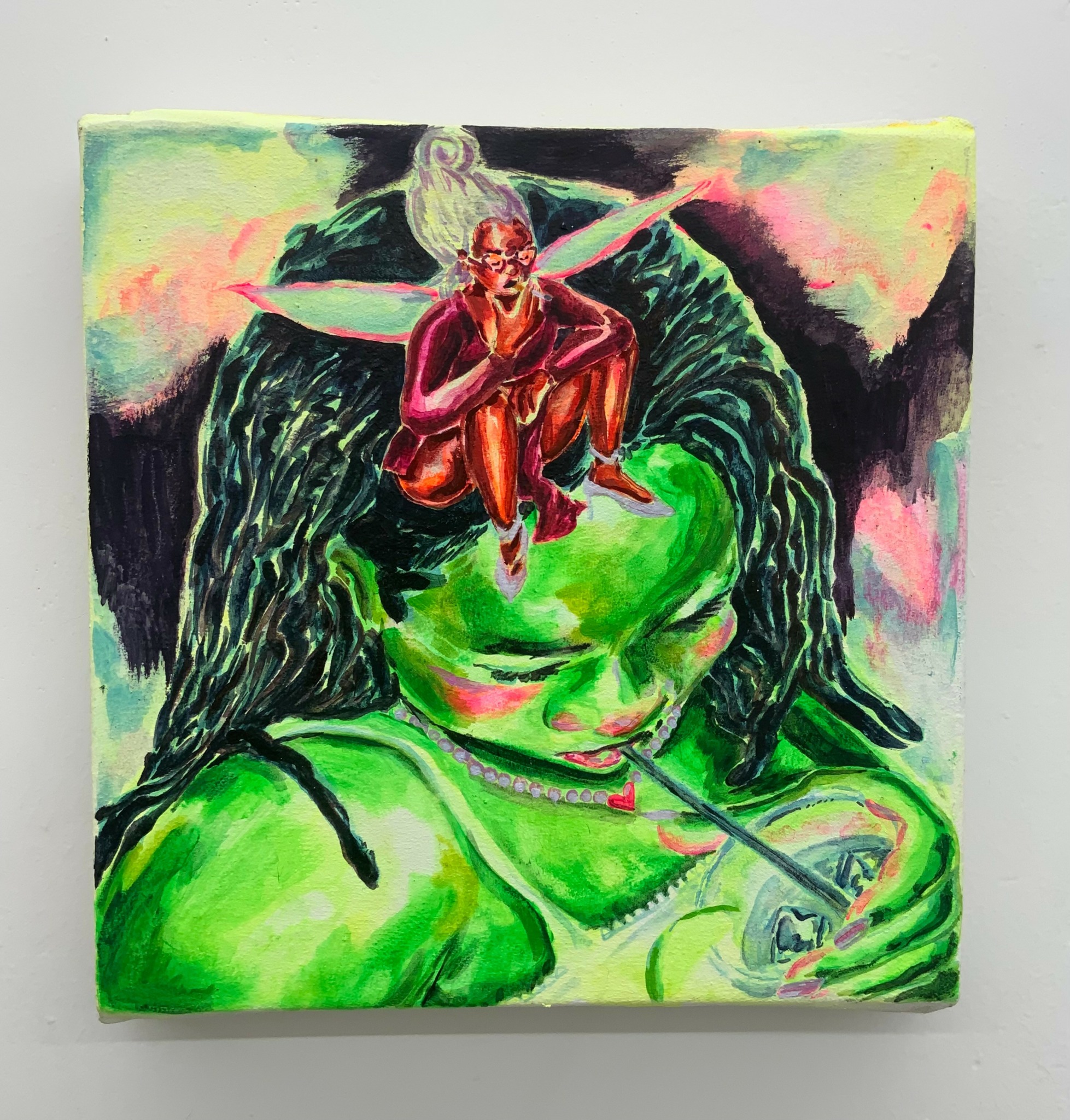
Image Credits
LOYAL Gallery
Farrah Sheiky