
We’re excited to introduce you to the always interesting and insightful Lauren Rice. We hope you’ll enjoy our conversation with Lauren below.
Alright, Lauren thanks for taking the time to share your stories and insights with us today. When did you first know you wanted to pursue a creative/artistic path professionally?
A lot of artists have really fascinating origin stories. My creative backstory is pretty simple and possibly mundane. But that might be why I feel compelled to share it. Ultimately, my path has been one of persistence and hard work.
I didn’t have an ah-ha moment or an event that turned me into an artistic being—it was simply the way I was. I have just always loved to draw and I never stopped. For as far back as I remember, I would spend hours lost in the act of drawing. I was lucky and also very stubborn. My family encouraged my creativity and I don’t remember anyone telling me not to do it (or if they did, I simply did not listen to them). I’ve always loved the accessibility of drawing on paper, that you don’t need a lot of special materials to do it. Some of my earliest memories are laying on the floor in my childhood bedroom, drawing for hours on the endless reams dot matrix printer paper.
By the time I was in high school, I was quite good at observational drawing (due to the loads of practice) and received more encouragement from friends and teachers. I became an art major in college (there was no question of anything else). I learned how to stretch canvas, paint with oils, color theory (Josef Albers!) and the New York School. I started to think of myself as an abstract painter.
Post-college, I moved to Brooklyn and eventually found a job as a gallery assistant at an art gallery in Chelsea. Although, I loved working with contemporary artists (like Faith Ringgold, Benny Andrews, etc.) and learning the inner workings of the commercial gallery world, after a few years, I realized that the sales aspect of art was not really my cup of tea. So, I decided to try for grad school. Grad school also isn’t for everyone; however, it was incredibly impactful for me. It opened me up to possibilities in my art practice that I couldn’t have realized fully on my own. Again, I was lucky. I applied to four programs and was rejected by all but one. I had a great cohort of peers in my program, and we mutually challenged and supported each other. Critiques with faculty and visiting artists were exciting and nerve-wracking. I learned to speak about my work publicly, something which had terrified me previously. Fear was motivation rather than a barricade. I began to recognize that my work was part of a larger dialogue with other historical and contemporary artists.
I moved to Detroit after graduate school, and started adjunct teaching at various colleges in the area. Detroit was the perfect place to live as an emerging artist. It was affordable, especially compared to New York and DC. I rented a huge studio with my boyfriend (now husband). I was able to support myself financially and also had the space and freedom to take creative risks. I applied to a lot of exhibition opportunities and received a lot of rejections. Every so often, I got into a show. Sometimes, a rejection led to an unexpected opportunity. I also went to see a lot of other exhibitions, primarily in artist-run spaces in Detroit that were showing local artists. It was really liberating and motivating to see artists and art spaces that were operating outside of a commercial market. With every show that I participated in, I pushed my work to the max. More unexpectedly during this time, I fell in love with teaching art and decided that was also an aspect of my career that I wanted to pursue.
There are a lot of things in life that I am uncertain about but somehow, I’ve maintained a strong inner commitment to doing what I love, regardless of money, recognition or other outside metrics of success. I’ve now been a practicing artist for over 17 years. I have been teaching at the college level for the same amount of time, and have been a tenured, Associate Professor for 5 years now. In terms of my artistic career, I’ve noticed many ebbs and flows. There are times when I’m incredibly busy and other times when I feel totally invisible. In retrospect, the times of apparent invisibility are often the best times creatively in my studio. I bought a sticker from Studio Two Three in Richmond a few years ago that reads, “Hard Work Beats Talent”, which I think sums up my career trajectory nicely.
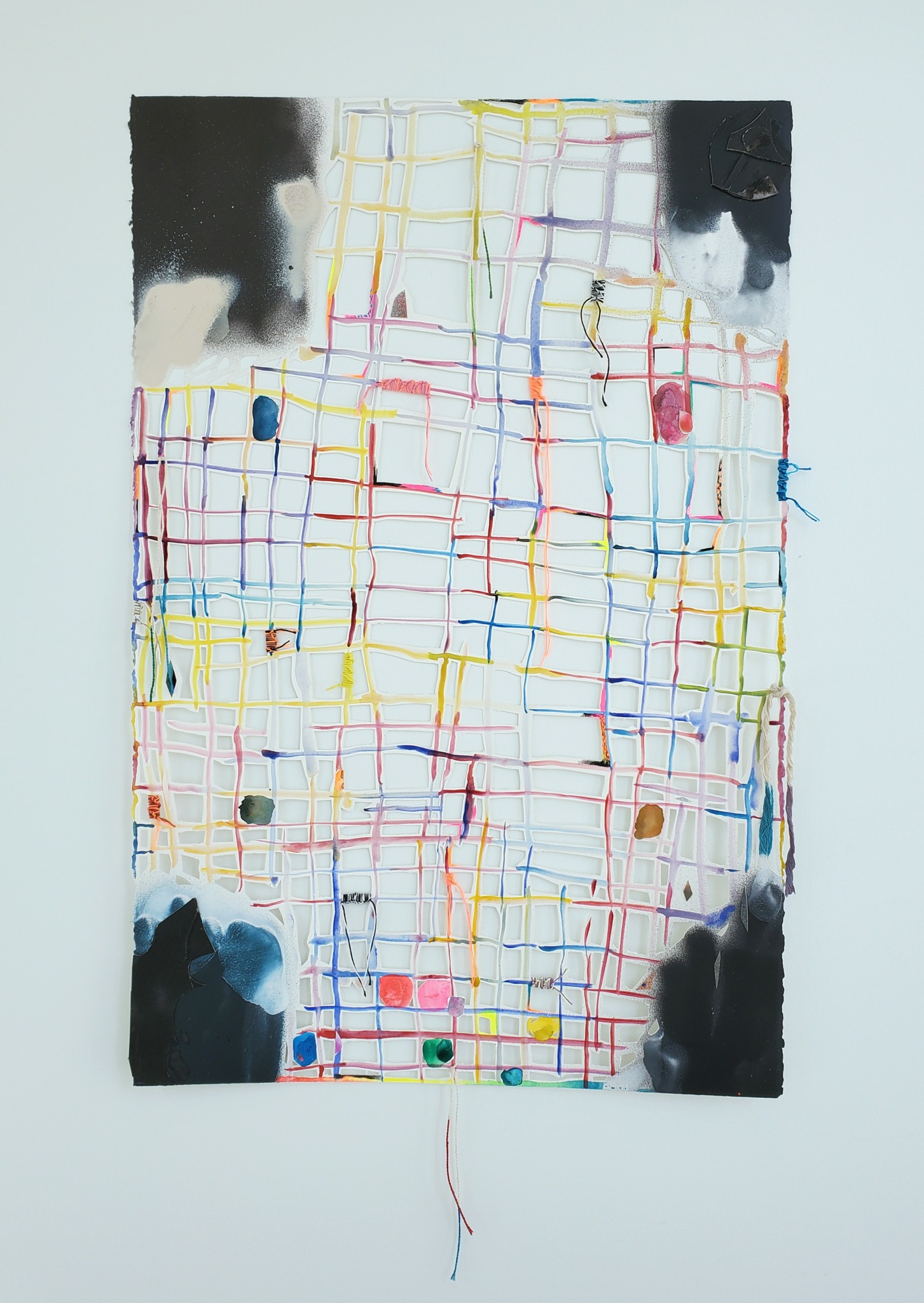
Great, appreciate you sharing that with us. Before we ask you to share more of your insights, can you take a moment to introduce yourself and how you got to where you are today to our readers.
I am an artist, art professor and, as you can maybe tell, a fan of the parenthetical. I am based in suburban Richmond, VA where I live with my husband and two children.
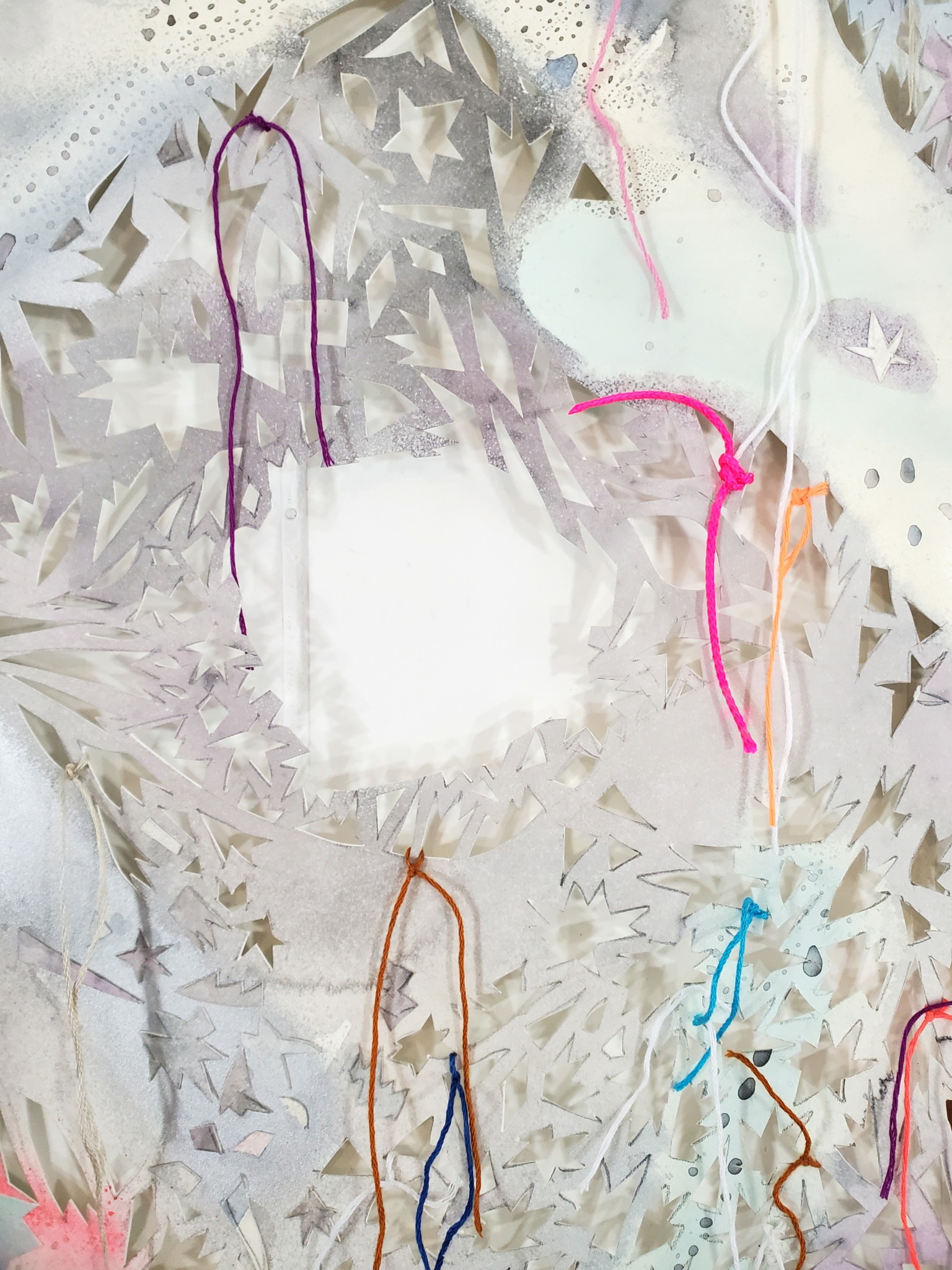
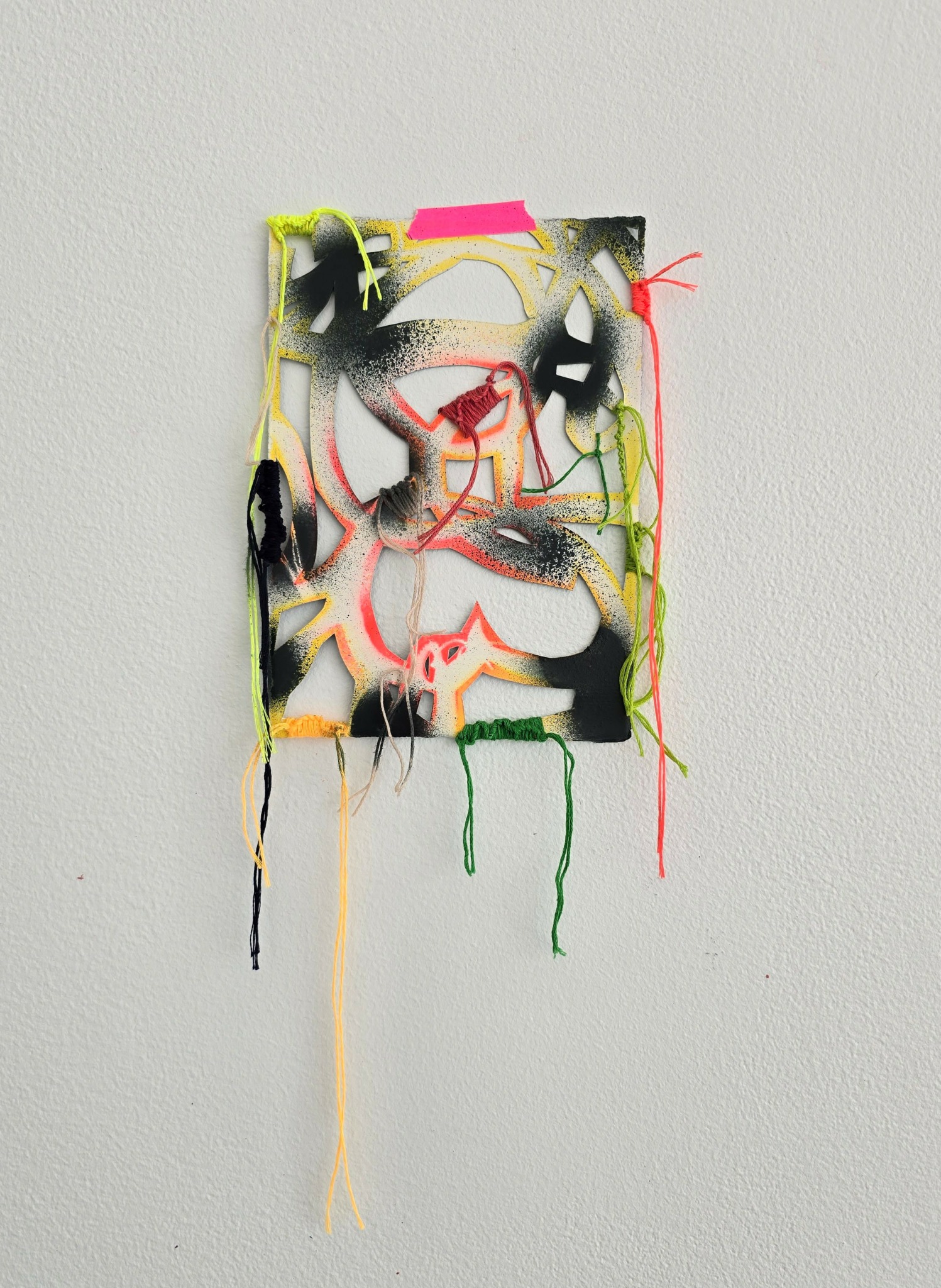
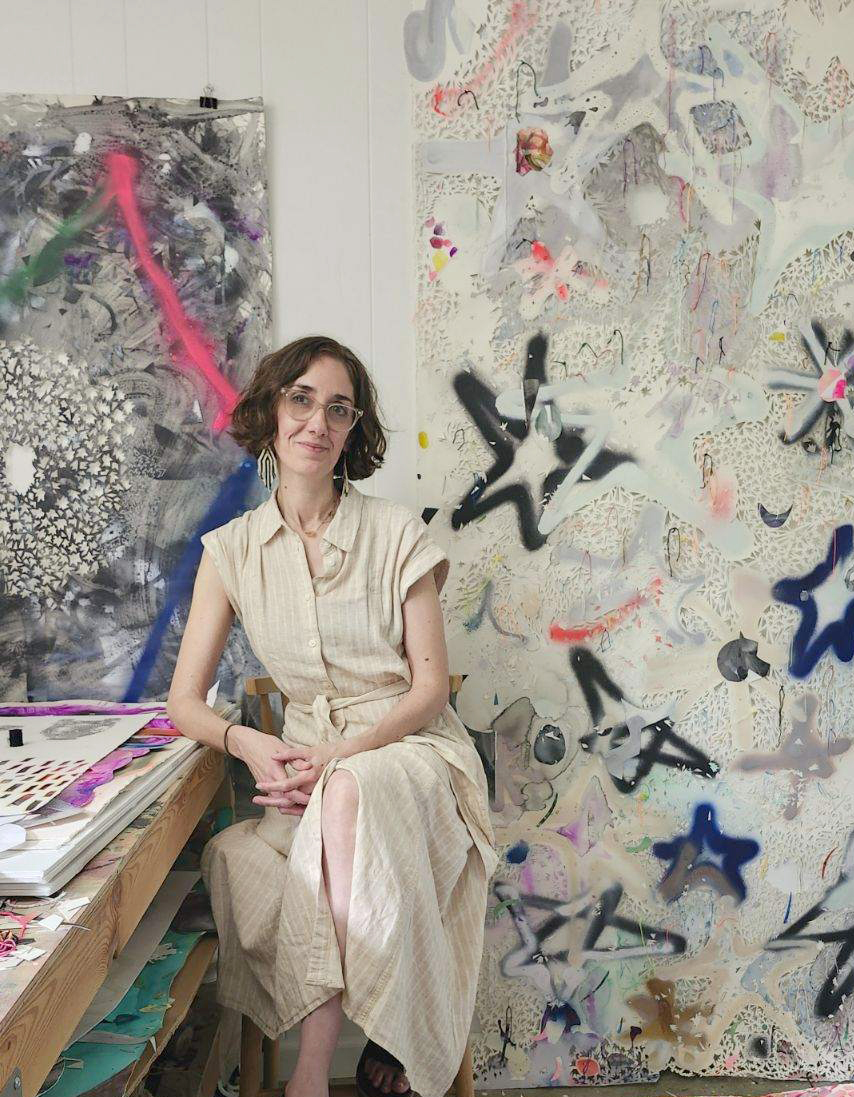
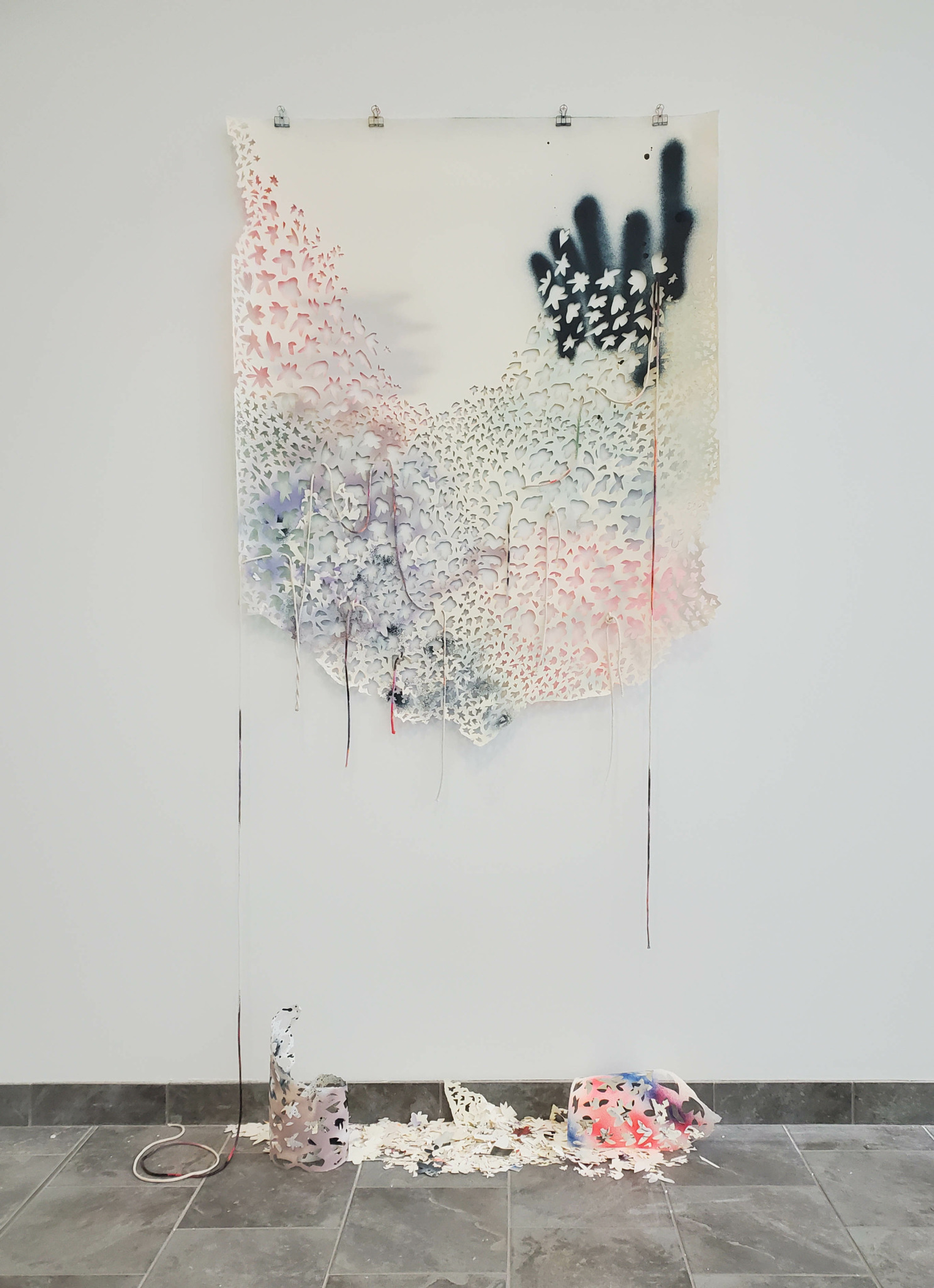
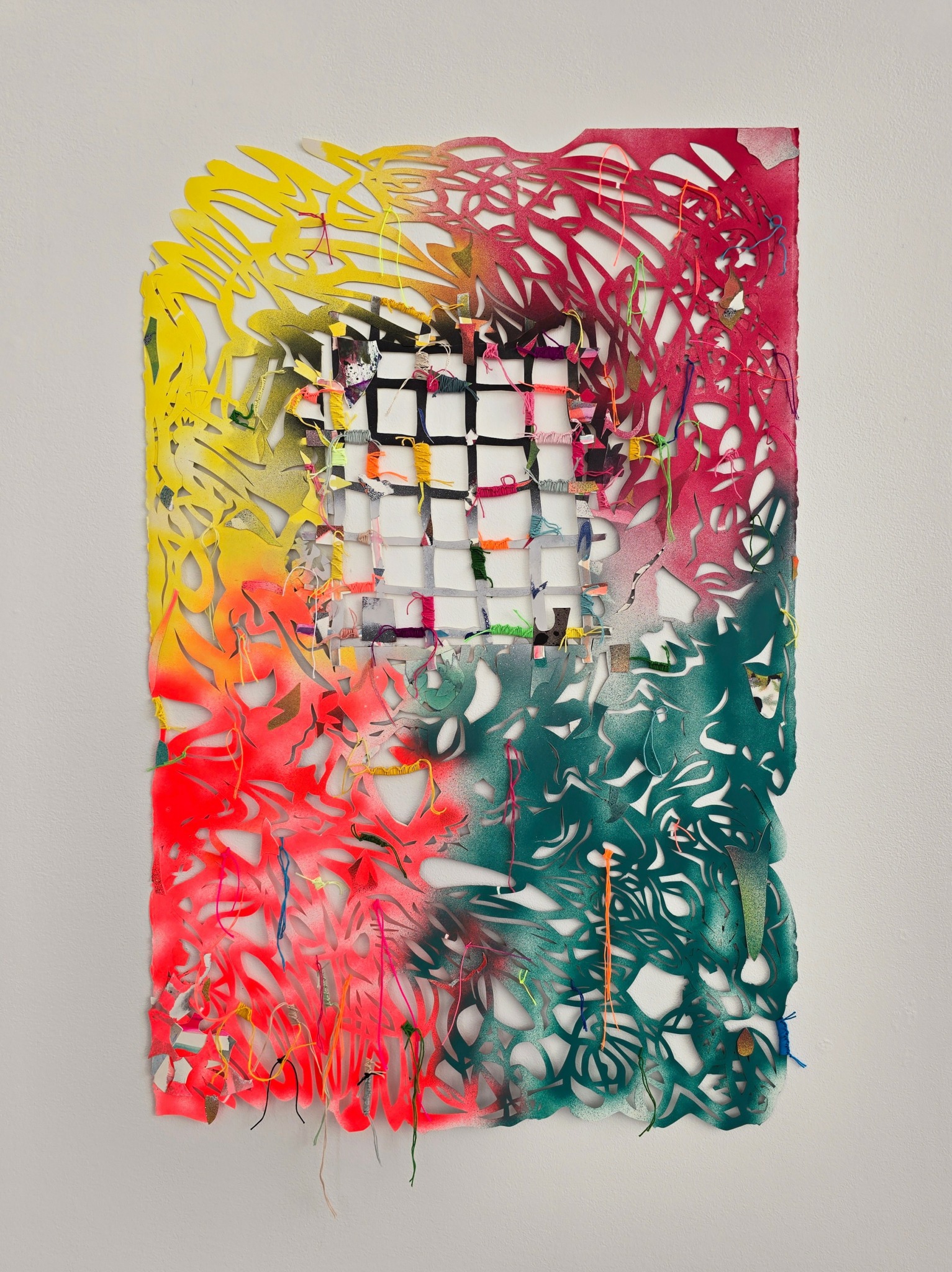
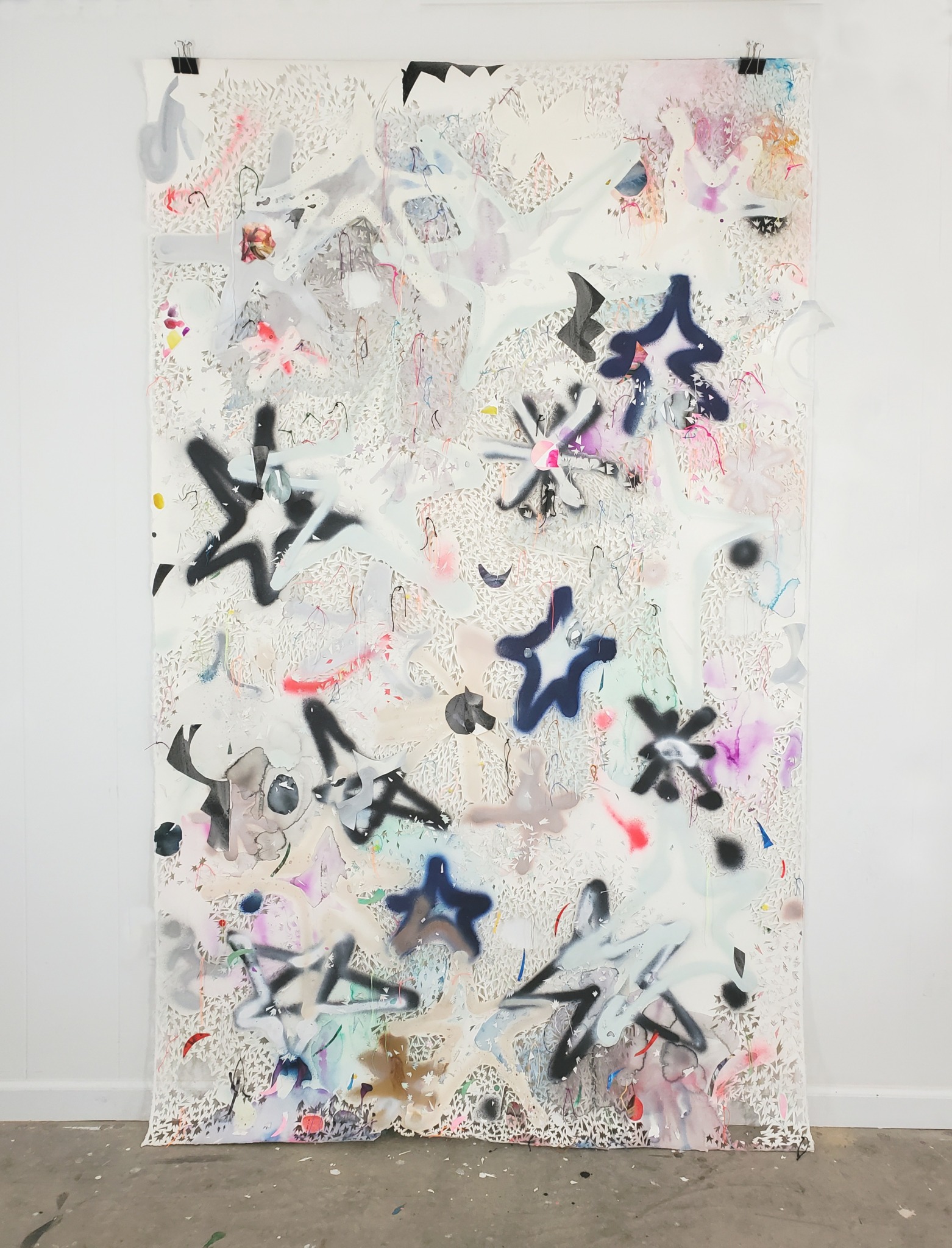
I identify as a painter; however, I usually work on and with paper through the combined modalities of collage, painting, drawing and sculpture. My approach to painting is idiosyncratic and my paintings incorporate all manner of found and fabricated materials. Additionally, I use various types of paint—spray paint, acrylic, gouache and Flashe. I am a material girl (Taurus moon) and, in my mind, almost any material can be a painting material. I love disrupting hierarchies and populating the paper’s surface with poured paint, discarded scraps, beads, string, sequins, stickers and scraps of my children’s abandoned drawings. Many materials that I am drawn to are of lowly origins, mass-produced remnants that are resuscitated within my paintings.
Accident and chance are my friends in the painting process. The studio is where I allow for any and every risk. In fact, I realized recently that to feel complete, a piece has to undergo some type of near-death experience. A painting that doesn’t go through this process never feels completely done to me.
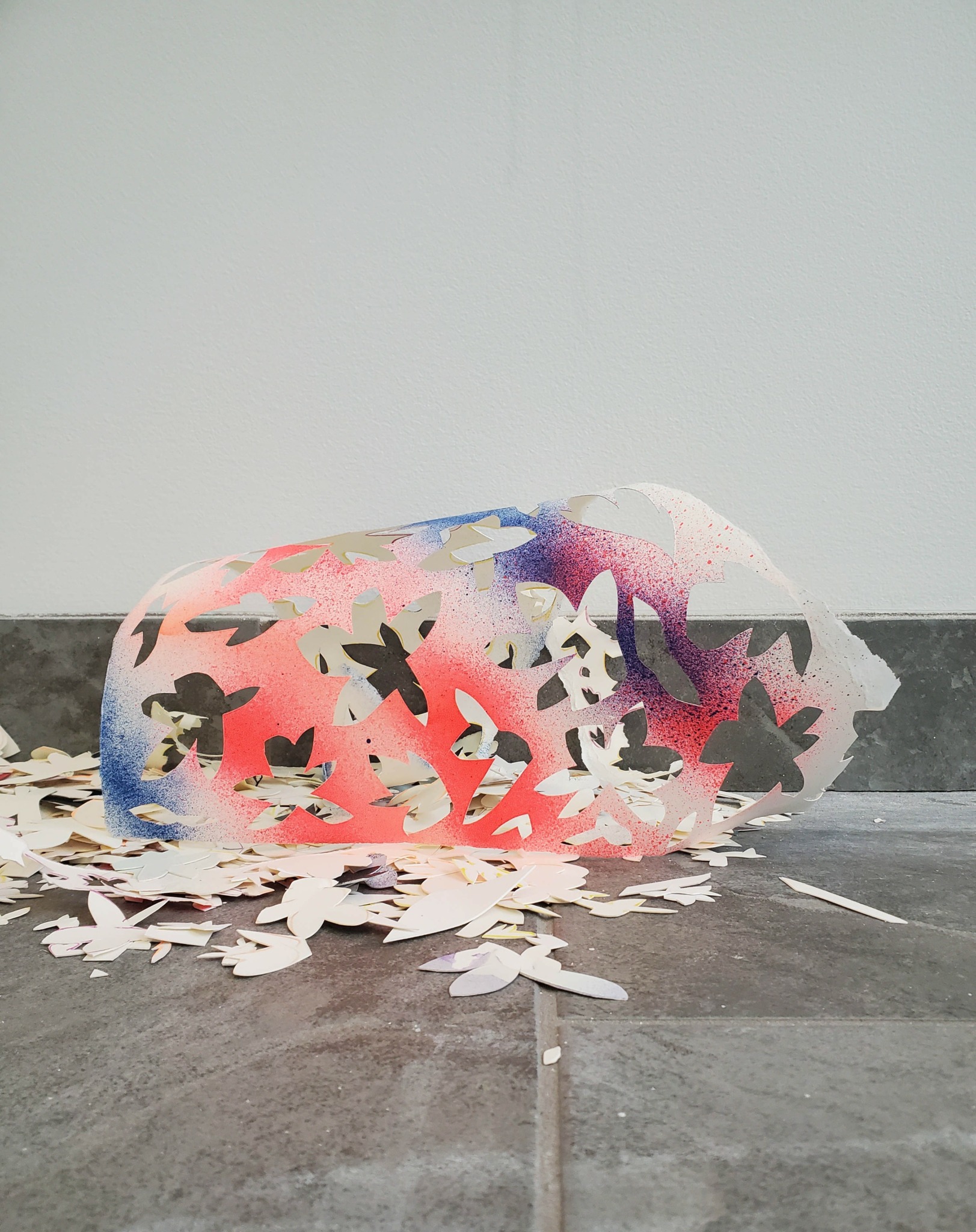
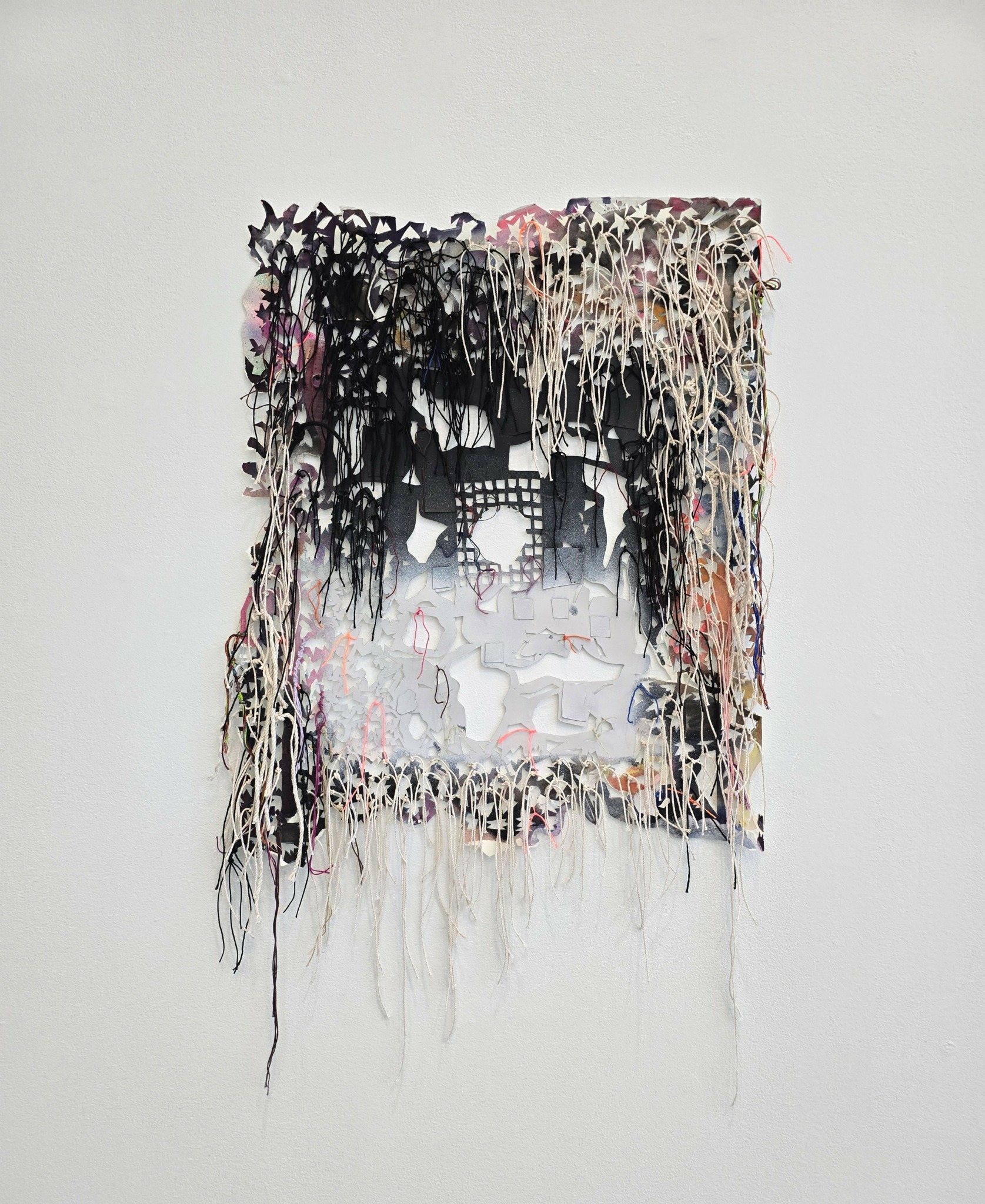
In my paintings, I pair additive mark-making with meticulous, subtractive cut outs. The cut outs are all hand cut and serve both an aesthetic and conceptual function. For instance, they can participate in the push/pull of color relationships and frame more intuitive gestures in my work, but they also challenge the preciousness of painting, particularly the notion that a painting is supposed to last indefinitely. I want my paintings to appear as if they are on the brink of falling apart. They incorporate holes, as well as bits and pieces of paper that hang off of the painting or fall to the floor. Elements of woven and knotted thread are used in the attempt to hold the painting together both literally and aesthetically.
I love thinking about my paintings as both surface and object, as well a ritual that measures time. Recently, I’ve been working on the front and back of paintings, and decide as the painting progresses which side will be the front. The color scheme on the paintings’ verso casts reflective color onto the wall, and I particularly enjoy the ephemeral quality that light and shadow bring to my work.
My paintings nod to textiles, as well as the nuanced history of abstract painting, I am interested in the pleasure of ordering—finding joy through creating patterns and assigning significance to odd items. Gardening, astrology and geology are of particular interest, as are the ways cultures have historically kept track of time, through rituals, calendars, mark making and writing.
Are there any books, videos, essays or other resources that have significantly impacted your management and entrepreneurial thinking and philosophy?
I’m a big reader of both fiction and non-fiction and a huge fan of sharing books, essays, podcasts and other resources. Below are a few of my favorites—some that I’ve reread many times, as well as some that are newer to me. Most of them examine creative thinking and success in some capacity. I am obsessed with creativity, human ingenuity and the personal drive to create art. Like, why do we continue to do it, often at little to no recognition and great personal risk?
I don’t really think of my artistic practice as entrepreneurial, but I find all of these books, essays, podcasts, etc. relevant to my creative philosophy:
The Artist’s Way, Julia Cameron
The Four-Hour Art Week? Read Carol Bove’s Self-Help Guide for Artists, from Academie X: Lessons in Art and Life
The Rise: Creativity, the Gift of Failure, and the Search for Mastery, Sarah Lewis
Air Guitar: Essays on Art and Democracy, Dave Hickey
An Interview with Dave Hickey, The Believer, Sheila Heti
How to Live: Or A Life of Montaigne in One Question and Twenty Attempts at an Answer, Sarah Bakewell
When We Cease to Understand the World, Benjamin Lebatut
Please Kill Me: The Uncensored Oral History of Punk, Legs McNeil and Gillian McCain
Walton Ford: A Bubble in the Lake, The Louisiana Channel
Hildegard of Bingen Composes the Cosmos, Alex Ross, The New Yorker
How to be an artist by night, Raqs Media Collective
Inside ‘The Red Studio’: Ann Temkin with 6 Artists on Matisse, Dialogues: The David Zwirner Podcast
Make Your Art No Matter What, Beth Pickens
What do you find most rewarding about being a creative?
Turns out, the act of slow looking that is required of drawing and painting is also an effective way of observing the world around me. I’m constantly curious, inspired and never bored.
Contact Info:
- Website: https://www.lauren-rice.com
- Instagram: @laurendrice