

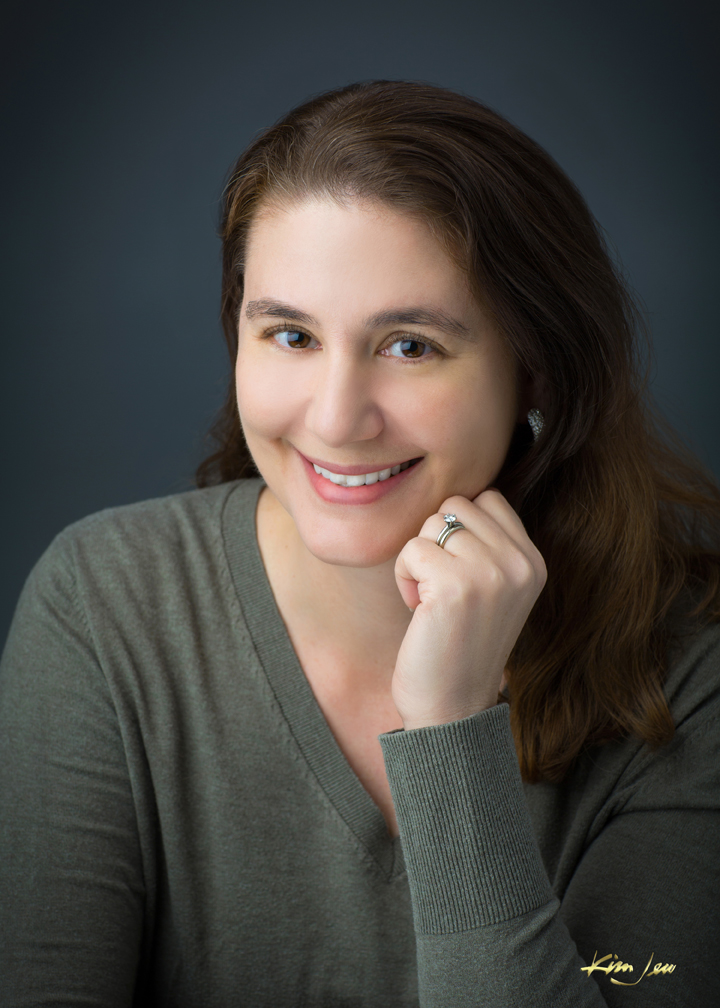

We caught up with the brilliant and insightful Lauren C. Teffeau a few weeks ago and have shared our conversation below.
Alright, Lauren C. thanks for taking the time to share your stories and insights with us today. Learning the craft is often a unique journey from every creative – we’d love to hear about your journey and if knowing what you know now, you would have done anything differently to speed up the learning process.
I would say I’ve spent too much of my life in denial I wanted to be a writer. I distinctly remember learning that it was people who were writing all the books I took out of the library in vast quantities at a young age. I decided I wanted to do that when I grew up, but the constant messaging I got at home was being a writer was too risky, that I should look elsewhere for a career. So I pushed that desire deep down as I went to school, then college, then graduate school, trying to do just that. But I still gravitated to English and humanities classes and wrote in secret around the edges of my life. Eventually, I grew tired of trying to deny that part of myself.
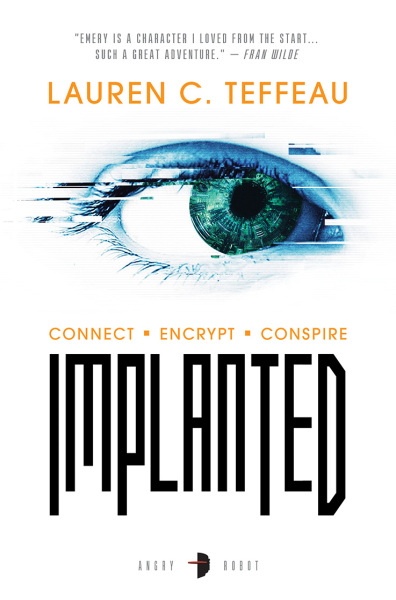
When I moved to New Mexico in 2009, it was an opportunity to reset my life and start taking my writing more seriously away from expectations. With the support of my amazing spouse, I was able to learn my craft and slowly build a community of writer friends and colleagues, both locally and online. I started publishing short stories, went to workshops and conferences, eventually got an agent and published my first book Implanted (Angry Robot, 2018), which was a finalist for a number of awards. There have been some ups and downs along the way, but I now have over twenty short stories published in magazines and anthologies, have another book, A Hunger with No Name, that just came out last fall from University of Tampa Press, and a great group of people I know who are in my corner, all of which has been hugely transformative.
It’s been a process undoing the programming I received early on that I shouldn’t want to write, which held me back from developing my craft, finding a support network, and building a body of high quality work. I still feel wistful for what I could have accomplished sooner if I hadn’t been deterred from writing for so long. I wish I could go back to my younger self and tell her there’s no need to be scared, that it will be worth all the uncertainty to give yourself over to your dream, but that’s of course all hindsight. Writing is very much a journey, and despite some trials and tribulations, I’d like to think my story has a happy ending. Or at least this particular act does, because I hope there is much more in my story to come.

Awesome – so before we get into the rest of our questions, can you briefly introduce yourself to our readers.
I’m primarily known as a speculative fiction writer based in Albuquerque, New Mexico. My work often focuses on environmental issues, examines the role of technology in our lives, and centers women’s voices through fantastical adventures and immersive worlds.
My latest book, the environmental fantasy A Hunger with No Name, was released in the fall of 2024 by the University of Tampa Press. It explores how the fate of a young woman from a low-tech culture intersects with a much higher-tech one, blowing up her worldview in the process and putting her values to the test as she comes face-to-face with technologies from the age before that should have been lost to time. Technologies that threaten the very existence of her culture because too many of her people view them as magic–too strong, too compelling, to fight off any longer. My novel Implanted (2018, Angry Robot)–a mash-up of cyberpunk, solarpunk, adventure, and romance–was shortlisted for the 2019 Compton Crook award for best first SF/F/H novel and named a definitive work of climate fiction by Grist. My short stories range from swashbuckling fantasy to noir technothrillers, climate fiction, and some occasional horror–with hopefully even more to come.
I earned a Master’s degree in Mass Communication, studying, in part, the digital divide and how people engage with the media. Afterwards, I spent a few years working as an academic researcher, examining how people adopt new technologies and navigate the digital information sphere. This was hugely formative and gave me a strong foundation in the social sciences for forecasting the future.
In addition to writing, I’m also an alumni mentor for the University of Georgia and an Artist Leadership Fellow with the Mid-America Arts Alliance. In both roles, I get to help people formalize their creative practice and provide them with the support I wished I had early on in my own writing career.
To learn more, please visit: http://www.laurencteffeau.com
What do you find most rewarding about being a creative?
There’s nothing like seeing your work published and being able to hold your book in your hands. Every time one of my stories is published, I get a little thrill that my words are out their in the universe for someone else to discover. It feels like a minor miracle every time, considering how much work that goes into each story, all the different versions to get it right, all the other stories and authors it’s competing against in order to be published in the first place. Whatever else happens after that is gravy.
Is there something you think non-creatives will struggle to understand about your journey as a creative? Maybe you can provide some insight – you never know who might benefit from the enlightenment.
What “success” looks like is very different for creatives than non-creatives. The milestones we have for marking our progress can be so subjective and sometimes intangible that the process of translating them into noncreative terms can render them meaningless. That can lead to a huge disconnect with the noncreative people in your life that can be tough to bridge. Plus, I don’t think we talk enough about how much time it takes to develop one’s craft before you get to any possibility of payment, let alone a living wage. For any other industry, such a prospect would seem irrational at best. But you need that irrational drive to make any progress as a creative because it is those very dreams that serve as our fuel when it seems like everything else in the world is conspiring against us.
Contact Info:
- Website: https://www.laurencteffeau.com
- Instagram: https://www.instagram.com/lteffeau/
- Other: https://linktr.ee/teffeau
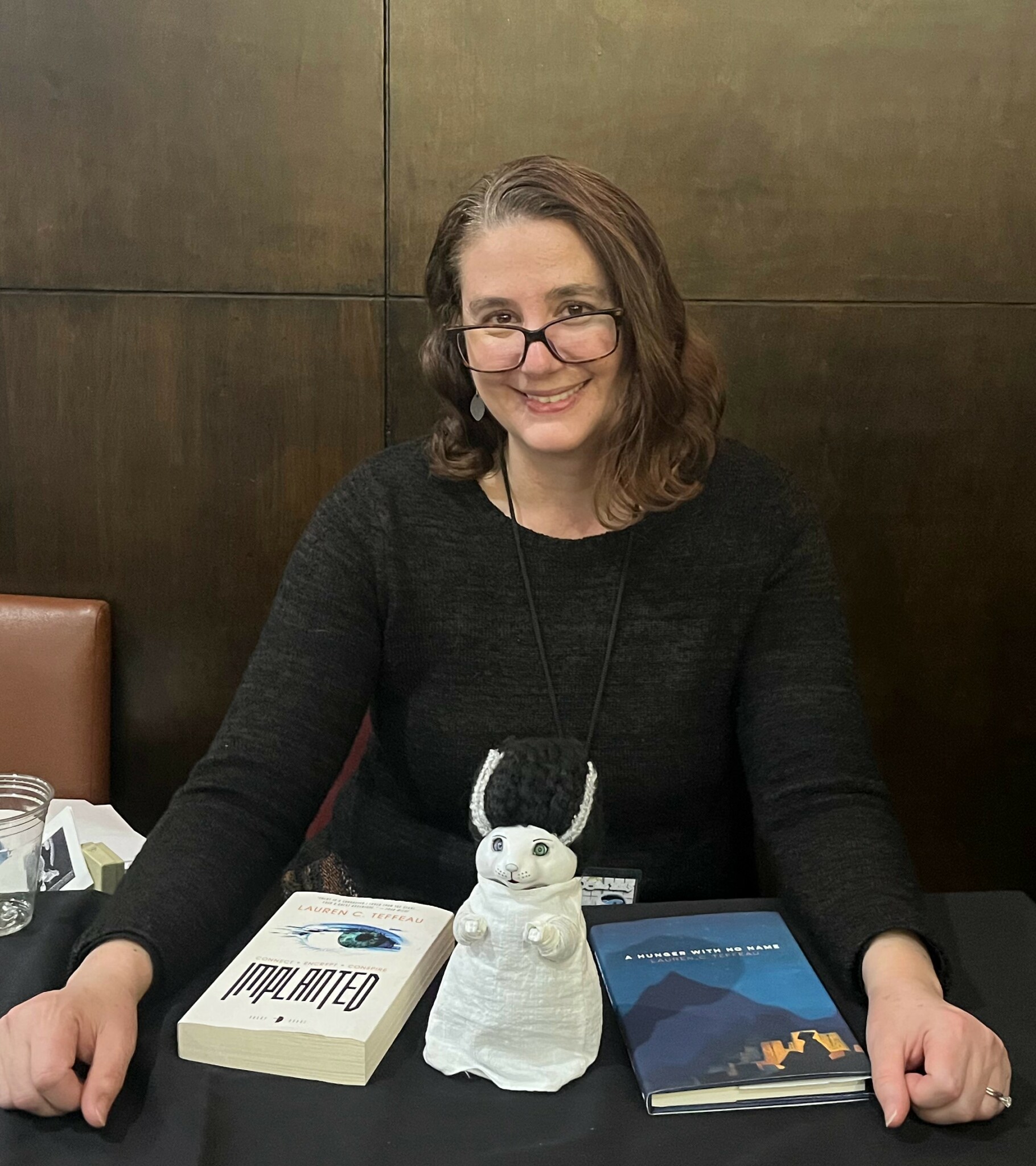
Image Credits
Headshot courtesy of Kim Jew Photography