

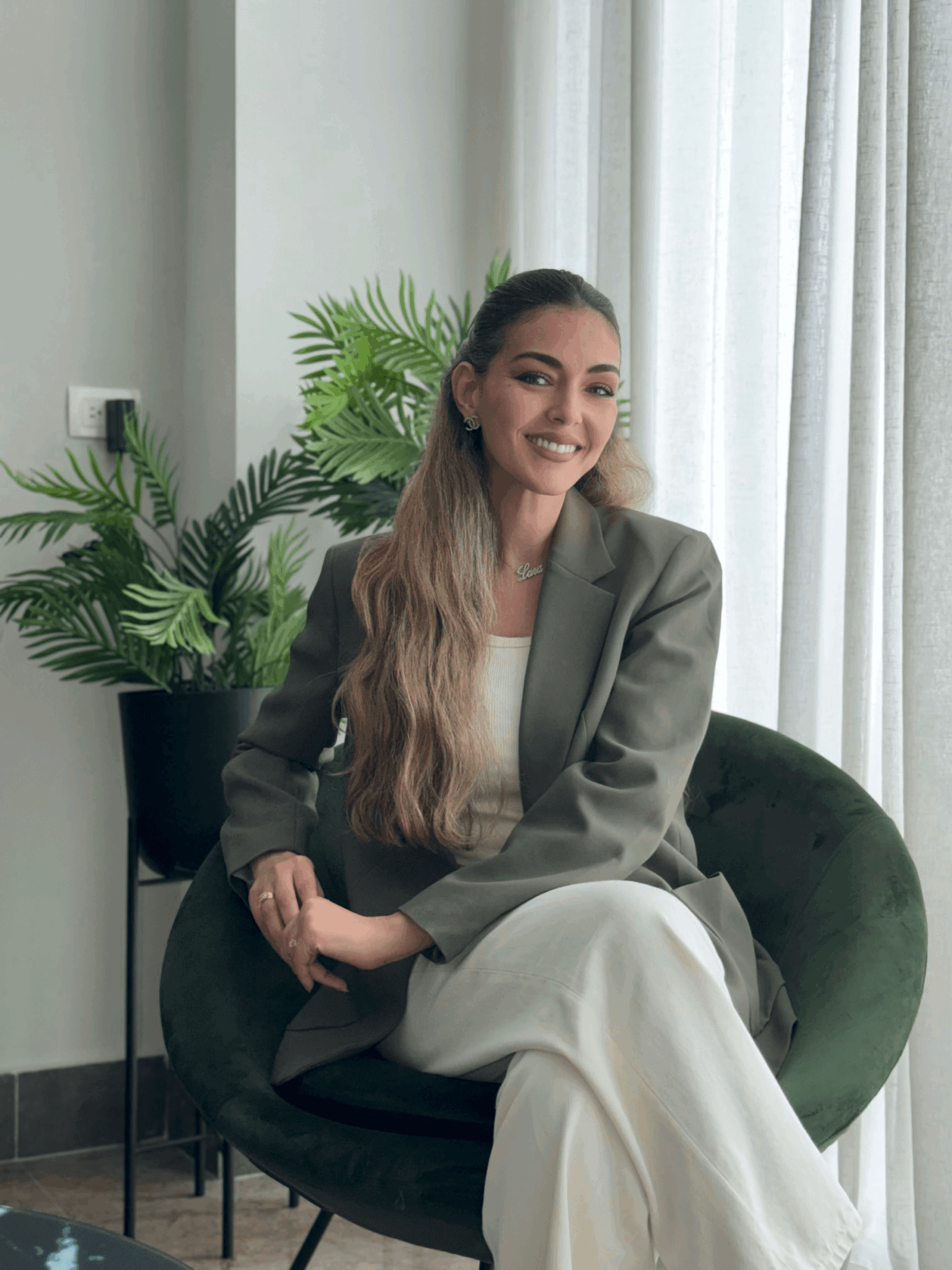

We’re excited to introduce you to the always interesting and insightful Lara Darwish. We hope you’ll enjoy our conversation with Lara below.
Lara, appreciate you joining us today. Was there an experience or lesson you learned at a previous job that’s benefited your career afterwards?
One of the most important lessons I learned early in my career was that if you do not create space for yourself, no one else will.
Like many professionals, I initially believed that hard work alone would be enough, that if I consistently delivered quality results, people would naturally notice. While performance matters, I learned that visibility matters too. The workplace is not always a meritocracy where the best ideas automatically rise to the top. Often, opportunities go to those who are willing to contribute visibly, share their perspectives, and make their value known.
I remember sitting in meetings where I had ideas to contribute but hesitated to speak up, assuming someone else would say it or that my perspective was not important enough. Over time, I noticed that the people receiving recognition were not necessarily the most knowledgeable people in the room; they were often the ones willing to take up space, communicate their ideas, and participate in the conversation.
That realization changed the way I approached my career. I began speaking up more, sharing my point of view, asking questions, and advocating for my work. Not because I wanted attention, but because I recognized that remaining silent served neither me nor the organizations I was trying to help.
The lesson I carry with me today is that visibility is not about self-promotion; it is about contribution. If you have an idea that can improve a process, help a team, or solve a problem, you have a responsibility to share it. Courage is not the absence of fear, t is choosing to speak even when the room feels intimidating.
Learning to create space for myself shaped the confidence I have today and taught me that professional growth often begins the moment we stop waiting for permission to be heard.

Awesome – so before we get into the rest of our questions, can you briefly introduce yourself to our readers.
Across multiple industries, my work focuses on helping individuals, teams, and organizations develop the mindsets, skills, and systems needed to navigate complexity and achieve sustainable results.
A central theme throughout my career has been bridging the gap between science and practice. Research creates value only when it can be translated into meaningful action. Whether facilitating leadership development, designing learning experiences, coaching teams, or consulting with organizations, the objective remains the same: transforming evidence-based insights into practical strategies that people can understand, apply, and sustain.
Particular passion lies in helping people challenge limiting assumptions, strengthen self-awareness, expand their capacity to learn and adapt, and create cultures where both individuals and teams can thrive. Lasting organizational transformation begins with human transformation, one person, one conversation, and one decision at a time.
Among the accomplishments that stand out most throughout my journey, is building a career that combines academic rigor with real-world impact. My doctoral research explored how learning experiences develop critical competencies in young people, while consulting work applies those same principles to leadership, culture, and organizational effectiveness. The ability to move seamlessly between research and practice has become a defining characteristic of that professional journey.
Beyond my role, I have a deep commitment to lifelong learning and personal growth. Every engagement is viewed as an opportunity not only to help organizations achieve results, but also to help people become more capable, confident, and intentional in how they lead, learn, and contribute.
Ultimately, the work is not about delivering information, it is about creating transformation. The mission is to help individuals and organizations unlock their potential by understanding the human side of change and turning knowledge into action.
We often hear about learning lessons – but just as important is unlearning lessons. Have you ever had to unlearn a lesson?
One of the most important lessons I had to unlearn was the belief that knowledge alone is power.
For years, I believed that the more I learned, the more capable I would become. I accumulated information, read extensively, pursued advanced education, and sought to understand how people learn, think, and change. While knowledge is valuable, I eventually realized that knowledge by itself changes very little.
Knowledge only becomes powerful when it is applied. It becomes power when we use it to improve our lives, solve real problems, make better decisions, and positively impact the people around us. Simply collecting information can become a trap. We convince ourselves that because we know more, we are growing, when in reality we may just be postponing action.
What I have learned is that knowledge also requires courage, the courage to act on what we know, even when it is uncomfortable. It takes courage to have the difficult conversation, change a habit, challenge a belief, set a boundary, or make a different choice once we know better.
Today, I believe that the true value of knowledge lies not in what we know, but in what we do with what we know. Learning is important, but transformation happens when knowledge is translated into action.

What’s been the best source of new clients for you?
The best source of new clients throughout my career has been referrals from existing clients. I have found that trust is built through consistently delivering results, acting with integrity, and maintaining strong professional relationships over time.
Many of the opportunities I have received have come from people who have experienced my work firsthand or have been referred by someone who has. While marketing and visibility are important, I believe that reputation remains one of the most powerful drivers of sustainable growth.
For me, the foundation of that reputation is a combination of ethics, credibility, and impact. When clients see meaningful results and feel genuinely supported, they become advocates for your work. Over time, those relationships create a network of trust that opens doors to new opportunities, collaborations, and long-term partnerships.
Ultimately, I believe that the strongest business development strategy is doing excellent work, treating people well, and consistently creating value for those you serve.
Contact Info:
- Website: https://www.laradarwish.com
- Instagram: https://www.instagram.com/_laradarwish/
- Facebook: Lara Darwish
- Linkedin: https://www.linkedin.com/in/lara-darwish-phd-2a7489197/