



We’re excited to introduce you to the always interesting and insightful Laneen. We hope you’ll enjoy our conversation with Laneen below.
Laneen, appreciate you joining us today. Let’s start with the story of your mission. What should we know?
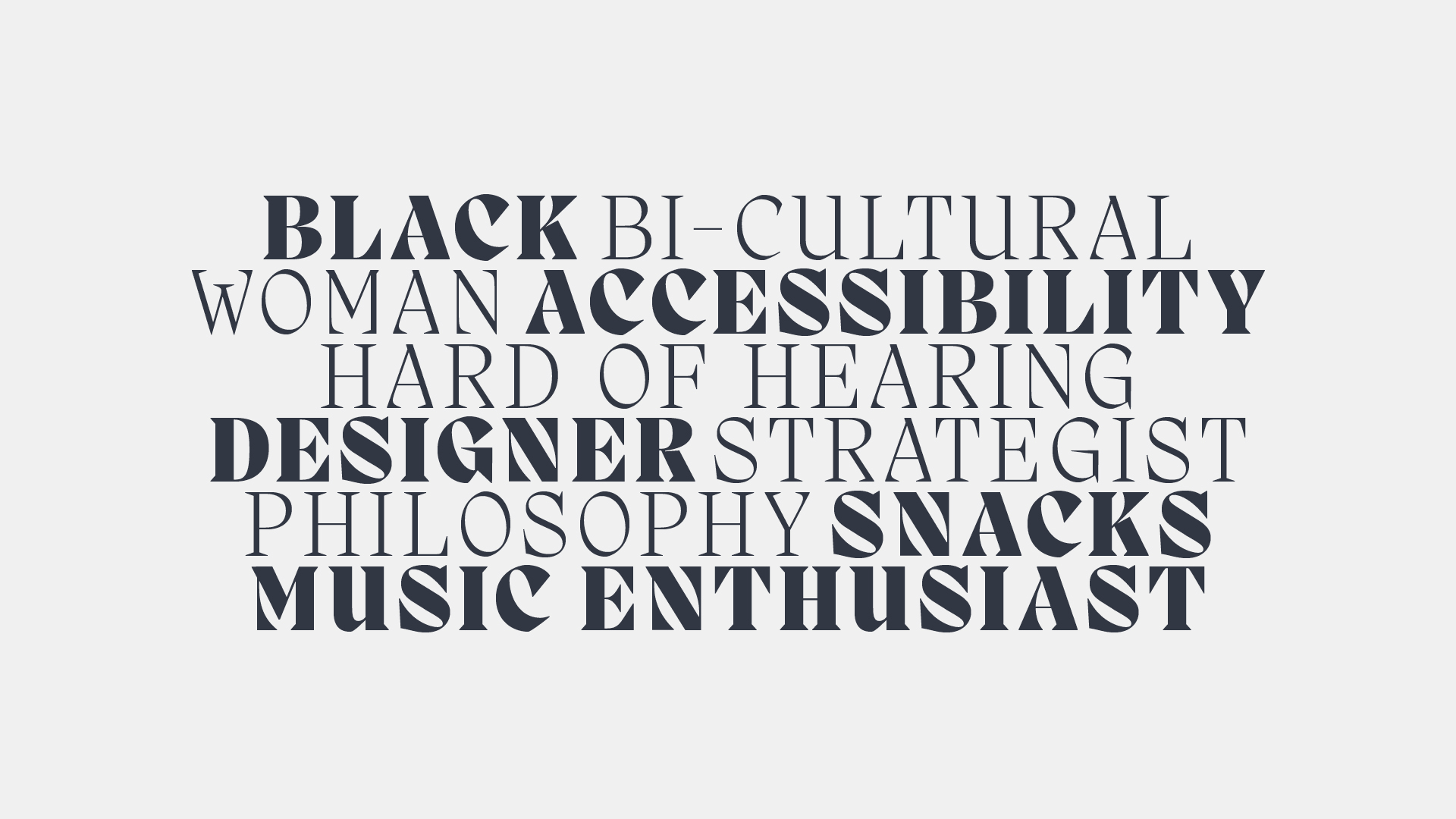
In addition to my love for all things art and design, I’m a bi-cultural multi-potentialite, a philosophy nerd, Hard of Hearing, and a huge music fan. I embrace my intersectional identity and integrate those perspectives into both my work and into connecting communities.
I’ve always had varied interests. When I’m not nerding out over fonts and color palettes, I read philosophy and listen to music. From wondering how snowboards are made to researching the latest advancements in physics, I’m constantly feeding my curiosity. To describe this range of interests, there are terms such as are multi-potentialite, multidisciplinary, or. generalist. During the time I started my design career, the industry taught junior designers that they must niche down – that they must pick one thing and focus only on that, such as a specific design style or design skill. The creative coaching gurus preach that being a generalist is bad because you’ll hit a career ceiling or that being a Swiss army knife of design means clients and agencies will be confused about what you actually do then choose not to work with you.
I’ve found that embracing those varied interests and letting go of conventional career advice about how to fit into the design industry actually improved the quality of my work and led to me feeling more engaged creatively. When I was designing a logo, a shape from String Theory would pop into my head and I’d use that for the brand identity concept. When in a strategy session with a client, I’d think “Well, that won’t go over well with the target community because you’re going to offend them” or I’d think “That design doesn’t accommodate captions on the video” and I’d speak up about it. Clients started to value me more because of the insights I brought to a project beyond just aesthetics. I expanded my skills from just designing to creative direction – learning new skills along the way and gaining a broader perspective of projects.
A quote that is often misused to allude to the fact that being a generalist is bad, takes on a different context when the full message is used. So remember…. “A jack of all trades is a master of none, but oftentimes better than a master of one.”
Laneen, love having you share your insights with us. Before we ask you more questions, maybe you can take a moment to introduce yourself to our readers who might have missed our earlier conversations? How did you get into the industry?
I’ve always been interested fine art, music, architecture, crafts, performance arts, video games, etc. … various forms of self expression and creativity. I also enjoyed learning about technology and keeping up with its advancements. It wasn’t until later in high school that I realized there was a career path that combined art and tech: graphic design. In university I started off doing visual effects but eventually pivoted to graphic design (and also double majored in philosophy). After I graduated I worked in-house, at agencies and studios, and did side projects – a typical route when you’re trying to find your footing. After a few years in-house at a company, I was creatively bored and also burned out. The idea of entrepreneurship took root during this time. I started scrappy with small production jobs and freelancing while mapping out what services I would provide and to whom then slowly built up from there.
PRODUCTS/SERVICES
My business is named Sublation Studio (SBLTN). “Sublation” refers to a concept introduced by the German philosopher Georg Wilhelm Friedrich Hegel. It’s integration without elimination. This term suggests that when seemingly contradictory things or ideas intersect, they have the potential to produce something more powerful than either could alone. An example: “being” and “nothing” are both preserved and changed through sublation in the concept of “becoming”. Even though the concept fit, I was going against the brand naming advice from the design industry. Advisors told me I was committing brand name sabotage because people would confuse it with another word or misspell it. I ultimately decided to embrace a word that was a snapshot of how I operate (combining and remixing my varied interests) and felt aligned with who I was (my multi-layered identity).
Because of my lived experience and identity lenses, SBLTN is a creative studio that focuses on inclusion and accessibility. “SBLTN Studio” offers offers inclusion-centered brand strategy and design for socially-curious entrepreneurs and organizations. Projects include developing messaging and defining audience as well as creating a visual identity (logo, color palette, collateral, etc). “SBLTN Lab” focuses on accessible practices through education, awareness, action, and advocacy. This is where I get to learn from others and really enjoy the knowledge-sharing that happens, such as through the Lab Notes newsletter.
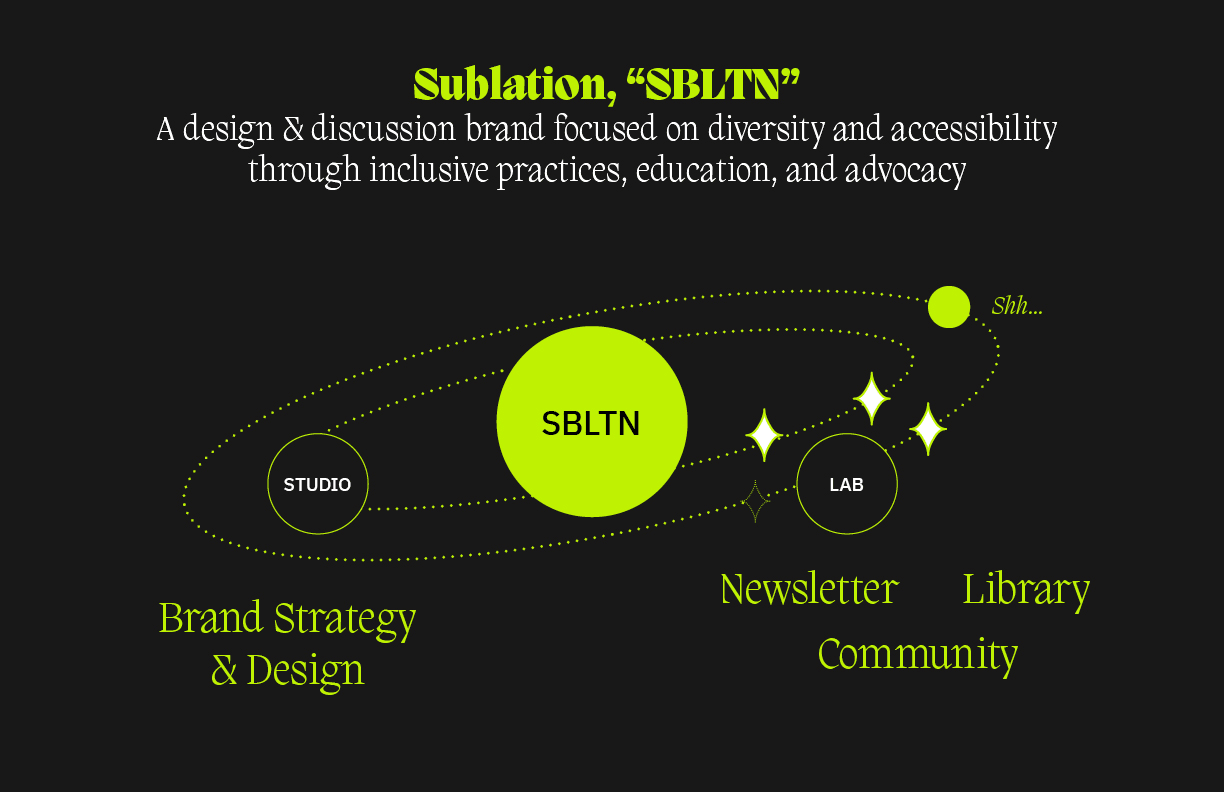
While DEI (diversity, equity, and inclusion) became mainstream buzzwords and industry initiatives, accessibility has taken a backseat and not received as much attention. SBLTN having a focus on access and intersectionality makes it a bit niche within the inclusion bubble.
Since it is people that are at the center of accessibility, I also value lived experience just as much as academic approaches and research. Often, someone’s story can tell you more than a manufactured framework.
What are you most proud of or would want people to know about your work?
I’m most proud of the values that I try to operate through: integrity, curiosity, community-in-practice and having fun while doing this work.
What I want people to know about accessibility and design is that it’s not a one-and-done thing. Ticking off boxes on a checklist once doesn’t mean that your product, service, or business is accessible forever. It’s an on-going journey. Learning about accessible practices, why they matter, and who they can positively impact is a big first step. Then you can take small, but cumulatively impactful, actions to implement. It’s also important to spread the word about your accessibility journey. Action and awareness are 2 key things – everyone has to start somewhere so just get curious.
What’s worked well for you in terms of a source for new clients?
Being a human to other humans and doing good work.
Just creating and building relationships of care. Yes, networking events can help but I’ve found treating people like people, and not just a number in your client roster, has created mutual respect. I’ve received referrals because of relationship building and/or being of service in some way – even if they weren’t a paying client.
It’s taught to push what is unique about you and to find this magical unicorn space that isn’t inhabited by any other creative or business owner. I think it’s perfectly okay to do something that many other people do but it’s HOW you do it that can stick with people. And the “how” doesn’t have to be a special framework. It can simply be something like giving grace when a meeting is rescheduled because a client’s kid got sick or putting up fun out of office messages on your email that remind people to take screen breaks.
You might be a brand designer in a sea of brand designers but most of the time, if the clients are happy with your work and you treat them with respect, they’ll talk about you to other people and you’ll attract people that operate in a similar way as you.
We often hear about learning lessons – but just as important is unlearning lessons. Have you ever had to unlearn a lesson?
You can’t plan your way to perfection. When I initially started, I thought that I could do enough research that I would avoid making mistakes and that having all the fancy systems would guarantee smooth, problem-free client interactions and processes. The result of that was wasted time and money, focusing on things that didn’t “move the needle”, systematizing too early or unnecessarily, energy spent solving problems I didn’t have yet, and spinning my wheels with information overwhelm that lead to indecision. Being busy didn’t mean I was productive. Yes, I did learn a lot but I could’ve made more valuable improvement and had more useful feedback if I had taken action instead. It would’ve been more helpful if I had taken action, regardless of how unsure I was, gotten feedback or data based on experience, iterated, then repeated that cycle. Overall, I’ve learned that an inch of action is worth more than a mile of intention.
Contact Info:
- Website: https://sbltn.com
- Instagram: https://www.instagram.com/sublationstudio/
- Other: https://sbltn.substack.com/

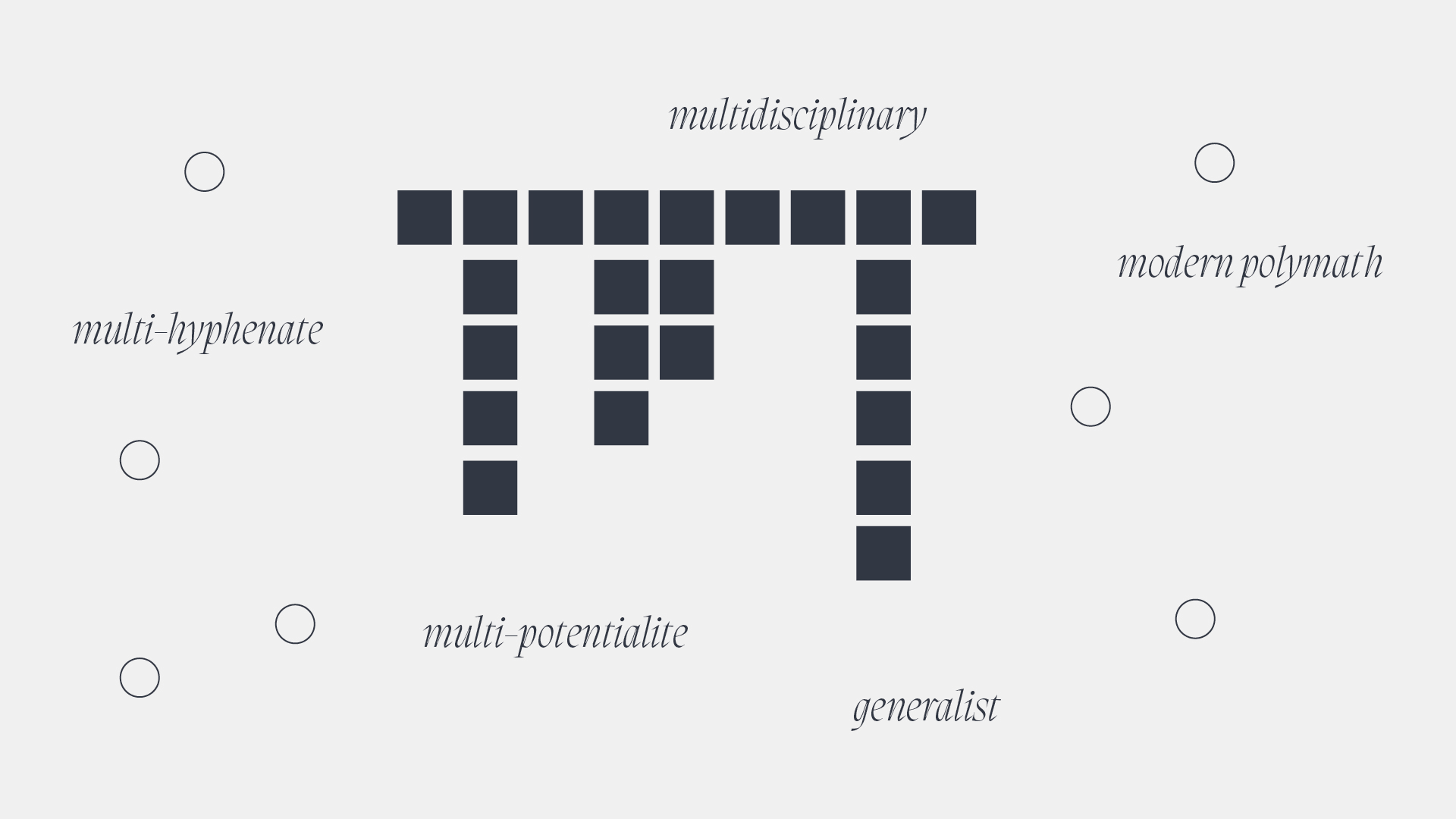
Image Credits
Photos and graphics by Laneen