

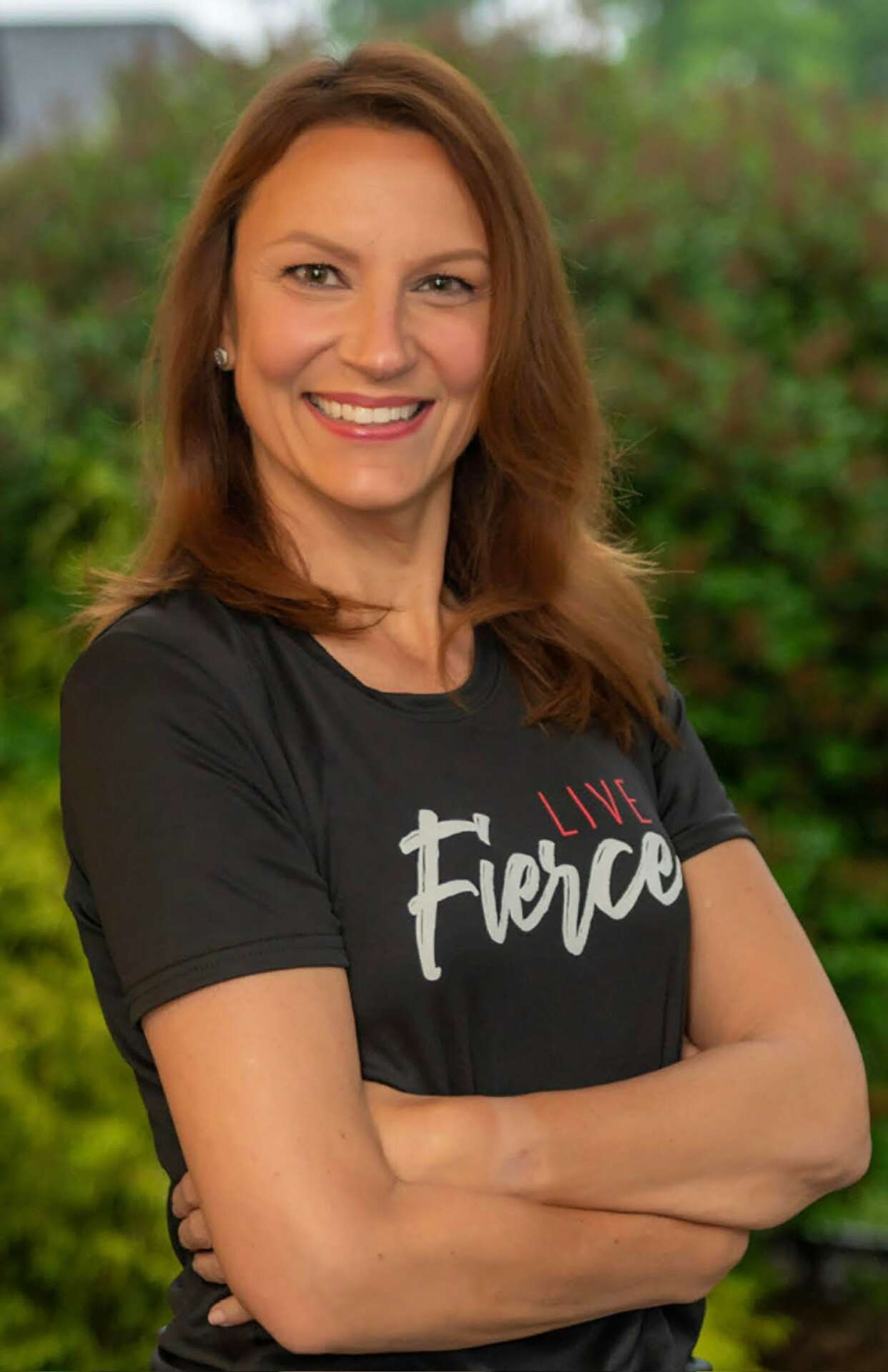

Alright – so today we’ve got the honor of introducing you to Kristy Sidlar. We think you’ll enjoy our conversation, we’ve shared it below.
Kristy, thanks for taking the time to share your stories with us today. Was there a moment in your journey that meaningfully altered your trajectory? If so, we’d love to hear the backstory.
We all have dates burned into our memories – our parents’ birthdays, our wedding anniversary, the birthdates of our children. But the dates I remember most vividly are the dates when I almost died.
The first was April 14, 1996, when I was teaching a fitness class and collapsed in front of my students. Fortunately, my blackout only lasted a handful of minutes and by the time the EMTs arrived, everything appeared to be fine.
The second time was on my 31st birthday – Halloween, 1999. I was training for a triathlon, by myself, with no cell phone, lying on the side of the road fading in and out of consciousness for 45 minutes. Another cyclist finally came by and called the paramedics. My heart was shocked back to a normal rhythm from its peak rate of 280 beats per minute.
This was when I was formally diagnosed with a rare heart condition and was told that the first symptom of my condition is often sudden death. I was again spared. My condition, however, was progressive and worsened through intense exercise. I was told my lifestyle had to change significantly. This was a hard pill to swallow, but I knew in my gut that cutting back on something I loved meant sustaining my life for a longer period of time.
There were other close encounters with death, but my most incredible evasion was due to a gift from a selfless organ donor when on March 11, 2021, she passed life to me in the form of a healthy new heart.


Wow! I appreciate you sharing that with us. Before we ask you to share more of your insights, can you take a moment to introduce yourself and how you got to where you are today to our readers.
As a 20+-year volunteer, speaker, and board member for the American Heart Association, my drive for raising awareness around the risks of heart disease – particularly in women – has not only brought me great personal satisfaction, but helped countless women and families live longer, healthier and more fulfilling lives.
I speak to corporate and civic groups, and pull a lot of my material from my way-better-than-expected transplant recovery. I believe this was due to a multitude of factors – mainly a positive attitude, a focus on six core dimensions of wellness, my very unique approach to making long-lasting changes, and of course great medical care through Henry Ford Health System in Detroit.
On the six-month anniversary of my transplant, I completed a 5k – my first in over 20 years. At my one-year mark, I completed that elusive triathlon, running across the finish line hand-in-hand with my 79-year-old mom.
During my first year post-transplant, I wrote a book called Change of Heart: My Journey of Transplantation, Revelation, and Transformation. I love telling my story, and I am always so grateful when a reader contacts me to tell me they made an appointment to check their heart health or that someone printed out my Wellness Widget and made commitments to better emotional health or social wellness or financial stability.
I have created a formula for looking at six core dimensions of wellness, finding ways to focus on small meaningful changes, and through a “micro-bite” approach that has deep meaning and a way of looking at creating habits like you’ve never heard before.
My last 25 years have been far from smooth, but I have learned some very valuable lessons and hope to continue to inspire people to take action and make changes for a more fulfilling life and a healthier society.


Can you share a story from your journey that illustrates your resilience?
My entire 25+-year journey with heart disease is one long story of resilience. I refused to feel sorry for myself or let my disease (and potentially shortened life) define me. I realized I needed to move from saying “I am a heart patient who is also a wife, a daughter, a professional, a friend” to saying, “I am a wife, a daughter, a professional, a friend who happens to have heart disease.” I couldn’t let the disease (aka the bad news) be the biggest thing in my life.
Have you ever had to pivot?
My story involves two pivots. The first was when I was an athlete and first diagnosed. I was told that my heart condition was progressive and the thing that would make it worse more quickly was exercise. I had to do away with the thing that was the single most important outlet in my life. That meant 20 years of no competitive athletics, no swimming, no cycling, no running – only low intensity exercise. It was a very hard pill to swallow in the beginning, but I knew it meant getting to live a longer life and avoiding a transplant for many more years.
My other major pivot was when I was given my second chance at life through my heart transplant. The day I was able to run for the first time was incredibly thrilling, emotional, gratifying, humbling and a day I will never forget. I do still run, and I also enjoy a half dozen other ways to keep me healthy, active, and grateful – biking, swimming, pickleball, hiking, yoga, pilates, and weights/resistance training, I never take it for granted.
Contact Info:
- Website: www.changeofheartmemoir.com
- Instagram: kristy.sidlar
- Facebook: Kristy Balogh Sidlar
- Linkedin: Kristy Sidlar https://www.linkedin.com/in/kristy-sidlar-57a1ba3/
- Email:kristy@
changeofheartmemoir.com - Other: You can find my book on Amazon and 30,000 other online retail sites across the globe.