

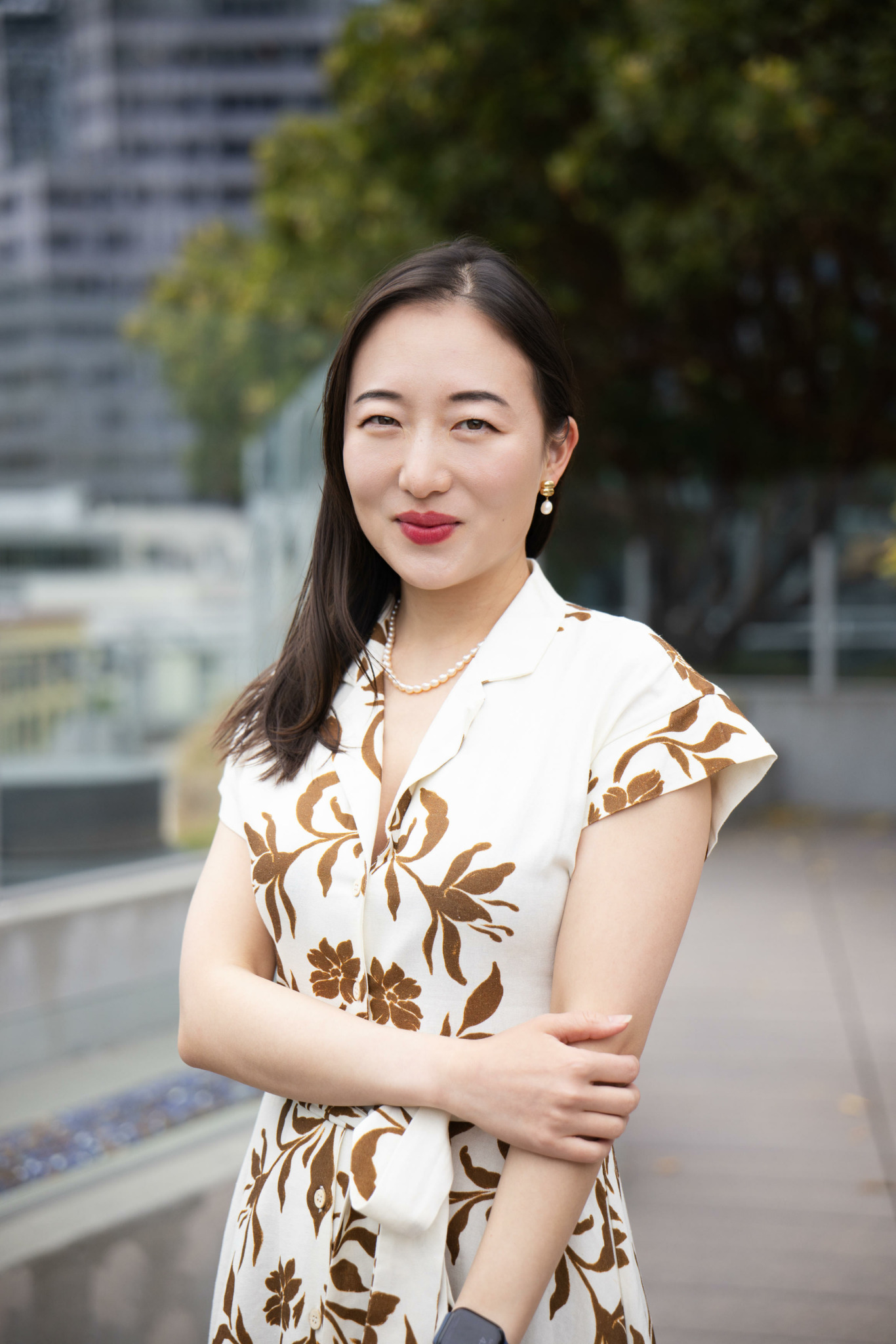

We’re excited to introduce you to the always interesting and insightful Kristy Kim. We hope you’ll enjoy our conversation with Kristy below.
Kristy , appreciate you joining us today. What’s the backstory behind how you came up with the idea for your business?
The idea for TomoCredit was born from one of the most frustrating periods of my life.
I immigrated to the U.S. from South Korea when I was 11 years old. I worked hard, studied hard at UC Berkeley, landed my dream job in investment banking in San Francisco, and thought I was doing everything right.
Then reality hit.
One of the first things I wanted to do after starting my job was buy a nice car. I walked into a Lexus dealership with a good salary, money in the bank, and every expectation that I would qualify for an auto loan. I mean, why wouldn’t I?
I was rejected.
Not once. But Five times.
Nobody really explained it to me. I kept thinking there had to be a mistake. I had done everything I was told to do. I went to a good school. I got a good job. On paper, I was every bit financially responsible.
The problem wasn’t my income.
The problem was that I didn’t have a credit score.
At the same time, I was trying to find an apartment in San Francisco. Again, I assumed having a stable job in investment banking would be enough. It wasn’t. Landlords kept rejecting me because I had no credit history. There was a period where I was literally couch surfing and renting rooms from strangers on Craigslist because I couldn’t get approved for housing. Looking back, it was incredibly stressful and, honestly, a little scary.
That was the moment I realized how much of everyday life in America runs on credit.
It didn’t matter how hard I worked or how much money I had in the bank. Without a credit score, the system couldn’t see me.
What shocked me most was realizing I wasn’t the exception. There were millions of people in the exact same position as me: immigrants, students, young professionals, women rebuilding their finances, and people who had the ability to pay but lacked the credit history to prove it.
I became obsessed with the question: Why are we measuring financial responsibility this way?
By then, we had smartphones, digital banking, and access to more financial data than we ever had before. Yet lenders were still making life-changing decisions based on a system that often ignored a person’s actual financial behavior.
I started digging into alternative underwriting models and cash-flow data. The more I researched, the more convinced I became that there was a better way.
That was the spark behind Tomo.
We built Tomo to help people access credit based on who they are today, not just on whether they have years of credit history. What started as a mission to help people build credit has evolved into something much bigger. Today, through TomoIQ, we’re helping consumers get personalized financial guidance that was historically available only to people wealthy enough to hire financial advisors.
The mission has never changed. I want to make sure that someone else’s dream doesn’t get delayed simply because a system decided they were invisible.

Kristy , love having you share your insights with us. Before we ask you more questions, maybe you can take a moment to introduce yourself to our readers who might have missed our earlier conversations?
I’m the founder and CEO of TomoCredit, an AI-powered financial wellness platform that helps immigrants, women, and other “credit invisible” groups get access to the credit they need and improve their overall financial well-being.
My background is actually in investment banking. Early in my career, I became fascinated by the way financial systems create opportunities for some people while creating barriers for others. That curiosity, and my own tumultuous relationship with credit scores, eventually led me into entrepreneurship and, ultimately, building Tomo.
Today, Tomo has evolved into much more than a financial wellness company.
Our mission has always been to help people gain access to the financial system, but over the years, I’ve realized that access alone isn’t enough. People also need guidance.
That’s what led us to create TomoIQ, our AI-powered financial assistant.
The funny thing is, I probably would have been the first person to use it.
People assume that because I worked in investment banking, I had all the answers. I definitely didn’t.
There were so many moments in my twenties when I felt overwhelmed by financial decisions. Questions about credit, budgeting, debt, saving, investing, taxes, negotiating a salary, buying a car, renting an apartment—you don’t magically know the answers just because you work in finance.
I remember sitting with questions that felt too basic or too embarrassing to ask. Questions like: Am I making the right financial decision? Am I saving enough? What should I be prioritizing right now? How do people seem to know all of this stuff? I asked myself the last question a lot.
Most people don’t want to admit they don’t understand something. They don’t want to ask a friend, and they certainly don’t want to pay hundreds of dollars an hour to ask a financial advisor a question they think they should already know.
I remember wishing there was a judgment-free place where I could simply ask questions and get personalized guidance.
That’s really our vision and mission behind TomoIQ.
We wanted to create a financial assistant that meets people where they are. Not generic advice anyone can Google. Real guidance that takes into account someone’s goals, challenges, and financial reality. A shame-free, judgment-free space to talk freely about your finances in a hopeful way – no matter where you’re starting from.
One thing that has always bothered me about the financial industry is that the best advice often goes to the people who need it the least. If you already have wealth, there are financial advisors, private bankers, accountants, and investment professionals available to help you make decisions. But for most Americans, financial advice can feel confusing, generic, or completely out of reach.
What excites me most about AI is not the technology itself. It’s the opportunity to make financial knowledge more accessible. For the first time, we have a way to deliver personalized financial guidance to millions of people who may never have had access to it before.
What sets Tomo apart is that we build with empathy first.
Many financial products are designed for people who are already financially established. We spend a lot of time thinking about the customer who is trying to make rent and save for the future in the same month. The customer who is supporting family members. The customer who is building credit, building savings, or building confidence for the first time.
Those are the people we wake up thinking about every day.
What I’m most proud of isn’t a funding announcement or a business milestone. It’s hearing from customers who tell us they were approved for their first apartment, qualified for their first car, improved their credit, or finally felt empowered to make financial decisions because they had the right tools and information.
At the end of the day, our mission is simple: help people build financial confidence.
If there’s one thing I’d want people to know about Tomo and about me, it’s that financial empowerment shouldn’t be reserved for a select few. Everyone deserves access to the tools, knowledge, and opportunities that can help them build a better future. That’s what motivates me, and that’s what we’re building toward every day.

Any advice for managing a team?
One thing I’ve learned is that company culture is built in the small things you do consistently.
At Tomo, we work hard. Startup life can be intense. Everyone is moving at lightning speed, solving problems, and wearing multiple hats. That’s exactly why I believe it’s important to create opportunities for people to connect as human beings, not just coworkers.
One of my favorite traditions is our team lunches.
Almost every day, team members are welcome to eat together, and we rotate who chooses the restaurant. The rule is that it has to be somewhere interesting. We love exploring different cuisines, trying new dishes, sharing food, and introducing each other to restaurants we might never have discovered on our own.
Some of our best ideas, funniest moments, and strongest relationships have come from sitting around a table together.
I know we’re living in a moment where many companies are trying to automate everything, reduce costs, and eliminate what they view as “extras.” But I actually think the human side of work has never been more important.
AI can help us become more productive. It can help us move faster. But it can’t replace trust. It can’t replace friendships. It can’t replace the sense of belonging that comes from being part of a team that genuinely cares about one another.
That’s why we’re doubling down on collaboration and connection rather than pulling back.
We also make time to have fun together. Right now, our team’s favorite activity is Topgolf. Some of us are much better golfers than others, but that’s part of the (competitive) fun!
What I’ve found is that when people know each other beyond their job titles, they communicate better. They solve problems faster. They’re more willing to support each other when things get stressful. And they enjoy coming to work.
Managing a team isn’t about keeping morale high with perks. It’s about creating an environment where people feel valued, respected, and connected to the people around them.
If you get that part right, everything else becomes easier.

We’d love to hear a story of resilience from your journey.
Resilience is something I learned long before I started a company.
I immigrated to the United States from South Korea when I was 11 years old, without my parents.
At that age, you don’t fully understand how life-changing that experience is going to be. You’re leaving behind everything that’s familiar—your home, your friends, your language, your culture—and stepping into an environment where basically everything feels new and scary.
There were moments when I felt alone. There were moments when I felt like I didn’t belong. There were moments when the easier option would have been to give up on a goal or lower my expectations for myself.
Instead, I learned how to adapt.
I learned how to get really comfortable being uncomfortable. I learned how to keep moving forward even when I didn’t have all the answers. And I learned that some of the most meaningful opportunities in life exist on the other side of uncertainty.
Looking back, I don’t think I realized at the time how much those experiences were preparing me to become an entrepreneur.
Building a startup is an extended exercise in navigating uncertainty.
People often see the headlines around startups—funding announcements, product launches, growth milestones—but they don’t see what happens behind the scenes. Building a company means facing new challenges every day.
There are moments when fundraising takes longer than expected. Moments when a product launch doesn’t go exactly as planned. Moments when you’re balancing the needs of your customers, employees, investors, and business all at once. Moments where just staying afloat is both necessary and terrifying.
As a founder, you’re responsible for a lot of people. That’s a privilege, but it’s also a tremendous responsibility – and to say it can be scary is an understatement.
I remember periods in the early days of Tomo when it felt like every answer created three new questions. We’d solve one challenge only to discover another waiting around the corner. There were certainly moments when things felt overwhelming.
What kept me going was remembering why we started.
Every time I spoke with a customer who felt overlooked by the financial system, I saw a version of my younger self. Someone working hard, trying to build a future, and looking for an opportunity to prove themselves.
Those conversations reminded me that the mission mattered.
Resilience is not about being fearless. Quite the opposite. It’s about continuing to move forward when things are difficult.
When I look back, I’m actually grateful for the challenges. They taught me patience. They taught me humility. They taught me how to lead through uncertainty. Most importantly, they taught me that setbacks are very rarely the end of the story.
Whether you’re immigrating to a new country at 11 years old or building a company from scratch, there will always be obstacles.
You learn. You adapt. And you always keep going.
Contact Info:
- Website: https://tomocredit.com/
- Linkedin: https://www.linkedin.com/in/kristykim7/Me
- Other: Medium: https://tomocredit.medium.com/
Substack: https://substack.com/@tomocreditiq
