

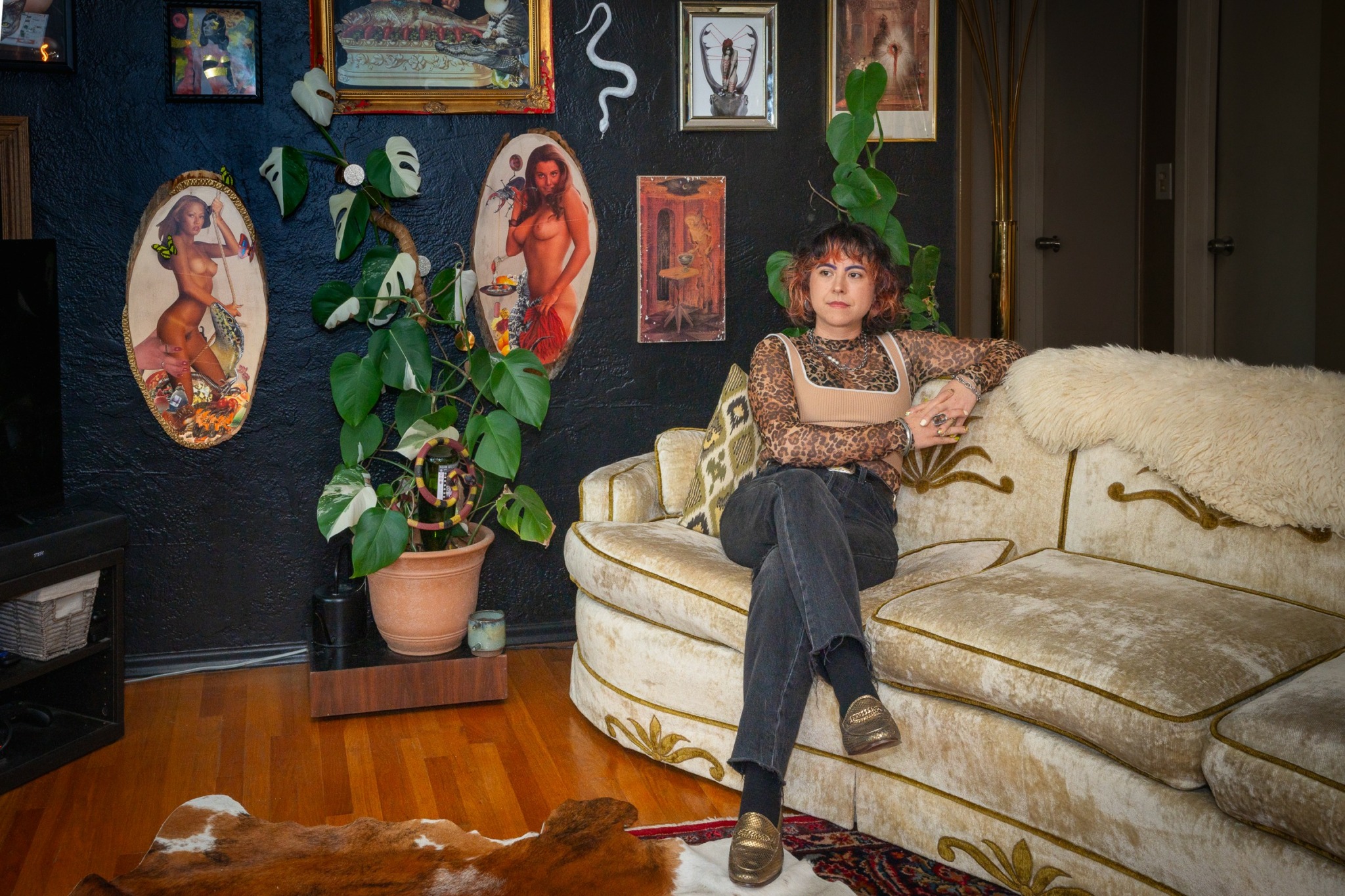

We recently connected with Krista Cuellar and have shared our conversation below.
Krista, appreciate you joining us today. When did you first know you wanted to pursue a creative/artistic path professionally?
The most dramatic example of this was not the first time I knew I wanted to pursue an artistic path professionally, but it was the first time I was really willing to go all in. I had always been drawn to art and creativity as a child but when I first started my secondary education I tried to “be practical” and get a “useful degree.” The practical route didn’t go well, and long story short I double majored in sculpture and art history.
So there I was a 2008 college graduate, working as a waitress at a very popular little chef-run neighborhood restaurant in south Minneapolis. Most of my co-workers were incredible artists and musicians, which seemed true for most restaurant workers around the city at the time. It seemed like everyone I worked with was in a popular band or they were compulsively drawing incredible illustrations on anything they could get their hands on at work, or they had started the Baldies in their younger years, a nazi-punching punk rock gang of brothers, and had lived these lives so outside of what I could even fathom in my early 20s coming from a religious republican suburban childhood. I was indescribably inspired by people I met in the restaurants I worked in. I wanted to live like them, seemingly unafraid, totally themselves, and effectively expressive.
I was doing the “artist escalator” as best as I knew how. I graduated from art school. I got a job as a professional photographer that didn’t quite pay enough for me to quit the restaurants but it felt official. I did some freelancing. I made enough money to get an art studio in a ramshackle industrial building that was likely condemned. But I was in my early 20s and I was impatient. I didn’t have much of a following when I decided that I was going to take a few months to save up enough to quit my paying job and try out “being an artist” as a full-time job. I figured if I couldn’t make it work when I had nothing but time and all of my energy to focus on it, then at least I tried my best and I would know if I needed to settle for a less creative and more practical job. So I worked my ass off and eventually told my boss I needed to quit to pursue my dream of being a full-time artist.
SPOILER ALERT: That was not the last restaurant I would work in.
As always, we appreciate you sharing your insights and we’ve got a few more questions for you, but before we get to all of that can you take a minute to introduce yourself and give our readers some of your back background and context?
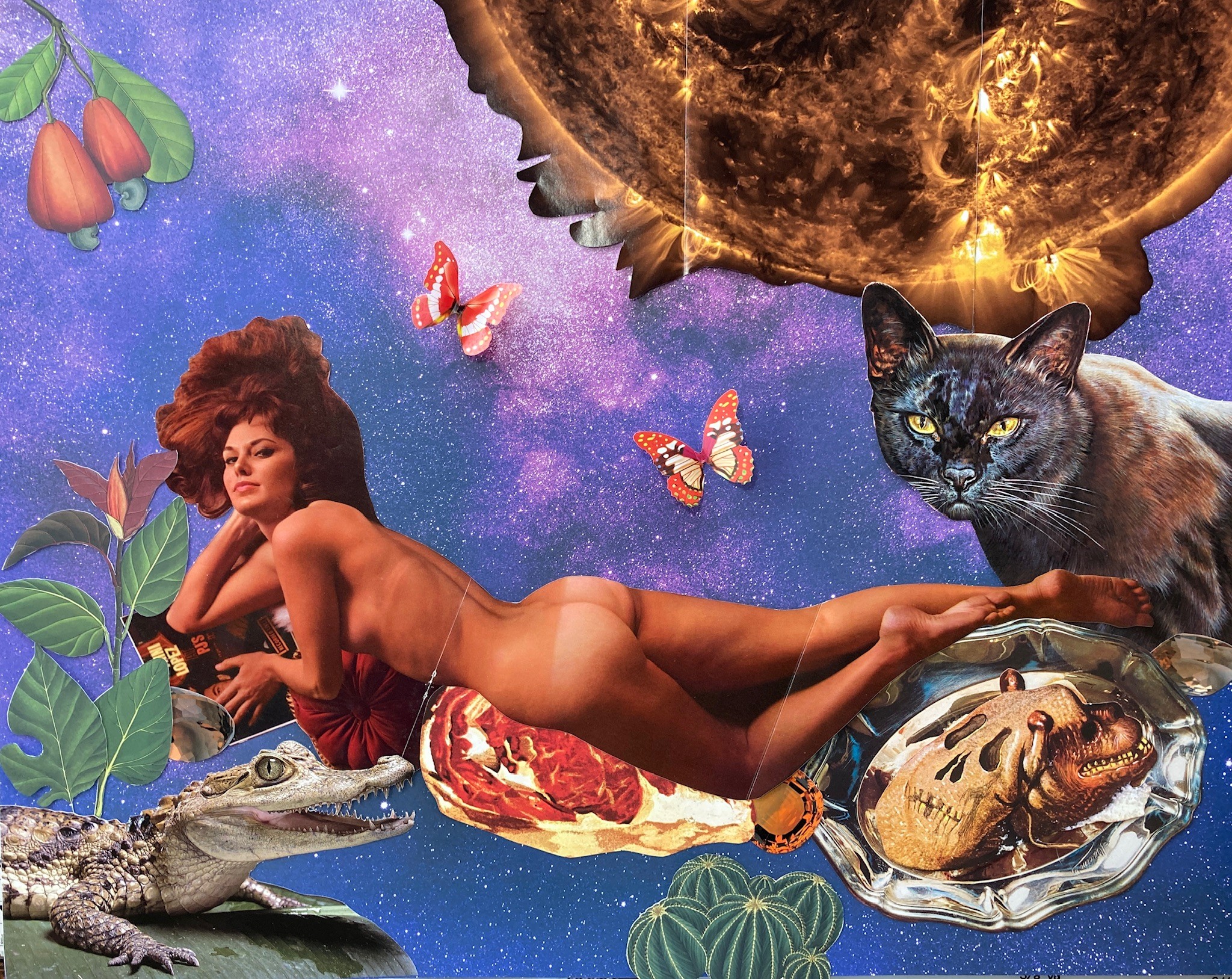
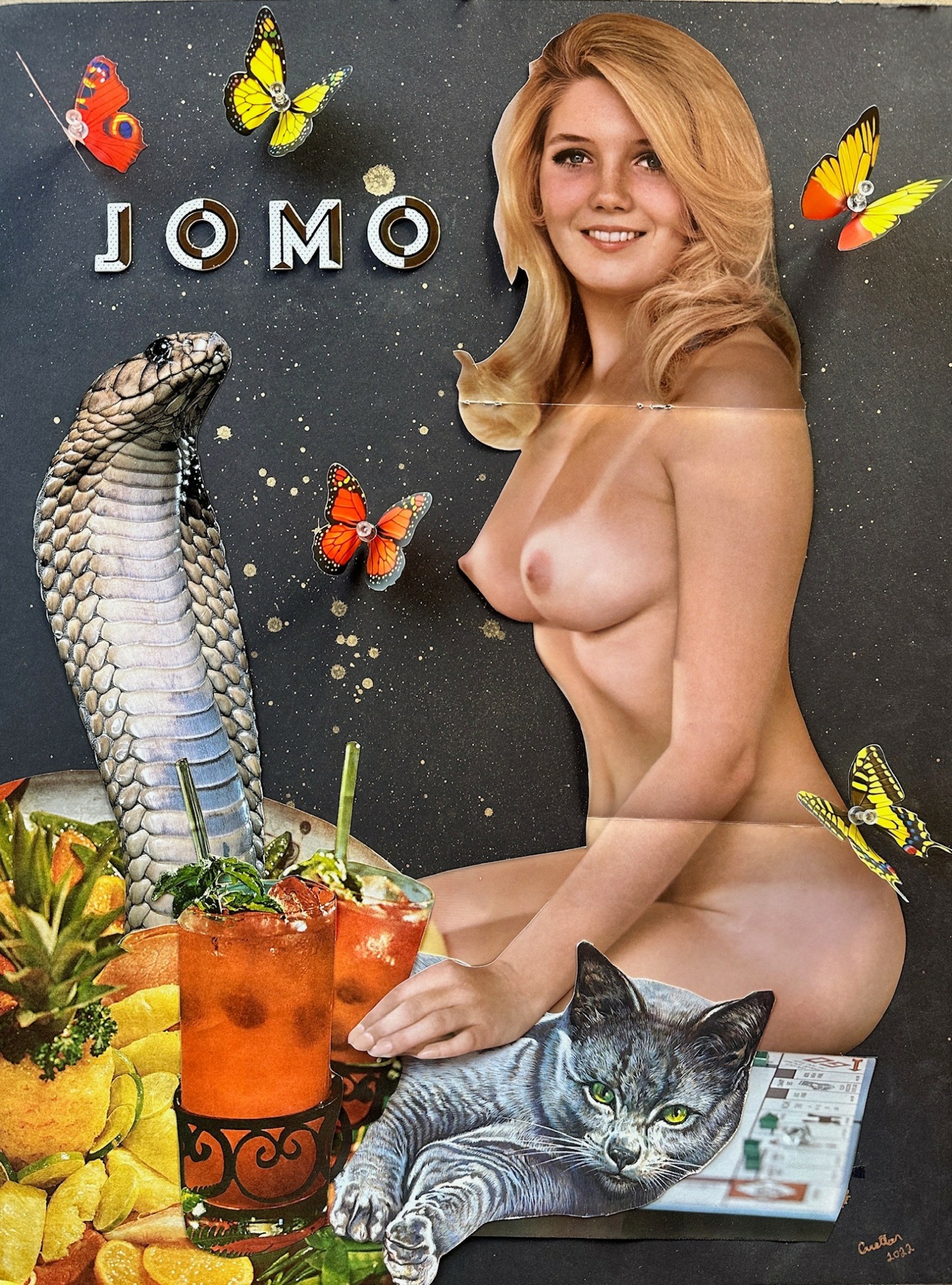
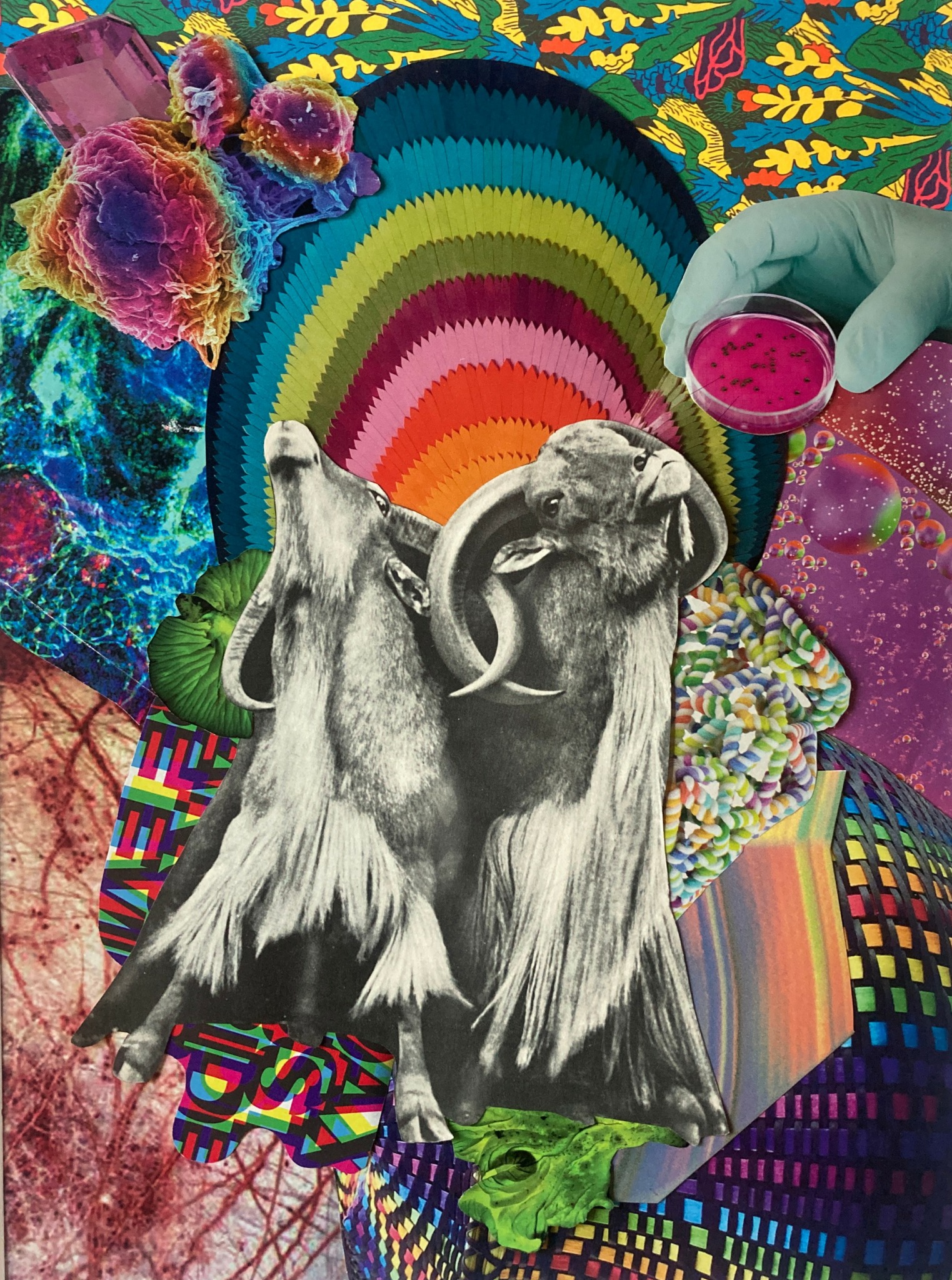
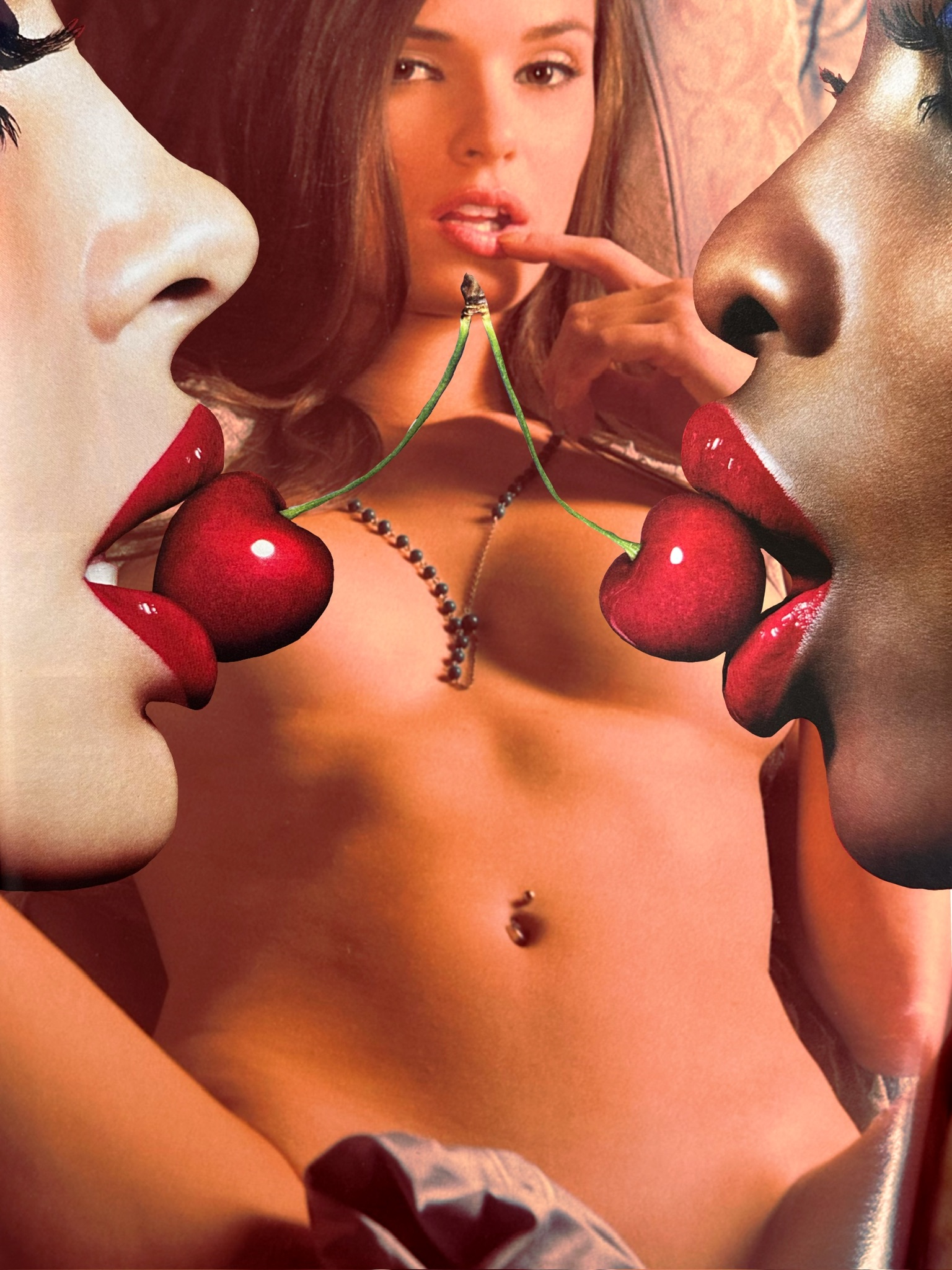
I got into the particular craft of collaging accidentally. I used to take myself pretty seriously as a metal sculptor, photographer, interior designer, etc. And if I’m being completely honest, I turned to collage because I didn’t take it serious as an art form. I hadn’t been exposed to much collage that resonated with me yet and it seemed like a low stakes low investment way to dissociate when the pandemic started. I just wanted to look at pretty pictures and cut them out because it was predictable and felt safe.
Once I had made dozens and dozens of collages and started getting inspired by new materials, I realized that collage was a new teacher for me if I was willing to listen. Coming from an academic art background colored how I previously defined art, what I thought it could and couldn’t be, how it could be made, and what important art was and where it came from. My older art used to start with an idea and I would spend my time and energy trying to figure out how to bring this idea into the physical world. Collage isn’t like that for me though. I don’t totally know how to describe it but with collage, I get to turn my brain off and listen to my hands and my body. It took me a while to understand that it was happening, but the work I’m making now is so much more personal and honest than anything else I’ve ever done. The pieces I make now are directly connected to and representative of my personality, my values, my politics, my relationships, my health and wellbeing. I’m embarrassed to say how long it took me to see that.
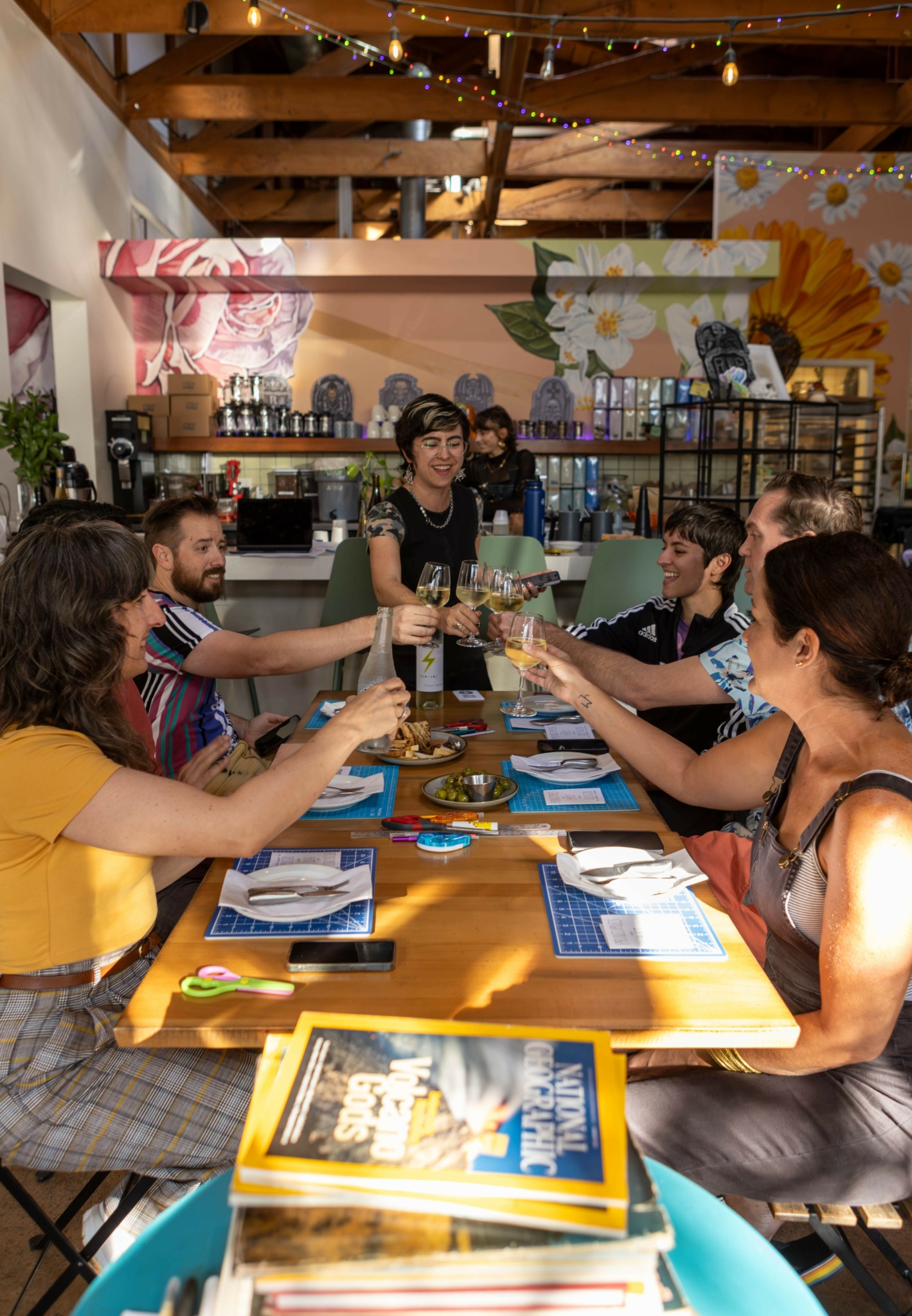
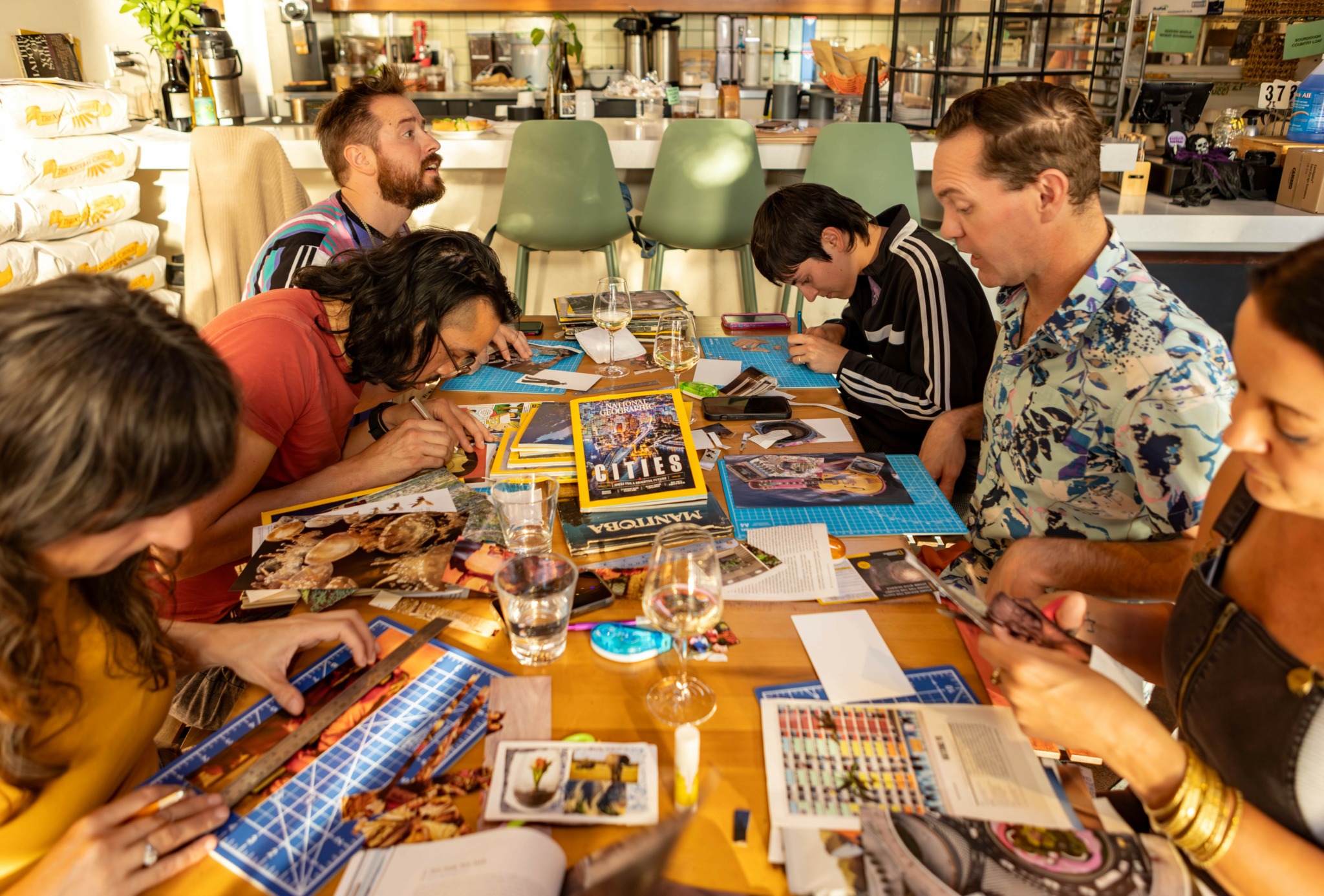
As a learning enthusiast, I want to share the knowledge I’ve accumulated in school and with my various past professions in fabrication, installation and experiential art, interior design, professional photography, printmaking, and now collage, so now I’m in my second year of teaching workshops where we learn about the principles of art and design and use collage as the vehicle for learning.
What can society do to ensure an environment that’s helpful to artists and creatives?
In my opinion, the best thing folks can do to support creatives and artists is to genuinely value creativity. And this sounds easy, but I think it requires a huge amount of unlearning and untangling. This would mean shifting our perception of the value of art away from being a commodity, away from seeing it as a luxury, but instead valuing it as an essential part of societal health and progression.
In order to do this, we kind of have to strip away commodity from art though, right? But because we live in a capitalist society, where we value money pretty much above all else, the only value society sees in art is if it’s sellable. As a society, I would argue that we don’t value the creative process. It’s messy, it’s ugly, often it looks like laziness because “doing nothing” is an essential part of creativity that we don’t really talk about enough. We value the product. And because we don’t value the creative process, unpopular opinion, I would argue that we don’t value the artist either. Unlike performers whose work exists in their bodies, visual art can exist in the world without the viewer ever seeing the hands that made it.
As an artist trying to run a Patreon campaign, something I think a lot about is community-based local artist sponsorships. At the risk of sounding like I’m describing socialism, I’ve been thinking about what it would look like if people who enjoy, support and value the arts spent money on the creative process instead of creative products. I know in my own experience, my best ideas come from a place where I am well rested, I’ve got food in my belly, I’m not worried about my basic survival or paying rent, I’m moisturized and in my lane. That’s the space where I’m free enough to listen to my materials and trust the process. That’s the space where the good stuff happens. Not just that but “successful” artists are constantly inspired by other artists and creatives that may never become sellable. And I wonder what it might be like if we funded processes without the entitlement of a product. Shoot, maybe I am just describing socialism.
Have you ever had to pivot?
Can I ever! So it’s 2019 and I’m working on building out the 6th and largest tasting room for Modern Times Brewery. I feel like these projects are going to be absolute stunners on my resume. I was an essential part of the design process, I engineered all of the designs, did all of the procurement, managed a team of skilled and unskilled workers to get the job done with the resources we had or more likely didn’t have, managed challenging budgets, opened 2-3 tasting rooms a year, and all things considered I was keeping the menty B’s to a minimum. I thought this would be a great launch into a long career of art and design work for commercial spaces, a fairly established business I had already started with a former colleague.
About a year into the pandemic, my position at Modern Times was dissolved and I was offered unemployment. A couple of months into the unemployment I realized that I was utterly burnt out from my previous position and stepped away from the interior design business my colleague and I started as well to focus on my recovery. When the unemployment ran out and it started to become clear that mentally and emotionally I was still not ready to return to the same field, especially for what felt like pennies, I picked up my first restaurant job again in years at a little local wine bar. It took me a while but eventually I started to understand that because of the meaningful connections I was making with customers and neighbors, I was able to show my personal work in public spaces for the first time in my career, I started getting pieces into galleries and art shops, and teaching art workshops. I can’t overstate how I attribute all of that happening to working in a neighborhood restaurant and connecting with and building relationships with regulars and locals.
Contact Info:
- Website: https://kristacuellar.com/
- Instagram: https://www.instagram.com/kristacuellar/
- Twitter: https://bsky.app/profile/kristacuellar.bsky.social
- Other: https://patreon.com/kristacuellar
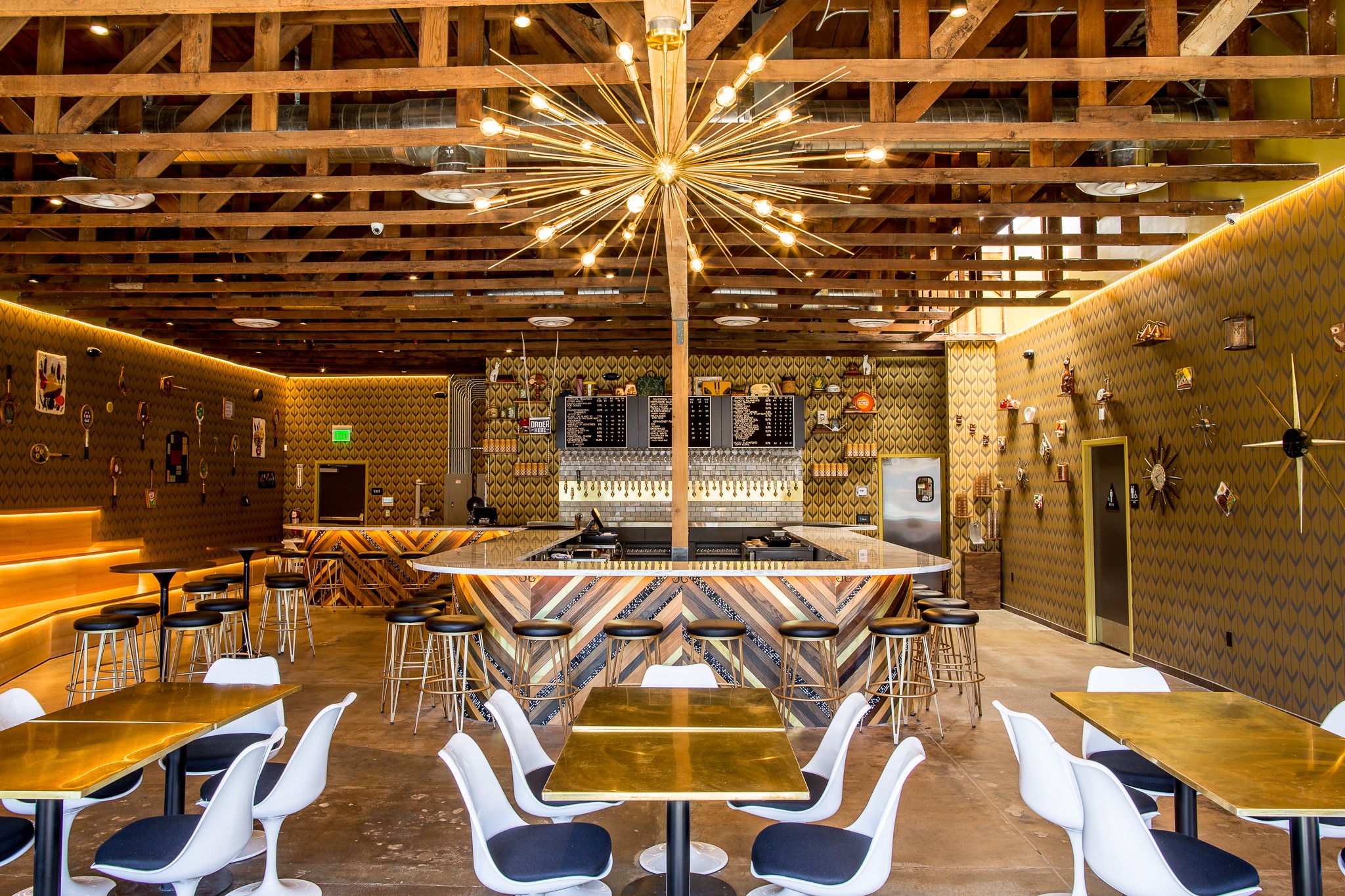
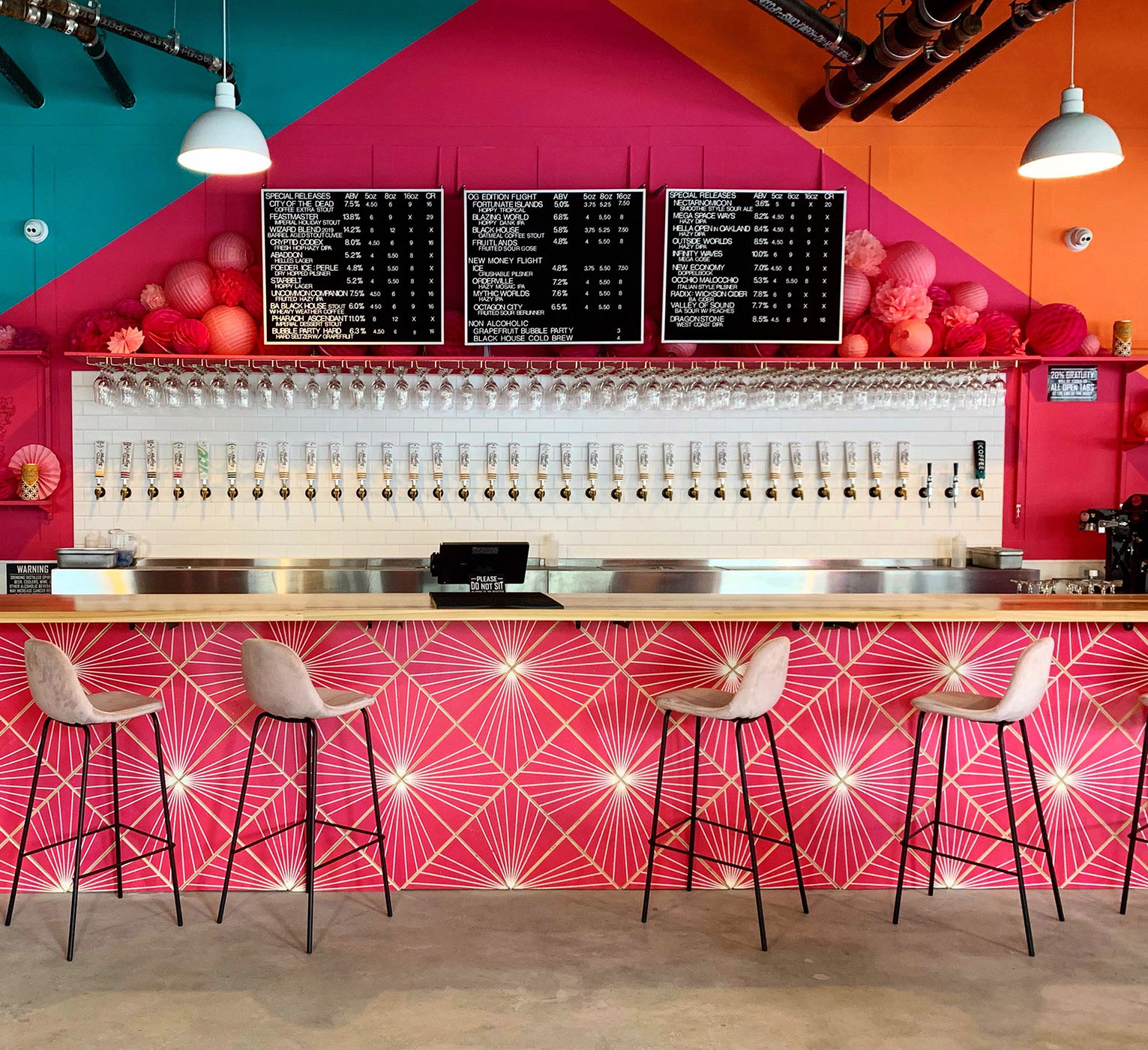
Image Credits
Lifestyle portrait of me in my home by Jackie Han @jackiexphoto
Photos of collage class by “Levity in Focus” @levityinfocus