

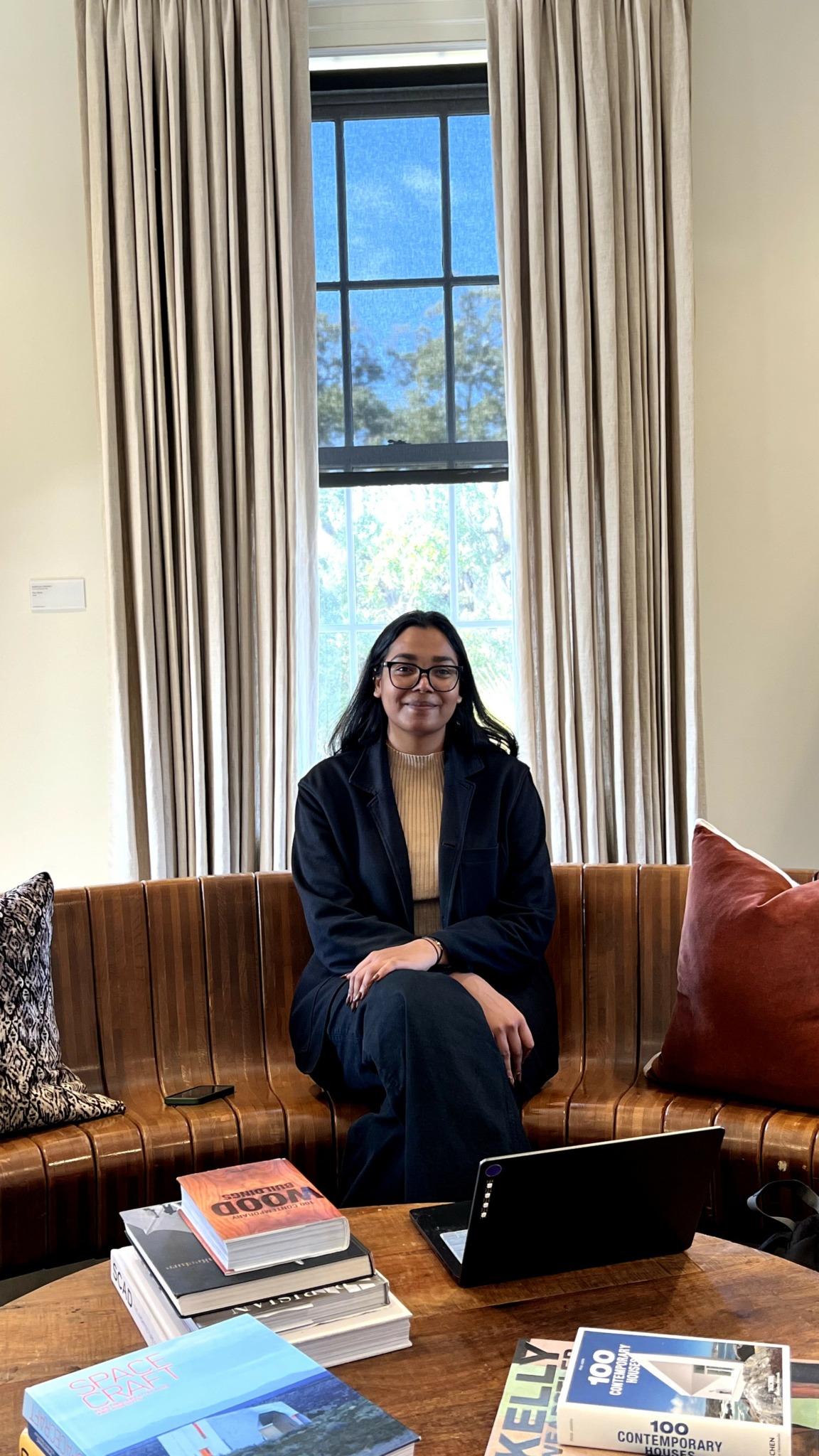

Alright – so today we’ve got the honor of introducing you to Krishnika Kundu. We think you’ll enjoy our conversation, we’ve shared it below.
Krishnika, thanks for taking the time to share your stories with us today Alright – so having the idea is one thing, but going from idea to execution is where countless people drop the ball. Can you talk to us about your journey from idea to execution?
If there’s one thing I’ve learned as a UX designer, it’s that ideas are the easy part. The hard part is resisting the urge to jump straight into designing them.
My process usually starts with something bothering me. Maybe a confusing app, a frustrating service, or a system that makes people work harder than they need to. Once I notice it, I can’t really unsee it. That’s when the questions start.
I spend a lot of time talking to people, observing behaviors, and trying to understand what’s actually happening beneath the surface. As designers, we’re often tempted to solve the problem we think exists, only to discover the real problem was something completely different.
From there, it’s a lot of sticky notes, sketches, diagrams, prototypes, feedback, revisions, and occasionally staring at a FigJam board wondering who made this mess (it was usually me).
The biggest shift from idea to execution happens when you stop treating your idea like a precious masterpiece and start treating it like a hypothesis. Test it. Break it. Improve it. Repeat.
That’s what I love most about UX. Every project starts with uncertainty, and through research, design, and collaboration, you slowly turn that ambiguity into something useful, meaningful, and hopefully a little delightful.


Krishnika, love having you share your insights with us. Before we ask you more questions, maybe you can take a moment to introduce yourself to our readers who might have missed our earlier conversations?
I’m a UX designer, researcher, and strategist who loves making complex things feel simple.
My career has taken me through design, business, entrepreneurship, and marketing, which means I rarely look at problems from just one angle. I’m naturally curious (some might say nosy), so I spend a lot of time asking questions, uncovering insights, and figuring out why people do what they do.
What sets my work apart is that I don’t just design screens; I design experiences. Whether it’s a product, service, or system, I’m interested in creating solutions that are useful, intuitive, and genuinely human.
At the end of the day, my goal is simple: help people navigate complicated things with a little more clarity, confidence, and maybe even delight.


Learning and unlearning are both critical parts of growth – can you share a story of a time when you had to unlearn a lesson?
I’m a professional question-asker.
I’ve always been fascinated by why people do what they do; and why so many products make us work harder than we need to. That curiosity has taken me through design, business, entrepreneurship, marketing, and a lot of sticky notes.
What I love most is taking messy, complicated problems and turning them into experiences that feel simple, intuitive, and human. I spend my days talking to people, challenging assumptions, connecting dots, and occasionally realizing the users were right all along.
What sets me apart is that I don’t just think about screens. I think about the people, systems, businesses, and behaviors behind them. The best design, in my opinion, isn’t the one that gets noticed; it’s the one that quietly makes someone’s day easier.
At the end of the day, I’m just trying to make technology feel a little less like technology and a little more like it was designed by someone who actually understands humans.


For you, what’s the most rewarding aspect of being a creative?
The most rewarding part of being creative is discovering that you’re wrong.
That probably sounds strange, but some of my favorite moments as a UX designer happen when research completely challenges my assumptions. I’ll walk into a project convinced I understand the problem, and then a user says something that makes me realize I’ve been looking at it all wrong.
I love that moment when patterns start emerging from what initially feels like chaos. A random comment in an interview connects to an observation from a usability test, which connects to a business challenge, and suddenly the real problem becomes obvious.
It’s a bit like detective work. You’re collecting clues, connecting dots, and uncovering stories that people themselves may not even realize they’re telling.
And then, once you’ve found that insight, you get to turn it into something tangible: a product, service, or experience that genuinely makes someone’s life easier. That moment when a user effortlessly does something they previously struggled with never gets old.
For me, creativity isn’t about making things look beautiful. It’s about making sense of complexity and finding clarity where others see confusion.
Contact Info:
- Website: https://www.krishnikakundu.com/
- Linkedin: https://www.linkedin.com/in/krishnika-kundu-5067601b5/

