

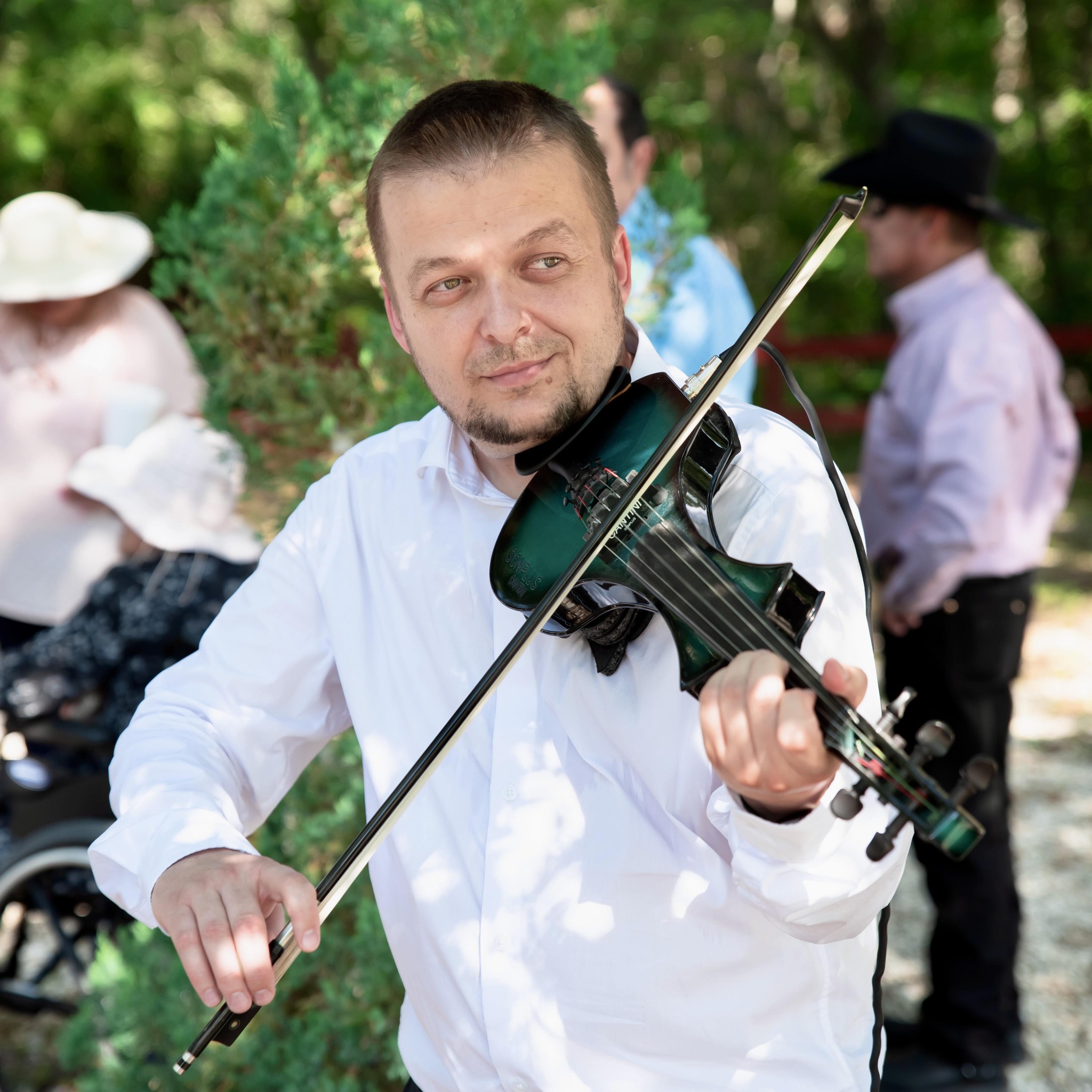

We were lucky to catch up with Kirill Raskolenko recently and have shared our conversation below.
Kirill, looking forward to hearing all of your stories today. Are you able to earn a full-time living from your creative work? If so, can you walk us through your journey and how you made it happen?
I began my career with part-time orchestra and music ensemble jobs, but soon after graduating from the Academy of Music, I became a full-time orchestra violinist. That was my main focus back in 2005 and the core of my work at the time.
As the years went on, I started adding more part-time roles—performing chamber music, playing with small ensembles, and even exploring new styles as a fiddler in various bands.
When I moved to the United States, my story expanded even further. What had once been part-time gigs and side projects gradually grew into a full-time life in music. I eventually founded my own company, which brought all my work together—performing, teaching, and collaborating under one roof.
It took nearly a decade of dedication to reach the point where I am now, and every step of the journey has shaped the musician I’ve become.
Looking back, there are moments when I wonder if I could have moved faster—saved 5 to 7 years during my transitions from Uzbekistan to Russia and then to Texas. But in the end, I believe things unfolded at the pace they were meant to. Each step, each shift, shaped the musician I’ve become.
And now, standing here, I feel like I’m in the right place and time.
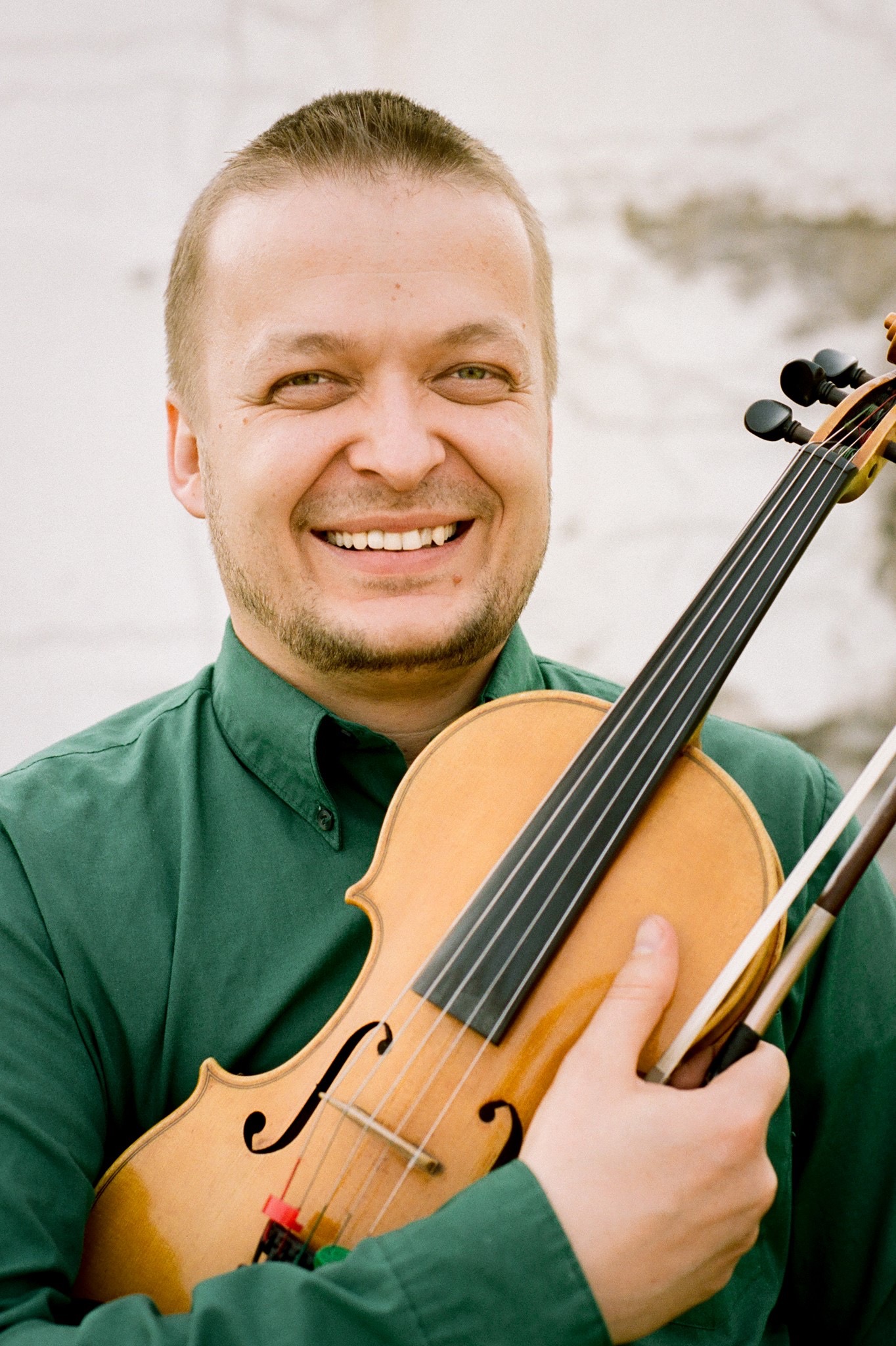
As always, we appreciate you sharing your insights and we’ve got a few more questions for you, but before we get to all of that can you take a minute to introduce yourself and give our readers some of your back background and context?
Music has been part of my life for as long as I can remember. From the very first day I stepped into school, it wasn’t just something I studied—it was the center of my world. I began my education at a music school in Tashkent, Uzbekistan, and later transferred to a special music school where I spent nearly all of my formative years. By the time I reached 3rd grade, my path was already set. I didn’t think much about a future outside of music because, for me, music wasn’t just a subject—it was a way of life.
I finished my music school education as a violinist, composer, and conductor—all before even entering university.
After graduating, I continued my journey at the Gnesins’ Russian Academy of Music in Moscow, majoring in violin performance. Even while studying, I started working part-time in music, and by the time I graduated, I was fully immersed in my professional career.
Like many classically trained violinists, I started out as an orchestra player. But as the years passed, I discovered other musical worlds that drew me in—worlds that were vibrant, interesting, and full of music possibilities.
One pivotal moment came when I was invited to perform as a live musician at Restaurant Margarita, a beautiful venue with an old-world charm where piano and two violins set the tone each evening. It felt like stepping into another era. For me, it became a “school of improvisation.” Coming from a classical background, it pushed me to listen, adapt, and create in ways I never had before. It was an experience that trained my ear even more and opened new doors.
Well, to be fair, my first experience with improvisation actually came earlier, when I was composing my own music on KORG Trinity Workstation. Of course, that creativity didn’t come out of thin air—it was built on the strong theoretical foundation I had developed during my years in music school in Tashkent. But that was the first time I truly experienced the freedom of creating music which has included improvisation.
Around 2007–2008, I discovered the joy of Celtic music. I started my fiddle path and began exploring Irish traditional music, spending countless hours listening to masters of the genre before daring to play it myself. That music awakened something in me—it was raw, expressive, and deeply alive. The key of this music is a strong beat, which I admire a lot, that’s my inner drive!
Throughout it all, orchestral playing remained a constant in my life. But my heart was pulling me toward new sounds and styles.
When I moved to the United States, I began an Artist Diploma program at TCU in Fort Worth. There, I connected with the local Irish music community and found myself continuing what I like to call my “full-time of part-times”—balancing orchestral work with regular gigs and festivals as a fiddler.
But even that wasn’t enough for me. I craved more variety and began venturing into Gypsy jazz and even a little Texas swing, performing with different bands and embracing every chance to learn. So my improvisational skills went even farther.
This mosaic of musical experiences eventually led me to launch my own company, KeyReel Music, as a home for everything I do: performing, composing, and teaching. Teaching, in particular, has been a vital part of my journey for the past 20 years.
Today, I teach privately at several schools in the North Dallas area and run my own program, North Texas Celtic Strings, where students learn entirely by ear. I continue to perform Celtic music as a fiddler and take on gigs as a jazz violinist and a fusion fiddler.
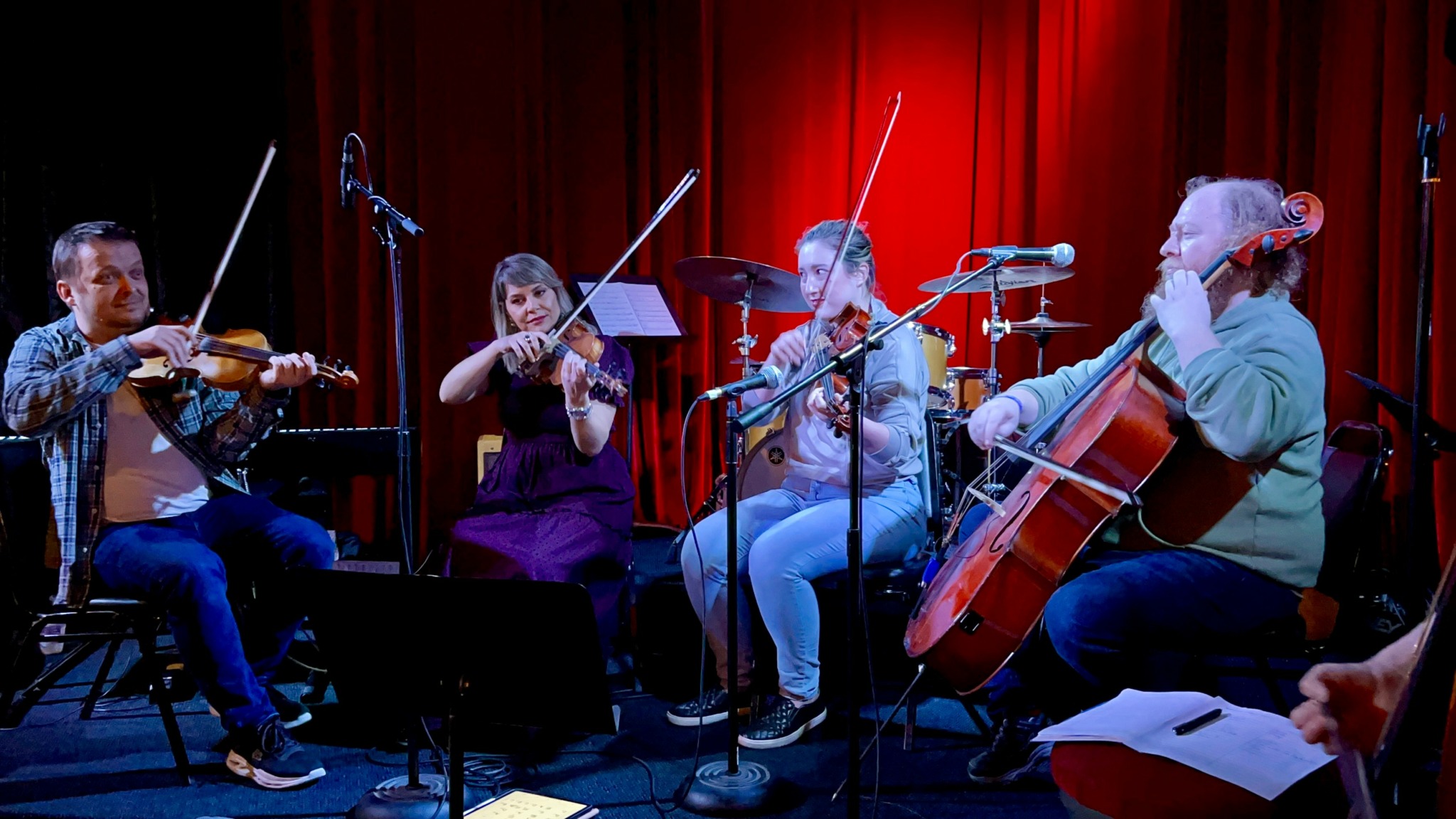
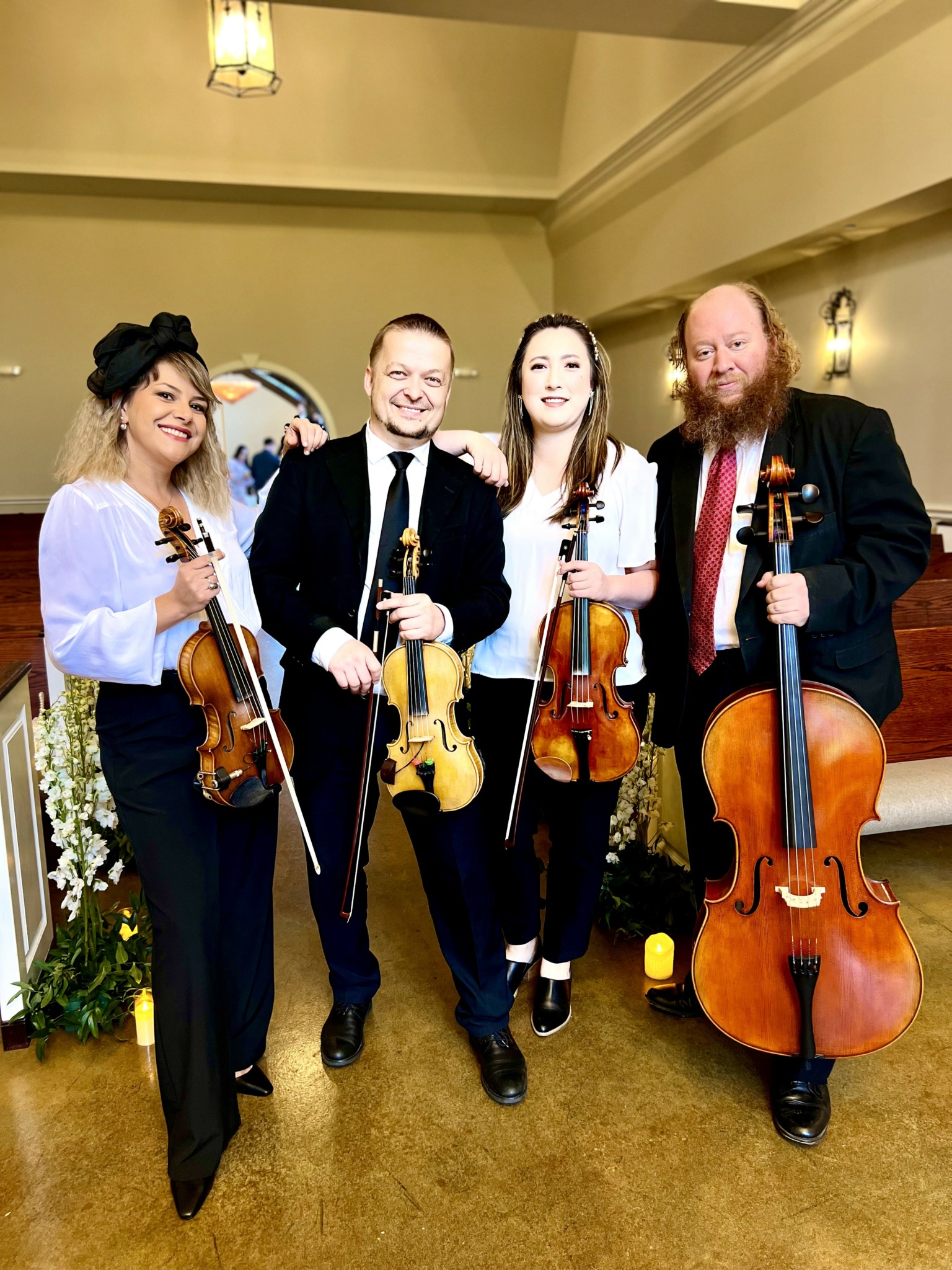
One of my most recent projects is That One String Quartet. As far back as I can remember—starting from my university days—quartets have always been part of my chamber music life. Back then, it was entirely classical, with long hours of rehearsals and intense, challenging projects. This time, though, it feels very different: modern, fresh, and exciting. We’re experimenting with percussive techniques, bass lines, drones, and harmonies in a contemporary way. We’re actively building our repertoire, and I’m excited to say we’ll be ready to hit the ground soon!
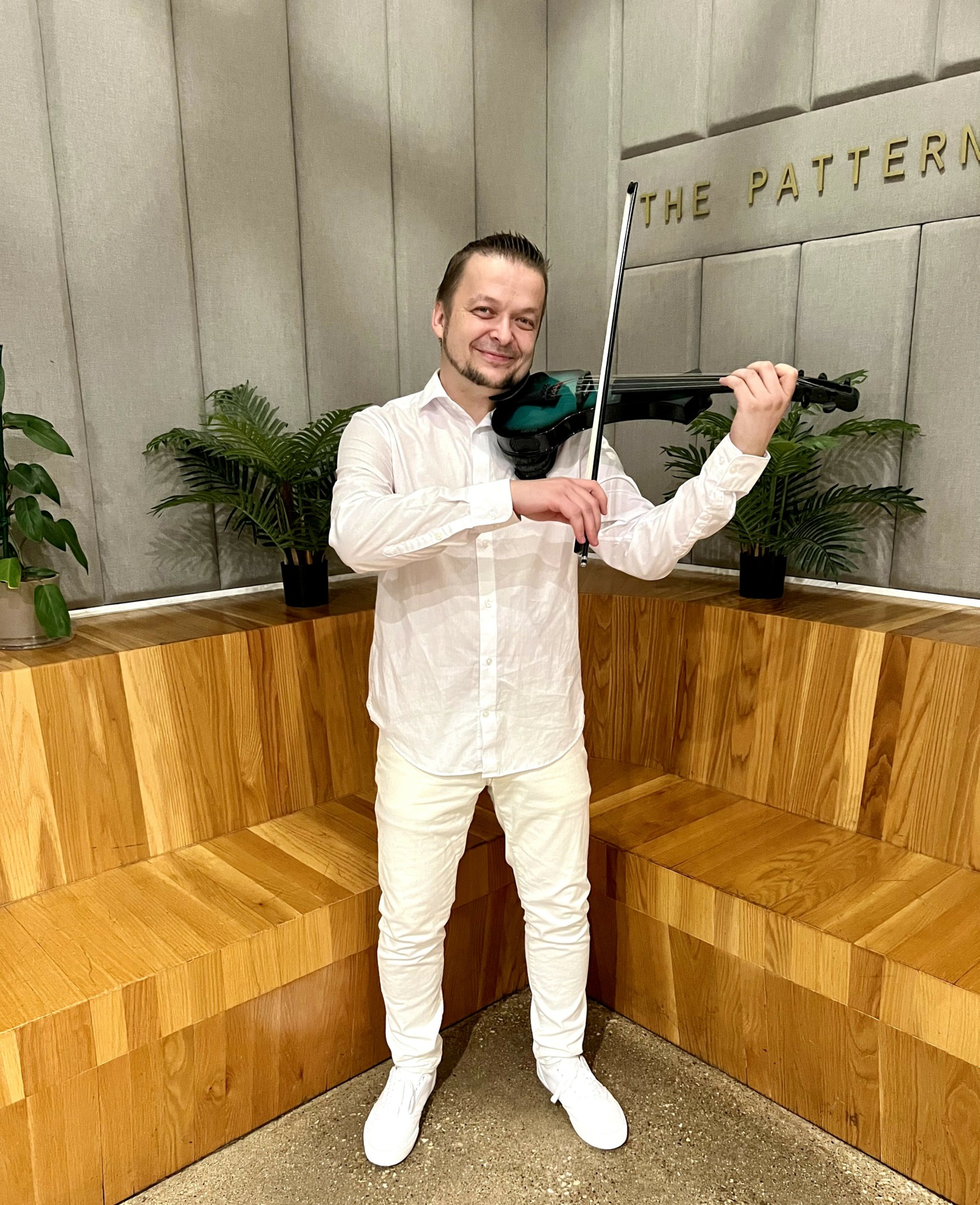
Another most exciting addition to my musical path has been the electric violin. I first brought it into my work during my final recital at TCU, where I performed an improvisation layered over several tracks, switching them live with a foot pedal. That moment felt like opening a new door—and since then, the electric violin has become part of my performance life.
These days, I use it often for events and weddings, playing with backing tracks that bring a modern and vibrant sound. But it doesn’t stop there. For me, the electric violin is a tool for exploration, and I see endless possibilities beyond those settings. It’s a new chapter, and I’m excited to see where it leads.
One more important chapter in my musical path—one that reaches back into my past—is composing music. Over the years, I’ve created pieces that I’ve shared on platforms like YouTube and Apple Music. I also write fiddle tunes, which have become a meaningful part of my expression.
But now, more than ever, I feel a strong pull to dive deeper into composition—to create more, to explore new sounds, and to let this part of my artistry grow alongside my performance.
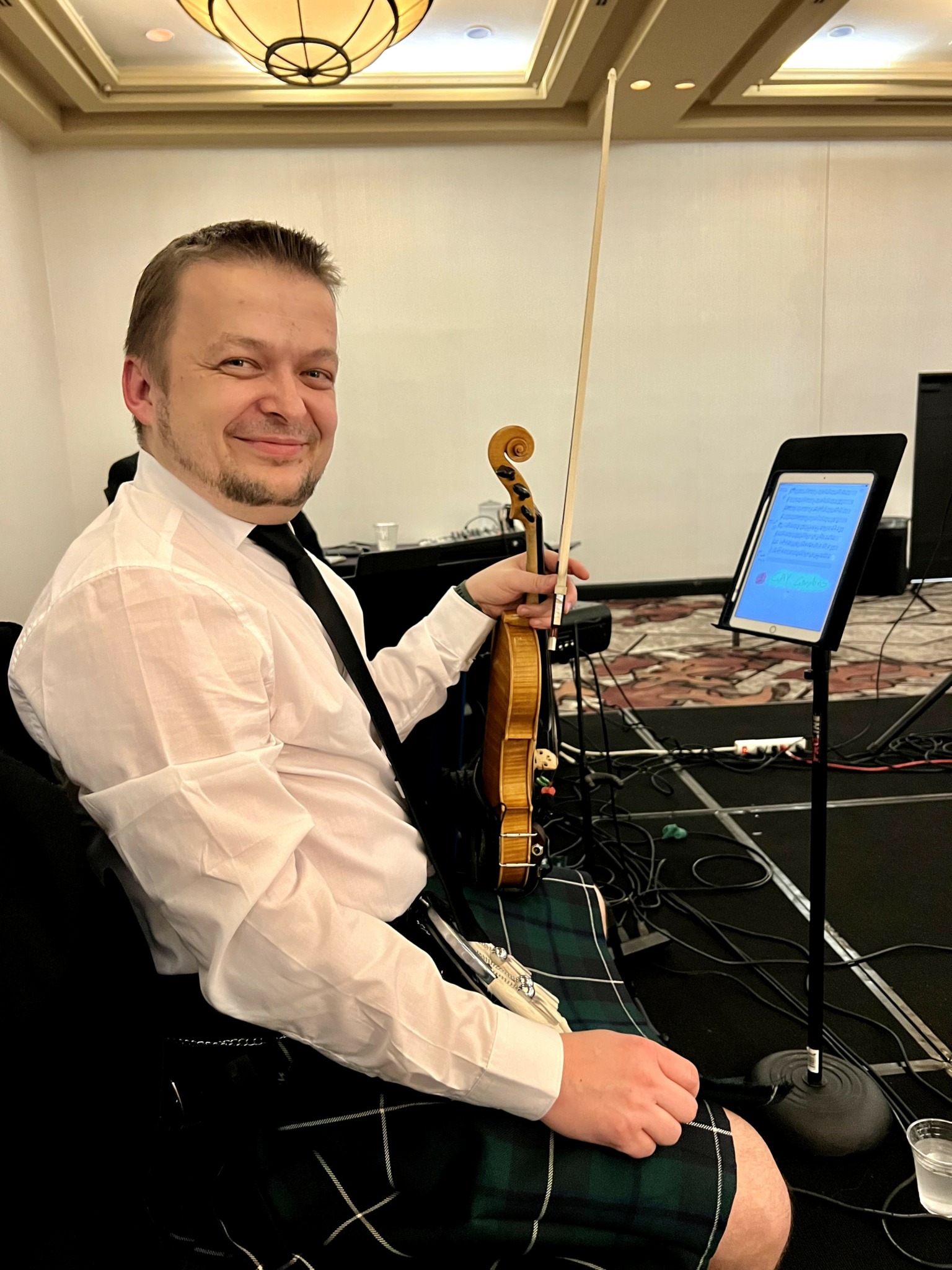
I wish more people could understand the amount of preparation that goes into a musician’s performance. It’s not just about what happens on the day of the show—musicians often begin preparing well in advance, sometimes weeks or even months before. And if the project continues over time, the work doesn’t stop after the performance either.
It’s not that musicians don’t know how to —it’s about the many factors involved, like muscle memory, which we build and refine throughout our entire lives. Muscle memory is our foundation and heritage; it accumulates slowly over time, unlike the instant upload/download pace of today’s digital world.
Of course, the complexity of the performance or project affects how much preparation is needed. Beyond muscle memory, there’s also a lot of practical preparation—gathering sheet music, backing tracks, accessories, and many other essentials that help ensure everything goes smoothly.
And of course, when it’s a group of musicians, there’s even more to consider—coordinating individual schedules, rehearsing together, and making sure all the pieces fit seamlessly. It takes careful planning and teamwork to bring everything together.
I’m not asking for much—just a little more appreciation from those who may not realize how much happens behind the scenes.

Any resources you can share with us that might be helpful to other creatives?
I wish that when I was a kid, we had the kind of opportunities young musicians have today—like playing along with backing tracks or practicing with platforms such as Canvas. Back in the 90s, the internet was still in its infancy, so there simply wasn’t the variety of tools and resources that exist now.
That said, I’ve found platforms like MuseScore and the IMSLP libraries incredibly helpful in my job. And honestly, I don’t feel like I discovered them too late—they came into my life at just the right time.
I probably could have joined platforms like GigSalad or GigMasters (now The Bash) earlier.
As for AI—that’s a completely new area for me. Looking back, I could have started exploring it at least a year ago, but now I’m diving in with curiosity and excitement to see where it leads.
Contact Info:
- Website: key-reel,com
- Instagram: https://www.instagram.com/keyreel_fiddler/
- Facebook: https://www.facebook.com/keyreel
- Youtube: https://www.youtube.com/@KeyReel-fiddler
- Other: www.keyreelmusic.com
https://www.facebook.com/keyreelfiddler/
www.ntcstrings.com
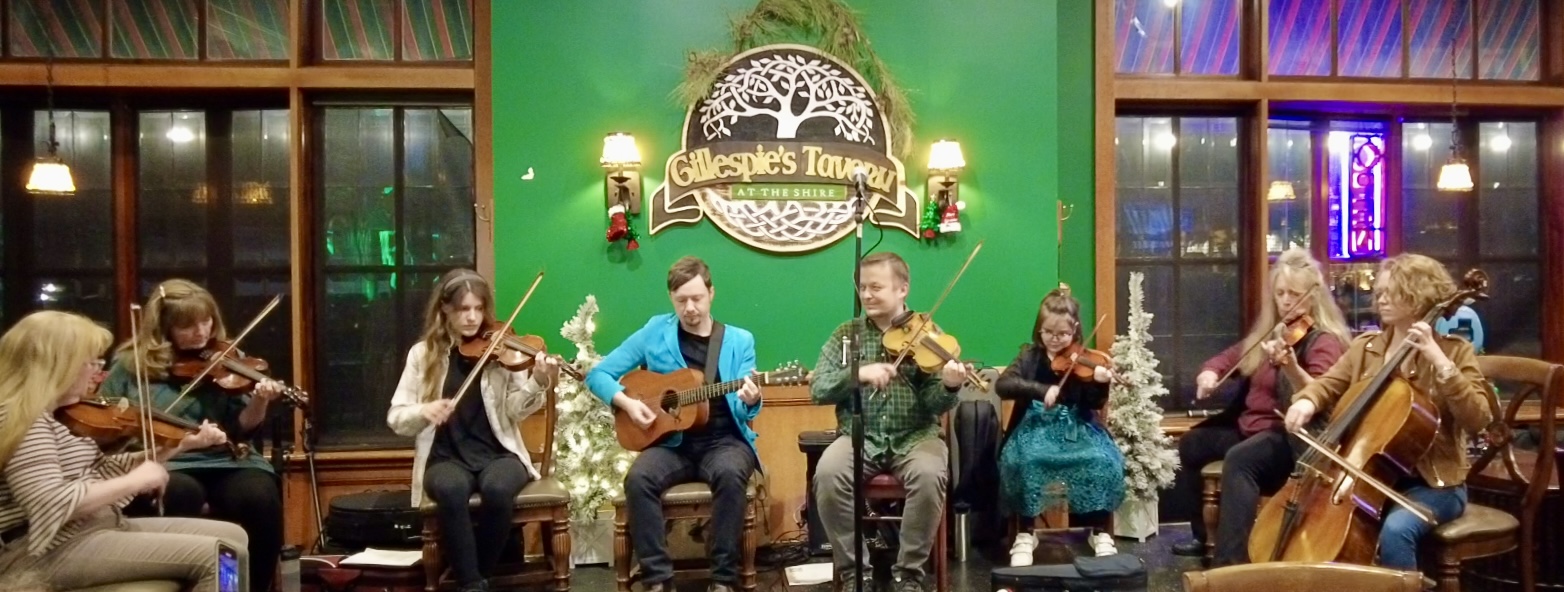
Image Credits
No Image credits given. I’m not sure if I will have opportunity to mention that before you publish this interview. But I would like to look at Preview please. To make sure everything is smooth, especially first two portions, which I still think a little clumsy with little AI help :)