
We recently connected with Kimberly Stewart and have shared our conversation below.
Alright, Kimberly thanks for taking the time to share your stories and insights with us today. Was there a defining moment in your professional career? A moment that changed the trajectory of your career?
Organizational skills never came naturally to me. If you told me at the beginning of my career that I’d spend my days promoting them, I would have run for the hills. I always viewed organization as rigid and stifling, something that would squelch my creativity, something for other people, but not for me.
That said, somewhere inside me, I craved order. I wasn’t a fan of my messy room, the late nights cramming for tests, and the comment that I regularly received on papers: Great ideas, but I’m not sure what you’re trying to say.
My difficulty with organization was undeniably an issue, but I didn’t know that it was organization that was the problem. I figured the way I walked through life was just part of what made me, me. Others offered help, but I pushed the support away, appreciating people’s intentions but feeling frustrated that they wanted to put their own systems on me.
My defining moment was in a staff meeting at my first job after graduate school. I had been a speech-language pathologist for years, had the respect of my coworkers, and was excited to share what I was working on. But as I talked, twenty sets of eyes looked back at me blankly, some with furrowed brows. I tried to share my idea again; still nothing. Then a close colleague kindly piped up. What Kim is trying to say is… and she succinctly explained my idea. People got excited, and the room livened back up. In that moment, I realized I needed to figure out how to do what my coworker effortlessly did. I needed to learn how to organize my ideas so that I could convey them efficiently and effectively.
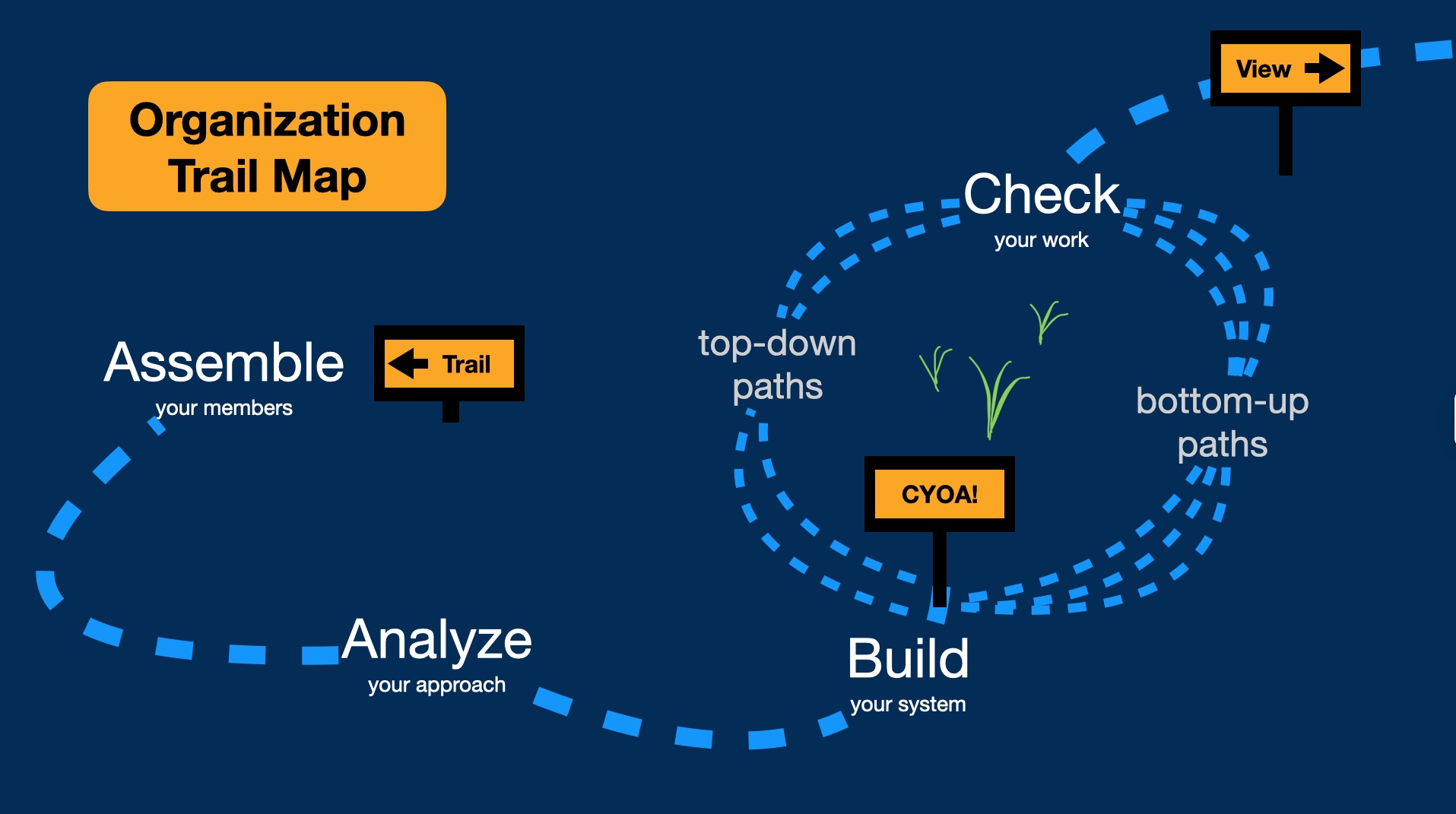
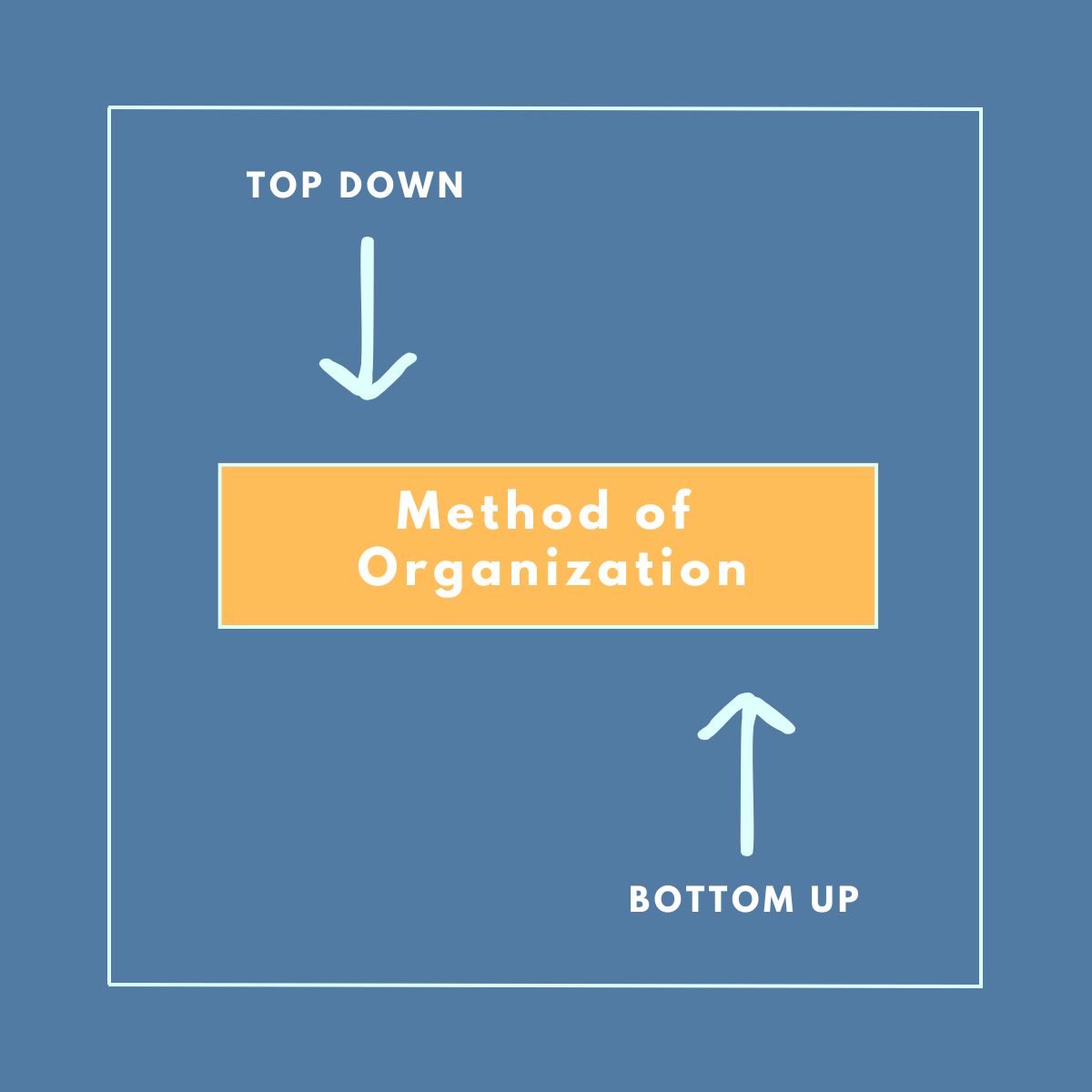
What I eventually arrived at became the focus of my career. I dug deep and learned how organization works. For the first time, I realized that for every organizational demand, there are categories and subcategories and an organizing principle (what I call a Method of Organization) that dictates how the subcategories work together. Importantly, I figured out that when faced with a task, a bottom-up (part-to-whole) approach is just as valid as the more traditionally accepted top-down (whole-to-part) approach. I developed a methodology to help bottom-up thinkers build a clear process to move from a bunch of ideas to a hierarchical system that they could use to confidently complete a task or explain an idea. This means that instead of facing organizational tasks with dread, they can be approached with intrigue – as one client said, fun little logic problems: cognitive jigsaw puzzles that give every thought a home.
Many smart, creative people crave organization, but as creators, they need to generate it for themselves. Understanding the inner workings of organization has allowed me, and now also the clients I teach, to gain control, do the things we want to do, communicate our ideas, and foster even more creativity. Making structure where none previously existed is both satisfying and empowering. It’s been a game changer for me both professionally and personally.

Great, appreciate you sharing that with us. Before we ask you to share more of your insights, can you take a moment to introduce yourself and how you got to where you are today to our readers.
The field of speech-language pathology is broad and multifaceted. Some of us work with speech (how you make sounds), some with language (how you label your thoughts), some with cognition (how you think), some with voice (how you sound), and even some with swallowing (yup – how you swallow). I have found my place working at the intersection of language and cognition, so my precise job title is cognitive-linguistic therapist: part language specialist and part executive function coach. In short, I help people learn how to organize their ideas so they can take action on projects and communicate more effectively.
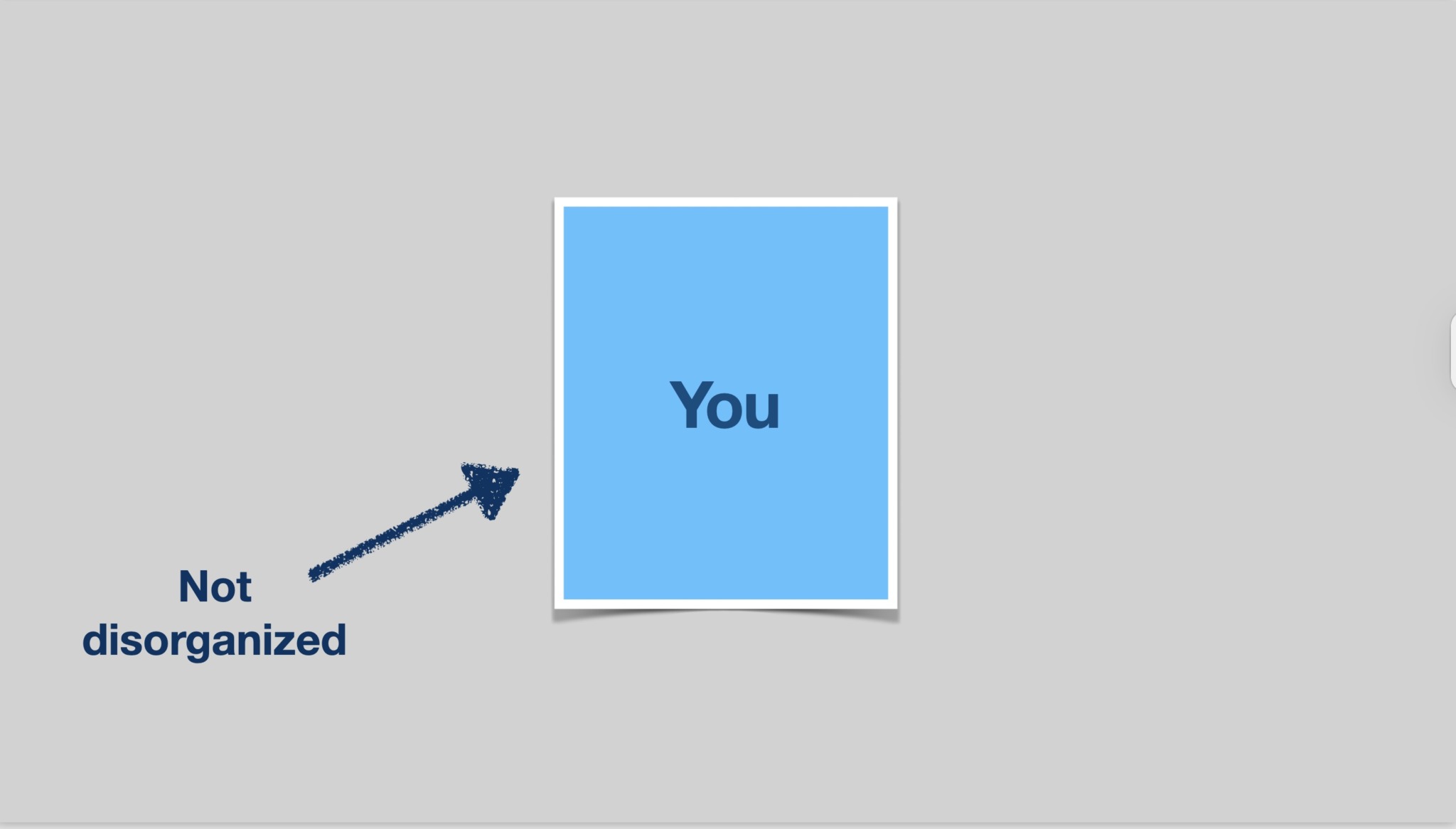
I have worked with people individually for over 20 years and have seen the life-changing experience that comes from mastering both bottom-up and top-down approaches to organizing their ideas. People gain self-compassion and confidence, and they reach their goals. Maybe most importantly, they stop viewing themselves as “disorganized” and shed the feeling of being less-than.
I wanted to bring this positive transformation to more people and build a community of smart, driven, creative people who struggle with organization. To do this, I created an online course, ThoughtGathering™ Foundations, that teaches people about organization and how to arrive at it from any direction. That is, people learn to find structure if they are starting with the details (bottom-up organizing) or with the goal (top-down organizing). Eventually most people come to realize that as they create structure, they are actually using a back-and-forth hybrid approach. The key is to know which approach you are taking, so if you get stuck, you can shift your direction, get unstuck, and keep moving forward. With these fundamental concepts in hand, people can organize anything from their sock drawer to their dissertation. ThoughtGathering™ Foundations could probably be considered my career capstone; it brings together my personal experience, my graduate education, and my years of research-informed clinical practice. I am inspired each time I see course participants confidently organize their things, time, and communication, especially when I experience them sharing, learning, and growing in community with each other.
I’m most proud when people reach out years after we have worked together and share their organizational successes: defending their thesis, getting into a top-choice grad school, throwing a party for 250 guests, becoming a nurse practitioner, and enjoying leisure time, because they now have time for it. It is always an honor to witness these personal growth journeys.
Training and knowledge matter of course, but beyond that what do you think matters most in terms of succeeding in your field?
In order to be successful, I think it is most important to meet people where they are at. Doing this helps people who struggle with organization to build the trust necessary to confront a lifelong challenge. In the work that I do, this means first acknowledging the burden that they carry, so that they can put aside old beliefs and make space for new learning.
The problem is this: Our society rewards organization and shames disorganization. To make matters worse, we personalize the skill. We say, this person is organized and that person is disorganized. We then describe the organized person as efficient, trustworthy, and destined for greatness, and we describe the disorganized person as lazy, undisciplined, and doomed to fail.
The fallout from this is that people believe organization or disorganization lives at the core of them, when in reality, it is a learnable skill that has nothing to do with their character. I encourage people to drop organized and disorganized as terms that describe humans, and instead place those terms on the product the human creates: an organized essay, a disorganized filing system.
Depersonalizing difficulty with organization allows people to shift how they think about themselves and challenge the belief that they are innately flawed. This new perspective honors people’s inner strength and allows them to learn new skills with the belief in the possibility for meaningful change.
Do you think you’d choose a different profession or specialty if you were starting now?
Yes! I feel lucky to do the work I do. I feel energized by working in the space where two seemingly different things – creativity and organization – come together. It feels like a microcosm of what I believe: that there is power in diversity and even more power when diverse things unite.
That said, my work is both verbal and abstract, and sometimes, my brain craves quiet and concrete work. On those days, I dream about being a potter or a cheese maker in a small town with a strong community.
But most days, I feel that I’ve found my calling in what I’m doing. It’s an honor to help people tap into their strengths and support them in developing skills that allow them to share their ideas with the world.
Contact Info:
- Website: https://www.thoughtgathering.com
- Linkedin: https://www.linkedin.com/in/kimberly-stewart-ms-ccc-slp