

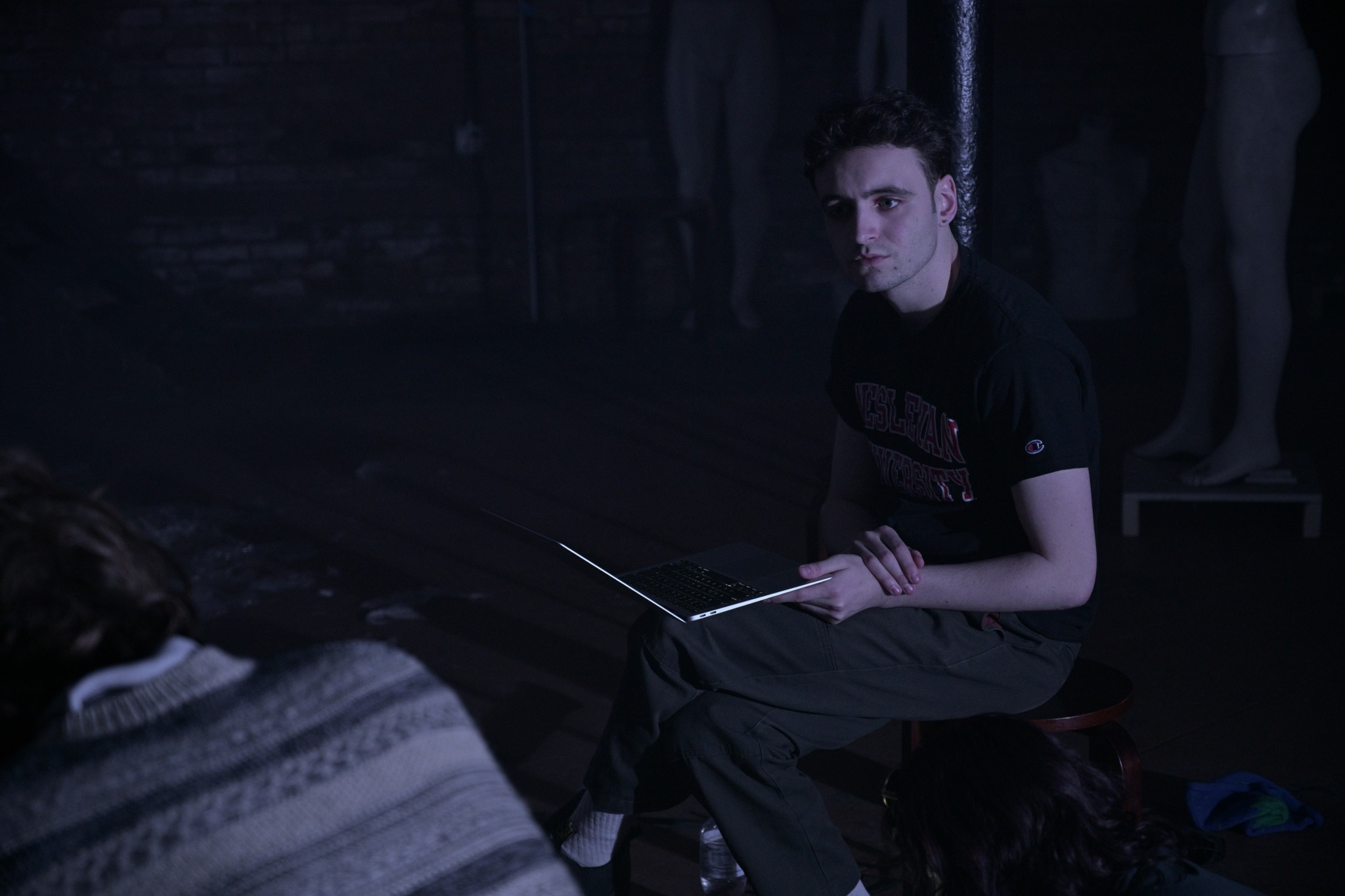

We’re excited to introduce you to the always interesting and insightful Kieran Gettel-Gilmartin. We hope you’ll enjoy our conversation with Kieran below.
Kieran, appreciate you joining us today. We’d love to hear the backstory behind a risk you’ve taken – whether big or small, walk us through what it was like and how it ultimately turned out.
I moved to New York with no real job. It was September, I was selling my soul working as a remote administrative assistant for an AI interactive movie startup, where I would get $150 a week under the table for 8 hrs of work (which mostly consisted of actively sabotaging the company since I despise AI). I also did some food delivery for offices, 2hrs a day, one hour commute both ways. I moved in with my girlfriend and another couple. We squeezed into a modern 2 bedroom apartment in east Flatbush.
I moved to New York to ‘make it,’ whatever that means nowadays. I just graduated Wesleyan with a film and sociology degree, split my summer in my hometown, Portland, Oregon and acting in a movie in New York. That was when I found our apartment, on my one day off from the film shoot. I toured 15 apartments in Brooklyn that day.
The first few months were insane. I wound up PAing on an Owala ad campaign my first weekend here. I found the gig on facebook, and it required me to stay up all night and drive the box truck back in the early morning hours. I thought ‘wow, I’m just going to make all my money doing this!’ Not really.
The first few months mostly consisted of waiting for the chance to be seen at an EPAs. Without a union card, it is a shot in the dark. I wound up being a chef for a cuny grad students short film. I did one catering shift with a company that brands themselves as catering jobs for actors. Most of the actors were too annoying so I left. I almost worked at a call center. I thought that if I could get into the big ol’ entertainment family then it would be smooth sailing, but I couldn’t even get an usher job. No internships, no fellowships, no nothing. I had moved across the country to pound the pavement, but the pavement was pounding me.
Then, I found a listing for a substitute teacher job on playbill of all places. And thankfully, I got it. It was an amazing time, I made almost enough money and could choose which days to work. This was October and some things started to turn around. I made my New York stage debut playing a ghost pirate in a festival of short halloween themed plays. Then another new play at the New York theatre festival. I also convinced a my friend the genius Tabitha Davidson to start a theatre and film company. I thought we would have a lot of free time, but that’s when I got a call from my sub boss.
He told me that a private school in Brooklyn needed an interim administrative assistant. I needed money, so I thought I would temp a bit there and then go back to subbing. It was nice there though. The staff’s kind, and so are the kids. They give you free breakfast and lunch, and it’s 25 minutes from me on the train. They liked me so much that they wanted to keep me on for the rest of the year. With a salaried job where I got off work at 3:45, I knew how I would fund my company.
On January 7th, SOLID FLESH COMPANY launched. We begged our parents friends for money, and I would cover everything that the gofundme didn’t. This is generally advised against in the entertainment business. They say never ever put your own money into a project. I figured though that I could spend my newfound money on a trip to Europe, or I could actually get a chance to direct plays. My main expense was rent, which I was splitting with 3 other people anyway.
We settled on a three show season (Woyzeck, The Seagull, and Salome) which looking back now is insane, but goddamn is it fun. Everything is in the public domain so we don’t have to pay for rights. We rehearse on rooftops, in parks, and in the living room of my 500 sq ft apartment (https://www.businessinsider.com/live-with-couple-afford-rent-new-york-city-pros-cons-2026-3), much to my girlfriend’s chagrin. We found actors on Playbill, and we were off to the races. We are scrappy. The actors wear their own clothes. We had to beg the venue owner for chairs and speakers at a lower cost than usual. I collected bits of transparent trash from my work (they all must have thought I was crazy) and that (because we have no money) became our ‘set’. We are just getting started.
Rehearsing Woyzeck was complicated to say the least. The playwright, Georg Buchner, died at 23 while he was writing it, so no finalized version exists, only fragments. I wanted to create our new version together, but that meant that the first two weeks of our six week process was dedicated to actually writing the play. While collaboration is very rewarding, you have to crack some eggs to make an omelette and you can probably imagine how people would try to change a script to be more to their liking, which is understandable, but doesn’t serve our communal goal. This kind of process also meant we only had 4 weeks, which is a standard rehearsal time if you rehearse 8hrs a day, but with our measly 3hrs a day it felt like a sprint. But anyway, the rehearsals are always the rehearsals: there is always some kind of tension, some kind of intense kinship, we are over worked, underpaid, and spending all of our free time together.
A week before the show opened we were set to lose over $1000. We hadn’t sold many tickets, because lets face it, a lot of people don’t really want to go see some depressing indie play. We were shitting bricks. Our first show was going to be a failure! We would lose everything and then we had 2 other shows to do while in the red. Then there was also the issue of compensation, because our initial plan was to share our profits with the cast and crew, but what do we do if there are no profits? We decided that we would offer people a measly stipend and go more in the red, because after all theatre is not a money-making venture, and it at least feels nice to be compensated for your work. We would continue the profit-sharing on the off chance that we make money.
I reached out to instagram pages and listed us on the theatre development fund and such, but what really helped is our wonderful casts’ involvement with getting people in the door and my willingness to embarrass myself via begging. I made a spreadsheet with everyone I knew in New York and pestered them like no one’s business. We launched a 2 ticket bundle, made some instagram posts, hung up posters illegally, handed out flyers on subway platforms and trains–it was an exercise in debasement. But always good to put yourself out there, so they say.
And you wouldn’t believe it but we made a modest profit. And people liked the show. And now we’re off to the next one and feel some sense of legitimacy even though we really are a bunch of kids just trying to make plays. I’m very glad I didn’t just wait around for the phone to ring. I’m very glad I stumbled into a decently paying job. But mostly I’m very glad and thankful for everyone who supported us. The risk paid off and I am excited that we’ll just be able to keep on taking risks. It might give us an ulcer, but right now there’s nothing else I’d rather be doing. It’s a joy to work with your friends, and it is a joy to be able to build something from the ground up.
As always, we appreciate you sharing your insights and we’ve got a few more questions for you, but before we get to all of that can you take a minute to introduce yourself and give our readers some of your background and context?
I got into the entertainment business at a very young age. Age 8, to be precise. The first play I was in was semi-professional and I felt like a big shot. It was called Frankenstein: the little monster and I was Frankenstein: the little monster. We ran for a month and I was paid $50. It was a strange ride. For example, during the rehearsal process, I was swinging my legs on the gurney too much and the director told me if I didn’t stop that she would cut my legs off! I, of course, burst into tears. I wanted to give it all up after that show, but the thing with a calling is that you cant run or hide from it.
The Northwest Children’s Theater and Oregon Children’s Theatre where much better places to learn the craft than ‘Jane: a theatre company’. (Sorry Jane) My first real time thing was playing one of the kids in Northwest Children’s Theatre’s production of Mary Poppins, which was one of the biggest hits I’ve ever been a part of. The show sold out and won tons of awards. I even took home Outstanding Young Performer from the now defunct Portland Area Musical Theatre Awards. That night one of the older actors told me ‘it’s all down hill from here, kid.’ which there is some kind of strange truth to.
Then, in high school I took to directing because I was tired of seeing bad plays. I got a student director mentorship with the also now defunct Enso Theatre Ensemble, a company focused on mindfulness. I directed a play that the artistic director recommended Gruesome Playground Injuries, which was a good idea because I as a high schooler wanted to put on Sarah Kane’s Cleansed. I started coming into my own then. Started sucking up all the weird and wonderful pieces of dramatic storytelling that I could get my hands on. Covid came the weekend after we closed our show (I remember wiping the seats down with lysol before each performance). I could see the cultural shift that was happening, how we grew to favor our individualism even more than before, how the comfort of the home is too soft and sweet and that isolation is the end point of neoliberalism, and I swore off the theatre, thinking everything would just die out.
For a bit I thought about going to school to get some normal kind of degree and getting some normal kind of job. Mentors of mine rightfully told me I was being stupid. At this point I was getting more into film as well, and I knew as well as them that I couldn’t escape this life. I didn’t intend going to film school, but at the end of sophomore year when you have to pick your major, I realized this is what I have to do and there’s no point in avoiding it. And now I’m here, trying to make it work.
What sets me apart from others? I try to make work that is explosive. My work is usually heightened, usually absurd, hopefully truthful, and in some ways funny. I like when things are visceral. I can make something interesting with no money. I have a crazed kind of will-power where I will just get things done no matter what. I believe that in order for us to truly live we need to dive into our subconscious. I think we are all perverts. I think we like to forget that we are going to die. I think we need to wake up. I think too much of art refuses to acknowledge the insidious nature of power, and that nowadays even political art doesn’t truly needle anybody or anything. I think the role of the director has become too much like a guru and needs to be more like a peer.
SOLID FLESH has 10 commandments instead of a mission statement (because most mission statements are the same stuff about building community and making inventive work, like duh) and here are our rules to create art by:
1. Abjection is our primary goal.
2. We aim to challenge what is thought of as natural and normal.
3. We aim to experiment, not solely deconstruct.
4. We aim for a synthesis between the actors/creative team and the director.
5. Superficial action must be avoided at all costs.
6. We will only lie if it’s necessary or funny.
7. Sets, costumes, and props must not become a distraction.
8. While we might make serious work, we are not serious people.
9. We will not overly modernize or historicize (no phones or poofy pants).
10. We live inside a dream.
I am most proud of my ability to get up and go.
How can we best help foster a strong, supportive environment for artists and creatives?
The best thing that could happen for artists in America is greater government funding for the arts. Of course, with this fascistic government which only cares about raping children and bombing the middle east, that won’t happen.
It is insane that we do not have a national theatre. The one time we tried to get one (the federal theatre project) it was called communist and shut down. If you hate the fact that broadway is basically Disneyland mixed with Las Vegas, then you should support a national theatre. At the National Theatre in London, artists can actually make provocative, ground breaking work without the need to be commercial. The closest thing we have is Lincoln Center, which is beholden to its benefactors and subscribers. Grants too are not the savior that people think they are. If you have to write 10 essays to get $500, then you are really not getting funding very easily or quickly. True governmental support would revolutionize the theatre industry in America.
It is also insane we do not give the governmental support to the film industry that other governments do. There are so many fantastic auteurs from other countries that made their first movies on the government’s dime. So many people are left out in the cold because it is so hard to scrape together funding for a project. The theatre is a bit easier because all you really need is a bunch of people. You all work for no money and then you have something to show other people. With film, you need loads more equipment to just make the movie, and then the real issue is actually getting it out there. It all is so expensive.
Call your local congresspeople. Write letters. Make arts funding an actual issue. No one seems to care because a lot of us work for free and just make it work, but it is unsustainable, and is making our art worse since we have to work other jobs.
Also! Actually see things. See and read and listen to as much art as possible. It is hard to get people in the door. One of the reason it is so hard to secure governmental or private funding is because it seems like no one cares anymore, but I know that’s not the case. And specifically with the theatre, I think a lot of people turn their noses up to it because theatre kids tend to be annoying, and their primary relationship with the art form comes from maybe seeing a mediocre high school show and then saying this isn’t for me. If you want to be in communion with others, if you feel isolated and stuck, go experience some art. It will at least give you some solace, it might give you a greater sense of your own personhood, and it helps us keep making things.
Is there something you think non-creatives will struggle to understand about your journey as a creative?
I think what is hard for people to understand who are not creative is the self-sacrificing aspect of it. I’m currently writing the adaptation for our next play, THE SEAGULL, and Trigorin has a monologue where he says “And this goes on forever. I can’t escape it, it consumes me. I feel crazy, they should lock me up. The best years of my life were spent behind my desk. I don’t have a life, just raw material.” and you shouldn’t be like him for a variety of reasons, but there is he is right when it comes to obsession. I can’t not think about my work. Artistic creation was once my main sense of joy, I am trying to turn it into my profession, and it is simultaneously something that I wish I could escape from. But you can’t. It will always pull you back in. I talk to my friends and even if we stay semi-professionals off-off-broadway for the rest of our lives we won’t stop. It’s a kind of compulsion.
I envy people who can live comfortably in a corporate job. I wish I could be happy doing it. I would love to not have to worry about money, and feel fulfilled in my life at the same time, but I don’t feel like I have much of a choice. I have to work. I have to express myself creatively. It’s an almost masochistic drive, but of course it isn’t because nothing else has ever made me feel more like myself and more understood.
It’s strange. You have to abandon your family, move far far away. Work yourself to the bones. Never see the people in your life who genuinely love you, unless you work with them and then that’s a whole other can of worms. But I also never question it.
So I guess my advice for the ‘non-creatives’ out there (who I also don’t really think exist because everyone can be creative in their own kind of way, the stock-broker can creatively sell you a stock, the plumber can think of a creative solution to a leak) is that you should find something that keeps you up at night with excitement. And you should find a way other than talking to express yourself. Once you’ve done that, surround yourself with likeminded people. You’ll maybe even be in a better position than us ‘creative people’ since it (hopefully) won’t drive you insane. Good luck!
Contact Info:
- Website: https://kieran-gettel-gilmartin.webnode.page/ https://solidflesh.org/
- Instagram: https://www.instagram.com/solidfleshcompany/ https://www.instagram.com/kierandoesntexist
- Youtube: https://www.youtube.com/@aesthetichouseforamadman2377


Image Credits
Kieran Gettel-Gilmartin, Connor Wrubel, Daniel Gunnarson, Nomi Kuntz, Kendall Mcdermott, Madeleine Voth