


We recently connected with Kiana Caton and have shared our conversation below.
Alright, Kiana thanks for taking the time to share your stories and insights with us today. Can you talk to us about how you learned to do what you do?
As an attorney, I’m constantly learning and trying to develop “creative” solutions to legal issues. But creativity in the legal sense is different than creativity in the artistic sense because you’re confined to what the law permits. After a few years of practice, I felt a sense of urgency to find an artistically creative outlet (and a side hustle, to be honest), and that urgency led me to believe I could jump right into my chose craft of voice over (VO). I bought a starter mic and an interface and started submitting auditions through Amazon’s ACX audiobook narration platform. But between the rejections I was getting on ACX and the vast amounts of information about launching a VO career, I quickly realized that this is not an overnight gig, even for those of us who have frequently been told we have a “great voice.” So, after further research, I decided to slow down and educate myself.
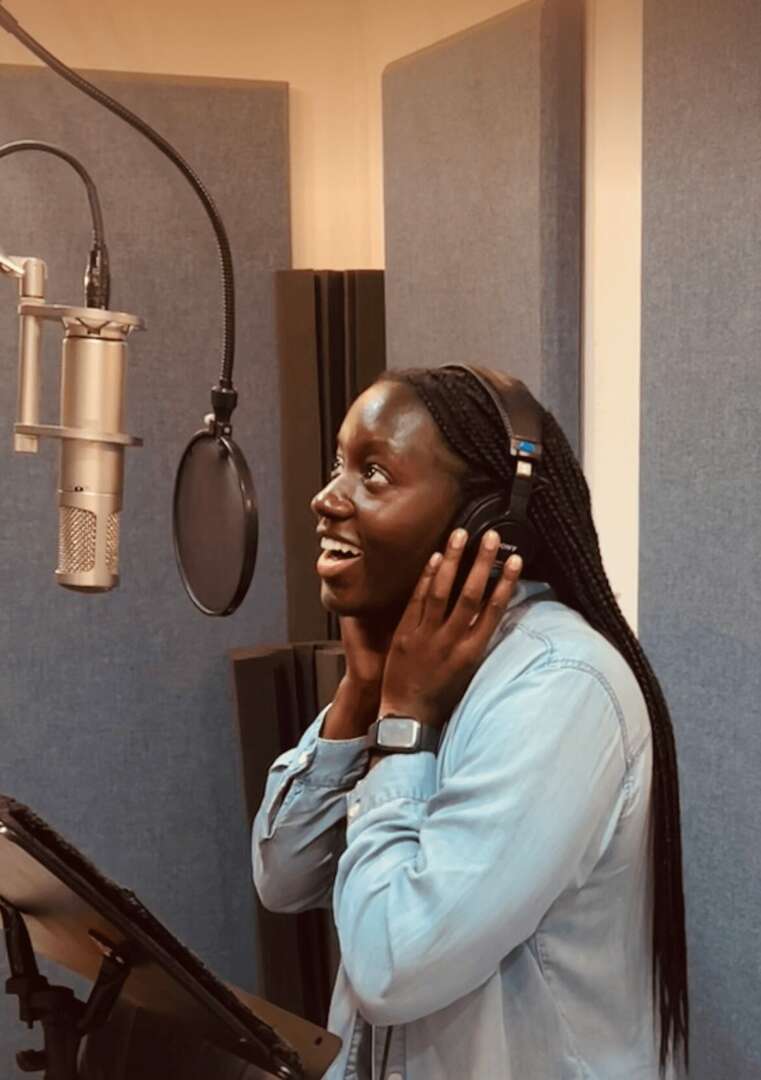
In Fall 2023, I enrolled in an introductory voice acting class through San Diego City College with Professor Jesse Keller. It was a fully remote class with no designated meeting time, so it didn’t interfere with my day job, and it was very low cost. My goal was to see if I even enjoyed VO and whether it was something I could see myself doing long term before investing significant time and resources into it. Sure enough, I loved the class! Professor Keller’s lectures and exercises covered a wide range of content: vocal placement, warm up techniques, different categories of VO work, character development, and even basic sound editing. For our final project, we recorded radio dramas. We could either select pre-written scripts or write our own script to be recorded with other members of the class. I decided to write my own script based on a series of negative experiences I had at a prior job; I thought it might be therapeutic. Overall, I had a lot of fun in the class and received consistently positive feedback, so I knew I wanted to pursue VO further.
After the City College class ended, I wasn’t quite sure how I wanted to proceed. While exploring my options, I came across a website for Deborah (“Deb”) Reeves. Deb is an experienced VO artist and sound engineer who has worked with well-known clients like Nike, Airbnb, and Logitech, but she also works as a VO coach and demo producer. We met briefly on Zoom to discuss the services she offers, and before I knew it, I was enrolled in her six-part Voice Over Arts class! Although some of the course content overlapped with what I learned in the City College class about performance technique in the different categories of VO work, Deb’s class offered a slightly different perspective. The class was a much smaller group and we met in-person on weekends at a local studio with a full professional sound booth, so we got to focus more on developing as performers without worrying about the technological side of things. We also did a much deeper dive into the business side of VO and covered topics such as marketing, union vs. non-union work, and avoiding legal pitfalls. Deb also brought in guest performers and coaches who offered practical tips and valuable industry insights. Since finishing Deb’s class in April, I’ve continued to work with her in her monthly VO Workouts, and most recently, we recorded my first ever demo reel with a focus on commercials and industrial work (e.g, corporate, e-learning, explainers, and interactive voice response (IVR)/telephony).
I would say the most essential skill during the learning process is patience. Because artistic performance so incredibly subjective, you have to be patient and give yourself grace as you learn what you’re naturally gifted at and what presents more of a challenge. Another key skill is the ability to accept and implement feedback. There is a lot of critique and direction involved in VO production. Sometimes, it’s as straightforward as correcting a mispronunciation, but other times you have to take ambiguous direction and use your creative skills to figure out how to capture the director’s vision. The greatest obstacle for me is managing a trifecta of limited resources—money, time, and space. For example, I knew equipment and demo production would be expensive, but I was shocked when I saw workshops going for up to $200 each. It can also be tricky to fit VO into my schedule, which already includes competing responsibilities of a demanding day job, a high-energy dog, and obligations to family and friends. Lastly, I live in a small home, so finding space that is both acoustically sufficient for home recording and safe to store my equipment when not in use has also been difficult. But even with these obstacles, the show goes on.
To be clear, even with nearly a year’s worth of training and education, I am still very much a student! The VO learning process is an ongoing one and there’s so much more that I want to learn beyond just the performative aspect of it. I’m not sure there really is anything I could have done differently to speed up the learning process in a way that would have been as productive or educational as the classes I took. In theory, I could have tried recording my own demo reel at home and marketed that on pay-to-play audition sites. But the demo reel likely would have been subpar in quality, leading me to spend more time and money submitting auditions with little to no return, and I likely would have quit prematurely and let my sound equipment collect dust. Because I respect VO for the learned craft that it is and understand that it can take years of training and investment (and rejections) before I receive consistent work, I wouldn’t change my learning process. For me, this is not a race to the top and I prefer to take my time honing my craft.
Kiana, love having you share your insights with us. Before we ask you more questions, maybe you can take a moment to introduce yourself to our readers who might have missed our earlier conversations?
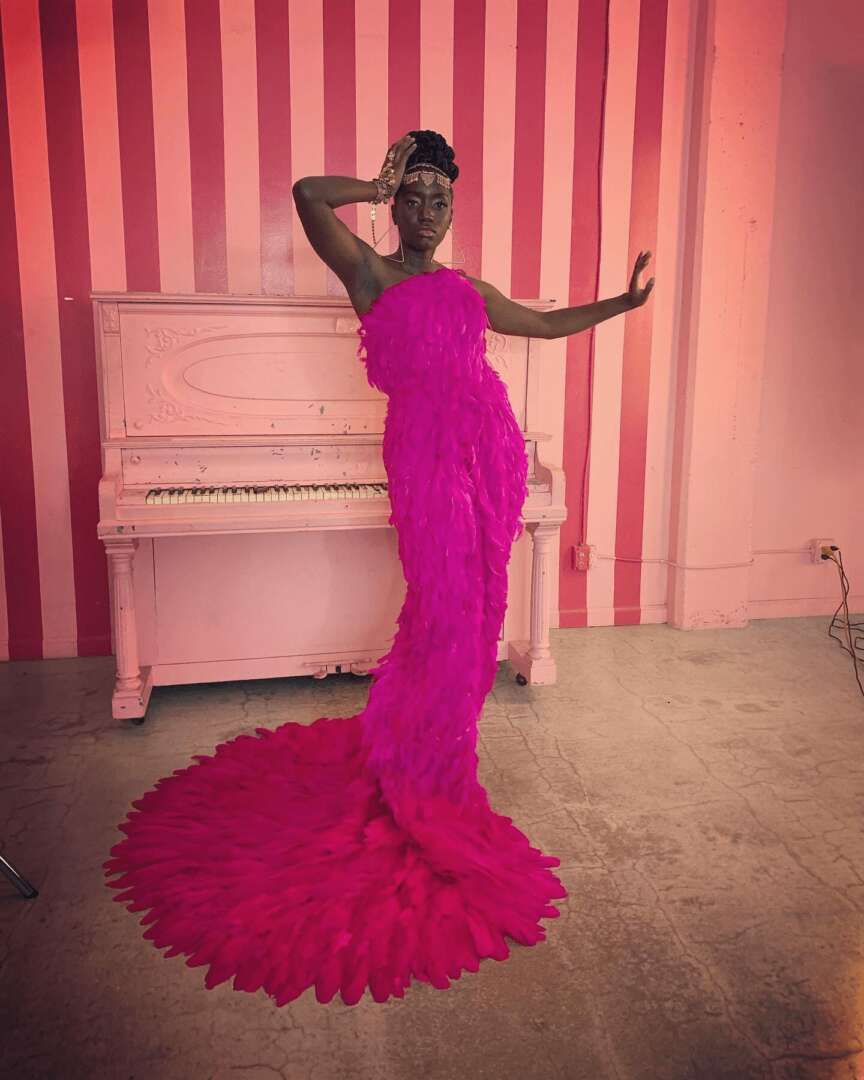
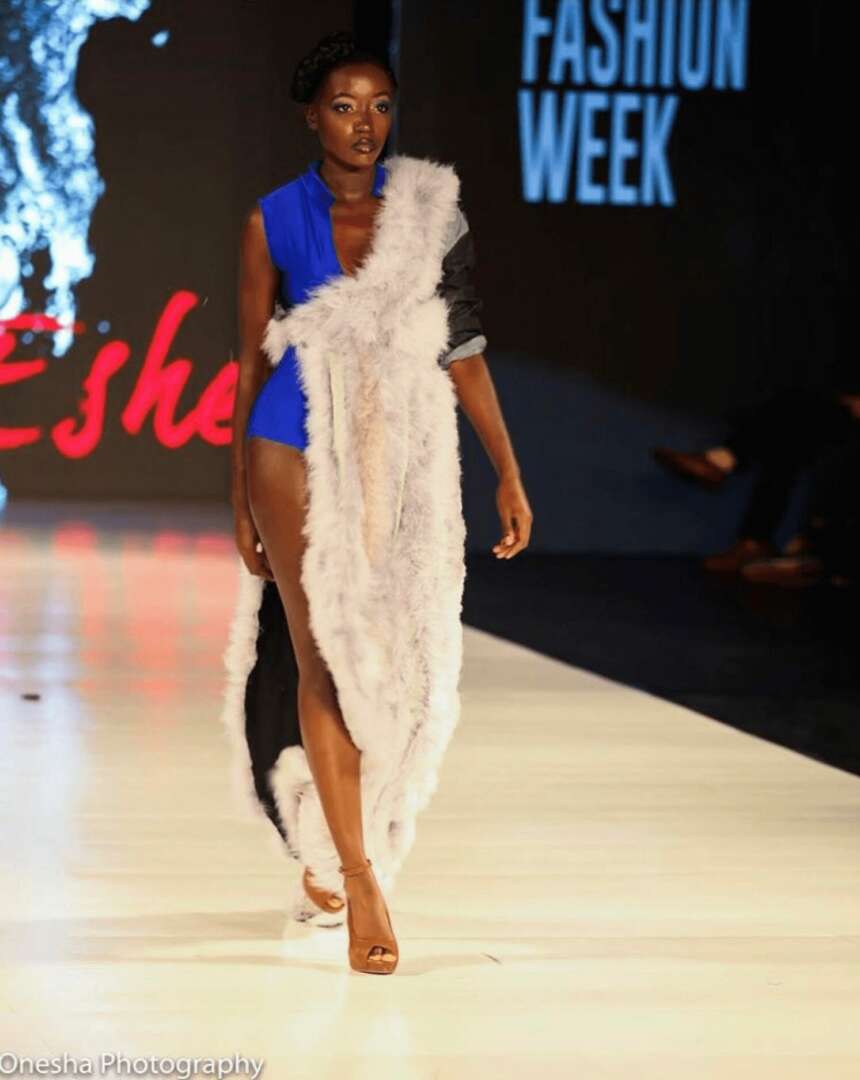
I’ve been a stage performer for as long as I can remember. I dabbled in a few sports that I wasn’t great at, but I always felt right at home in my creative endeavors—specifically, modeling, dance, pageants, and theater. By the time I finished college, I had moved on from performing dance, pageantry, and theater, but modeling was my steady passion for 14 years. I started modeling in middle school and continued all the way through high school, college, and law school. But when I transitioned from law school to law practice, and as the COVID-19 pandemic brought global activities to a halt, I quietly made peace with the fact that my freelance modeling career had reached its end. But what I failed to appreciate until more recently was the sense of freedom and whimsy that my creative activities gave me to balance out the more mundane demands of everyday life.
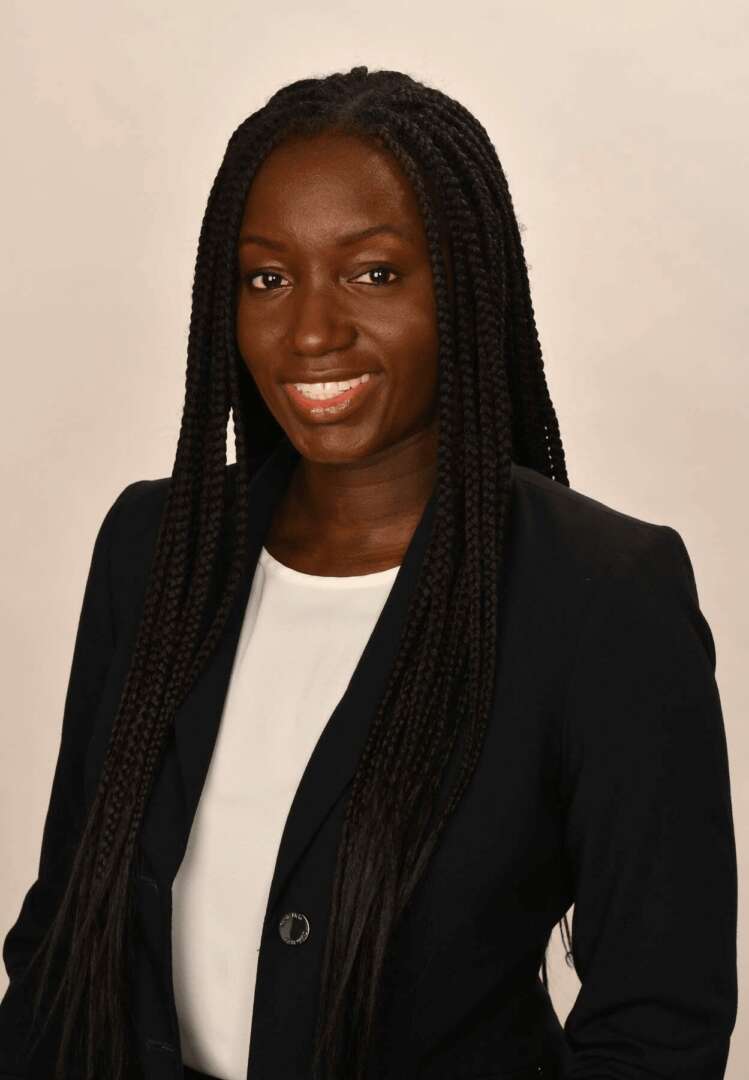
Now, I’m an attorney. I became an attorney because, as someone who spent much of my childhood and young adulthood advocating on behalf of myself and others, I wanted to lend a voice to those who would otherwise fall through the cracks of our modern justice system. Like any major undertaking directed at helping others, being an attorney takes substantial amounts of time and energy, and it is easy (and quite common) to burn out.
Enter VO. It was actually a guy I briefly dated who planted the seed. He wasn’t the first person to tell me I have a nice voice, but he was the first to suggest that I have a nice voice specifically for recording commercial greetings. I didn’t think anything of it at the time, but it was an encouraging memory when I started considering doing VO work on the side. As I mentioned earlier, I needed something that was not only financially lucrative, but more importantly, something to help get my creative juices flowing again and counter the effects of working as an attorney. So far, VO has definitely helped to keep a smile on my face.
I’m still in the developmental stage of becoming a professional VO artist, so my personal brand is a work-in-progress. While I don’t want to sell myself short or be pigeonholed into a specific category of VO work, I feel most comfortable with commercial and industrial copy. In fact, one of my former VO classmates nicknamed me “Siri,” which I took as a major compliment! Maybe I’ll be the next addition to the mobile assistant family.
Is there something you think non-creatives will struggle to understand about your journey as a creative?
Absolutely. I think non-creatives may struggle to understand the breadth of VO work and why it’s so challenging and can’t necessarily be replicated by artificial intelligence (AI).
The first misconception I want to dispel is that VO is just making silly voices for cartoons. When I told my family and close friends that I was getting into VO, the first thing they often said was, “Oh, like cartoon characters?” While animation is certainly one of the most widely recognized categories of VO, it is so much more than that. When you hear a commercial or movie trailer on the radio or TV, that’s a VO artist. When you listen to audiobooks, navigation instructions, or guided meditations, that’s a VO artist. When you hear pre-recorded announcements on public transit or at the airport, that’s a VO artist.
Although AI may be responsible for some of the voices in these modern productions, they were historically recorded by humans. One of the limits of AI is that it is only as good as the algorithms and human voices that were used to create and train it. The real work for VO artists isn’t just reading words from a script; it’s the ability to tap into emotions, colloquialisms, and lived human experiences and integrate them in a way that is meaningful for the listener without making the listener feel deceived. Unlike visual acting, VO artists do not have the benefit of costumes, set designs, or body language to help convey the sort of authenticity that makes for a convincing performance. Yet, so much of the human condition is captured through voice. For example, I attended a workshop where they played the audio of a finished commercial. The voice actor was a Black American man who read the script in a way that incorporated phrasing and phonology that are consistent with African American Vernacular English. Current AI technology can certainly capture the voice actor’s choice of language and intonation, but without the human experience to back it up, it’s virtually meaningless. This is why human voice actors and maintaining diversity among them are so important.
Is there mission driving your creative journey?
Yes, and it’s simple: I want to do work that is fulfilling to me. This means being able to view my work as filling my cup halfway and not emptying it halfway. This means having energy left and feeling accomplished after a long day’s work, not being drained by it. This means being able to bring my whole self with me to work and not feeling the need to assimilate to tradition.
Contact Info:
- Twitter: @catonthevox
- Other: Email: [email protected]
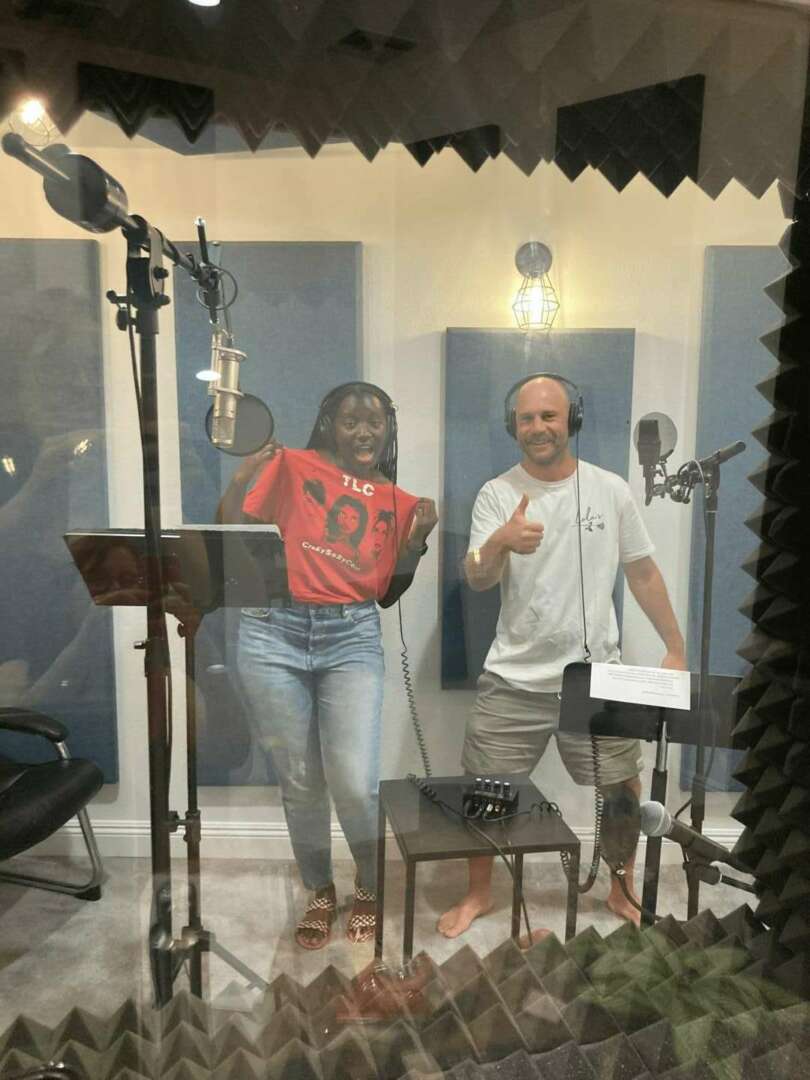
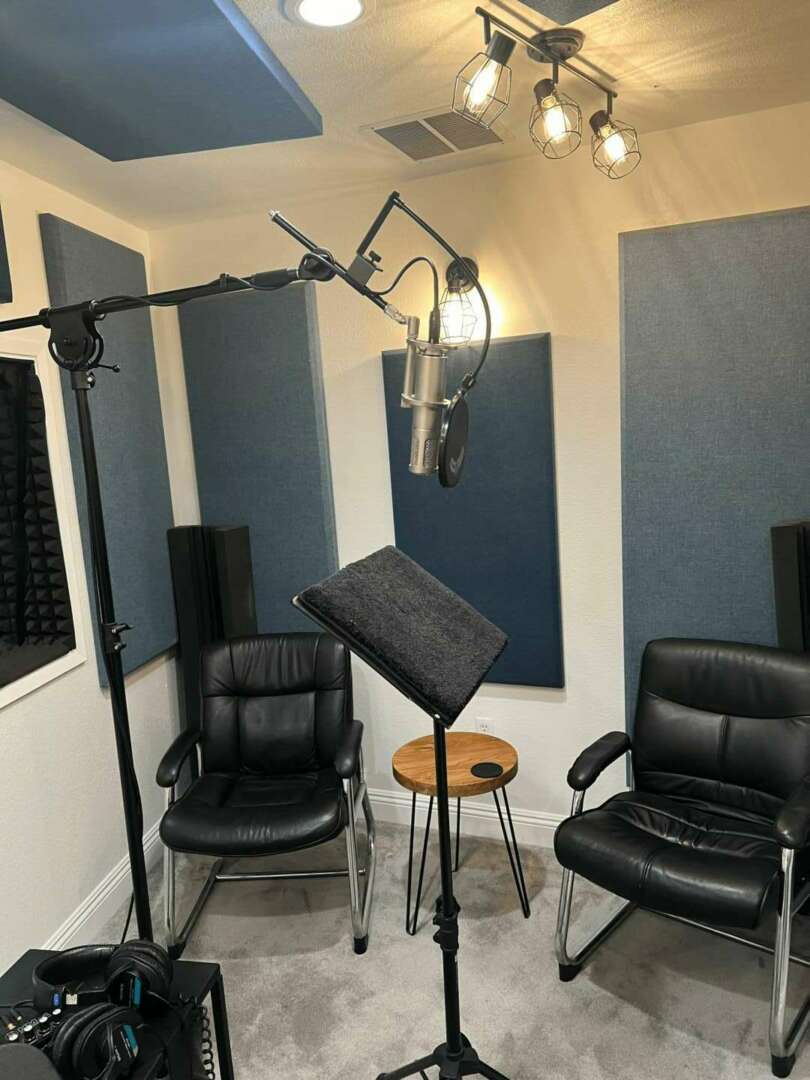


Image Credits
Behind the Scenes of “Many Shades of Pink” Photoshoot – Publication: Horizont Magazine (January 2020); Photographer: Arlisa Holloman; Creative Director/Photography Assistant: Angela Ledyard; Fashion Designer/Hair Stylist: Tanya Jenkins; Wardrobe Stylist: Linda Jay’s Danielle Jeffries; Makeup Artists: Sarahi Tablas, Boricua Mamii, and Aryanna Paige Crayton
Los Angeles Society Fashion Week 2018 – Photographer: Onesha Photography; Fashion Designer: Tanya Jenkins; Stylist: Candi of KottonCandiCo; Makeup Artists: Jennifer Hope, Charde, Shani Nicole; Hair: Ms. Toni
Attorney Headshot: Martin Mann Photography