



We recently connected with Khiara Foss and have shared our conversation below.
Hi Khiara, thanks for joining us today. One of the things we most admire about small businesses is their ability to diverge from the corporate/industry standard. Is there something that you or your brand do that differs from the industry standard? We’d love to hear about it as well as any stories you might have that illustrate how or why this difference matters.
At the Enigma Emporium we strive to provide games for those who want more depth and difficulty from their puzzling experiences. We’re unafraid to utilize complex ciphers, difficult codes, and concepts that fall well outside the box. This is a choice we made early on, that we’ve revisited and discussed with each other many times, because it sets us apart in ways that are both favorable, and less so. Not everybody wants a game that will require research and a somewhat significant amount of time to work through, but there are also plenty of folks that LOVE what we do, and appreciate that we design complex in-depth games that are meant to challenge even seasoned puzzlers.
That said, it absolutely means that we are targeting a niche group within a niche market, which has led to those discussions about whether or not we should try and design something with more mass market appeal, but we keep coming back to the fact that we’re designing the type of games that we would enjoy playing, and that means that our games won’t be for everyone, and we have to be okay with that. Learning to love what I’m designing and continuing to work on it while also knowing that it won’t appeal to everybody is definitely a skill that took a while to get comfortable with, but one that has been invaluable, and will likely serve me well in any creative endeavors I pursue going forward.
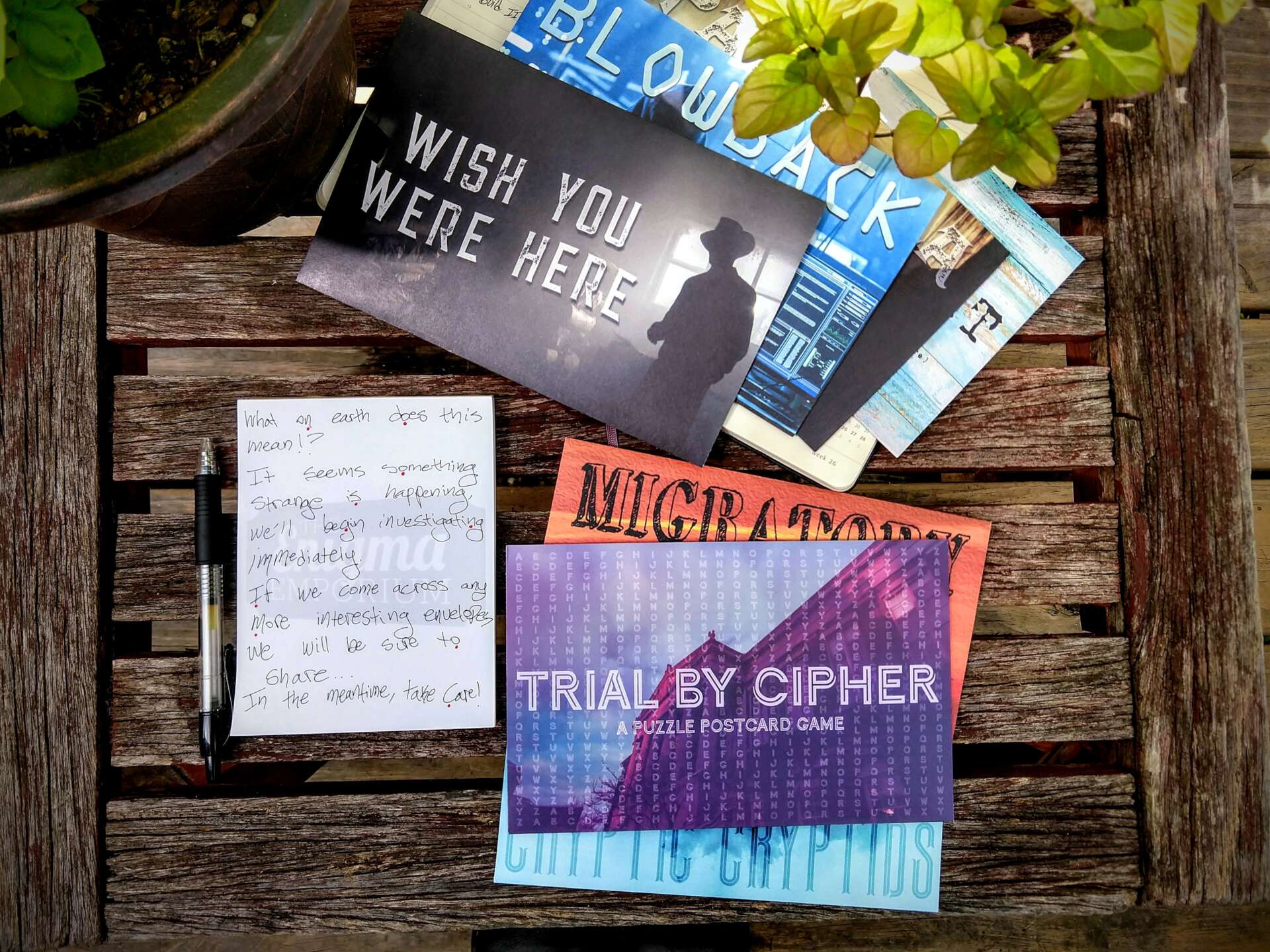
Another thing we aim for is affordability – our core line of games (Puzzle Postcards) retail for just $15 each, which sits solidly on the lower end of anticipated pricing for puzzle games. There’s actually quite a range in cost for this industry, with mass market games going for as little as $10-$12 each, up through bespoke experiences that can be hundreds (or even thousands) of dollars. We strongly believe that puzzles are for everyone, and that curiosity is good for the soul, and we knew from the start that we wanted to ensure we had games available for as low a cost as we could reasonably manage, so that anyone interested can partake in an enigmatic and engaging experience.
Khiara, love having you share your insights with us. Before we ask you more questions, maybe you can take a moment to introduce yourself to our readers who might have missed our earlier conversations?
My name is Khiara, and I make puzzles. Not jigsaw puzzles, what I do goes a little deeper than that. Think clues, codes, ciphers, secrets – logic, attention to detail, pattern recognition, perhaps a bit of research. On top of designing the puzzles themselves, I’ve accrued a wide range of different skills, from website building, to graphic design work, to running and advertising a crowdfunding campaign, to coordinating international fulfillment afterwards. I won’t say that getting here has been easy, a lot of the time I’ve felt out of my depth, but it has been a wonderful journey full of learning and opportunities to grow, all while being able to pursue a wide variety of topics that deeply intrigue me.
Since I was young, I’ve been fascinated by mystery, language, hidden messages, and the like. These are not uncommon things for small children to take interest in, but I continued to be engaged by these concepts up through high school, when life got too busy and I had to focus my attention elsewhere. Fast forward a handful of years, and as a young adult I was looking for work. I’d been in retail management for a couple of years, but felt like I needed something new. I stumbled across a job listing looking for folks to staff a brand new escape room that would be opening imminently. I’d heard of escape rooms, and was intrigued by them, but had never played one myself. I went in for an interview, which went well, and was hired on before we’d even opened. My first few shifts were spent helping finish the rooms themselves, painting walls, sanding floors, and installing puzzles. Shortly thereafter, I played an escape room for the first time, and was absolutely floored by how much I loved it. It harkened back to the passion I had in my youth for the intriguing and mysterious aspects of life, and required such a marvelous and bizarre mode of thinking that I just couldn’t get enough of.
Given how new the escape room was when I started working there, bookings for the first few months were rather slow, so myself and the rest of the staff ended up with quite a bit of free time. In an effort to fill that free time with something tangentially relevant, we took to playing ‘Escape Room in a Box’ style games. After playing numerous of those games, myself and (my soon to be business partner) Logan naturally came to discussing what we really enjoyed about them, and what aspects we found less favorable. Those conversations rather naturally morphed into discussing what it would take to design games of a similar sort, what that might look like, and how it would differ from what was already available. After a handful of chats in loose terms about potentially designing games, we sat down and had a more serious discussion about doing so in earnest, and The Enigma Emporium was formed.
In the 5 years since we initially started doing this, we’ve put out 11 games (with a 12th slated for later this year) that are full of challenging puzzles and engaging narratives, with plenty of wondrous intrigue and satisfying reveals. On top of the games we’ve published in-house, both myself and Logan have branched off and done a wide variety of design and consulting work for other companies. We’ve weathered a pandemic along with a global shipping and materials crisis, plus navigated the life changes that come with doing anything across an extended period of time. I’m really proud of the work we’ve done and where we are, and I very much look forward to what’s still to come.
We’d love to hear the story of how you built up your social media audience?
Social media can be exceedingly frustrating to manage, and often feels obscure and counterintuitive. I’ve been helping manage social media accounts assorted for over a decade at this point, and still encounter plenty of situations where I’m unsure what will work best. For The Enigma Emporium, we actually set up our social media accounts (Facebook, Instagram, and Twitter) the same day that we filed our LLC paperwork with the state. We knew that we would be running a crowdfunding campaign later that year for our first game, and successful crowdfunding relies largely on bringing your own fans for the campaign, so we wanted to ensure that we had at least some degree of social following going into our first game.
The biggest thing that we quickly realized was that consistent posting, while helpful, is insufficient on it’s own. I would generally say that the quality and content of your posts is more important than the quantity. Good social media posts engage with the audience in some fashion, whether that’s asking for their input, bringing them into a discussion, or presenting them with a problem. That said, coming up with consistently engaging content on the fly is a big ask; it takes a lot of time and effort to create genuinely thought provoking and stimulating posts!
To work with the need for intriguing content, while not stretching ourselves too thin trying to come up with brand new concepts every week, we opted for a ‘Weekly Puzzle’ posting format. This allowed for us to offer our base captivating content with consistency, while removing the onus of coming up with entirely fresh formats and posts over and over again. It also allowed us to try out new ideas and puzzles in a controlled fashion to see what people thought of them before opting to use those ideas in a game. We kept up with consistent weekly puzzles for a couple of years, but a brand new puzzle every week is still quite the ask, especially when life gets messy. Since then, we’ve taken to posting with less frequency, but we still aim to keep our audience engaged by offering the occasional puzzle, along with peeks into what’s happening behind the scenes, and highlighting excellent work being done by other folks in the industry. While we’re posting with less frequency at this point in time, we do tend to ramp up our social presence ahead of new game launches or other things we want to ensure our audience is apprised of, but we’re less concerned with building up an audience at this point, and moreso in maintaining it.
We’d really appreciate if you could talk to us about how you figured out the manufacturing process.
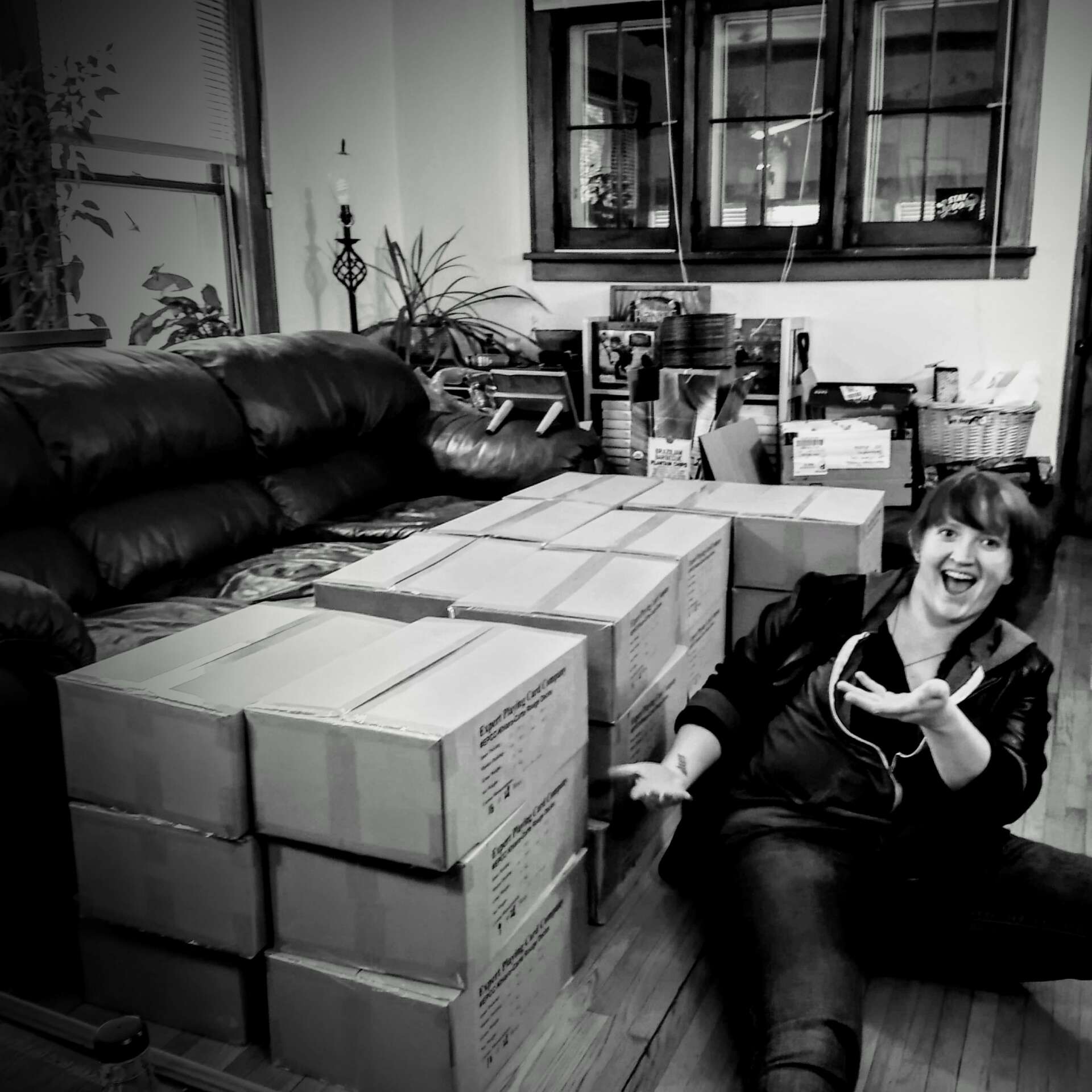
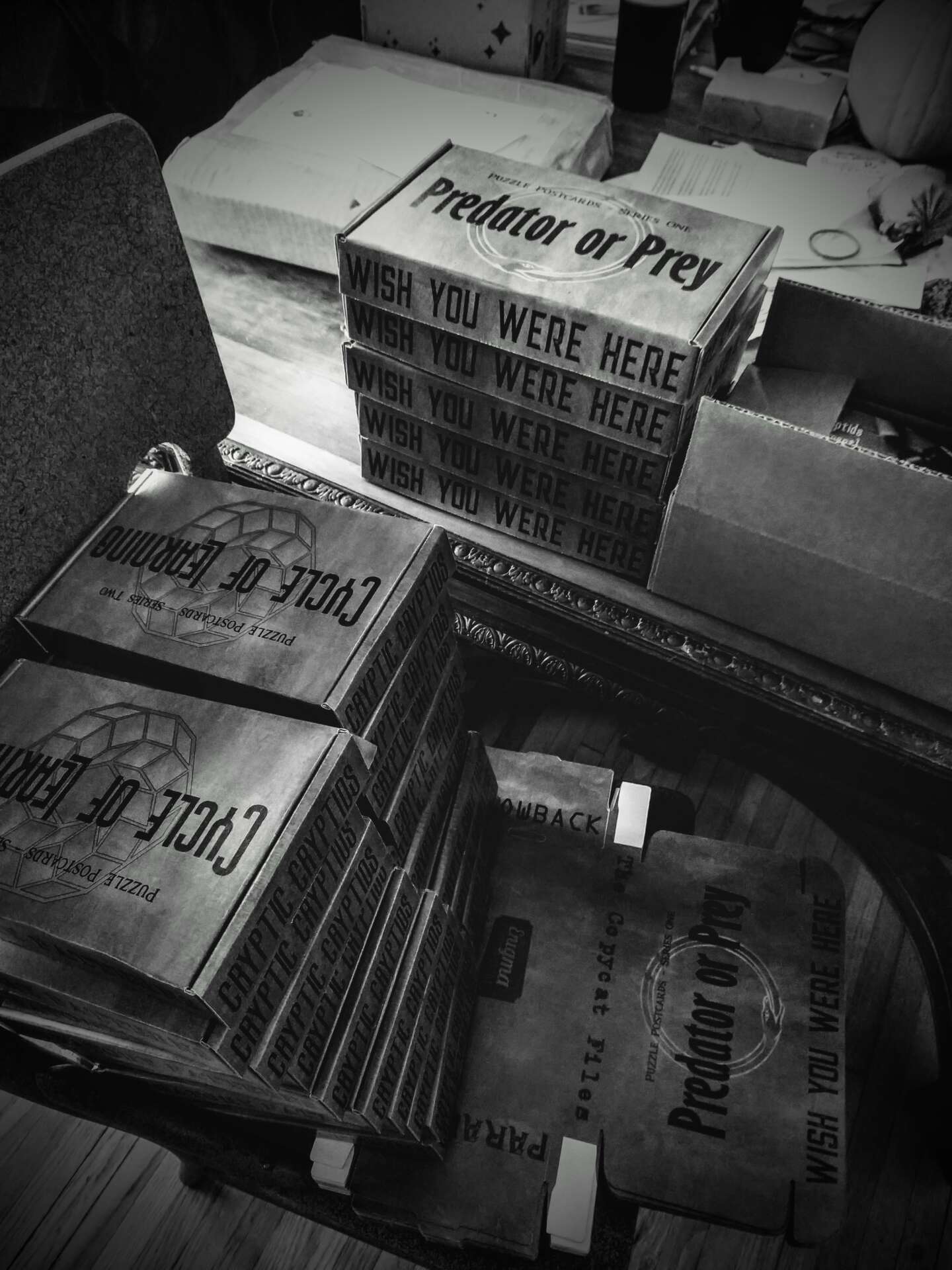
Going into this endeavor, I had some experience with hand crafting items of varying variety, but had never been involved in the manufacturing of things in quantity. Our Puzzle Postcard games were our first foray into high volume printing, and I’m very glad that we started with those. To this day, we’re still manufacturing them in the same fashion. We use a POD (Print on Demand) service for the cards, envelopes, and any other bits and bobs, then assemble full finished envelopes by hand ourselves. This gives us a lot of control over the process, from catching misprints to ensuring that every piece is up to our standards, plus it’s very cost effective and helps provide us with good margins for those games, and means that we can readily reorder in whatever quantity is needed at any given time.
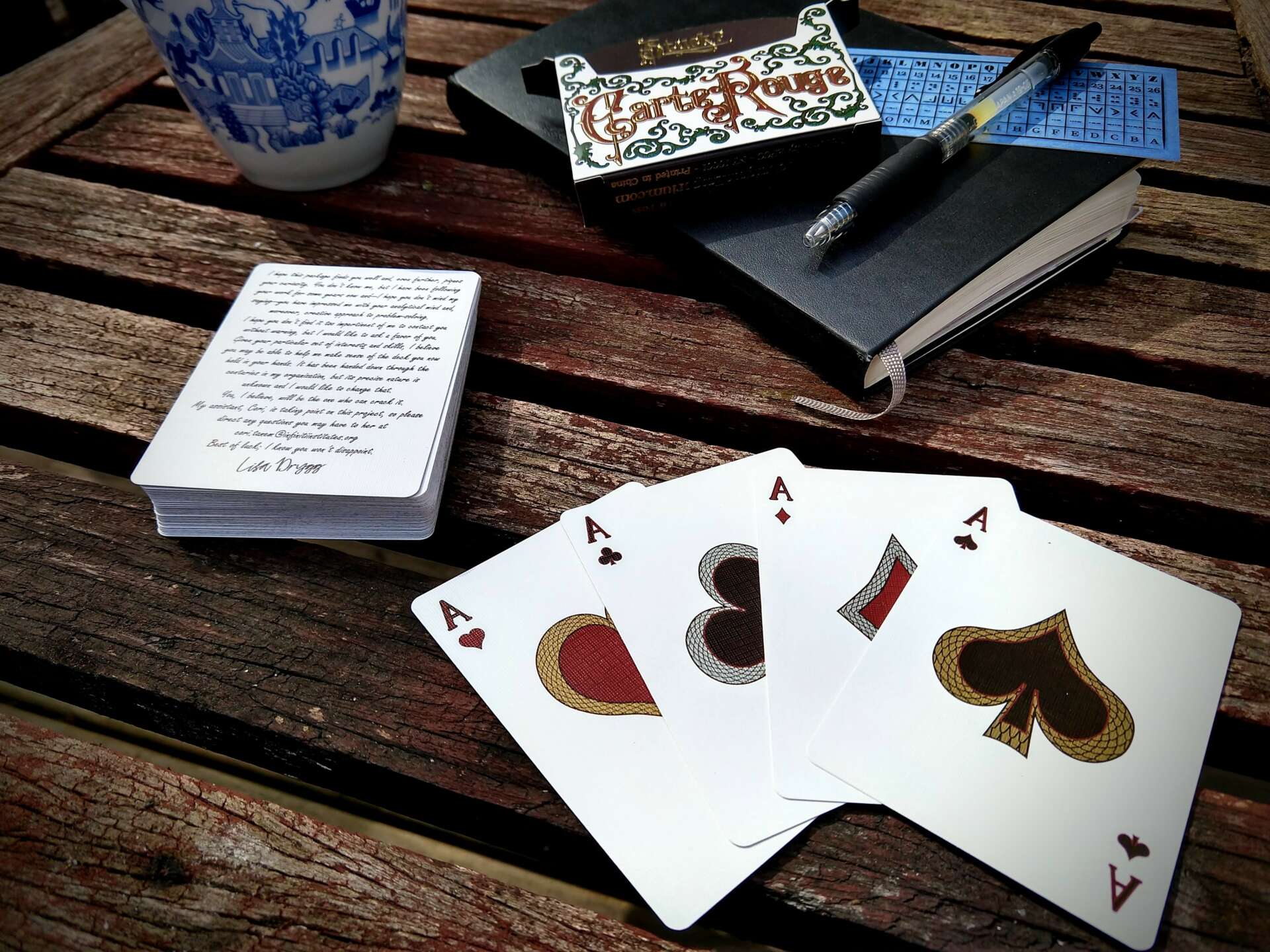
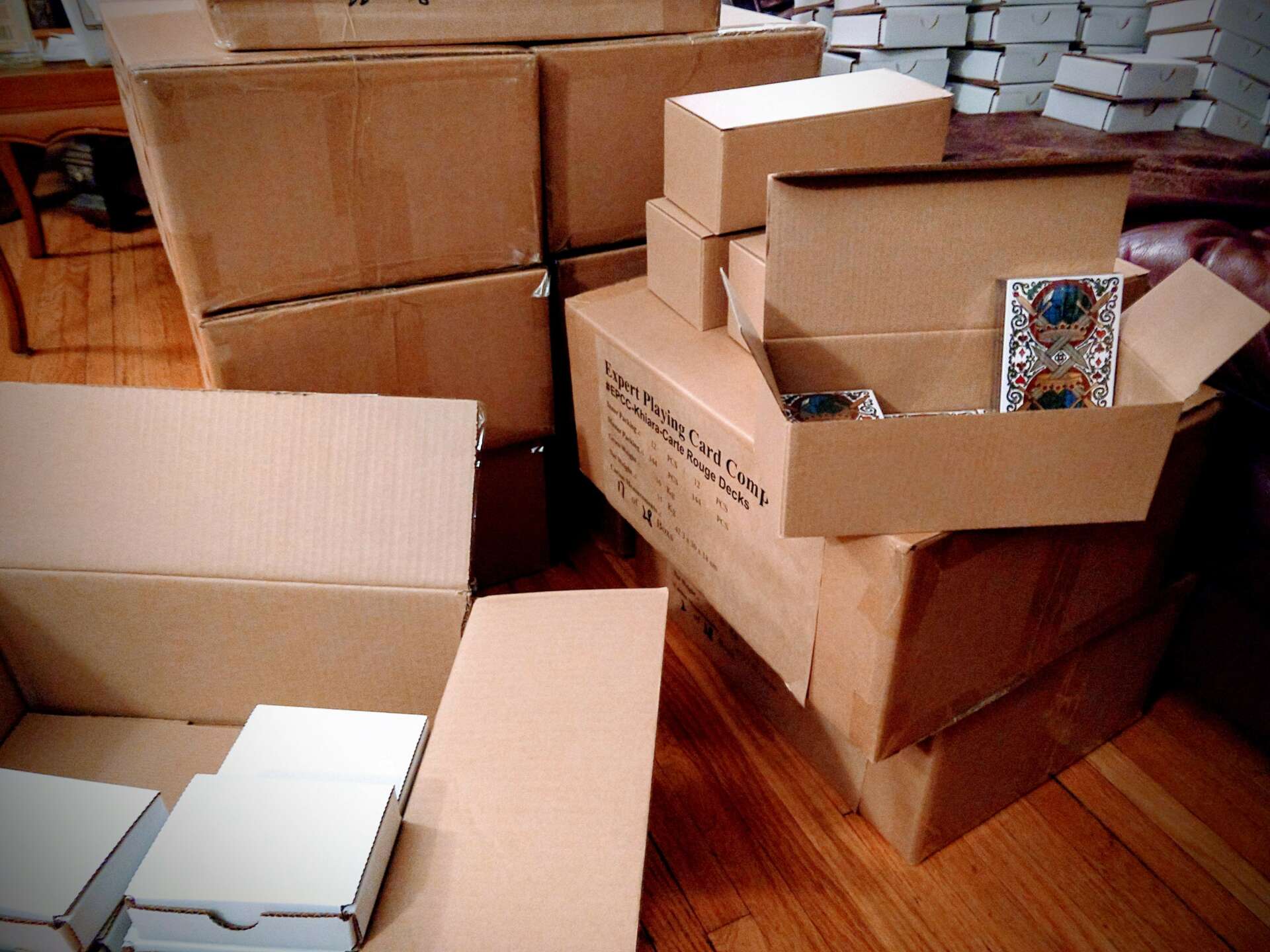
The first game we put out that required coordinating with a proper manufacturer was Carte Rouge -a fully functional deck of 54 playing cards, that contains a narrative in clues hidden throughout the artwork. This was the first project we put out that was fully under my purview – I not only designed the puzzles and narrative, but I also illustrated the entire deck, from the pips on each card up through the tuck box they come in. It was an intensive task, that took about three years from initial concept up through having a finished deck in hand. I had to learn how to prepare production ready files, along with how to incorporate specialty features like foiling and Pantone colors. I also learned how to select and coordinate with a manufacturer, and what that process looks like from start to finish. I must say, I’m quite pleased with the final product of that project, which is ideal considering that we acquired 4000 decks.
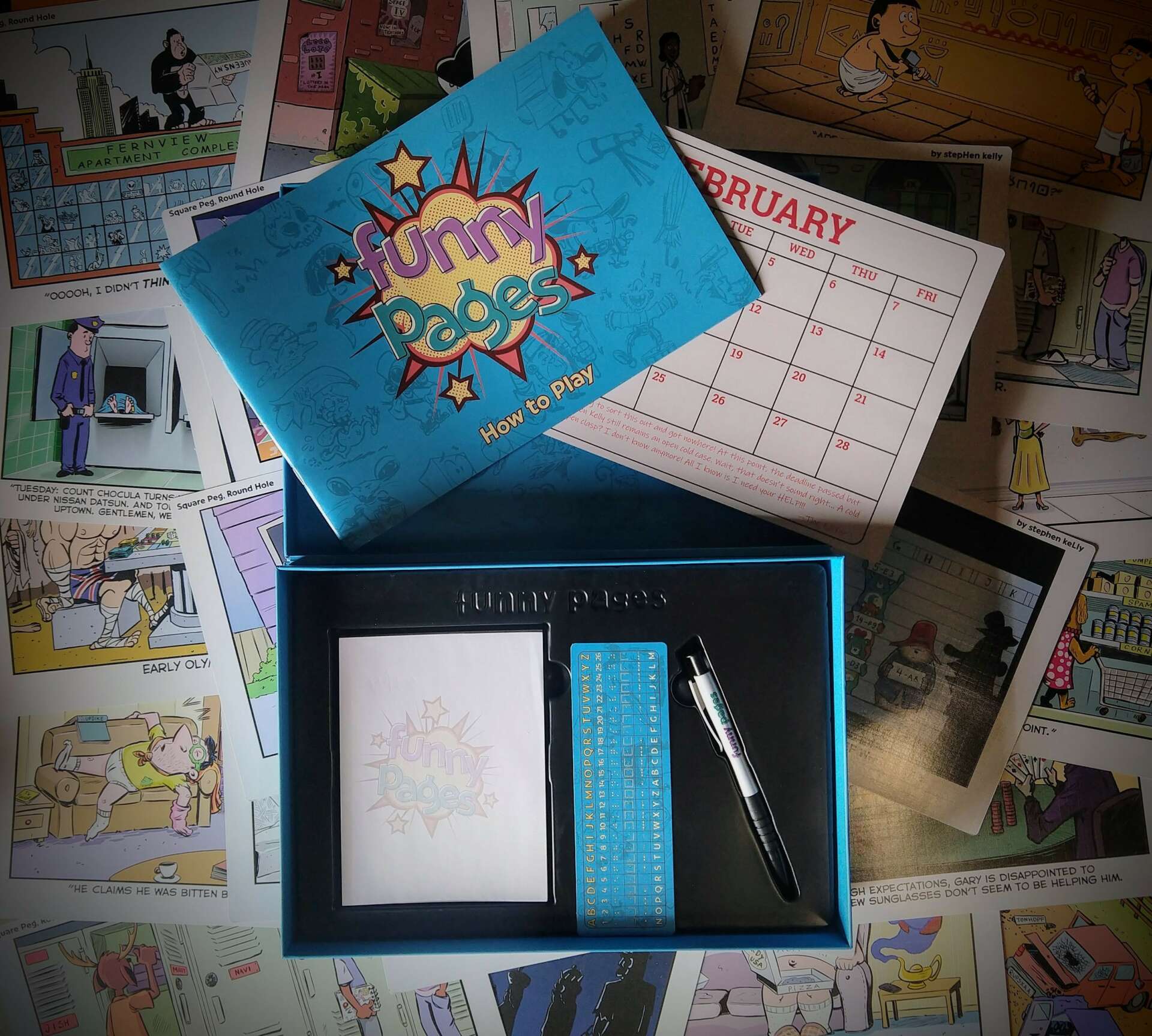
The second project that we needed an external manufacturer for was even more intensive – Funny Pages is a collection of single panel comics, through which you can uncover the story behind the disappearance of a much beloved cartoonist. Component wise, it consists of a sturdy custom box, containing the comics themselves, a notepad, a pen, and a miniature cheese grater. Most of these components could be provided by pretty much any games manufacturer, but it turned out that miniature cheese graters are not as common as one might think – the need for that item was actually one of the deciding factors for us in determining which manufacturer to go with.
The other thing that tends to really factor into our choice of manufacturing partner is how clear, consistent, and concise they are in their communication. Regardless of how well put together your files are, or how clear your vision for the end product is, if you and your manufacturer can’t clearly communicate and get on the same page, it’s going to be a far more difficult process than it needs to be. Manufacturing also tends to be an extended undertaking, as going from rough digital files up to a polished printed product takes many iterations and test prints, and again, if the communication is subpar, that will further draw out an already lengthy process..
Contact Info:
- Website: www.TheEnigmaEmporium.com
- Instagram: www.instagram.com/theenigmaemporium/
- Facebook: www.facebook.com/enigmaemporium
- Twitter: www.twitter.com/EnigmaEmporium
- Other: Personal Twitter: www.twitter.com/PuzzleyPunk