

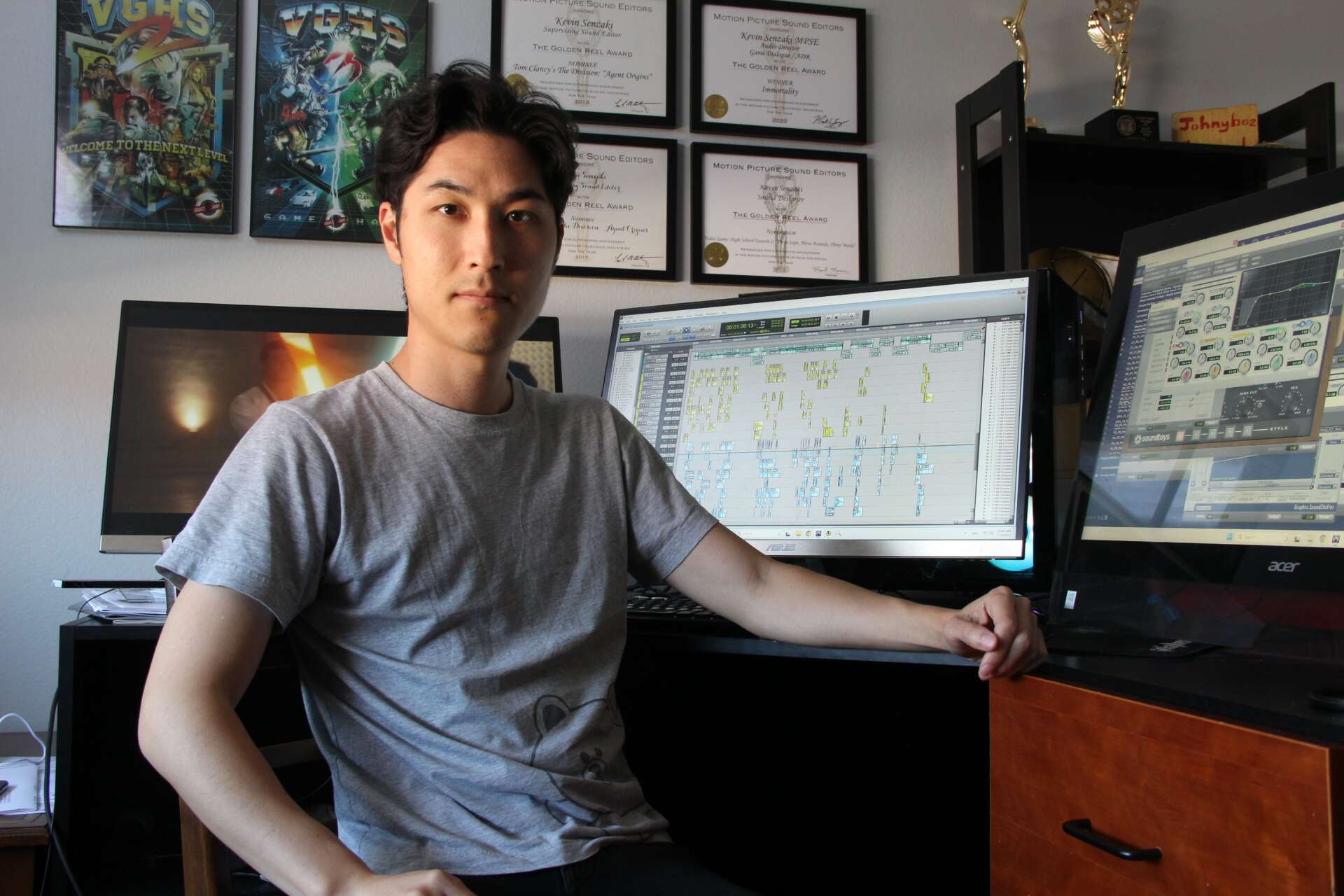

We were lucky to catch up with Kevin Senzaki recently and have shared our conversation below.
Kevin, thanks for taking the time to share your stories with us today Can you tell us about an important lesson you learned in school and why that lesson is important to you?
By the time I was in high school, I was firmly set on pursuing a creative career. Although I’m now working as a sound designer, at the time my main interest and notable “talent” was in the fine arts, mostly pencil and charcoal drawing, and I was considering a job in illustration or animation. I was taking the art courses available at my high school, but I did not get along well at all with the instructor, whom I found narrow-minded and judgmental.
While structure is to be expected in any class, one of our mandatory assignments was illustrating a poster for an annual horse show event, which just happened to be held every year at a nearby venue. The teacher proudly showed us previous years’ entries made by her past students, which were all essentially the same picture — realistic profile angles of a horse and jockey leaping over a pole. We were strongly pressured to create an entry just like these if we wanted to win. As this didn’t appeal to me, I instead came up with an entry that suited my own style and ideas. I drew a young child dressed as a jockey holding a stuffed horse, seen from behind, looking off into the imaginary distance at adult jockeys riding, or maybe towards their “dreams for the future” or what have you. The teacher hated it. She snidely told my parents that my entry would absolutely not win. When the contest came about, the teacher was somewhat proven right as my entry didn’t win first place, but instead won “special recognition” and was displayed as one of the winning entries — the only one that wasn’t a realistic profile angle of a horse and jockey leaping over a pole — and was later purchased by someone working for the horse show, to hang in their grandchildren’s bedroom.
What I learned through this assignment (and the many others I did in the teacher’s class) was that I was a selfish and temperamental visual artist. While these aren’t necessarily negative traits in a creative field, I came to the realization that I simply did not enjoy drawing for someone else, particularly if they were going to be picky. I decided that I didn’t have a good temperament to pursue art as a full-time career, managing things like clients and project expectations, and it was something I would only continue to enjoy if kept as a hobby.
I enjoyed collaborative work much more on film projects, which at the time I was taking less seriously and doing just “for fun.” I came to the conclusion that film was a much better direction for me to pursue for a career, for my personal well-being and creative fulfillment. While I still think back on that instructor as having been awful, the experience itself was an invaluable way to “test the waters” and to learn about myself and how I worked in a constrained, stressful environment. It was close enough to trying illustration “for real” as a career to learn what I needed to about myself, and redirecting to a film career was absolutely the right personal decision.
Practical experience is the only way to truly understand how a creative profession works day-to-day. Hands-on experience can often lead to surprising discoveries, and the way specific fields operate are also constantly evolving and changing. While having a dream or goal is extremely important, it’s equally important to be open-minded about that goal, and to adapt and revise as you learn more about working realities and how you respond to them.
Kevin, love having you share your insights with us. Before we ask you more questions, maybe you can take a moment to introduce yourself to our readers who might have missed our earlier conversations?
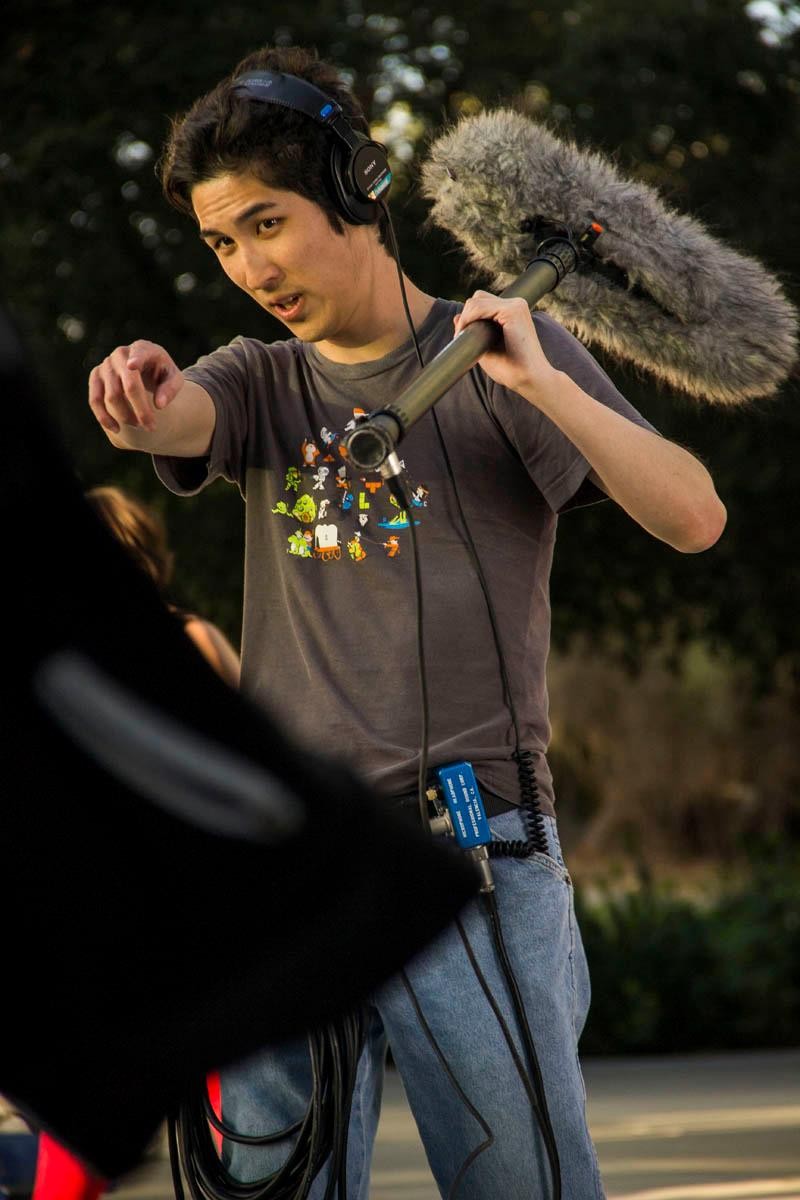
I’m Kevin Senzaki, a sound designer in Los Angeles. I create the soundscapes for things like movies and video games, which in the most basic terms usually means everything outside of dialogue and music. My work can be subtle, like crafting a morning park ambience to either make a scene feel like a playful weekend morning or the overcast day of a funeral, all the way up to really bombastic stuff like the servos and weapons of sci-fi robots and the roars of fantasy monsters.
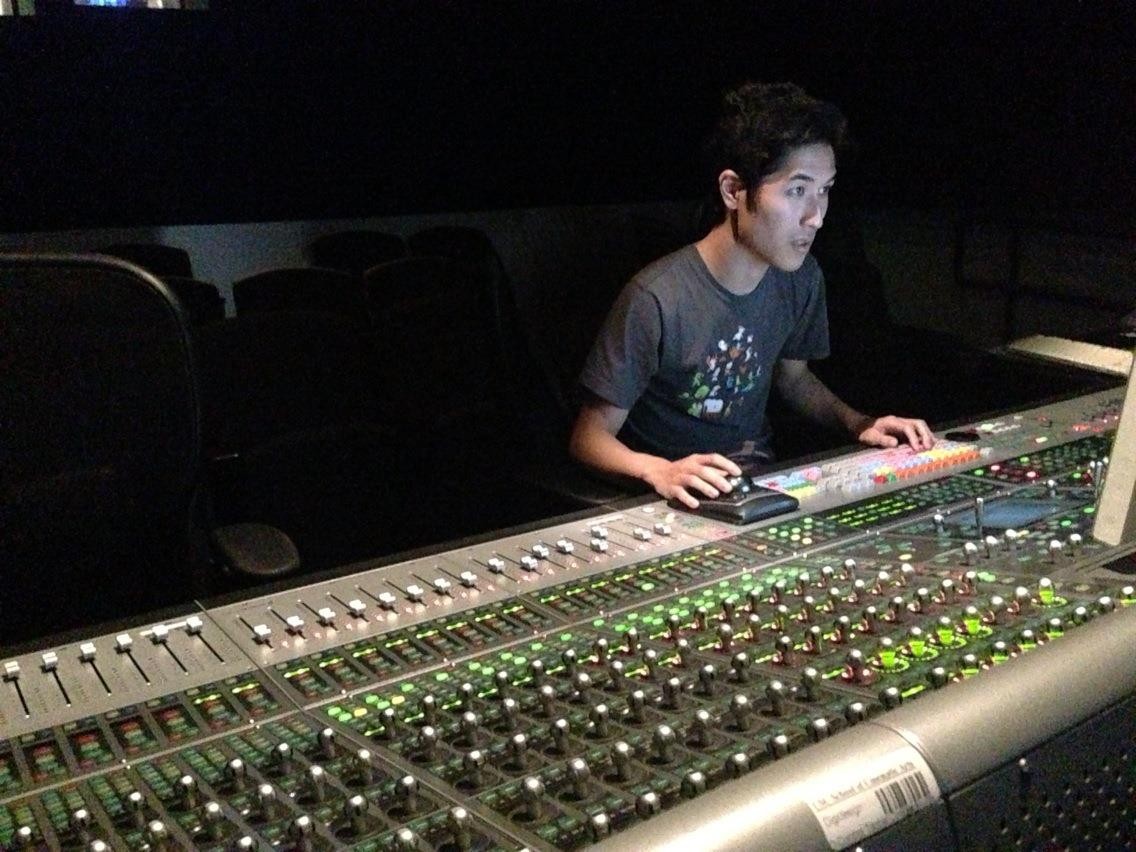
Watching the behind the scenes for Star Wars and Jurassic Park when I was young, I was fascinated by how a group of individuals could work together, each contributing their own craft and expertise, to create a magical result that was a greater sum than its parts. I drew and wrote a lot as a child, but was frustrated by the lack of motion and sound, two things which made movies so much more immediate and visceral. That interest in movies stayed with me, and I graduated from USC’s School of Cinematic Arts having focused on sound design, which was an area of film that had always fascinated me, and after working with professional equipment and doing several school projects as a sound designer, I decided it was a great fit for me. (I jokingly summarize it as, “they needed sound designers, I wanted to do it, and I apparently was decent enough at it, so it stuck!”)
I graduated into the aftermath of the 2008 financial crash, and between what looked like a bleak job market and my tepid enthusiasm for joining a big post production company at the bottom of the ladder and slowly working my way up, I decided to start freelancing. Around this time, there were some YouTube channels uploading original action short films every week, with really impressive quality, and I wanted to seek out similar opportunities since it seemed like a potential new and innovative direction for the industry. After about a year and a half, I was connected with one of these YouTube channels, FreddieW (later RocketJump) to work on a crowd-funded web series called Video Game High School. The story followed a boy’s journey through an elite high school training the best video game players in the world (which predicted the contemporary rise of esports teams), and all the video game sequences, with settings like battlefields and race tracks, were shot in live action like “normal” movie action scenes. The show did really well, eventually spanning three seasons, and is to this day one of my most “recognized” projects. I got along really well with the team’s creative sensibilities, and from that point on also did sound design for their weekly action short films, as well as working with fellow YouTube action channel Corridor Digital, which was based out of the same building. Most projects had a half week turnaround for sound for about five minutes of content, which is an intense “pressure cooker” situation where quick, confident decision-making and task prioritization were key. I needed to nail the sound of a different genre every week, and help make sure every moment of the story was as powerful and clear as possible. Visual effects and sound design without a story gets boring really fast, but these shorts were successful because of their humor and storytelling, and learning in an environment that valued narrative really helped me hone in on making the story the heart of every one of my creative decisions. Although I’m in no position to really analyze my workflow, I’m often told by other sound designers that I work really quickly, and I would credit a lot of that to my formative YouTube work experience with such crazy deadlines.
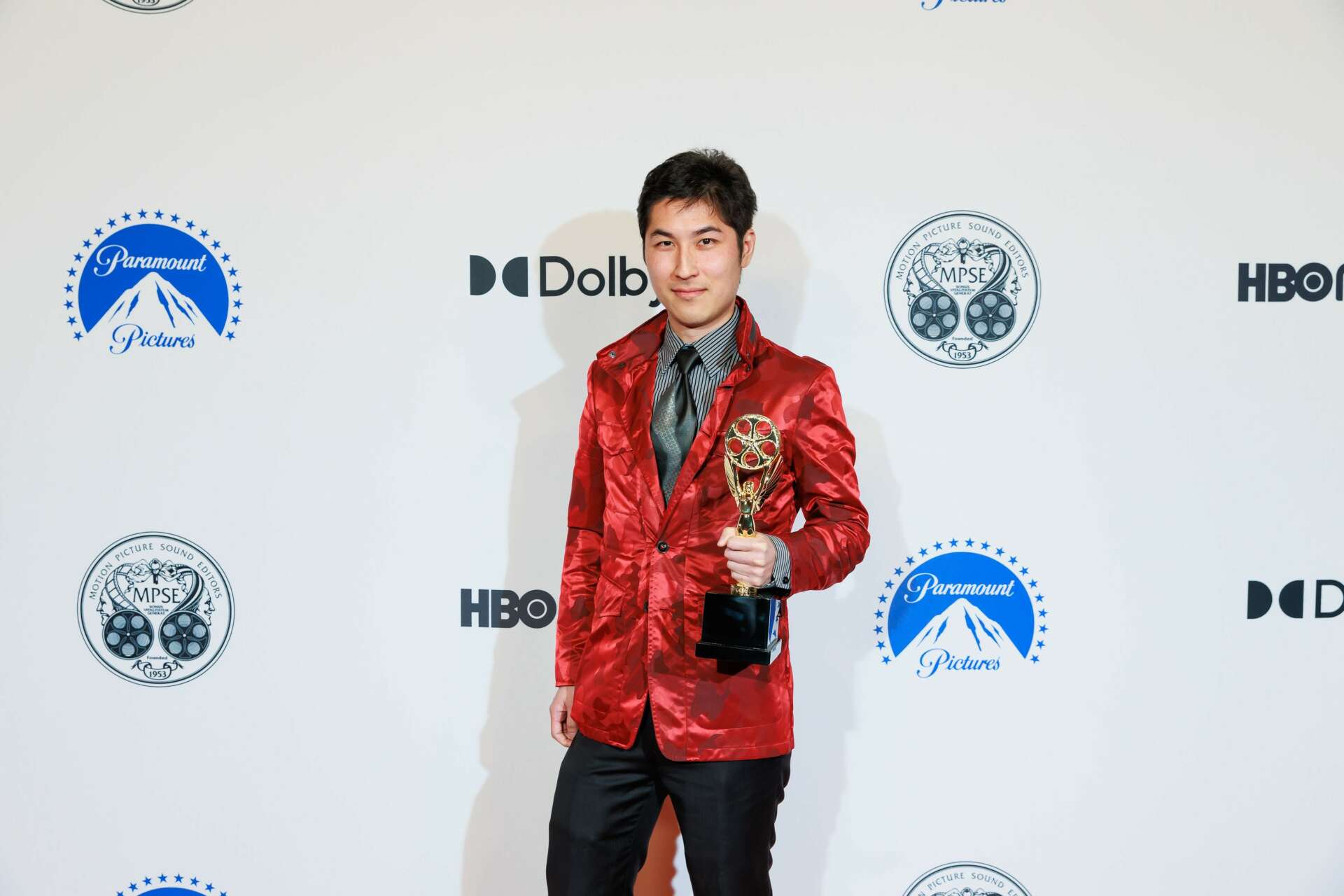
Over the following years, many YouTube people migrated to other areas in entertainment, and as a result my network grew, leading to a wider breadth of work. Nowadays, my projects range from feature films to TV, documentaries, video games, commercials, podcasts, meditation apps, and even museum exhibits. Some recent releases as of this writing are the comedy drama “Mo” on Netflix, the video game “Immortality,” for which I won an MPSE Golden Reel Award, and the big wave surfing documentary series “100 Foot Wave” on Max, for which I have an Emmy nomination. Covering such a wide range of stories means a new set of challenges and considerations with each project, which I absolutely love. I find my job to be the most fun and engaging when I don’t already know the answers, and a bit of experimentation and creative risk is necessary.
What do you think is the goal or mission that drives your creative journey?
My ongoing goal is bringing awareness and purpose to all of my work. When I’m brought onto a film, my job is to understand the story being told, and then bring new ideas and embellishments to that story through my sound design that improves and strengthens the work as a whole. Sometimes this can be from a deep personal connection I find with the material, and sometimes it’s perhaps a bit more “superficial” (understanding the genre and making moments “cooler”), but that can be and equally fulfilling and fun challenge.
I do my best to be mindful of who I bring on as my collaborators on a project-by-project basis, taking into consideration not only their work experience, but their personal backgrounds and goals. This can be a wonderful way to bridge a personal experience gap with the subject matter of a film, and collaborate with someone who is more intimately familiar with the story’s setting or point of view, which are invaluable insights and learning opportunities. The most significant steps forward in my career have resulted from people “giving me a shot,” and I try to pay that forward as much as I can. I’ve found a sense of purpose in trying to be a positive force that helps others rise up, even if I can’t offer as much shared work and mentorship time to everyone as I wish I could.
While I don’t pressure myself to always have an active personal project, I do try to let my imagination run wild in directions a bit off the beaten path. I find a lot of personal fulfillment in simply doing “work” for the fun of it, and it’s a great way to try out backburner creative ideas, and teach myself new things I can apply to my “real” job. A few years ago I did a joke “surf metal” song called “R.I.P.Tide” in collaboration with some composers and musicians I know through work, and I taught myself Adobe After Effects to create the music video. I have a comic book pitch currently floating around out there, co-written with a good friend who’s a professional comics writer. I’m currently putting together a little “sound design-based music” EP, which is almost hilariously unmarketable, but it entertains me and has some ideas I find personally compelling, and that’s what matters.
When I was starting out in my career, it was nice to have clear career goals like “work on a summer blockbuster movie,” but I’m now grateful to have reached a point where I’m pretty much able to simply enjoy the ride and I have fun being surprised by what comes my way (being busy certainly helps). I don’t have a single “dream project” in mind anymore, but I hope that I can keep continuing to find unexpected challenges, and new ways to apply my creativity, ideas, and personal experiences to the projects I participate in.
How did you build your audience on social media?
For my work as a sound designer, I’m in a position where “social media visibility” is most valuable within the sound design and filmmaking community, as these peers are effectively the equivalent of my “customers,” rather than the broader general audience. Early on in my career during the early 2010’s, I was working with some of the big YouTube action short films channels of the time, FreddieW/RocketJump and Corridor Digital, both of which gained a lot of their popularity from doing extensive behind the scenes videos to accompany their action short films. Making-of documentaries for movies like Jurassic Park and Star Wars were my inspiration for pursuing filmmaking when I was young, so I enthusiastically participated in behind-the-scenes whenever I could. I made some of my own sound design tutorials as well, and later hosted videos for the YouTube channel RocketJump Film School. Some of these videos still seem to have lives of their own, and I’ve heard from plenty of younger filmmakers and students that some of my old videos are part of their college curriculums. While I have no desire to be a conventional public celebrity, it is nice being recognized by other sound designers, and film students looking to have a career in the industry.
I’ve also been on Twitter for a decent while now, and for the moment there’s still a good sound design community on the site. While I do of course share projects I’ve worked on when they get released, I find the platform most valuable for simply conversing with people in the same field of work, and being a participant in the community. This is something I always encourage people new to sound design to join in on; while being on social media may not immediately bring you work, being able to learn from peers and participating in discussions is a great way to start casually networking and getting your presence out there, particularly if you’re in a geographically isolated location. While it’s generally a faux pas to ask people directly for a job, it’s usually okay to share your work and ask for feedback — demo reels and sound redesigns are great ways to demonstrate what you can do!
Contact Info:
- Website: senzaki.com
- Linkedin: https://www.linkedin.com/in/kevin-senzaki-630b9716/
- Twitter: @KevinSenzaki
- Youtube: https://www.youtube.com/@KevinSenzaki