

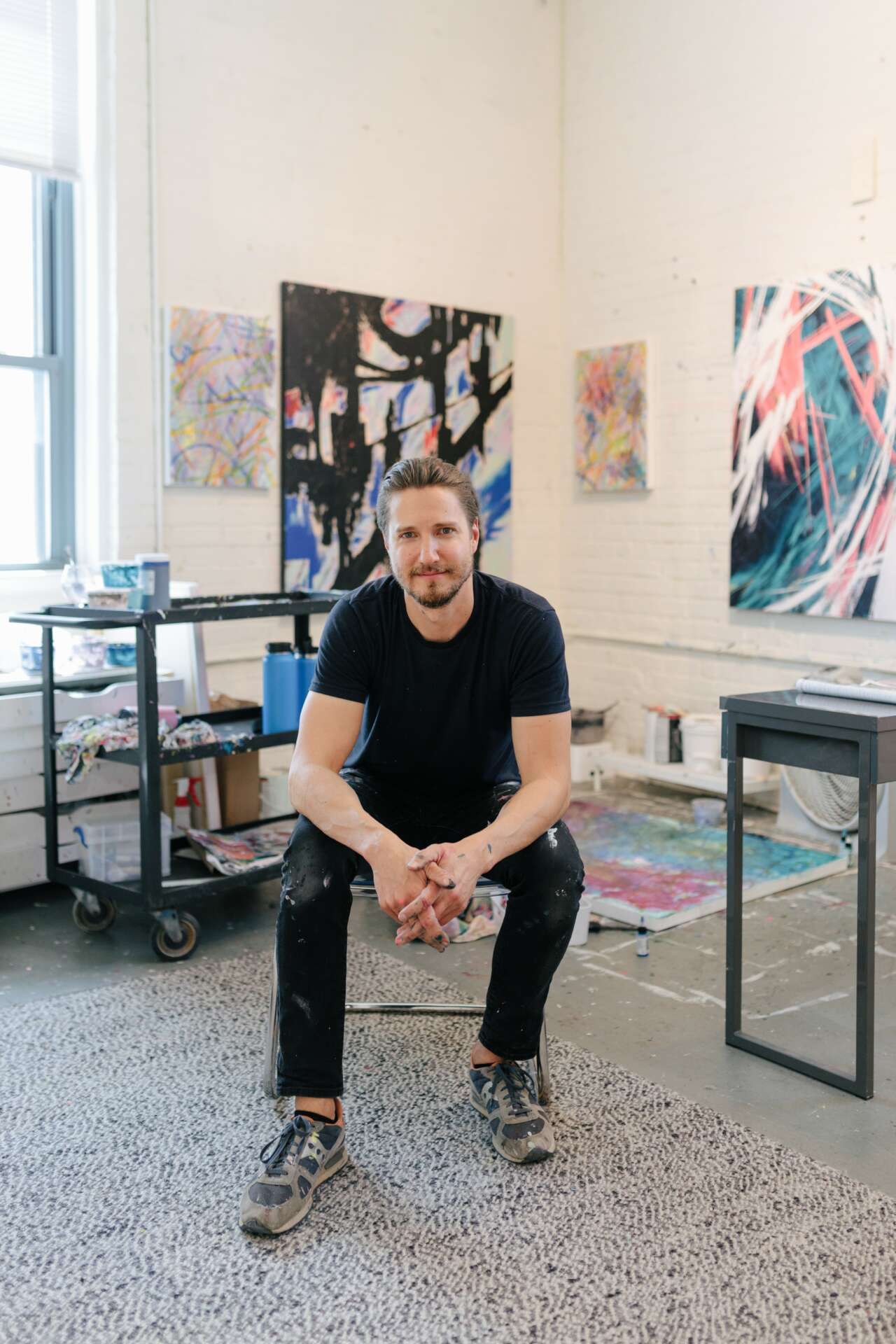

Alright – so today we’ve got the honor of introducing you to Kevin Andrew. We think you’ll enjoy our conversation, we’ve shared it below.
Kevin, looking forward to hearing all of your stories today. Are you able to earn a full-time living from your creative work? If so, can you walk us through your journey and how you made it happen?
A full time living from creative work truly depends on the lifestyle we want. I am able to make a full time living doing my creative work. I wanted to be artist all my life, but pursued Civil Engineering instead because it was the right path. I wanted to go to school for art, but my dad told me he didn’t want me living in his basement my whole life and go choose something else. After an undergraduate degree in Civil Engineering and a masters in Structural Engineering, I had my dream job in Chicago designing sky scrapers. However, I quickly realized I hated it. I never questioned my purpose or existence. I was on the path of school, career, retire, die, and call it a life. There is nothing wrong with that path, but it just was not for me.
I was then thrown into IT consulting working for a corporation in Charlotte, NC. I did project management and process improvement work for about 3 years. My analytical mind set training from college and ability to play well with others helped me in corporate America. But once again, it was one step closer to purpose but still a far ways off.
I was able to showcase my art at a hair salon gallery. There was an opening party for the work, and I had pretty low expectations for it all. However, a bunch of my family from around the US came to visit, friends showed up, and a bunch of strangers came. I sold most of the work. This salon/gallery gave me a space to be empowered to do my thing and it forever changed my life. Not only did I want more of these opportunities for myself, but I wanted to provide spaces for others to be empowered as well. From that spark, along with not doing well with authority I don’t respect, and a love for community building, I quit corporate America and starting a coworking space called Advent Coworking.
This was in 2015 during the early days of coworking where most people didn’t know what it meant or just barely knew of WeWork. We focused on helping our members grow and connect. We grew from 4700 sqft to 30,000 sqft and had over 400 members over the course of 6.5 years. We had multiple event rooms, podcast studio, curated gallery, huge work spaces and offices, a library, and partnerships all over Charlotte. It was a wild ride before I sold the company to a local competitor. This was absolutely a bigger step to what I felt I should be doing, but it was not there completely.
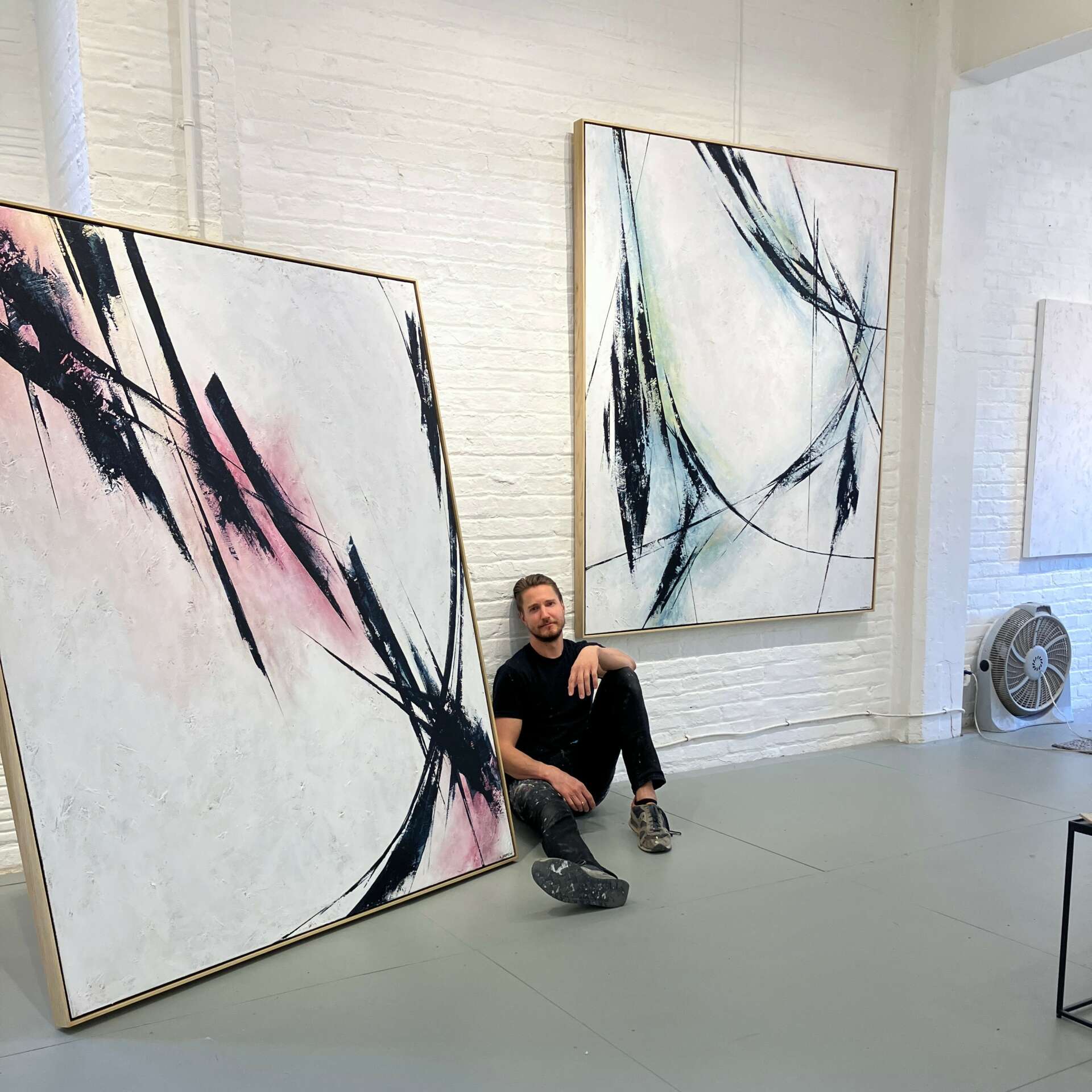
After some soul searching, we decided I should try to become an artist full time and see how it goes. The River Arts District in Asheville, NC is a very unique place to be an artist full-time. You have 300+ artists creating and displaying their work in 25 buildings bunched together over a couple mile radius just south of downtown Asheville, NC by 10 minutes. The concept of having a working studio space that was open to the public blew my mind. I could sell work directly to collectors. It works so well in Asheville because of the high volume of tourists coming through every year. I read the artist way, and it recommended verbally saying what you’re going to do. Once you say it, be ready for the universe to provide opportunities and if you didn’t go through the doors that opened, they may never open again.
I took this to heart and committed to the universe out loud: “OK, I’m going to become a full time artist. What do you f*cking got for me?” I honestly didn’t think much of it. 2 weeks later I was able to get a working studio/gallery space in a coveted building in the River Arts District from an obscure connection and it began! The sale of my business helped to support me for the first 6 months. Day one was very strange doing what I loved full time. Creating art is another business for me, and I’m treating it like one. However, it’s a balance of not letting business and making money completely destroy my creative process and freedom. I have since moved to a bigger, ground level studio/gallery with store front glass with my name on the window. I have not reached my monthly revenue goals yet, but it’s been less than 1.5 years, and I’m on track to get there.
I still wonder what would have happened if I went to school for art, and who I would be today. However, so much life has happened since then and each step helped shape me and prepare me to create and sell work. I am still wondering what my life purpose is. It’s the perfect combination of 3 parts:
1.) What are you passionate about and lose yourself in it?
2.) Other people find value in what you do.
3.) It helps other people.
Creating art is closest I have ever felt to my purpose, and I’m loving how my work is evolving.
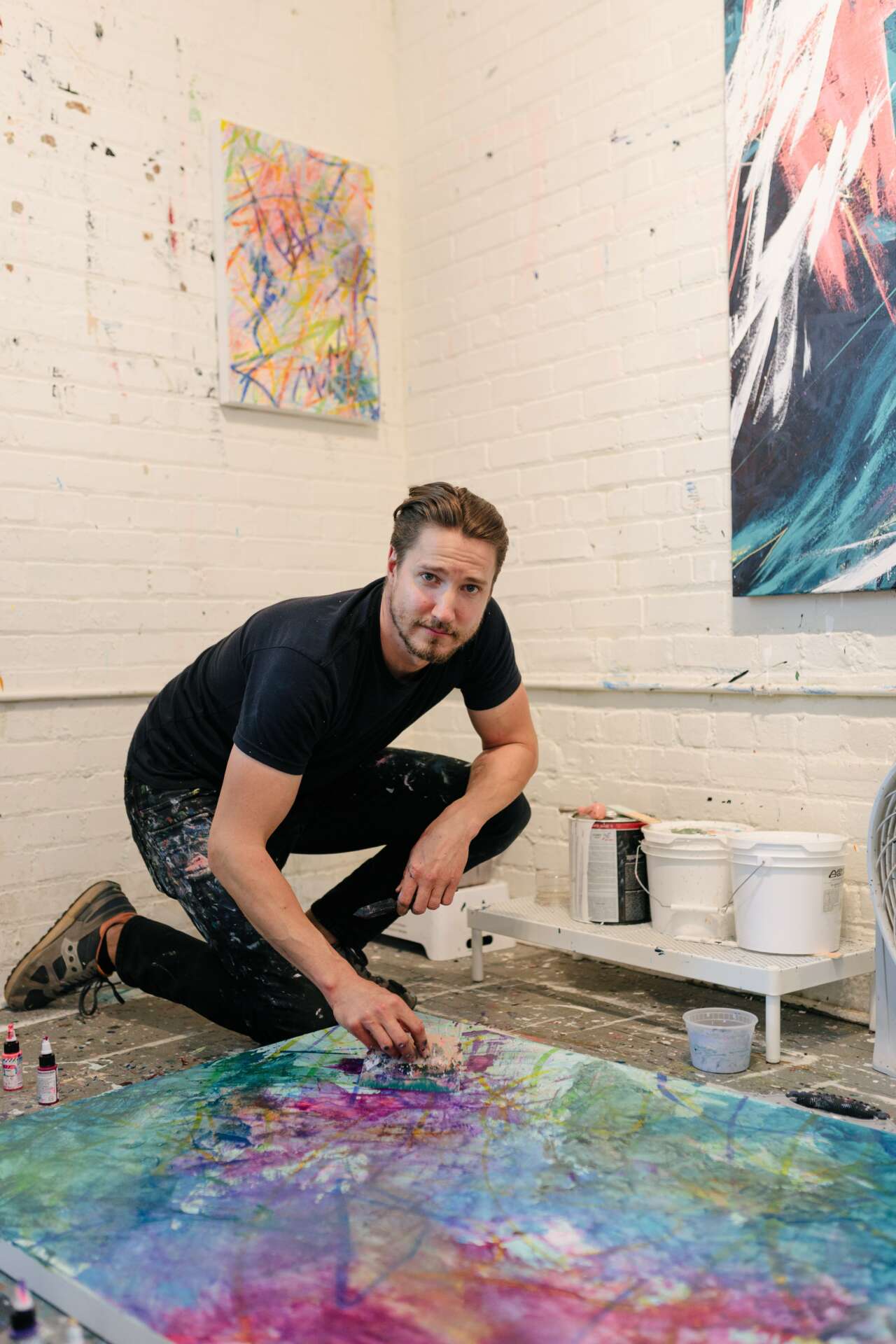
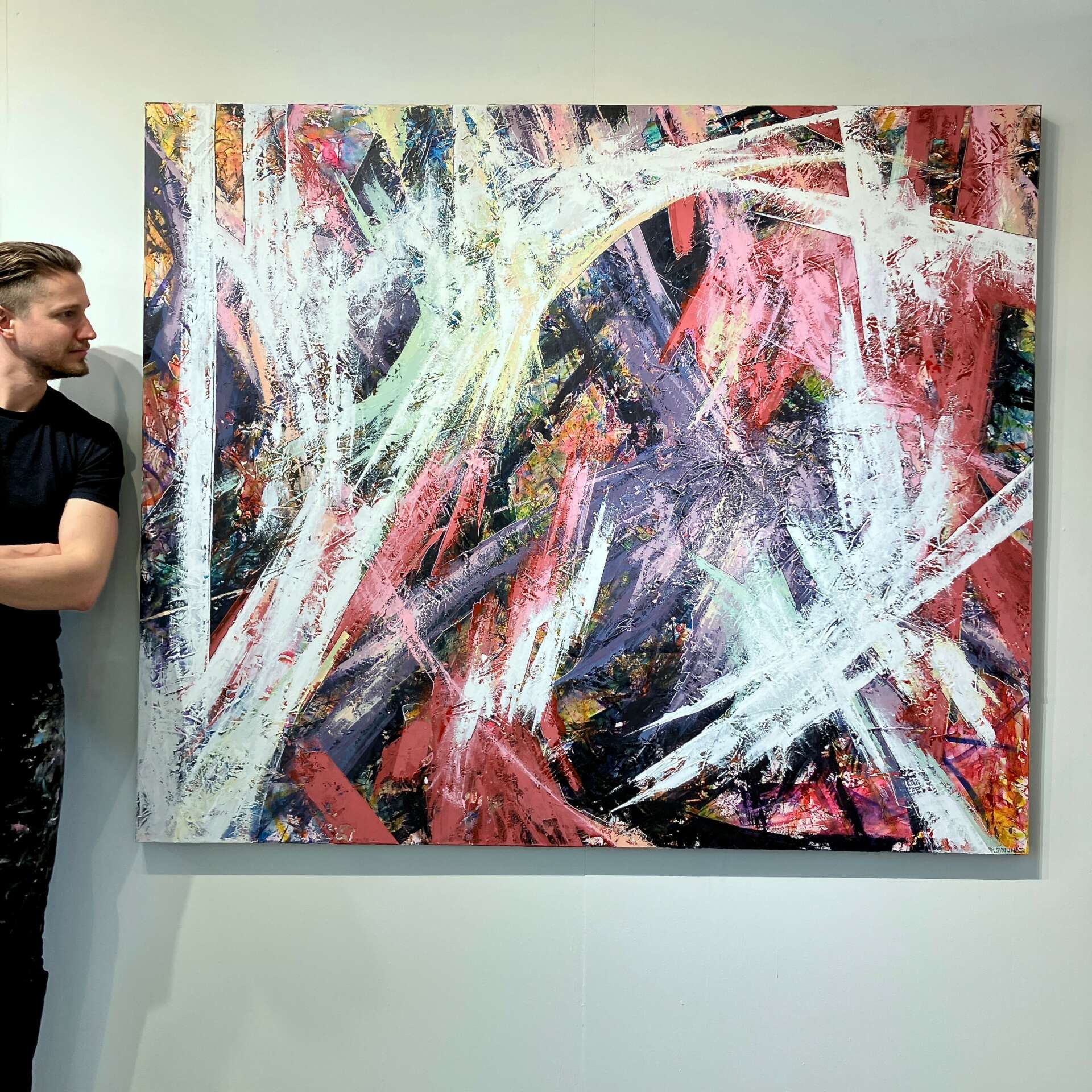
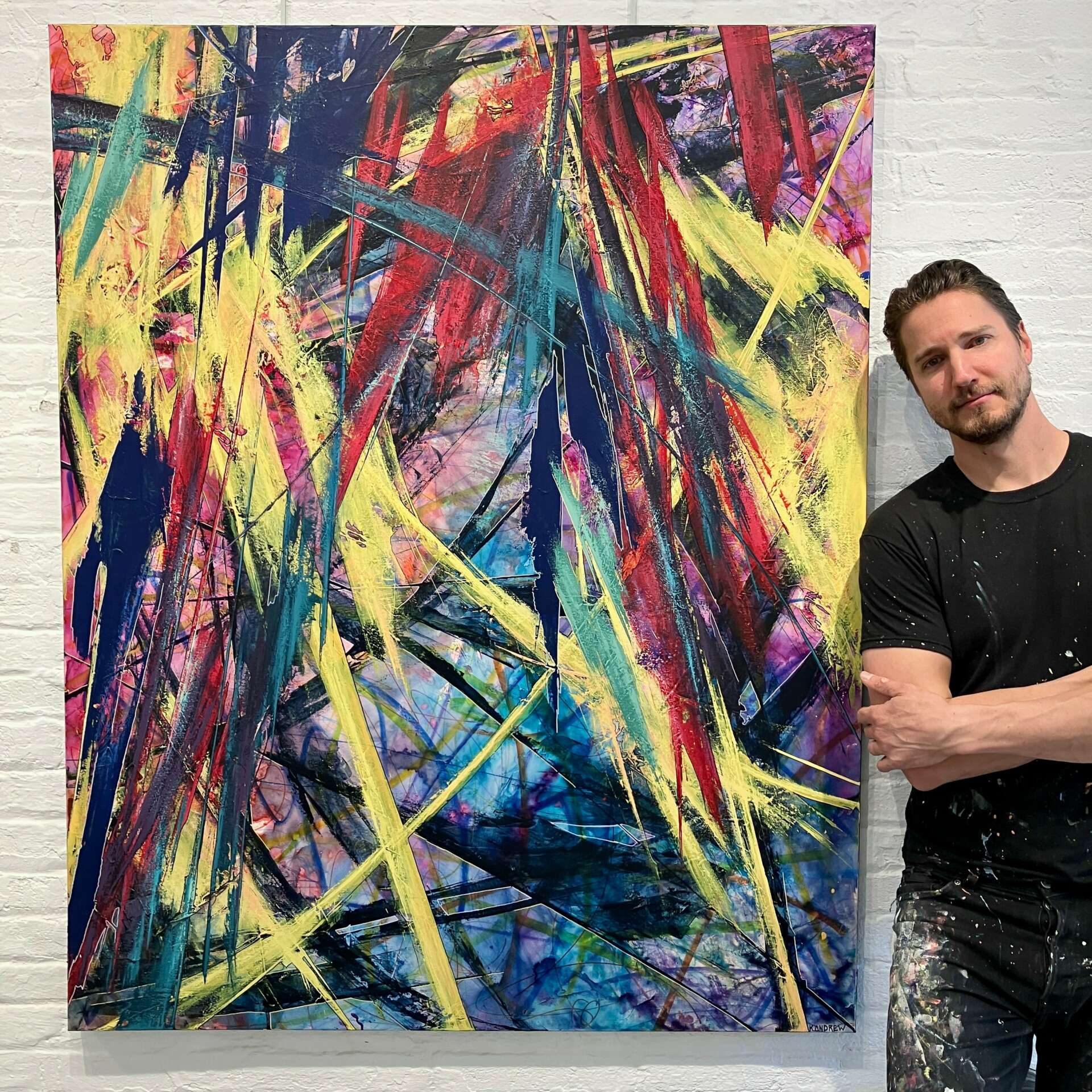
Awesome – so before we get into the rest of our questions, can you briefly introduce yourself to our readers.
I used to do a lot of graffiti in high school. The instant gratification of color and coverage was wonderful. However, the medium is too difficult for me to work with sustainability.
I am also very much in love with art nouveau. The flowing colorful images with thick bold outlines really inspire me.
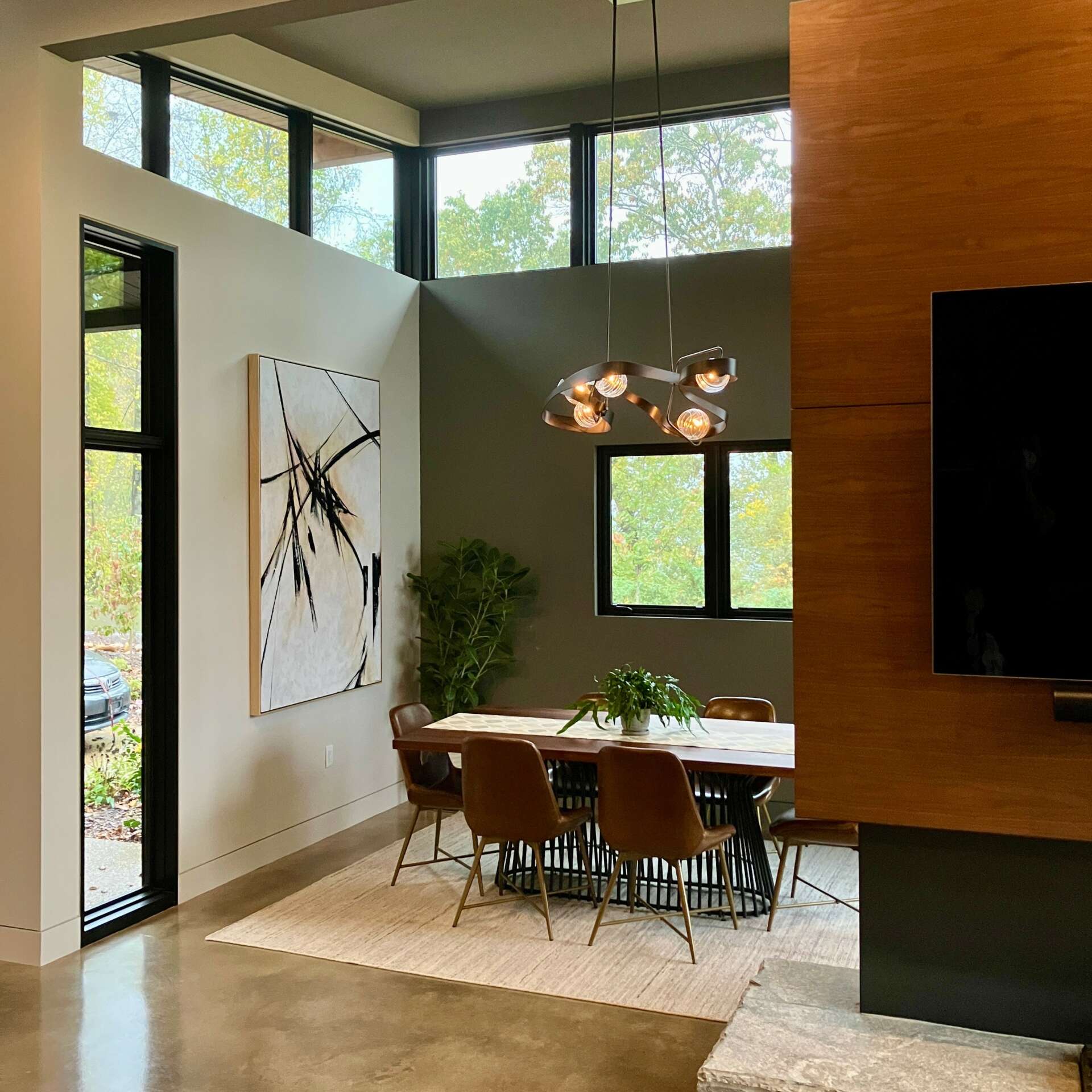
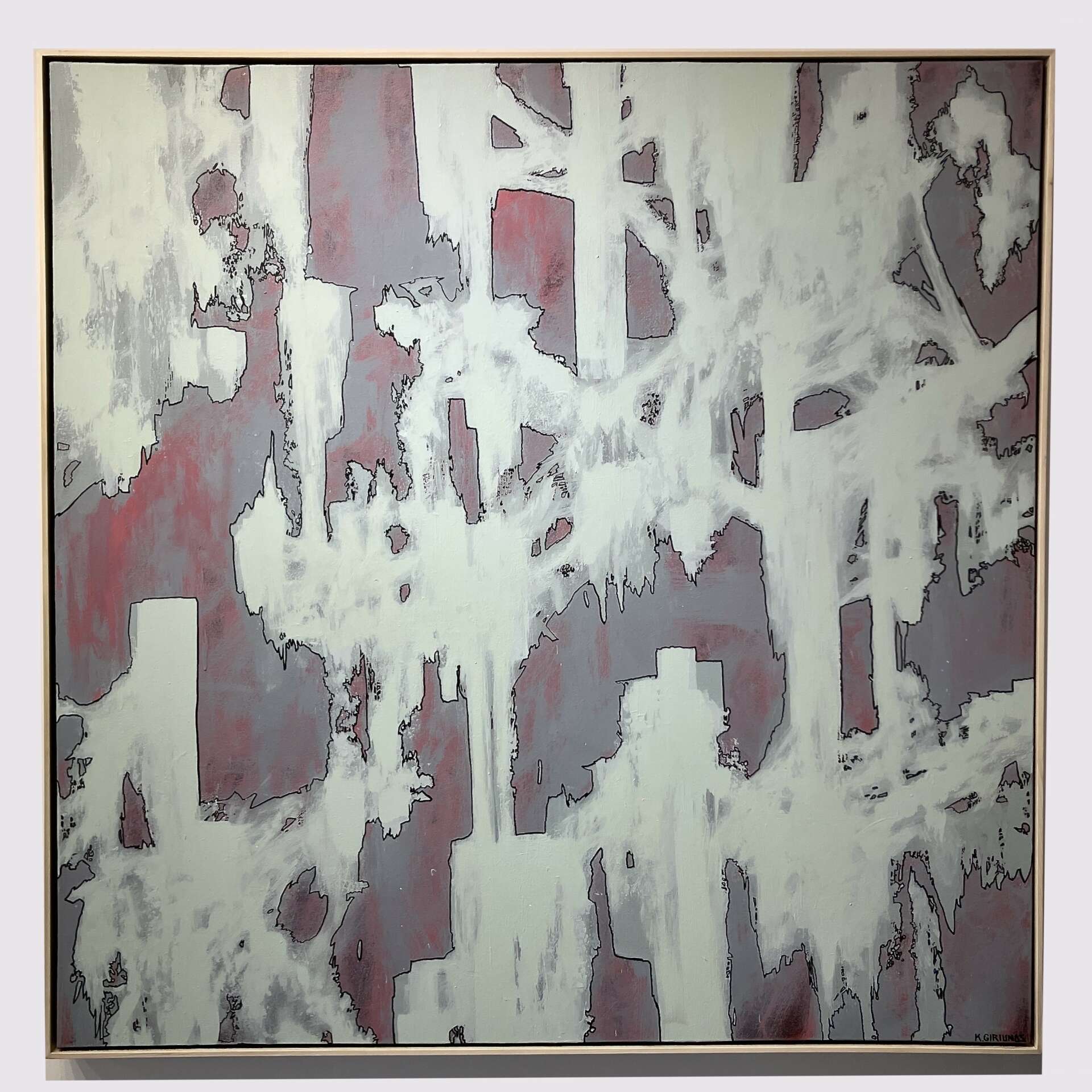
All of this inspired me to jump into acrylics and markers for my artwork. I created an abstract painting over the course of 9 months that really changed how I viewed paint on a canvas. I really spring boarded into what I am creating now full time. I want to make a difference in this world and searching for how. I paint, write, and collaborate to force myself to self reflect and grow. My art is an extension of my thoughts, emotions, and biases (conscious + unconscious).
Every piece has some underlying story, motivation, or therapy session I’m working through. I love seeing which works resonant with who and why. I feel my vulnerability and openness with my work to the world is something that helps set me apart. Whether the piece is about appreciating live before death arrives, the love of a mother, or the importance of traveling I will talk to anyone about my motivation behind it. I’m not 100% sure the end result, but I feel creating with a purpose will help drive my overall life purpose. I hope at least :).
I also try to have fun and not get too bogged down in process, topic, or deadlines.
I am proud of my work, jumping right into the art scene in Asheville, NC, and not looking back. It’s a hustle, but it’s really fun.

Is there something you think non-creatives will struggle to understand about your journey as a creative?
It took me a long time to stop worrying about being a productive citizen by society’s eyes. The capitalist wheel is always spinning, and creating art is usually deemed an ineffective use of time. I still have a level of embarrassment telling people I am a full time artist for a living. It’s just been so engrained from an early age > we need ‘real’ jobs to be deemed successful. I was not exposed to creatives, entrepreneurs, or folks really going against the grain of society growing up.
I believe people who say they are not creative are the ones who are internally struggling the most. They need to justify giving up dreams and internal joys to not be judged by society. I dare ‘non creatives’ to take and art class and see how you feel. Maybe try another one after that. You never know what might spark from it.
I get asked about once a quarter if I’m a starving artist. I believe this question is coming from. a place of hopeful justification the path the individual chose in life was OK. That their lifestyle, their sacrifices, their lost dreams were worth it for their lifestyle. I believe they want to hear I am eating an apple a day and suffering. If I can thrive, why not you? What’s really holding you back at this point from living your life before it’s gone?

Are there any books, videos, essays or other resources that have significantly impacted your management and entrepreneurial thinking and philosophy?
I believe in the power of meditation, it’s honestly the best thing I have ever done (and attempt to practice everyday). This book jumps off the deep end a bit on it, but it’s really really good: Neuro Dharma – Rick Hanson
A gateway drug into mindfulness and intentionality is this book (love him or hate him, it’s got a lot of easy to adopt concepts): Think Like a Monk – Jay Shetty
I think being organized really critical to being a successful creative. This book helped me get my act together with simple ideas and concepts easily applicable for day-to-day living: Manage Your Day-to-Day: Build Your Routine, Find Your Focus, and Sharpen Your Creative Mind – 99U
I never thought much about sleep, but after reading this book, I realized how important sleep truly is to living longer. DO NOT read it unless you’re ready to question your sleep habits every day of your life going forward: Why We Sleep: Unlocking the Power of Sleep and Dreams – Matthew Walker
Contact Info:
- Website: https://www.creativekevin.com
- Instagram: https://www.instagram.com/creative_keving/?hl=en
- Facebook: https://www.facebook.com/profile.php?id=100089302058122&mibextid=LQQJ4d
- Linkedin: https://www.linkedin.com/in/kevin-giriunas-99b27820
- Other: https://www.tiktok.com/@creative_keving?_t=8a0SbocZW1b&_r=1
Image Credits
No credits required