



We recently connected with Kelly Lundquist and have shared our conversation below.
Alright, Kelly thanks for taking the time to share your stories and insights with us today. Can you talk to us about how you learned to do what you do?
I’ve been trying to write the same book (a memoir about my first marriage and what it taught me) for twenty years. In fact, I began drafting early forms of it only months after that marriage ended in 2003. During the time I cover in the book, I completed a BA in English, an MA in English, and I’d enrolled in a PhD program in English/Cultural Studies. During those years, I was also teaching writing and being trained as a Writing Center tutor. In the wake of my divorce, I dropped out of the PhD program. Two years later, I enrolled in an MFA in Creative Writing program (with an emphasis in Creative Nonfiction). Despite all that training, every time I sat down to attempt to write the book I had in my head about that first marriage, I struggled to get it down on paper.
Some of the impediments I encountered were emotional and cognitive: I didn’t have enough distance from the experience to write about it the way I needed. Some obstacles were classic features of writer’s block: I believed that “real” writers always found it easy to write every day, and if that wasn’t true of me, then I wasn’t a “real” writer. But other obstacles were real craft obstacles that took time to resolve themselves.
One of those craft obstacles was the fact that it took me a very long time to learn how to create a zoomed-in scene, how to move from what writer Debra Gwartney calls “general time” to “specific time.” In a more classical (and perhaps cliched sense), I was doing a lot of telling and not a lot of showing.
A critical scene that I wanted to capture nearly as soon as it happened to me was that about an hour before he left our apartment for the last time, I taught my ex-husband how to make mashed potatoes the way I knew he liked them. I felt it was a moment that captured the poignancy and sweetness of that time as well as its sorrow and complexity for both me and my ex. I tried to write that scene repeatedly from various points of view by just describing what happened rather than placing the reader inside that moment almost the way you’d zoom in on a moment in film. It took me years and dozens of drafts to get close to it, and even now, it remains a moment I’ve had to include in summary rather than scene. Which is also something that writing nonfiction teaches you. No matter how expert you become at certain aspects of craft, there are moments that are so powerful or transcendent that you just can’t force them to become story no matter how skilled you are.
But around that summarized moment, the scenes that mashed potatoes moment is set in are so much more evocative and authentic to what happened than the same scenes were twenty years ago. And what it took to get there was practice and seeking out advice from more skilled and experienced memoir writers (as well as doing TONS of reading and film-watching to tune into what worked in world-building and what didn’t).
As always, we appreciate you sharing your insights and we’ve got a few more questions for you, but before we get to all of that can you take a minute to introduce yourself and give our readers some of your back background and context?
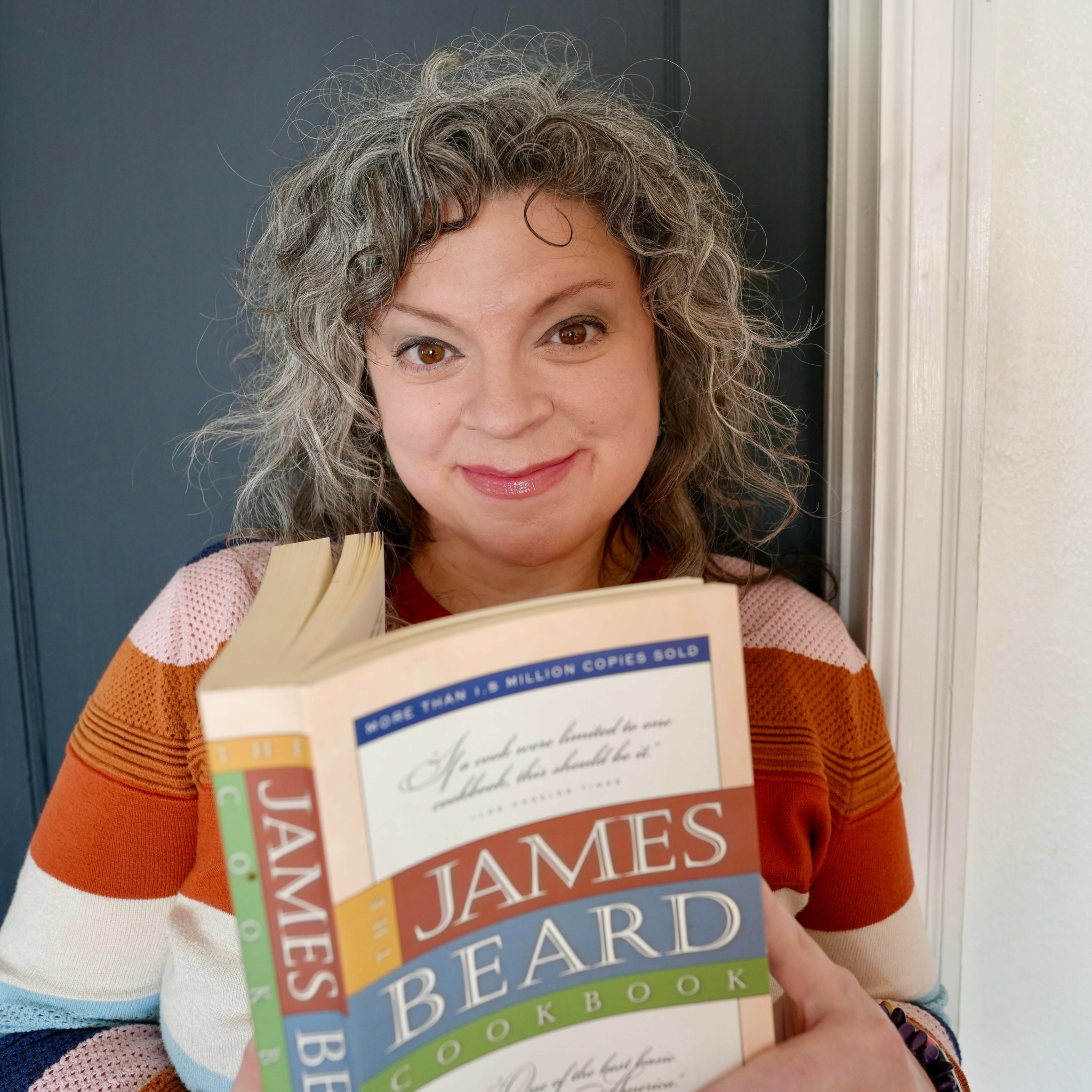
I’m a nonfiction writer, and I’ve been teaching writing since 1999. I’ve got an MA in English and an MFA in Creative Writing. I currently direct an AFA in Creative Writing program at a community college outside Minneapolis. Next year, my first book-length project Beard: A Memoir of a Marriage will be released through Eerdmans Publishing. I’m also working with Kaye Publicity to help organize my book launch.
I am most proud of the ways I’ve hung in there despite my own self-doubt and the very real limitations placed on my time and energy from being a working parent to complete this project. It’s taken me twenty years to finish the book, and I’m honestly mostly proud I finished it. Because of that hard-won accomplishment, I think one thing I bring to the table now as a writing teacher and freelance editor is empathy for how impossible writing can sometimes feel, even when you have time, energy, and space to do it. No matter the setting, if you believe that no one will care what you say, it’s very hard to access the parts of yourself that can be generative and creative. So I think one thing I offer the students and editing clients I work with are strategies to combat that internal critic and help it redirect its energy to more productive channels.
Can you share a story from your journey that illustrates your resilience?
In 2012, I got married (to my second/current husband), and I was also awarded a nine-month, first-book fellowship that provided me with housing and a stipend to focus entirely on my writing. In my head, this was going to be the solution to all the previous obstacles I’d encountered to getting my dream book down on paper. I no longer had 100 writing students each semester or any extracurriculars to participate in. My 80 hour work week was suddenly whittled down to about ten, even with the one class the fellowship required me to teach each trimester. However, about five months into the fellowship, I got unexpectedly pregnant and experienced debilitating morning sickness that lasted all day for about twelve weeks, which pretty much derailed all my momentum. Instead of spending my days happily writing in a cool coffee shop in Seattle (where I lived then), I instead curled up on my bathroom rug and binged Friday Night Lights. After she was born, my daughter remained a tough sleeper until she was three or four years old, and refused to take a bottle or eat solid foods until she was nearly two (which meant I had to be physically with her nearly all the time despite beginning the tenure-track job I now have during those years). So what I began doing (which is how I got the book written) was typing ideas with one finger into the Notes app on my smartphone while I held my sleeping daughter with my other arm. In the mornings, I’d send those Notes to myself and type them up into a more structured draft that I could continue to draft as I had time. Eventually, my daughter grew out of all of that, became a great sleeper and eater, and is now a happy and healthy eleven year old. But I’ve continued that middle of the night brainstorming (and morning drafting) since, and now there’s a completed, soon-to-be-published book to show for all of that.
Any resources you can share with us that might be helpful to other creatives?
I wish I’d known there were so many resources out there for learning the actual craft of writing. Partly because my early writing work was primarily academic and partly because my early creative writing training skewed a bit more theoretical than practical (and honestly, I’m sure my own ADHD also served as an impediment), there were several things I learned to do later than I would like–like scene-writing and completing a book-length project.
Contact Info:
- Website: https://kellyfosterlundquist.com
- Instagram: @kellyfosterlundquist
- Facebook: Kelly Foster Lundquist
- Linkedin: Kelly Foster Lundquist
- Twitter: @kfoslundquist
- Other: Tik Tok: @kellyfosterlundquist
Image Credits
Ben Lundquist and Izzy McIntosh.