

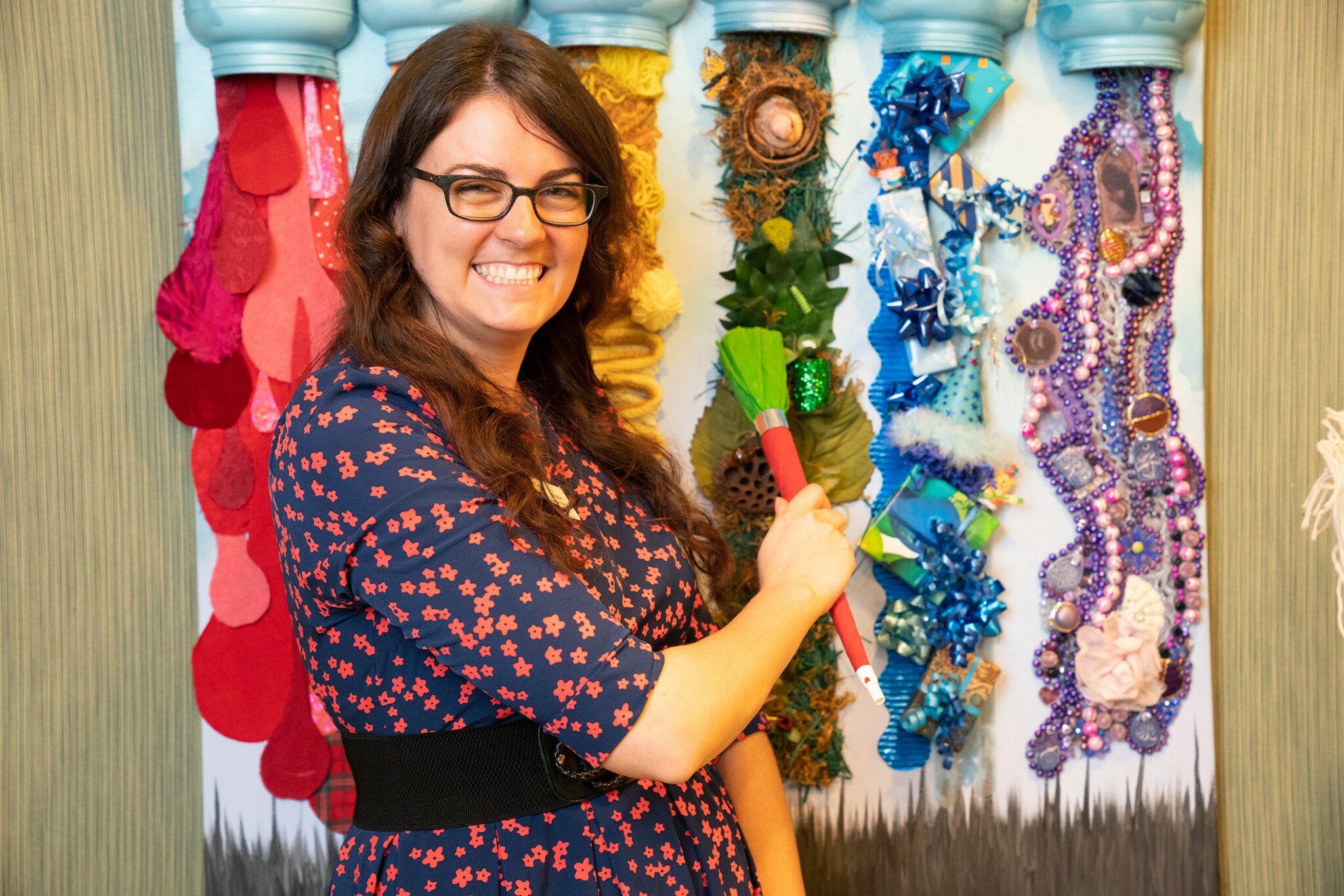

We were lucky to catch up with Kelly Johnson recently and have shared our conversation below.
Kelly, thanks for taking the time to share your stories with us today Let’s kick things off with your mission – what is it and what’s the story behind why it’s your mission?
The Arts & Business Alliance of Eugene (ABAE) exists to drive investment to preserve and enhance Eugene’s creative and cultural vibrancy. As a nonprofit arts services agency, we are dedicated to arts advocacy and advancement, ensuring that Eugene’s incredible arts ecosystem continues to thrive.
The arts in Eugene do more than just entertain—they fuel our economy, bring joy, inspire social change, foster community cohesion, and enhance both physical and mental well-being. But this vibrant ecosystem didn’t emerge overnight. It has been built over decades through strategic investments, dedication, and passion.
Now is not the time to pause and simply admire what’s been created—we must remain vigilant, continuously reinvesting in this essential sector to ensure that future generations of Eugeneans inherit the same thriving arts community. That means advocating for sustainable funding, fostering partnerships between businesses and the arts, and championing policies that recognize the arts as a vital part of civic life.
For me, this mission is personal. We believe that when the arts thrive, our entire community thrives. That’s why we do this work—because a strong, creative Eugene benefits everyone.
As always, we appreciate you sharing your insights and we’ve got a few more questions for you, but before we get to all of that can you take a minute to introduce yourself and give our readers some of your back background and context?
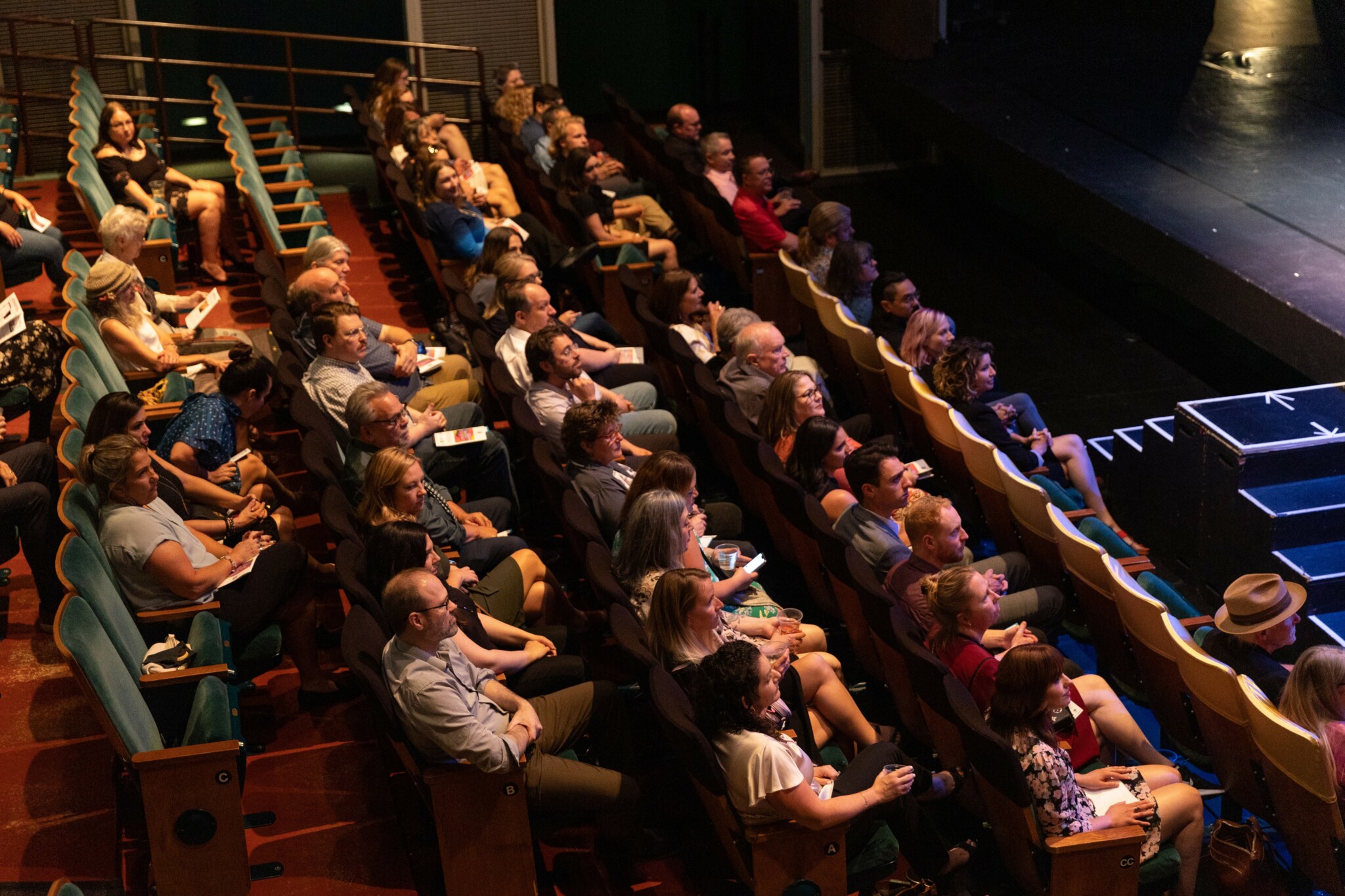
I’ve been passionate about the arts for as long as I can remember. I started out as a theater kid—I loved everything about it, from watching performances to being part of the creative process. There’s something truly magical about live theater; research has even shown that watching a performance can synchronize heartbeats among audience members, creating a shared experience of connection.
When it came time to choose a college path, I naturally pursued theater. But a couple of months into my studies, I realized that while I loved theater, performing wasn’t the right fit for me. I wasn’t quite sure what direction to take, so a professor encouraged me to try out different roles behind the scenes. I explored lighting, costumes, set design, and directing, but ultimately, I discovered that my skills were best suited for stage management. It was the perfect combination of my love for theater and my strengths in organization and project management.
I worked as a stage manager for a few years, and during that time, I became increasingly interested in the administrative side of the arts—how theaters were run, how funding was secured, and how creative spaces thrived. This curiosity led me to pursue a master’s degree in arts administration at the University of Oregon. It was my first time living outside my home state of Colorado, and the experience was transformative. I had an incredible cohort of peers and gained a deep understanding of arts administration.
After graduating, I decided to stay in Eugene. While I wasn’t able to land an arts administration job right away, I did start working at a nonprofit focused on housing and human services. This turned out to be an invaluable experience because it gave me a deeper understanding of the Eugene community—how it functions, how nonprofits collaborate, and how civic engagement shapes local initiatives. Working in nonprofit development also allowed me to build fundraising and event-planning skills, which became essential when I finally landed my role at the Arts & Business Alliance of Eugene (ABAE).
ABAE is a truly unique organization, and I love sharing its origin story. In the mid-2000s, the City of Eugene conducted a deep dive into the local arts ecosystem. Consultants spent a year studying how investments were made and how the sector functioned. The resulting report, the Cultural Policy Review, confirmed that Eugene had a vibrant arts scene—remarkably strong for a city of our size. However, the study also identified challenges and vulnerabilities within the ecosystem. One of its key recommendations was to establish an arts and business foundation to strengthen civic engagement and investment in the arts.
In response, the City of Eugene partnered with several key institutions to bring this vision to life, including:
The University of Oregon
Lane Community College
Travel Lane County
The Eugene Area Chamber of Commerce
The City of Eugene
Together, these organizations formed ABAE, creating a dedicated entity to champion the intersection of arts and business. What sets us apart is this collaborative foundation—we continue to have board representation from these founding institutions, ensuring that Eugene’s major civic, business, and educational leaders remain deeply engaged in shaping the future of our arts sector.
Our mission at ABAE is simple but powerful: to drive investment that preserves and enhances Eugene’s creative and cultural vibrancy. We see ourselves as arts advocates, working to ensure that our city’s arts and culture sector not only survives but thrives.
Eugene has an incredible artistic ecosystem that has grown through decades of passion and investment. But sustaining that vibrancy requires ongoing support. That’s where ABAE comes in—we connect businesses, artists, and community leaders to ensure that Eugene’s creative economy continues to flourish.
What I’m most proud of is the work we’re doing to build long-term, sustainable support for the arts. Whether through advocacy, economic impact research, ABAE is helping shape the future of arts and culture in Eugene. And I couldn’t be more excited to be part of that journey.
What do you think helped you build your reputation within your market?
Building strong relationships has been the foundation. I’ve always believed that genuine connections and meaningful collaborations create lasting impact. While day-to-day responsibilities can be demanding, I’ve made it a priority to step outside of my usual circles and engage with people beyond my immediate network—both locally and nationally.
One of the key things that has helped me grow my reputation is intentional networking. I approach networking not just as a way to meet people, but as an opportunity to learn from others, share ideas, and build long-term partnerships. I focus on listening, understanding different perspectives, and finding ways to create value for others rather than just promoting my own work.
Expanding beyond my usual spaces has also been essential. Whether it’s engaging with leaders in different sectors, or connecting with state wide or national peers who approach arts advocacy from a different cultural or economic standpoint, these experiences have broadened my perspective and helped me bring fresh ideas back to my work.
Additionally, I prioritize relationship-building over transactions. I don’t just reach out when I need something—I stay engaged, support others’ work, and cultivate authentic connections over time. People remember when you show up for them, and that kind of trust and reciprocity has been invaluable in building my nonprofits reputation.
Ultimately, stepping outside of my usual routine, seeking out diverse perspectives, and consistently investing in relationships—both near and far—has strengthened my reputation and helped me make a bigger impact in my field.
What’s a lesson you had to unlearn and what’s the backstory?
One of the biggest lessons I had to unlearn was the scarcity mindset—the idea that resources, opportunities, and success are limited, like a pie where if one person gets a bigger slice, there’s less for everyone else. Early in my career, especially working in nonprofits and the arts, it often felt like we were all competing for the same limited funding, audiences, or recognition. But over time, I’ve come to understand that this mindset is not only limiting but also counterproductive.
The turning point for me came when I started working more in collaborative advocacy and community-building. I saw firsthand that when organizations and individuals work together—rather than in isolation or competition—we all benefit. Resources are not finite in the way we often assume; in fact, when we share knowledge, amplify each other’s work, and build genuine partnerships, we can create more opportunities rather than just divide existing ones.
This shift from a scarcity mindset to an audience-centered, interconnected mindset changed the way I approach my work. Instead of asking, How do we protect our share of the resources?, I now ask, How do we grow the whole ecosystem so that more people benefit? Instead of focusing on what we might lose, I look at what we can build together.
This perspective has been transformational, especially in advocacy and arts funding. Instead of seeing other organizations as competitors for limited grants or donor support, I now focus on collective impact—making the case for why investing in the arts benefits an entire community. The more we collaborate, the more we can expand the resources available to all of us.
Unlearning the scarcity mindset has allowed me to embrace abundance, interconnection, and shared success—and that shift has made all the difference.
Contact Info:
- Website: https://artsbusinessalliance.org/
- Instagram: https://www.instagram.com/ABAEeugene/
- Linkedin: https://www.linkedin.com/in/kelly-johnson-7b363534/
- Youtube: https://www.youtube.com/@ABAEEugene
Image Credits
Taken by Athena Delene