



Alright – so today we’ve got the honor of introducing you to Katya Lovejoy. We think you’ll enjoy our conversation, we’ve shared it below.
Katya, looking forward to hearing all of your stories today. Over the course of your career, have you seen or experienced your field completely flip-flop or change course on something?
I’ve been interested in mental health for as long as I can remember, mostly because during childhood I could tell something wasn’t quite right about my family dynamics. My home life was chaotic, I felt really alone, and I suffered from depression and anxiety from a very young age. I remember thinking “What’s wrong with me? I hate feeling this way, and I don’t know why. No one should ever have to feel this way.” I thought that if I could figure out why I was suffering, I could stop it and help others feel better too. I decided that learning about the brain would be the ticket, so I ended up going to college and getting a degree in neuroscience.
Neuroscience is fascinating, but it was focused mostly on research and not working directly with humans. It also didn’t quite answer my question of how to actually implement changes in daily life. I decided to transition my career into therapy, and studied to receive a masters degree in clinical social work. Social work felt a little closer to what I had been searching for, and I loved working with my clients. But something still felt like it was missing. For one, I didn’t feel much relief from my own mental health struggles, despite all the learning and training I’d done, and despite having been in traditional talk therapy for going on 10 years. I still felt pretty empty inside, was still engaging in codependent relationships, and was struggling with addiction.
Then I learned about the subconscious mind, the nervous system, and trauma (if you can believe, they didn’t teach anything about these things in my entire master’s program!). It all finally clicked into place – why I couldn’t just change my mindset, and why understanding and talking about what had happened never helped me actually change how I was feeling and showing up in my life on a day to day basis.
There has been a huge shift in the field of mental health, where now there is a much better understanding of how early childhood events, as well as family history and collective experiences, can create trauma. We now have more information about how that trauma shows up (hint, it’s not necessarily in the conscious mind).
Personally, I didn’t even know I was suffering from untreated complex trauma until I was 30 years old and studying in my trauma-focused hypnotherapy program. I had always been a high achiever, I did what others expected of me, and on the outside things looked good, so I didn’t understand why I was still struggling with mental health symptoms. I thought there was something wrong with me or that I was “too sensitive,” because I had no idea I was carrying trauma patterns in my subconscious and in my body. I finally was able to recognize how family dynamics, ancestral trauma, oppressive social systems had created deeply held beliefs, which then impacted feelings of safety and worthiness, and how my body was reacting to this for decades. I finally had an answer for the depression and anxiety I had experienced for so long.
Though traditional educational programs in psychology and social work may not yet have caught up with these advances in understanding (last I checked), it’s now well established in the field that working with the body and the subconscious mind, in combination with traditional clinical practices like cognitive behavioral therapy, is an effective and efficient route to healing the past. It’s part of the reason that I shifted my own career trajectory from traditional counseling to go on to receive 5 years of post-graduate training in trauma-focused hypnotherapy and somatic practices, as well as spiritual healing practices. I found that discovering and engaging my spirituality added depth and meaning to my journey, and was inspired to incorporate that added layer into my approach. Not only has my own life improved tremendously as a result of these practices, I feel so much more confident that I can actually help my clients access a deeper sense of safety, self-love, emotional freedom and personal empowerment. Witnessing my clients and students blossom and come alive again brings so much gratitude and fulfillment in my life.


Awesome – so before we get into the rest of our questions, can you briefly introduce yourself to our readers.
As I shared, I grew up in a family with a lot of pain. Both of my parents had untreated PTSD, there was codependency, alcoholism and mental health struggles in the home, and I felt alone in trying to figure out how to handle it all. While we often blame our parents for our struggles, and it’s true that they were responsible for setting us up well for life, the reality is that they could only give what they themselves received. At first I didn’t understand this, and I held on to a lot of resentment for many years. Changing my perspective transformed both my healing journey and my professional purpose.
I am a second generation Ukrainian American, and I can see now how this experience propelled me into my career as a trauma healer. As Resmaa Menakem says, “trauma decontextualized in an individual looks like personality, trauma decontextualized in a family looks like family traits, and trauma decontextualized in a community looks like culture.” Understanding that the things I thought were my personality (being too sensitive or being a people pleaser), my family’s traits (anger outbursts, codependency, and addiction), and my community’s characteristics (fear of scarcity, fear of being seen and heard, fear of the other), were all trauma responses – this shifted my worldview completely. In my personal experience, being the descendent of several generations in living memory who experienced genocide and slavery altered the way my community and family functioned. Of course I would have inherited trauma if my family members and community had untreated trauma. This understanding brought so much compassion for myself and for my family, and it has inspired the work I do today.
My hope is for all of my students and clients to access similar compassion for all the things they think are “wrong” with themselves and their lives. There is always a reason for self-sabotage, addiction, relationship problems, underachieving, etc. My goal is to help people understand the impacts of individual, ancestral, and collective trauma, and to understand the underlying needs that their mental health symptoms or troublesome behaviors are trying to meet. Only through meeting the vulnerability within ourselves can we tap into our power to create the life we’ve always hoped was possible.
In my experience, the most effective and efficient way to make these discoveries and achieve these shifts is through working with the subconscious mind, the nervous system, and the energy body. Incorporating subconscious reprogramming and spiritual healing into trauma work can be profound. Learning how to feel safe in the body and in the world has deep and lasting effects. Giving ourselves permission to acknowledge our darkness and pain gives us the pathway to reclaiming our worthiness and self love. Being able to reconnect to a sense of wholeness and belonging in a world that seems determined to break us is how we rise up from the mud and blossom into our truest selves.
My ultimate mission is to help people connect to an authentic and embodied experience of self love and acceptance, and reclaim their wholeness and belonging. I help people let go of their unprocessed pain and remember their worthiness and joy. I guide people to rescue their inner child from the darkness and learn how to grow up from the inside, so they can feel capable and empowered in their lives. I support people to connect with their own personal spirituality to access a renewed sense of aliveness, inspiration, and wisdom.
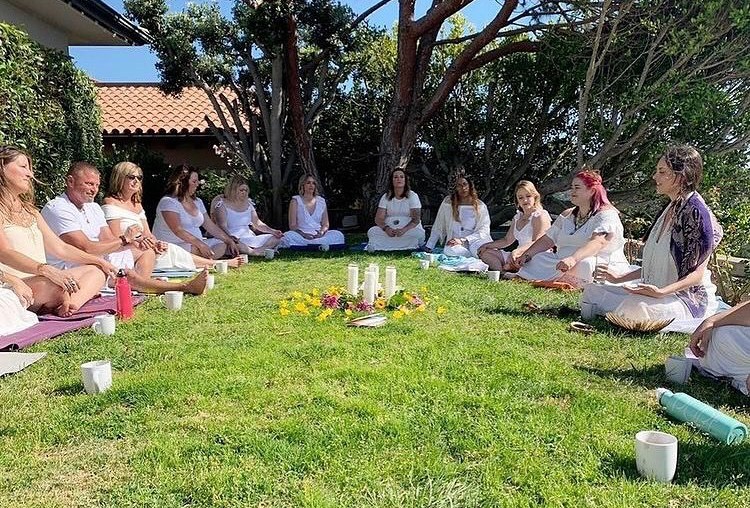
I have over a decade of experience in traditional and holistic healing modalities, and I am committed to offering and teaching the most effective pathways for safe and sustainable self-transformation. I approach healing from an individual, ancestral, and collective lens, utilizing subconscious, somatic, and spiritual approaches, alongside traditional clinical practices, to help my clients find release and resolution and experience post-traumatic growth. This takes many forms, including workshops, group programs, individual work, retreats, and trainings. My offerings are holistic, dynamic, and effective in helping release patterns that keep people in survival mode, so they are able to finally thrive as their fully expressed, authentic self.

Learning and unlearning are both critical parts of growth – can you share a story of a time when you had to unlearn a lesson?
When I first began my practice as a trauma healer and mental health consultant, I completely bought into the girl boss culture. It was everywhere I looked in the self-development and wellness world, and I was inspired by the freedom lifestyle and abundance thinking that everyone seemed to be promoting with their programs. I took webinars on copywriting, sales, and marketing; I mimicked the content styles I was seeing (think: banded IG grids with the perfect colors and words-to-photos ratio); I hired different coaches who’s main advice was to keep raising my rates. Something felt off about much of the advice I was being given, but I thought, “This is what everyone else who is successful is doing, so I guess I need to do it too.” I wish I had listened to my gut earlier because ultimately, doing things in a way that wasn’t aligned with my values ended up wasting my time and money.
A lot of the practices in the business coaching industry are not trauma informed and can actually be quite damaging. They are designed to prey on clients’ weaknesses in order to get them to buy. There are so many common practices that actually manipulate and harm people, rather than help them. Some examples are:
– Traditional sales tactics that mine people for pain points weaponizes shame to manipulate potential clients into thinking there is something wrong with them so they spend money to not feel that way.
– Pushing a client to give credit card information during a sales call and “coaching” them through money objections doesn’t honor people’s boundaries or allow them the time to make a well thought out decision about what is right for them. It also doesn’t recognize the reality that some people truly do have financial troubles and cannot afford to spend thousands of dollars on coaching.
– Charging more for payment plans than for payment up front (how does it make sense to charge more to someone who is already struggling to pay?).
– Lovebombing potential clients in order to create a false sense of intimacy so they feel safe to spend money, and not bringing that sense of safety into the coaching container (this can look like abandoning clients or blaming them for their lack of results).
– Not being upfront about costs, inflating prices, or pricing things in ways designed to psychologically trick the mind (i.e. prices like $97, $447, etc).
– Continuing to raise rates without any additional training or certification, or consideration of what people can afford (The idea of “charging your worth” is flawed; we are all inherently priceless. Our bank accounts do not reflect our worth or value. It is not ethical to charge exorbitant amounts of money without, and even in spite of, adequate training).
To be fully honest and transparent: I have used every single one of these techniques in my own business. I drank the kool-aid because it looked so enticing. I was also still working through my own trauma patterns of people pleasing, fear of rejection, the belief that money equaled self-worth, and my fear of not fitting in. Despite how hard I tried, these practices always felt icky, and because of this I was never able to make real sustainable growth this way. Because these practices were fundamentally out of alignment with what I believe and teach, they ended up sabotaging my business. When you build something on a cracked foundation, it will inevitably crumble.
About 5 years into my business I felt the rumblings of this crumbling. I felt burned out and lost passion for my work, I resented the business part of it, and I lost trust in the wellness industry. I myself had fallen prey to these same tactics as a client, and I felt resentful and ashamed that I had bought into coaches who didn’t deliver on what they charged, leaving me with little to show for my investment besides debt. My eyes were opened and it was incredibly painful to look at. I questioned my career path and my whole identity.
It was a challenging time in my life and my business, but ultimately I am grateful for it. I was able to step back from the noise and listen to what felt authentic to me as to how I wanted to share my work and how I wanted to serve the world. I got back to the core of my mission, vision, and values. I learned from ethical coaches and trauma healers about how to market offerings with respect for the dignity of potential clients. I learned more about systemic oppression and changed my approach to divest from the extractive ways of patriarchy and white supremacy (and I am still engaged in this life-long unlearning). My session rates are on par with the market for therapists, I offer several sliding scale spots in my practice, and I have created multiple tiers of offerings so people can invest in their healing for as little as $11. I believe all people should have access to trauma healing.
While I might not be making 7 figures this way, I’m not worried about it. I can sleep better at night knowing I am living and working in alignment with my values. Plus, I am confident in the future. The trees that live the longest actually take the longest to grow. I”m here to build something that lasts.
Putting training and knowledge aside, what else do you think really matters in terms of succeeding in your field?
I think the most important thing for professionals in the business of supporting others is to continue to prioritize receiving support themselves. So many helping professionals spend most of their days holding space for others, but who is holding space for them? To not have your own safe place to process emotions, talk through difficulties, and feel seen, heard, and held, is a recipe for inevitable burnout.
It sounds so cliche but I’ll say it anyway because so many of us need to hear it – we need to keep our own cups full. In fact, we need to fill up our cup so much that we are giving from the overflow. We’ve all heard that metaphor of putting on your own oxygen mask first before helping another on the turbulent plane, yet so often we bypass this in real life. “Yeah yeah,” we think, “I’m fine, I’ve done the work,” and we ignore the advice we give others until, lo and behold, we find ourselves feeling resentful, irritated, anxious, and fatigued.
I personally could not do the work I do for as long as I’ve done it without consistently going to therapy myself. Not only do I need a place where I can offload the stress of holding space for other people’s traumas, what I’ve learned about myself through my own healing has helped me be a better healer for my clients. As they say, we can only take our clients where we ourselves have gone. Part of the process of maturing in my life and my business has been letting go of the arrogance that convinced me I had it all figured out. In the last few years I’ve revisited and even uncovered deeper places of my own trauma that needed my attention, which initially shocked me because previously I was definitely on my high horse of “I figured out how to heal myself and I can help you heal too” (now I cringe at the thought!). As I continue to commit to my own emotional healing process, I find I have even more depth to offer my clients. I am able to approach their healing process with the patience, compassion, and realistic expectations that are needed to create a safe environment in which to grow and bloom.
Even though we hear it all the time, I want to shout it from the rooftop to all healing professionals: “You deserve the same amount of care you offer your clients!” Commit to yourself as much as you commit to your work, and both with flourish.
Contact Info:
- Website: www.katyalovejoy.com
- Instagram: www.instagram.com/katyalovejoy
- Facebook: https://www.facebook.com/katyalovejoy
- Linkedin: https://www.linkedin.com/in/katya-gaynor-6b89697/
Image Credits
Alison Love