

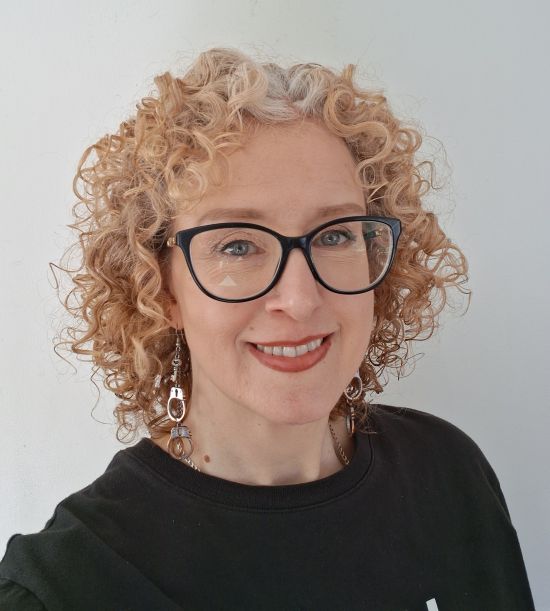

Alright – so today we’ve got the honor of introducing you to Katie Vianello. We think you’ll enjoy our conversation, we’ve shared it below.
Alright, Katie thanks for taking the time to share your stories and insights with us today. Can you talk to us about how you learned to do what you do?
When I was young, I wanted to be a painter but I was told I’d be just another starving artist and I shouldn’t bother. Later at college in the 90s, I took an elective oil painting course. While I was excited to finally try, it was a terrible experience led by a terrible instructor, I came away from the whole thing with with a firm resolve that I’d never, ever try oils again.
I stumbled upon legendary portrait painter Mark Carder in 2020. He had begun offering online instruction and I watched one of his videos. The workflow was so simple, almost mechanical, I couldn’t believe it. When I got done being completely furious about all the time I’d lost that I could have been painting had someone explained it to me properly the first time, I got to work practicing. I’d love to say that my early attempts were anything other than cringeworthy, but alas, many of them will never see the light of day. But I adapted quickly, I can figure things out very fast when I’m determined to do so. Within two years I had a functioning website up and was beginning to sell my work.
If there’s one thing I’m terrible at, it’s asking for help. The good news about life in the age of technology is that I can get help with just about anything at any time. I was all over the internet, re-learning all the basic principles I’d been taught at art school and studying painting instructors. I got the hang of the basics but developing my own styles and techniques came on much slower, as it should. It takes time for your own voice to emerge from the voices of all your instructors.
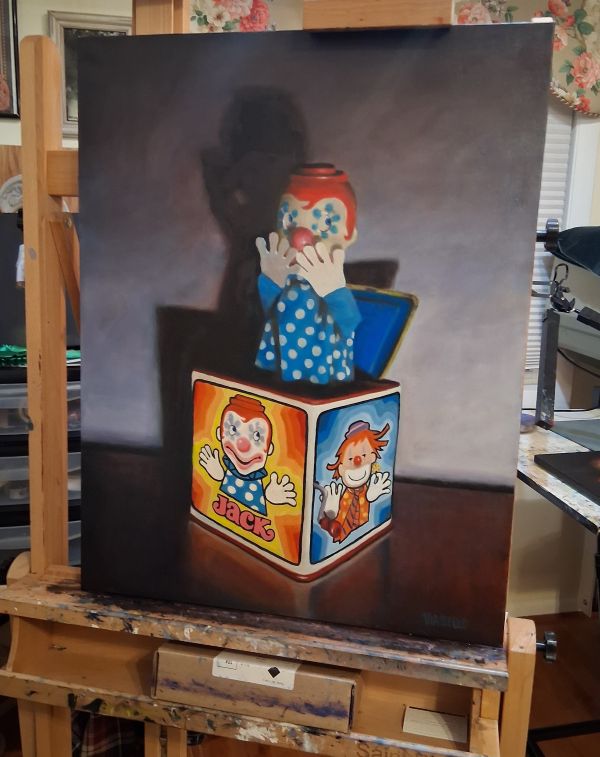
Katie , before we move on to more of these sorts of questions, can you take some time to bring our readers up to speed on you and what you do?
After all the cautioning and finger-wagging from adults who were sure I’d starve to death as a painter, I pursued another avenue sure to light all of their hair on fire: Tattooing. The bills got paid, I got to create, so I figured that was the end of that. But in the back of my mind there was always that little voice calling me to the easel. I’m finally heeding the call, but my tattoo career really bolstered me in ways I wouldn’t have expected.
I learned to work in a variety of styles, and to think quickly. Tattooing is collaborative and it involves a lot of compromise. This prepared me to take on painting commissions, and be able to work through the possibilities and problems smoothly in order to get the best outcome.
Additionally, I was exposed to a wide variety of styles and techniques while tattooing that translate to painting, and from painting back into tattooing. They are both wildly different media, yet there are fundamentals to both that absolutely cannot be shaken; once you understand the basic rules, so much is possible.
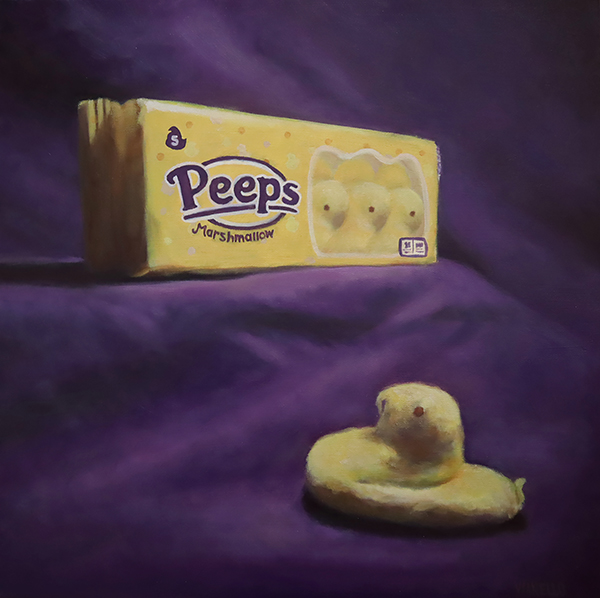
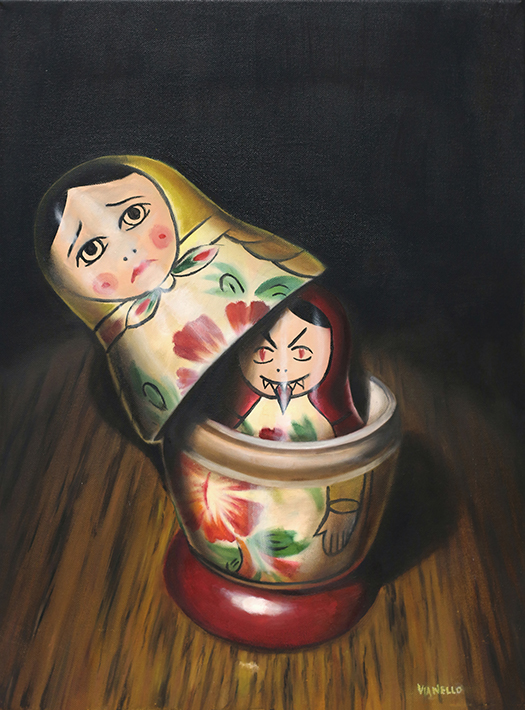
At the end of the day, I’m kind of an odd duck. People tend to think of oil painters as serious museum bait, but I’ve got an odd sense of humor that was was sharpened by being in a tattoo shop all day, and I see it surfacing in my paintings. I guess ‘gallows humor’ would be a good way to describe it. I started out trying to paint flowers all day, but the weirdness just kept creeping in.
Learning and unlearning are both critical parts of growth – can you share a story of a time when you had to unlearn a lesson?
I cannot stress enough how important it is to ignore people who don’t know what they’re talking about. Everyone who ever told me I’d never make it as an artist had some desk job somewhere. They couldn’t imagine how it would work, so they did their best to convince me that it wouldn’t. When I was young, and I was being told ghastly tales of starving to death in a hovel as I begged people to buy my work, I took that seriously. Sure, there were many struggling artists. But there were many that weren’t. They had talent, they had drive and they had confidence. They marched up to powerful people and made themselves known and they got work. People were getting sacks of gold from wealthy benefactors as plagues tore up the city. They were getting supported by patrons as wars raged on across the countryside. There has always been opportunity in the worst of times, there’s no reason to not try now. There’s more opportunity and access than ever! Simply posting on social media can result in a sale, it’s silly to be afraid because some old fool from your past was afraid.
I still get the jitters when I am about to take a big risk, so I have to stop that old tape that’s playing in my head, the one that says it’s impossible and I’m going to fail. If I don’t try, the odds of failure are 100%. If I try, I have a chance. There is tremendous risk in pursuing a dream. I think the worst risk of all is landing on my deathbed knowing I was too scared to try, and only because someone else said I should be.
Is there something you think non-creatives will struggle to understand about your journey as a creative?
Plenty of people find art to be unnecessary, a frivolous luxury, something that’s only for bored, wealthy people. Worse, artists are often seen as unhinged, chaotic drug addicts who can’t find a real job and would rather goof around all day. Creating art is fun, and it certainly is a fine hobby. When it starts to become a business, that’s when things change. I don’t spend nearly the amount of time painting that I’d like. Instead, I’m watching seminars about marketing. I’m making video after video after video to build an audience on social media. I’m researching festivals, galleries and groups that might be a good fit and give me an opportunity to show my work and expand my audience. I’m figuring out funding and finances, a lot of which is me robbing Peter (me) to pay Paul (also me). There are many hats I have to wear, and some days I’m wearing them all at the same time.
Someone close to me once said “I don’t know, I just have trouble seeing it as a business”. That stung, but it underscored the need to aggressively attack all those business activities that seem to be the antithesis of painting. I was dumbfounded when I found myself learning how to use Excel so I could better keep track of my inventory. I never thought I’d be doing this dorky office stuff! But it’s the dorky office stuff that separates the professional artist from the hobbyist, the ones who make it from the ones who don’t. Artists generally aren’t wired for such buttoned-down stuff, which makes it all the more difficult to adapt and follow through. Turning off the whimsy machine and putting on the accountant hat is far harder for us than it is for the MBAs. The artists that make a living off their creations are doing real magic.
Contact Info:
- Website: https://www.katievianello.com
- Instagram: katiecaintattoos
- Facebook: Katie Vianello
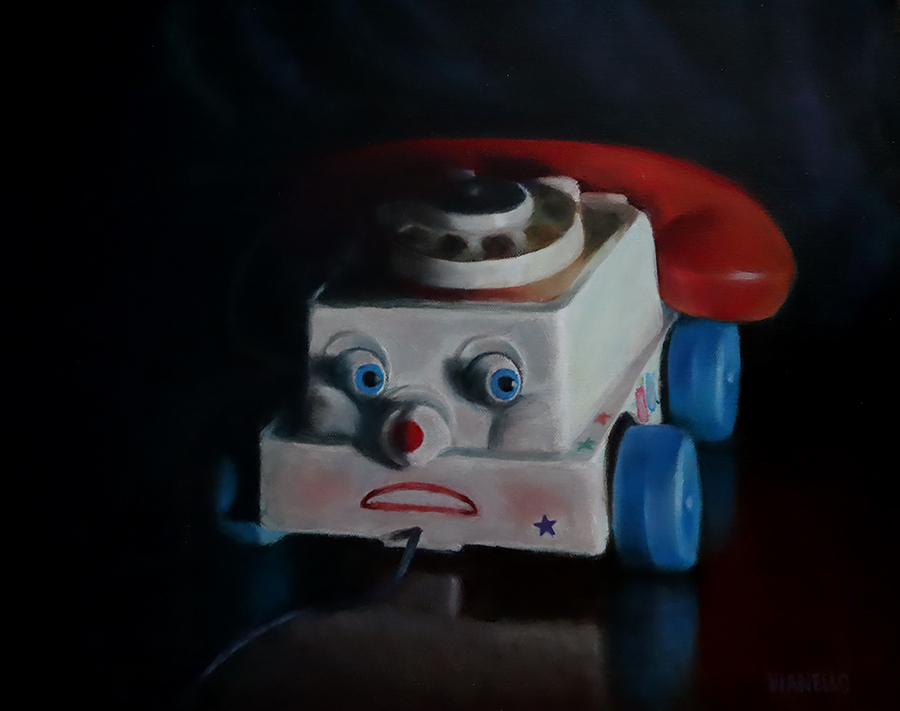

Image Credits
Katie Vianello