



We caught up with the brilliant and insightful Katie Gilbertson a few weeks ago and have shared our conversation below.
Katie, looking forward to hearing all of your stories today. Looking back at internships and apprenticeships can be interesting, because there is so much variety in people’s experiences – and often those experiences inform our own leadership style. Do you have an interesting story from that stage of your career that you can share with us?
I had such a challenging internship experience. It started when I wanted to intern at a private practice (since that was my plan after graduation) but my graduate program only established relationships with community health centers. I had already been working in community health for 3 years, I didn’t want a repeat experience. I was determined to find a private practice that took interns and boy did I learn a lot! My first internship site was a quiet private practice where two therapists shared office space. When I interviewed for the position, I felt like the supervisor and I really hit it off, we seemed to be on the same page as to what type of clients and issues I wanted to work with. At some point in my internship, things took a turn and I started butting heads with my supervisor more often. She assigned me clients who I was not equipped to work with, which felt uncomfortable and unethical. We didn’t agree on certain procedures and overall started having personality clashes. But, being an intern and needing hours to graduate, I felt like I had to stay. I endured the discomfort, I allowed my supervisor to cross my boundaries, and it started to affect my joy and passion for the work.
Eventually, I informed my school of my experience and they helped me transition out of that internship site and into a new one. This time I found myself at a group practice that had about 8 therapists. While I never was given clients I didn’t want to work with, and was pretty much given free reign on everything, I still was not gaining the support from my supervisor that I needed. Our supervision time was often made about her personal issues, I had concerns about confidentiality and how my notes were being stored, boundaries were broken with how often my supervisor reached out to me outside of office hours…it was another challenging experience.
Despite an entire year of that mess I was able to graduate. Instead of looking at my negative internship experience as a loss, I thought “what do I have to gain from this?” Well, I was able to take clients with me and establish my own practice, Rainy Day Therapy, immediately after graduating. I learned what values and policies I didn’t agree with, which has informed how I built my practice and conduct myself as a therapist. But most importantly, it’s made me more aware of how to support new therapists. I’ve always had a passion for mentoring newly graduated therapists. I think some of that passion comes from my nature of wanting to help others succeed (duh, therapist), but most of that comes from having crummy support when I was a baby therapist. I was left to figure out how to be a therapist and business owner all on my own. I had a ton of fear and self-doubt because I didn’t have the best mentors. Due to that, I now provide supervision support that not only helps new therapists work competently and ethically with their clients, but also focuses on their personal values and needs as a clinician. I help new therapists boost their professional confidence, believe they can actually run a successful practice and then implement the tools and values to get them there. I keep communication open so my supervisees feel like they can address any issues with me, instead of feeling like I have authority over their education and clinical experiences.
So despite having a rocky internship, I’m grateful that it taught me exactly the type of leader and mentor I want to be. I feel fully connected to my values and that shows in my practice and supervision.

Katie, before we move on to more of these sorts of questions, can you take some time to bring our readers up to speed on you and what you do?
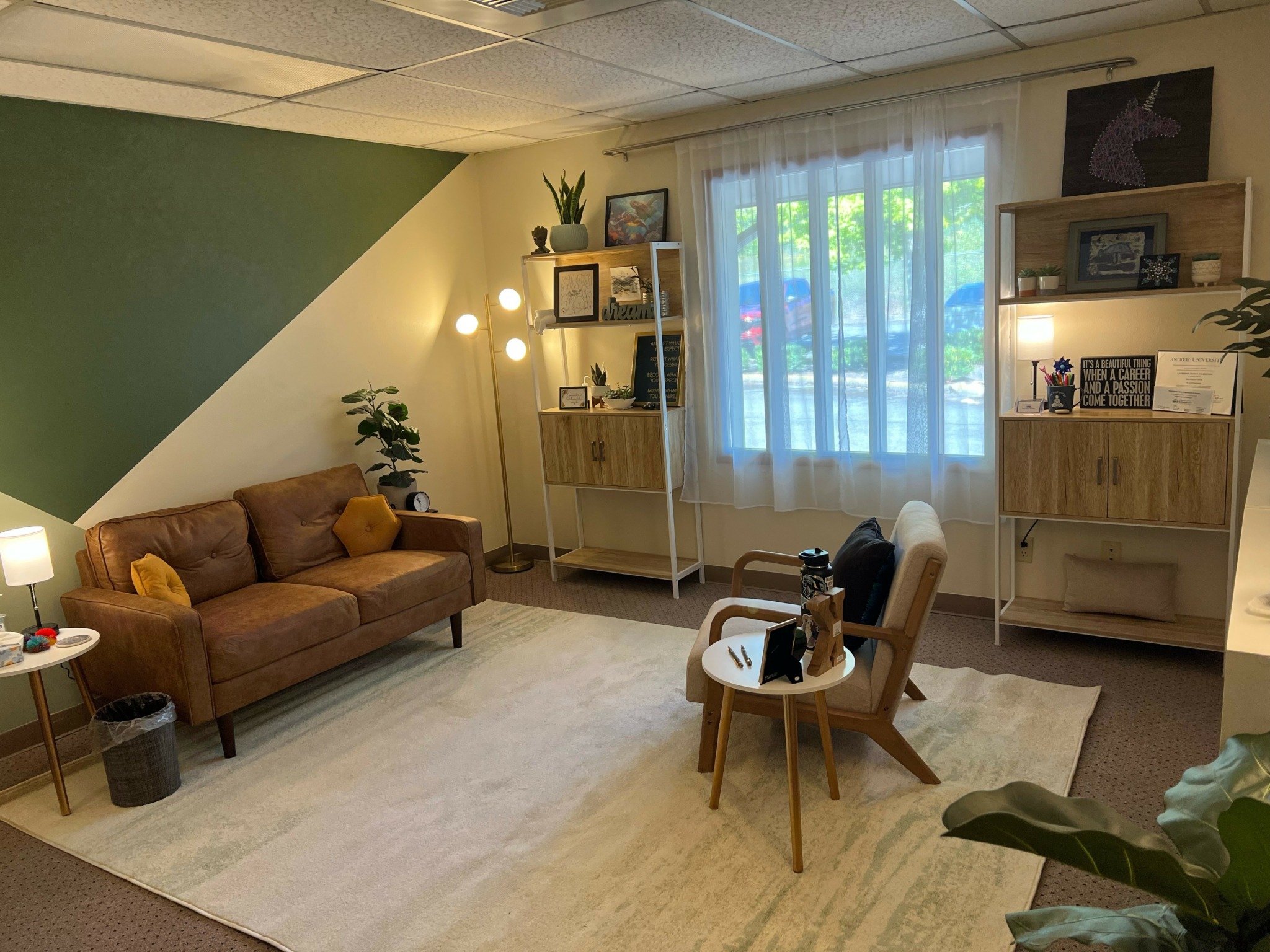
Like most therapists, I felt pulled to this work because I often played advice-giver in my friend groups, I always felt sensitive to others’ emotions, and I empathized with the tragedies of the world. What made me choose private practice was simply that I was tired of working in community mental health and wanted to be my own boss. I had given so much of my time, energy, and tears to a system that is so broken, that I didn’t want to keep contributing to the brokenness. So I started my own practice, Rainy Day Therapy, in 2019. It was rare for newly graduated students to start a practice right out of school, but I was determined to leave my community mental health job and start working for myself.
I found office space, completed the necessary paperwork to be licensed and a legal business, was lucky enough to have 10 established clients from internship, and then set on my journey. It was pretty surreal the first day I sat with clients in my own office space. I felt like a fraud, almost like I was playing therapist and not that I actually was one. But over time my confidence grew and my clients kept coming back so I must’ve been doing something right.
It was challenging to figure out a niche because as a new therapist I just wanted to help everyone with everything. But over time I was able to pinpoint who I best work with and what types of issues I’m passionate about. Now, I provide mental health therapy to adults who identify as women and/or queer who struggle with anxiety. This anxiety usually stems from people-pleasing, lack of relationship boundaries, body image and food struggles, discomfort in their identities or not knowing who they are, and challenges with ADHD. Clients who work with me often experience change once they address these issues head on and implement tools that alleviate or minimize barriers to being happy and fulfilled.
I’m a traditional talk therapist and most clients have shared that my desire to see them thrive, mixed with my sense of humor and realness is what has helped them most. I’m not sure if my graduate school would be happy about this or not, but I’m a pretty casual therapist. I show up as a human helping humans, not some expert that can’t relate to my clients. If my clients are angry, I may be angry with them. If they cry, I may be sad with them. If they swear, I may swear with them. I think the most important part of therapy is establishing a trusting, authentic relationship and so it’s important clients know who I am so they can determine if I can actually support them. If anyone is wondering if I’d be a good fit for them this is what I would say:
I invest HARD in my clients, so I expect you to invest in yourself just as much. That means spending the time, money, and energy it takes for the process to work. I deeply care that you meet your goals and create the change you want in your life. If things in our therapy aren’t working, tell me so we can pivot. Your therapy experience is solely for you, so it should look and feel how you want it to. I’m here to guide you toward your goals by providing insights about your trauma, relationship dynamics, feelings and needs. I provide actionable steps toward shifting your challenges. I’m fully in your corner to validate you, boost your confidence, hold you accountable, and cheerlead you toward the finish line. If you can handle a millennial therapist with a dark sense of humor, who changes hair color every quarter, is obsessed with dogs and romance novels, and is also a recovering people-pleaser, then I’m your therapist!

If you could go back, would you choose the same profession, specialty, etc.?
Yes! I love what I do and that’s only grown more clear as time passes. There’s been ups and downs in my career but the relational work with clients continues to ground me. Niching down and working primarily with women and queer adults has continued to keep me passionate about this work. I enjoy connecting with people in general, but when I’m also able to play a part in their success, healing, and creation of a fulfilling life, nothing could compare to that. Therapy is such an underrated form of healthcare, yet it’s the one thing every person struggles with at some point in their life. I’m proud to be part of a field that provides so much healing. It gives me joy to see my clients transform and thrive.
Even managing a practice, something not taught in therapy school, has felt like the right career path. There’s always stressors to running a business, but being able to work less hours, choose who I work with, take time off when I want, and create a practice and policies that align with my values has been the most freeing part of my career. I honestly don’t know what else I would do instead – maybe work with animals, but that’s just a different side of the coin isn’t it?
We often hear about learning lessons – but just as important is unlearning lessons. Have you ever had to unlearn a lesson?
The therapy field has a martyrdom to it. Community mental health and grad school programs perpetuate this idea that you shouldn’t want to make money as a therapist, you shouldn’t expect to make decent money as a therapist, and if you do then you’re not helping people. As a private practice owner, I had to learn real quick that my business was not going to survive if I gave my services away for nothing. I went $150,000 in debt (and that’s just student loans) to be able to provide competent and ethical mental health support. I gave 3 years of my life to a community mental health job that could care less about me as a person, I was just a body that made them money. I have sacrificed in many ways to give back to a broken medical system that would never have my back in a crisis or hardship. So, a major lesson I learned (and continue to learn) is it’s ok to want to make money as a therapist. It’s ok to make that money however I see fit for my lifestyle and wellness and it doesn’t mean that I don’t care about people just because I charge what I need to survive..
When I first built my practice I was only charging $60/session. Sixty dollars! Now, I was brand new and didn’t know any better, but I was also told that as a new therapist I couldn’t expect to be paid well. So over the years I had to slowly increase my fees to make a livable income. What most people don’t understand about being a therapist is that the job is emotionally and mentally taxing. There’s no way I could work a typical 40hr work week and continue to show up and be present for my clients. Could you image having to know and remember the intimate details of 40 people (and that’s if you see them weekly, otherwise it would be 80 biweekly clients!) and their family members, jobs, friends, pets, likes/dislikes, etc? That would be insane. So when I started my business I also had to learn how many clients I could see without burning out and losing my passion for the work. As an empath, my sweet spot is about 15-18 weekly clients because I tend to absorb the emotions and trauma of my clients. Imagine…my student loans just came due and they want me to pay $1100/mo and I’m seeing 18 clients at $60 per week. My student loans took 1/4 of my income! That’s not including money set aside for taxes, expenses, etc. Needless to say I learned quickly that in order to maintain a practice and the life I wanted, I had to work through my internalized martyrdom and my attachments around money.
Till this day I struggle with allowing my needs to be met as a therapist, but it’s gotten better as I’ve surrounded myself with community that wants me to thrive. Ultimately meeting my needs enables me to be a better clinician by preventing burnout and modeling what it’s like to set boundaries and prioritize needs to clients. There’s deep work to be done around most things and money is no exception! Issues around money show up in therapy all the time. Whether it’s a client who doesn’t believe they’re worth a raise, or a client with negative cultural messages around money, or a client struggling with guilt for needing financial support from family, or a client who struggles to invest in their wellness, it’s all important therapeutic work that I wouldn’t be as equipped to help with if I hadn’t done my own money therapy.
In closing, I had to unlearn messages that being a therapist was always going to be a struggle and I should expect financial burden the rest of my life. I don’t hear this coming from doctors, lawyers, tech companies, or really any other corporate entity. So why is a helping profession, one that is relational and establishes a deeper form of care than most helping fields, not allowed to make money? There’s a way to balance care for clients, being a good therapist, and running a business. If I kept giving my services away for $60, I’d have to close my practice and I wouldn’t be helping anyone anyways.
Contact Info:
- Website: https://www.rainydaytherapy.net/
- Instagram: https://www.instagram.com/rainyday_therapy/?hl=en
- Facebook: https://www.facebook.com/rainydaytherapy
Image Credits
Brandon Gilbertson