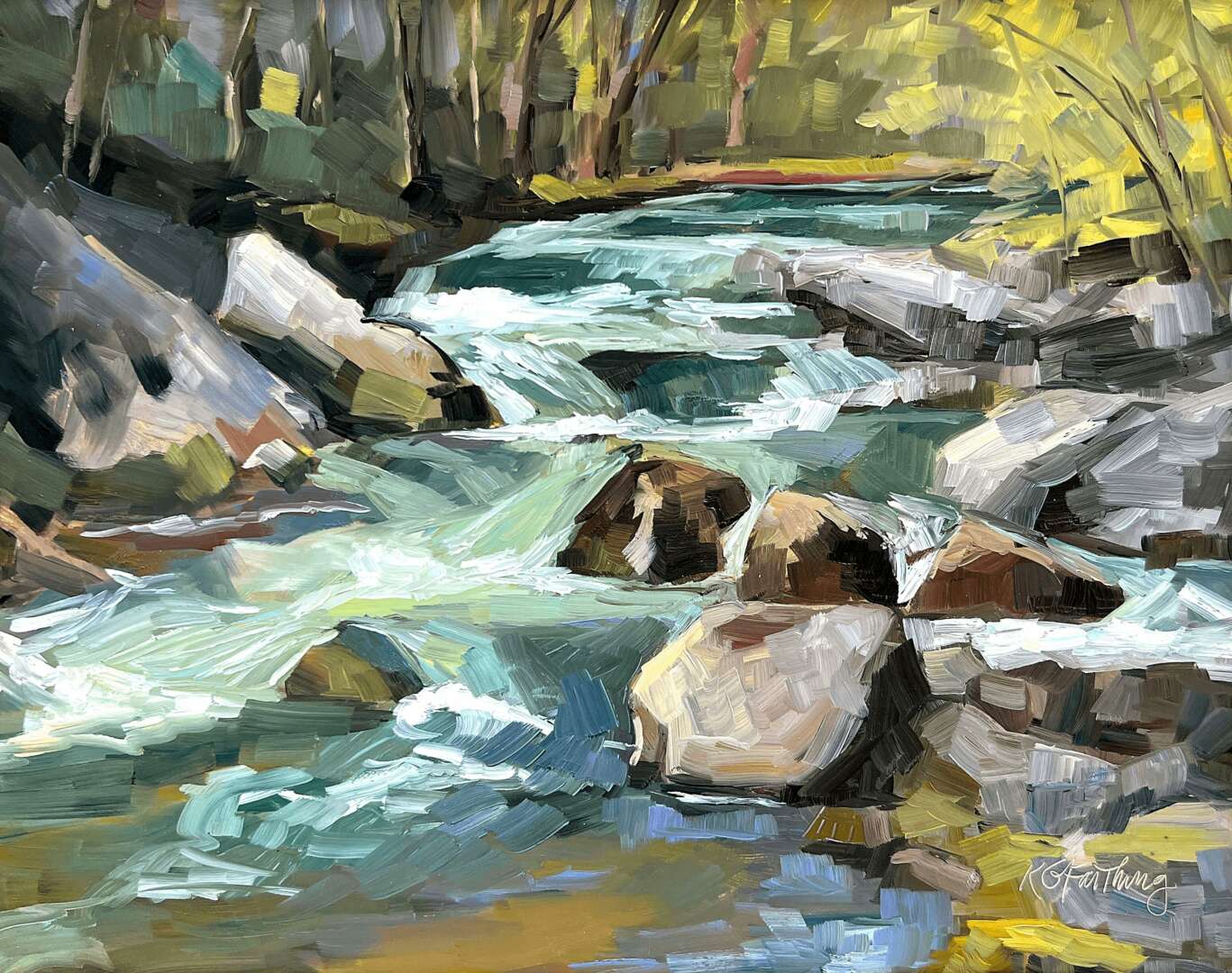
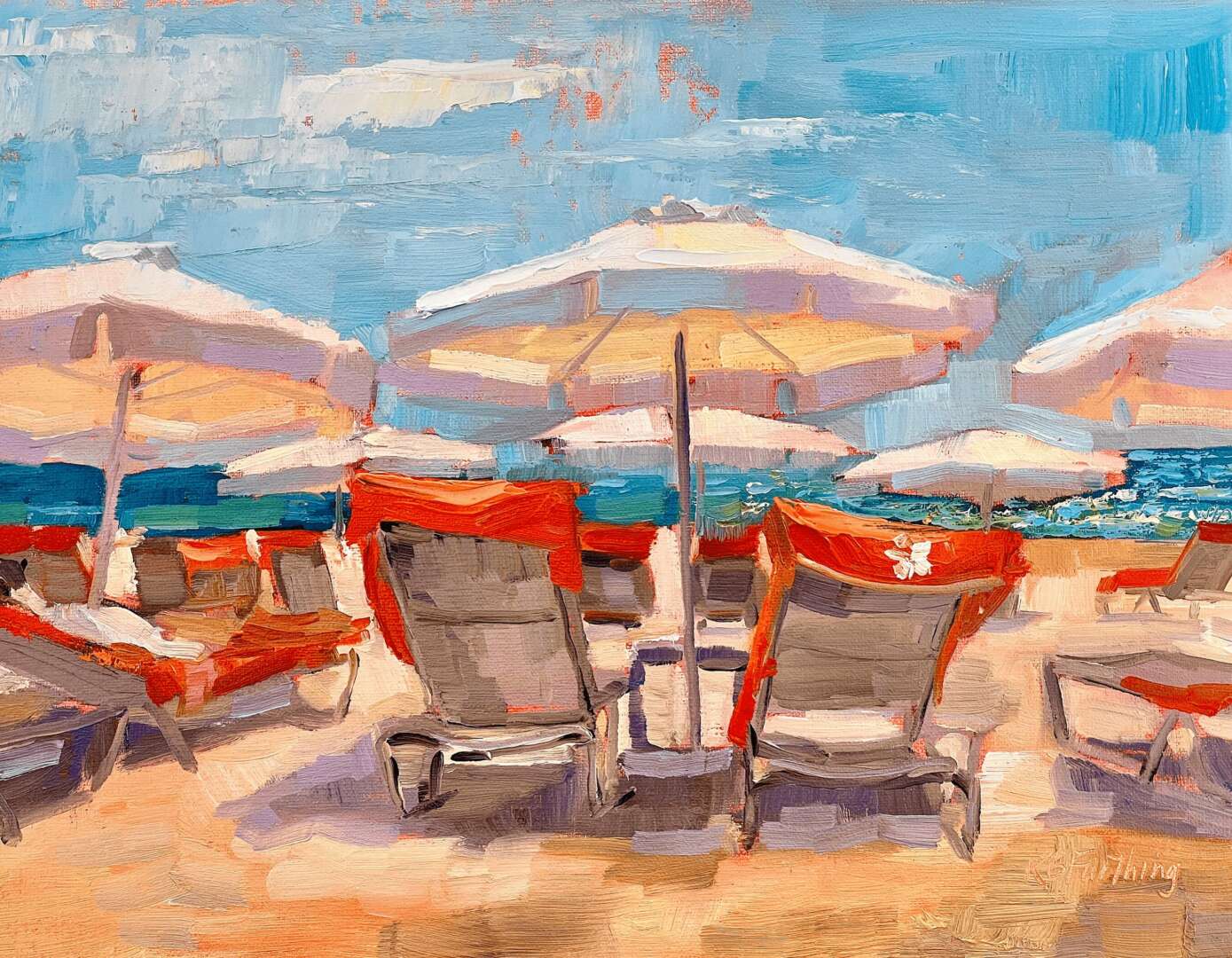
We recently connected with Kathleen Gray Farthing and have shared our conversation below.
Kathleen Gray, appreciate you joining us today. How did you learn to do what you do? Knowing what you know now, what could you have done to speed up your learning process? What skills do you think were most essential? What obstacles stood in the way of learning more?
Knowing I wanted to be an artist, I earned a BFA in fine art. Back in the 1970s, I was only aware of two practical paths to make a living as an artist: teach art or do commercial art. While still in school, I began getting jobs in graphic design and illustration. I learned the more technical aspects of commercial art as I worked. Having never been taught design and illustration, I sometimes felt as though I were faking my way through. When children came along, I started my own freelance business.
Computers came into the graphic design world in the 1990s and it was back to square one. It was a huge learning curve and all self-taught. Some days it was a real struggle, but I was always so grateful to be making a living doing what I loved, and to be able to do it while continuing to be home with my children.
When my youngest child went off to college I decided it was time to do something for myself. For me, that meant returning to my fine arts roots. I began to paint, working around my freelance deadlines. Opportunities to make time to paint were very sporadic. Progress was slow. Then I discovered the work of an old college friend. He was posting paintings almost daily. I wondered how he could find the time since he too had his own commercial art business. He introduced me to “plein air painting” (painting on location.) The paintings are done outdoors, started and finished in a few hours. I found I loved the process and became hooked on plein air painting.
I had been very successful with grades in school, and awards in my design and illustration business. I figured I was ready to take on the plein air art world. The artist, Edgar Degas famously said, “Painting is easy when you don’t know how, but very difficult when you do.” And boy, did I quickly find out how little I knew. 1970s art education was pretty much, “Go do your thing.” I had no fundamentals in materials, basic concepts of value, composition, color mixing, etc. Talk about being back at square one!
I began to study with established artists, discovered the extended plein air and painting community, and most of all, continued to paint and paint. Twelve years later, I am still climbing that steep learning curve.
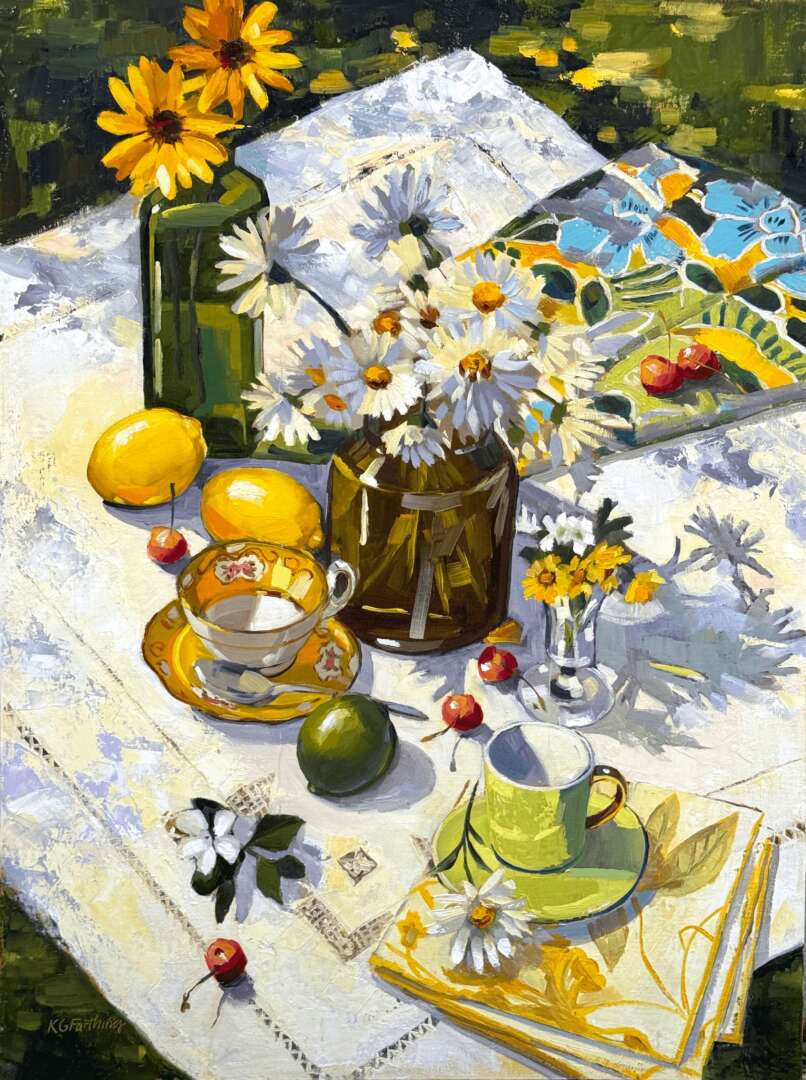
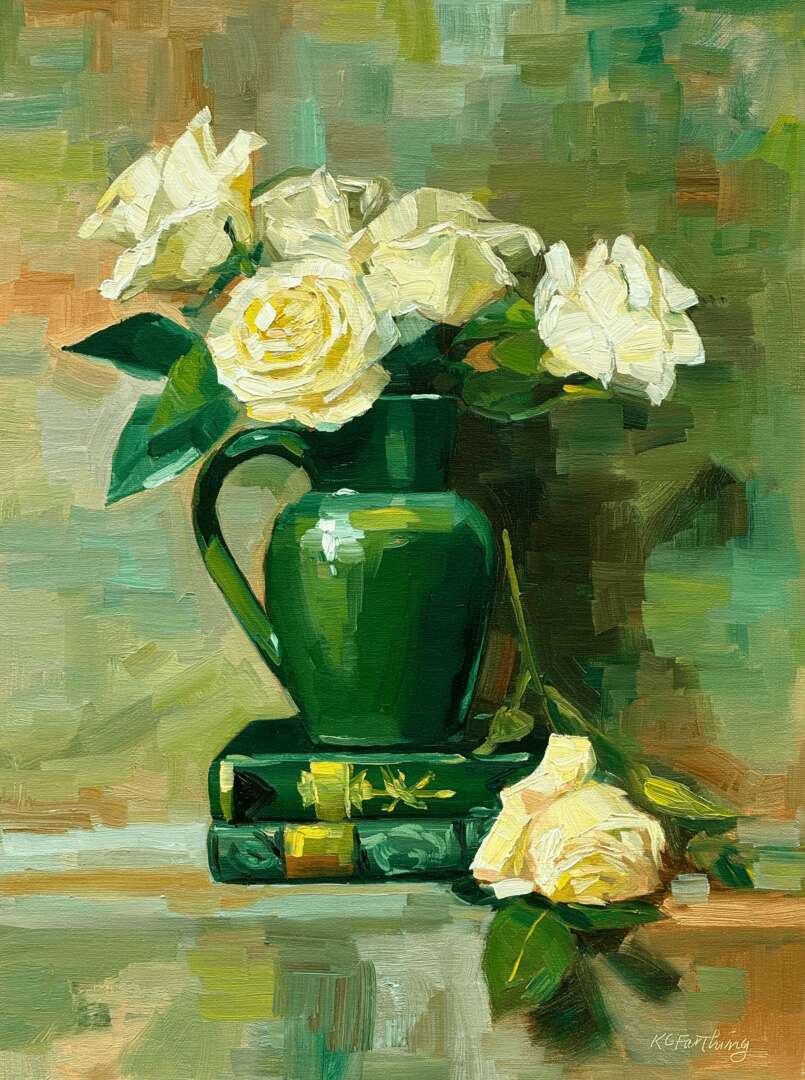
As always, we appreciate you sharing your insights and we’ve got a few more questions for you, but before we get to all of that can you take a minute to introduce yourself and give our readers some of your back background and context?
Much of this question is answered in the previous space.
I am a fine artist who works in oils. This may be considered a 2nd career as most of my adult life I worked as a graphic designer and illustrator. While I still do a bit of commercial art, my primary focus is now on painting. For the first 8 years of painting, nearly all my work was created outdoors, on location. There is something incredibly special about plein air painting. When you are outside, you become absorbed into the scene. All of the senses are engaged. You have the additional challenge of dealing with weather- rain, heat, wind. Changing light, bugs, people asking questions, the physical challenge of standing for 3 hours.
I compete in several plein air events each season. These events are usually sponsored by an art association- a gallery, museum, or nonprofit organization. Artists apply to the event and 30-40 artists from across the country are accepted. We paint in a specific area for about a week, then submit paintings to be judged for awards and offered for sale to the community, I love doing these events. It gives me the opportunity to travel to areas that are new to me and provide exposure and income. Some of the areas include: Sedona, AZ, Jupiter, FL, the Adirondacks, the Smoky Mountains, Annapolis, MD, Nova Scotia and more. Meeting other artists and doing nothing but paint for 5 days in a row provide an opportunity for improving my painting.
When Covid hit and we went into seclusion, all the plein air events were canceled. I started doing still life painting under the instruction of Kelli Folsom. I was surprised to discover that I love it. I now do about half still life work and half plein air work. (www.KathleenGrayFarthing.com)
What I am most proud of:
I am so grateful that there are people who appreciate my artwork enough to spend money to have it in their home. It means a lot to me, and often is the inspiration to keep painting.
While I have won awards, and gotten into assorted “high tier” shows, I am more proud of the fact that I am “getting out there and doing it.” Many people my age are now sitting back and hanging around the house; I am in love with traveling and painting. Besides the competition travel, I have gone with my paints to an artist residency on the Olympic Peninsula, to Cuba with a group of painters, to Portugal and France for artist workshops. Soon I will begin planning my next adventure.
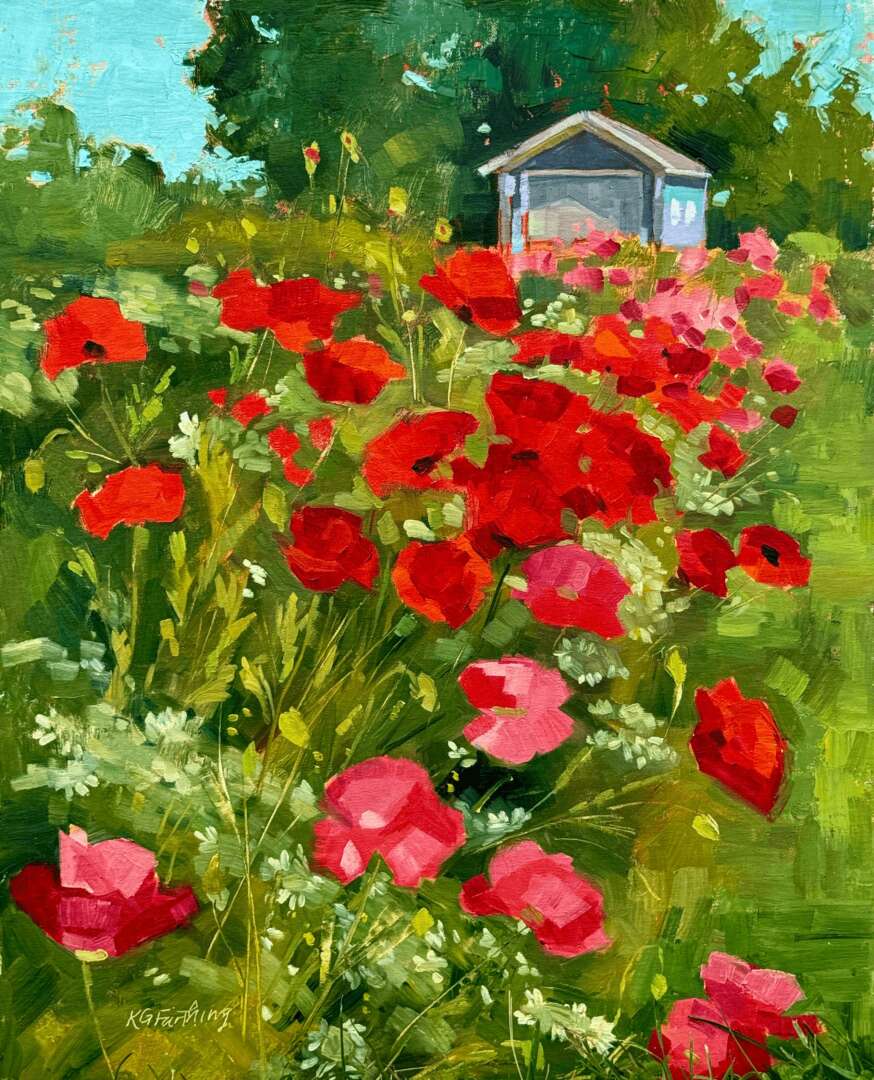
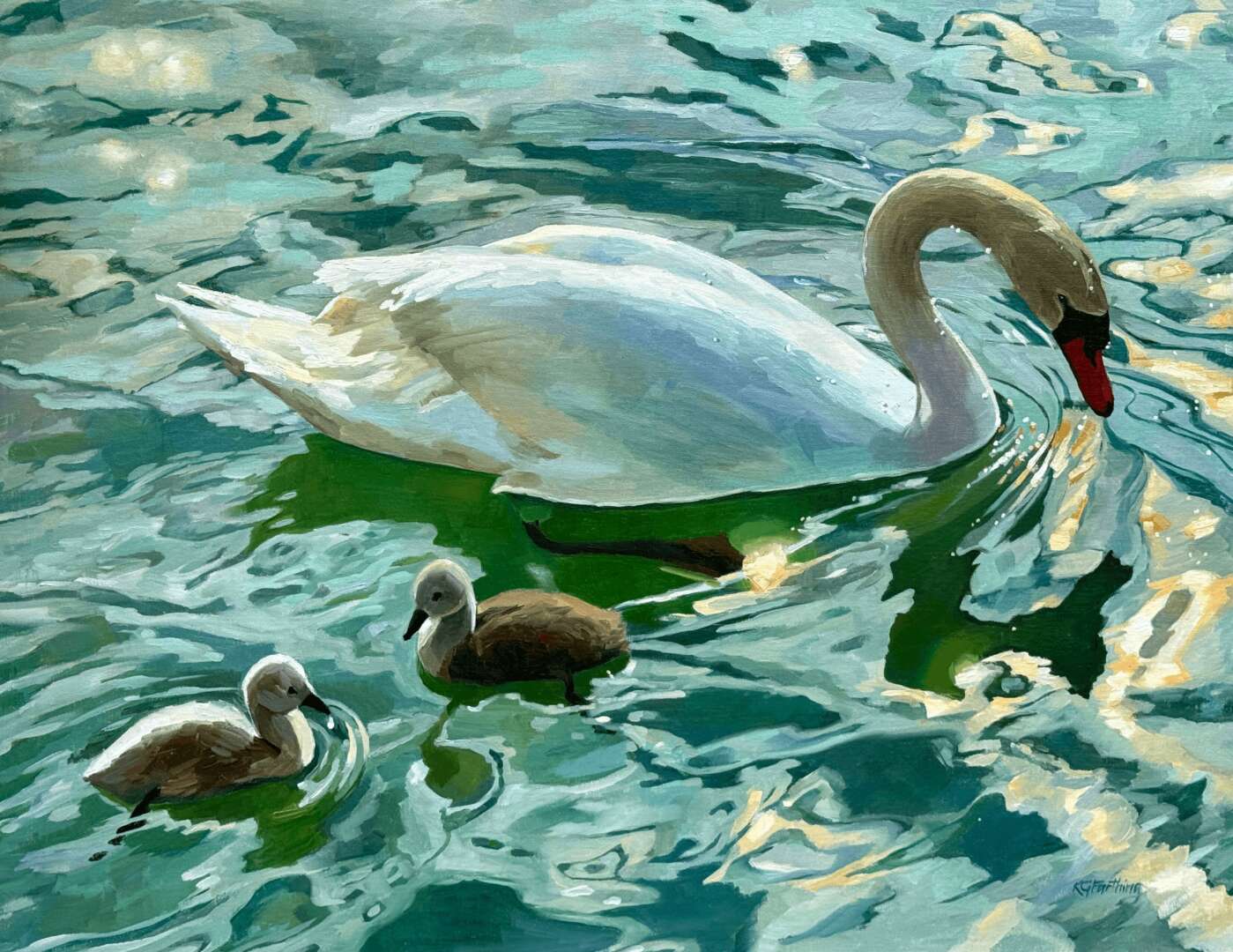
Do you think there is something that non-creatives might struggle to understand about your journey as a creative? Maybe you can shed some light?
When people see me painting, or come to my shows many assume that this is a nice, fun hobby. It’s actually one of the questions I most often get when I am painting on location, “Are you a REAL artist or is this a hobby?” Yes, it IS fun, but it is also work. And hard work both physically and mentally. My sister, who is not an artist wanted to come along with me and try painting in beautiful Colorado. Every time we went out she would comment on how hard it was, how tiring it was. I recently participated in the Grand Traverse competition. The temperatures were in the 90s. Strong winds took my easel over more than once. Black flies were biting. A huge thunderstorm interrupted one of my painting sessions. It was wonderful to be in that beautiful area with the opportunity to paint, show and sell, but trust me, it was work.
What people don’t see is all the behind-the-scenes work. Artists are advised that at least 20% of your work time needs to be spent on the business. That’s one day out of a 5-day work week. During that time, I need to be doing social media marketing, framing, packing and shipping work, doing taxes, taking inventory, updating my website, studying and more.
Another aspect of being an artist people don’t realize has to do with the cost of artwork. Not everyone can afford original artwork. I understand that. But here is an example of the breakdown of the pricing of a painting. Let’s say that a painting at a gallery or event is $1000. The gallery or show organizer takes 40-50% of the $1000. So, now the artist has $500. The artist pays for the frame and materials. Deduct $100. The artist pays for shipping to and from a show. Deduct another $100. The artist covers all of the cost of travel to the event. Deduct $$$? For a $1000, the artist may net $300. Ouch.
The next most often question I get is “How long did it take you to paint that?” A plein air painting may have been completed in 2 hours. A studio painting in any number of hours. But the true answer is one many artists will give, “My whole life.” Besides the 2 hours of brush to canvas, there is the travel time to the location, set up and break down time. There is the time and money spent in all the workshops, online training, and self training. Not to mention all the painting “fails” all along the way.
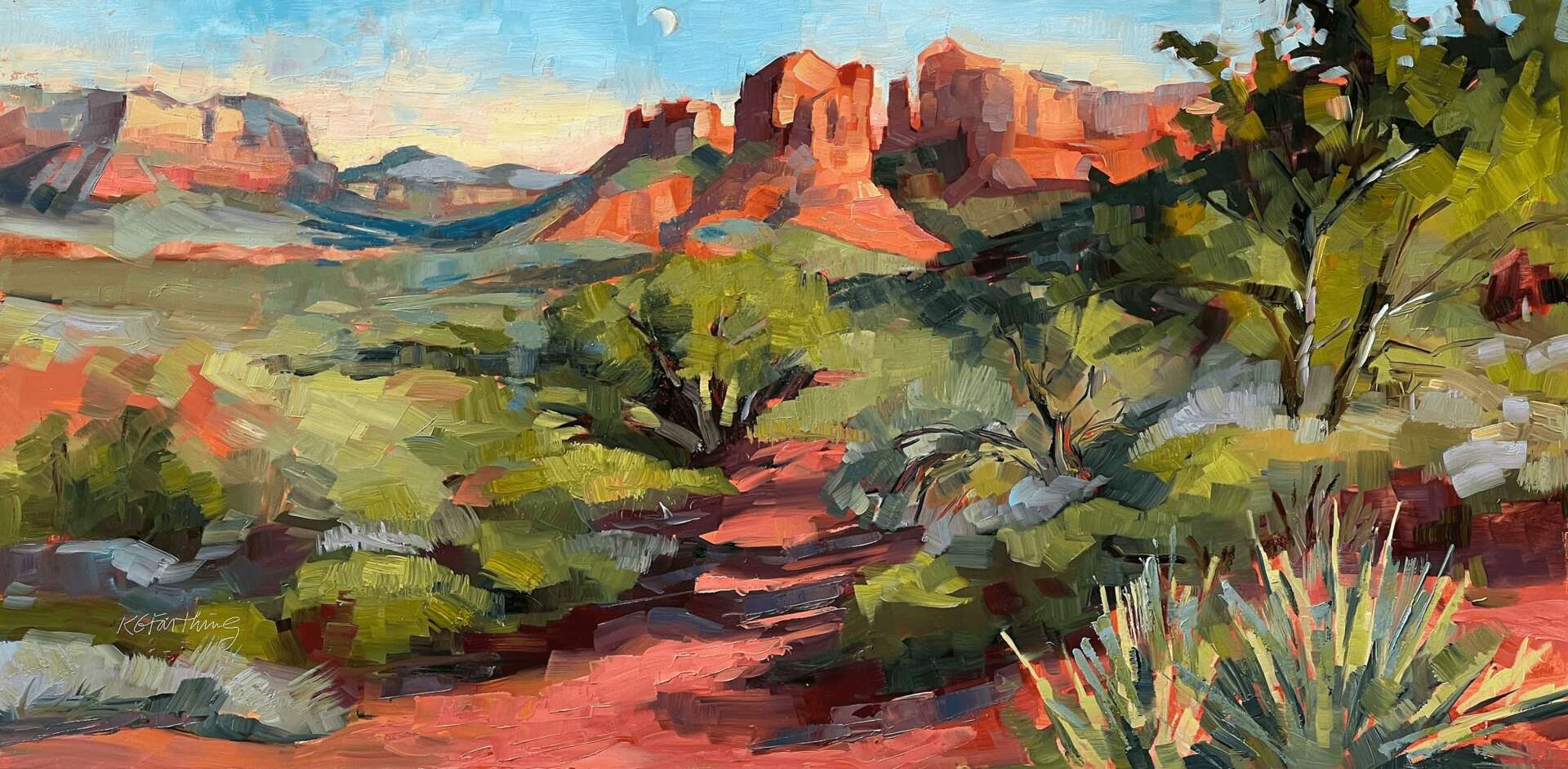
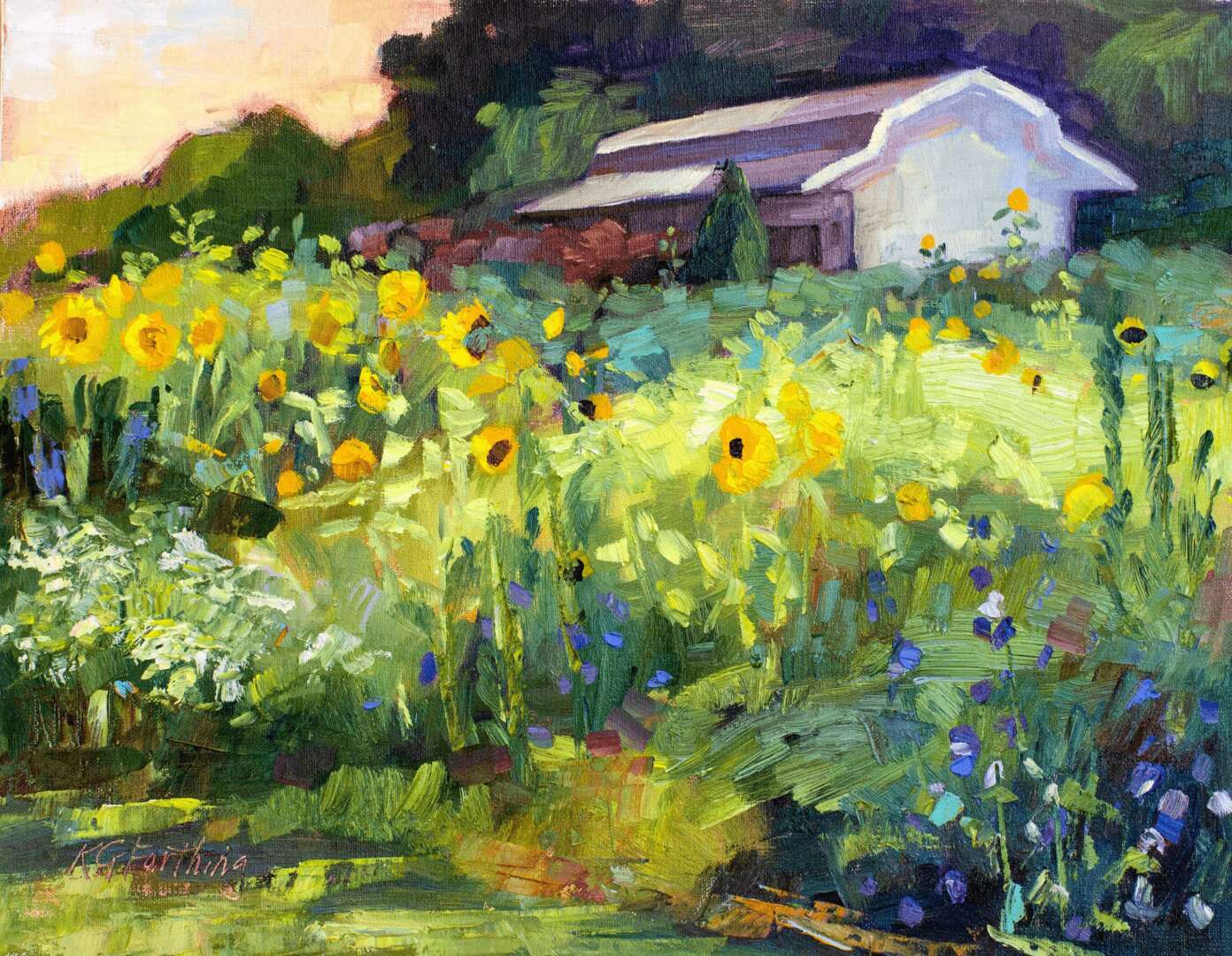
Are there any books, videos, essays or other resources that have significantly impacted your management and entrepreneurial thinking and philosophy?
People who want to make a living as a fine artist have so many more opportunities today than we artists had years ago. I know of a number of artists who support themselves and families doing fine art. Though most have to do a combination of things for adequate income. Paint, show in galleries, have social media presence, teach workshops, write books, enter shows, etc.
There are so many more resources available as well. Besides your standard university education, there is the choice of attending an atelier (small, independent art schools), workshops, online tutorials, online mentoring with established artists.
Early on in my plein air journey I discovered Plein Air Magazine with all of its associated offerings. Outdoor painter is the online site for Plein Air Magazine with links to their national convention, articles, podcasts, and a few hundred painting tutorials (paintTube.tv). The material is endless. Much of it is free.
The workshops I attended with well-known artists were very helpful in the first part of my learning curve. I still attend workshops to “freshen up” and get inspiration.
Studying with one particular artist online or in person can be helpful as well. For me, learning to paint still life, Kelli Folsom’s “Art Life School” tutorials made a huge impact.
Contact Info:
- Website: https://www.KathleenGrayFarthing.com
- Instagram: @KathleenGrayFarthing
- Facebook: Kathleen Gray Farthing