



We were lucky to catch up with Katelyn Rohde recently and have shared our conversation below.
Katelyn, looking forward to hearing all of your stories today. Coming up with the idea is so exciting, but then comes the hard part – executing. Too often the media ignores the execution part and goes from idea to success, skipping over the nitty, gritty details of executing in the early days. We think that’s a disservice both to the entrepreneurs who built something amazing as well as the public who isn’t getting a realistic picture of what it takes to succeed. So, we’d really appreciate if you could open up about your execution story – how did you go from idea to execution?
DAY ZERO When Roland died it was like I had taken a step away from my body and was watching everything happen in slow motion around me. It felt as though a dark, ever expanding hole had formed inside me. Originally that hole was filled with the hopes and plans we had for Roland – like going camping for the first time, or running in his first Fast CAT, or getting some puppy frozen yogurt and planning with his BFFs Nico, Ralph and Poncho. But in a moment that future just evaporated and the emptiness remained.
I was disoriented, confused, and fully consumed by the deepest and most painful emptiness I had ever experienced. I couldn’t make sense of what was happening. I had just dropped Roland off 5 hours earlier – he was just here – what do you mean he’s dead? What do you mean I need to come view his cold, lifeless body? It should be warm and full of wiggles. He shouldn’t be laying on that metal plate – he should be jumping into my arms.
In the days that followed, that confusion and pain would continue to grow. When we found our attorney, we figured this would be a clear cut case and that the legal system would be there to back us. Instead, we were greeted with the sobering reality of what our situation really was. Dogs are property under Texas law, which means you are technically only owed what you “paid for them”. There are no specific regulations in place for dog daycares, boarding facilities, groomers, trainers – no certification requirements. No safety requirements before they can open. Nada. You could call yourself a dog trainer tomorrow if you wanted to.
Losing your dog or cat in such a traumatic way, having to accept you may never know what really happened that day, realizing that there is no legal or regulatory body there to support you is such a specific and isolating feeling. It was at that moment that Michael and I knew we had to do something. We knew we couldn’t be the only family to experience something like this and we knew there were plenty of other dog families who were just as oblivious to the reality inherent in the dog care industry.
CHANNELING OUR GRIEF
It was one thing to know that we wanted to do something, but it was a whole other thing to actually figure out what that meant. A million questions ran through our head:
Do we start a non-profit or a foundation? A 501c-3 or a 501c-4?
What is our message? What are our goals?
How do you change a billion dollar industry?
How do you influence legislation and push for regulation in a notoriously anti-regulation state?
How do you convince people to care as much as you do?
But before we started submitting any paperwork, Michael and I sat down and created our mission statement and then defined 3 core impact pillars that ladder into the mission. With such a broad space that we were entering, we knew it would be critical to have clarity on our direction on day 1 AND have clear scope definition (knowing what you aren’t going to do, is almost more important than knowing what you will do).
Once we had our impact pillars, we scoped out what success looked like within each pillar, how we would plan to allocate our time and resources and then outlined what our key outputs and activities would be. Michael and I both have a program management background and have used similar principles to get programs off the ground and ready for scale. A solid foundation upfront ensures you can limit scope creep, extending yourself too far or taking on activities that are counter to your true end goal.
One of the next core pieces we tackled was the brand. My background is in advertising and something I learned early in my career is that a brand is a promise and the onus is on the brand to maintain, protect and keep that promise. Our brand was going to be a promise for a safer and more transparent future. Our brand was going to be a promise to Roland that we weren’t going to let his spirit just fade away. Originally we thought of keeping the tone and voice of the brand super formal with muted colors, especially given the topic we were trying to tackle. But that wasn’t true Roland. Roland was a silly goose through and through. He was a light in our life and made everyday bright, fun and full of laughter – and we wanted our brand to lead with that. We ultimately landed on ‘Roland’s Silly Goose Crew’. He may have been a silly goose, but he’s on a mission for serious change.
After a few weeks of research, debate and feedback from friends and peers we ultimately landed on establishing a 501c3, but the upfront legwork of defining our mission and impact pillars helped make this decision much easier and ensured we picked the most appropriate solution for the goals we wanted to accomplish. From there it was a few weeks of reviewing documents and getting forms submitted to the State of Texas and the IRS and then on March 22nd, 2023 we received confirmation that our 501c-3 application had been approved.
It was real. Roland’s Silly Goose Crew is an official 501c-3.
And now it was time to get to work.
LAUNCH TIME
In all honesty, the first year as a non-profit felt like such a blur. There was so much that had to be built from the ground up. A website, resources about our organization, business cards, setting up donation channels, setting up a business account to even be able to receive donations, getting a Paypal and Venmo setup, creating an email address and about a thousand other things, But on top of the actual operations of the non-profit, we had to start diving in head first into the world of animal welfare, regulation and legislation. We began researching other organizations with shared goals, tried finding states with some semblance of regulation in place for the dog care industry and ultimately tried to just learn, absorb and understand.
Our first year was hyper-focused on driving awareness. For people to care, donate or get involved, they need to realize that there is a problem. We developed our first two guides: “Roland’s Dog Daycare Evaluation Guide” and the “Roland and Friends Guide to Finding and Selecting a Dog Trainer” (made in partnership with Every Dog Behavior and Training). These resources were our first stab at creating a tool to empower dog parents to be more informed and in control of the decisions they make for their dogs.
In addition, over the course of about 6 months we joined 5 different dog-focused events including the Annual Puppy Mill Awareness Day, the Paws on Chicon Doggy Drag Show (where we were the beneficiary non-profit), The Watering Bowl’s Anniversary Party, Puptopia Fest and Pet-tober Fest. We networked, shared our story, explained the current state of the industry and then listened as people shared their own stories with us. There were stories of people working on boarding facilities with significant safety and care issues, stories of dogs being severely injured and unfortunately, even stories like Roland’s where they never came home.
LOOKING BACK ON OUR FIRST YEAR
I’m so incredibly proud of what we were able to accomplish in 2023, and more importantly, I’m so grateful for the outpouring of support our little organization received. We were able to attend 5 events across the Austin area (including being the non-profit beneficiary from Paws on Chicon’s annual Doggy Drag Show) and we raised over $4,000 from more than 37 unique donors. When we look at our impact pillars, I’m still in shock what what we were able to do:
Educate Pillar
— Developed, launched and distributed two bespoke guides for dog parents:
—–“Dog Daycare Evaluation Guide”
“—– “How to Find a Dog Trainer Guide” (with Every Dog Austin)
Regulate Pillar
— Developed and launched “The Roland Foundation for Dog Advocacy” brand to bring more transparency to the regulatory efforts driven by RSGC.
— Met and aligned with Pancho’s Promise and the Texas Humane Legislative Network on shared legislative goals for 2025
— Launched the “Austin Dogs Deserve Better” Coalition and had 1st meeting
— Developed and launched the “Dog Daycare Safety” Survey, capturing 271 unique responses
Advocate Pillar
— Launched the “Silly Goose Showcase”, supporting the adoption of Acorn and Puppers from New Hope Animal Rescue
— Launched Roland’s Holiday Giveback and donated $3,000 in supplies and resources to 10 local dog rescues
— Distributed 1,300 of our “Dog Daycare” and 800 “Dog Trainer” guides to rescues to supplement adoption packets
2023 was a year of resilience. It was our first year without Roland but it was also the first year we were able to make progress towards making the Texas dog care industry safer and that helps soften the sting of Roland not being here.


Awesome – so before we get into the rest of our questions, can you briefly introduce yourself to our readers.
We are Roland’s Silly Goose Crew and we are on a mission for serious change in the dog care industry in memory of our silly goose, Roland.
Roland loved sunbathing, going on walks in his canary yellow harness, and savoring the occasional French fry. We have so many amazing memories of taking him to get doggy froyo at Paws on Chicon, him playing with his BFFs Nico, Ralph and Poncho and him even strutting his stuff on the runway at the Blue Owl Dapper Dog fashion show.
He was, and will forever be, our silly goose.
On October 15th, our silly goose was killed while in the care of an Austin dog daycare, as a result of lax safety measures. He was only a year and a half old. Following his death, the daycare faced zero consequences and under Texas law, Roland was just a piece of property to be quantified with receipts.
This was unacceptable and we knew we had to change it.
Roland’s Silly Goose Crew Inc. is the culmination of all of the pain, frustration, and anger we have felt and had to internalize since October 2022. Our mission is simple yet powerful: to advocate for change in the dog daycare industry (and beyond), support local animal shelters and rescues, educate the community on dog safety and empower dog parents to be stronger advocates for their dogs.
Roland’s Silly Goose Crew is a registered 501c3 Non-Profit (EIN: 92-2542861) and when you donate to our organization, you are impacting the lives of Austin and Texas dogs through our three Impact Pillars: Educate, Regulate and Advocate. Each pillar is designed to create a narrowed focus for maximum impact:
Educate: Empower and enable dog parents to make more informed and educated decisions about their dog’s care.
Regulate: Drive regulatory and legislative change to hold pet-focused businesses to higher levels of transparency, care and safety expectations.
Advocate: Amplify the needs of local Austin rescues/shelters and drive actionable support through donations.

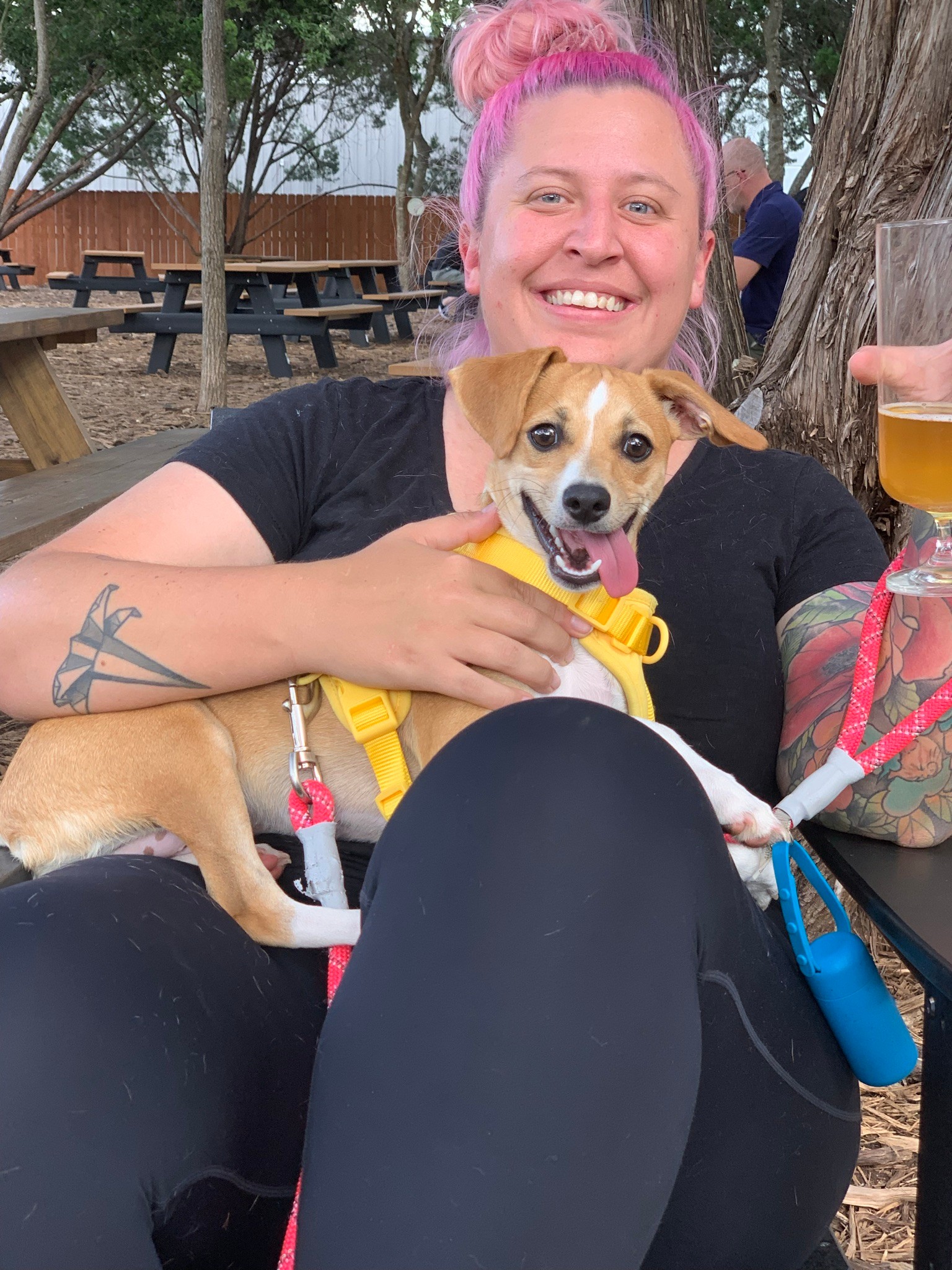
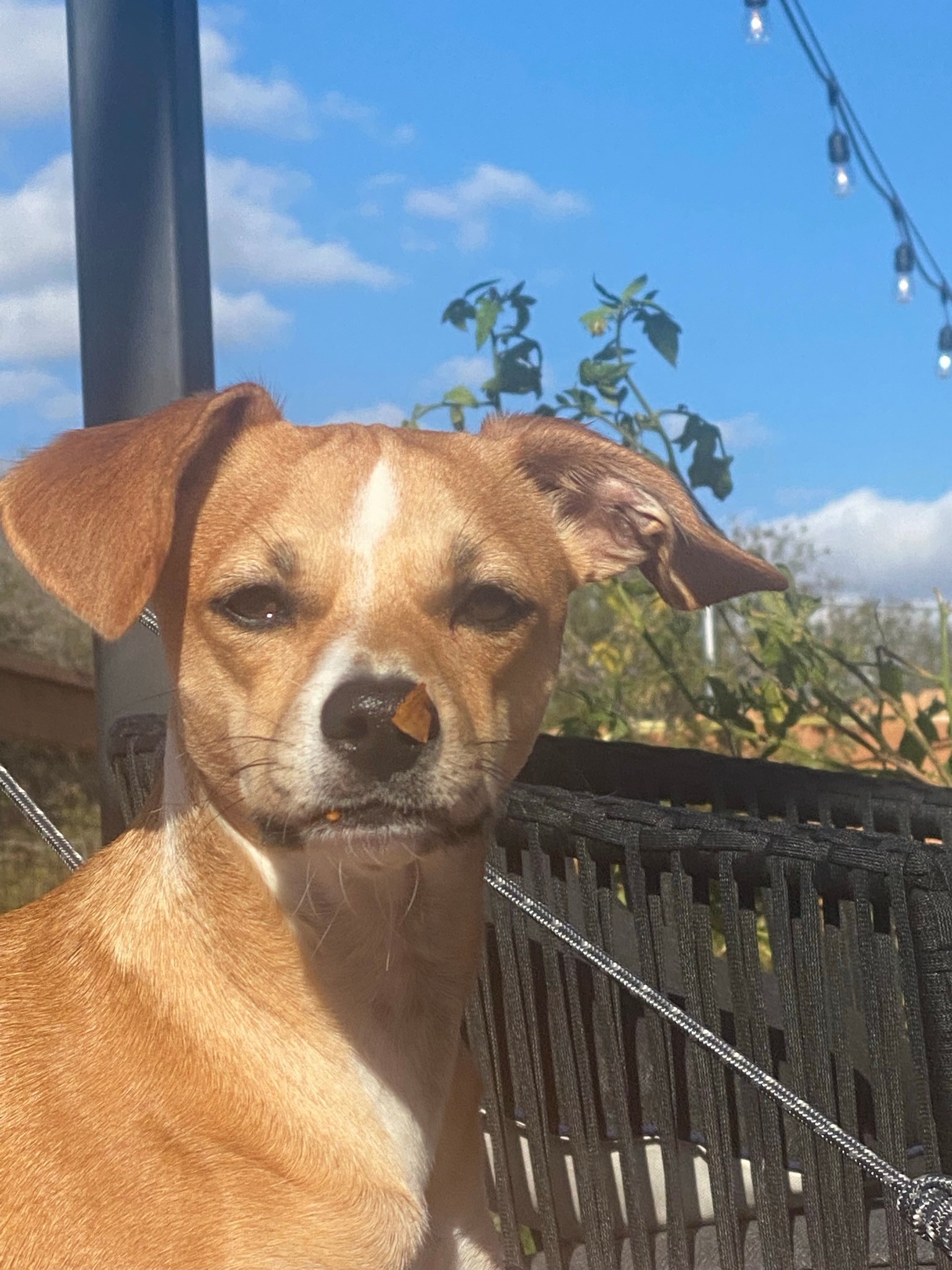
Can you share a story from your journey that illustrates your resilience?
Looking back on how the non-profit started, it was clear it was my way of processing and coping with Roland’s death. When I was forced to hold his cold, stiff, battered, dead body I was flooded with the reality that I had failed him. I was supposed to be Roland’s guardian. I was supposed to be the one who protected him from getting hurt. I thought I had been doing the right thing. I thought I was right to trust these places, everyone else seemed to trust them. The longer I sat in the stillness and the pain, the longer I kept internalizing the thought that Roland’s death was somehow my fault. I made the decision to hire this daycare. I made the decision to trust them. And let me tell you, that is a dark headspace to be in.
But quickly my grief morphed into anger. Yes I had hired them. Yes I had trusted them. But trust only goes so far when daycares or boarding facilities don’t have the necessary precautions, regulations or standards to keep dogs safe. The first four months after Roland’s death were a sobering look at who the legal system is designed to truly support. Dogs are considered property under the law, not living beings, just a “thing”, an object to be itemized and forgotten. The dog care industry, inclusive of daycares, boarding facilities, groomers, training companies, is completely unregulated and lacking any semblance of oversight, monitoring, licensing or transparency. The stylist who colors your hair has more job-specific licensing requirements than a business taking care of your dog.
On the day of Roland’s death, his daycare had not installed double gates at any of their entrances, despite being open for over a month (but remember, in Texas there are no requirements for those safety measures to be in place before operating). Roland escaped through one of those unprotected gates and was hit by a car. Our dog was killed in the care of a local business, and they suffered zero consequences. It was easier for them to ignore us and move on.
With all of this floating in my head I chose to force myself to push through the pain and the grief in the pursuit of building a way to stop this from happening again. I was (and am!) a good dog parent. I know I make decisions in their best interest. But if you don’t know what you’re getting into, how can you truly make the most informed decision? If I found myself in this nightmare, I knew there had to be others who had experienced this same tragedy. And others who would, if things didn’t change.
Was this the healthiest route for me to take for my mental health? Probably not. Has this prolonged my grieving process by forcing my body and mind to live in that moment of trauma for the last two years? Absolutely, and I’m still working through it to this day. But do I regret the approach? Not for a minute.
I knew I wouldn’t have the closure I desired so I needed something real to hold on so I could make it through those first days, weeks, months. Ensuring Roland’s spirit lived on in a way that helped save other dogs was that “something real” that helped keep me grounded.
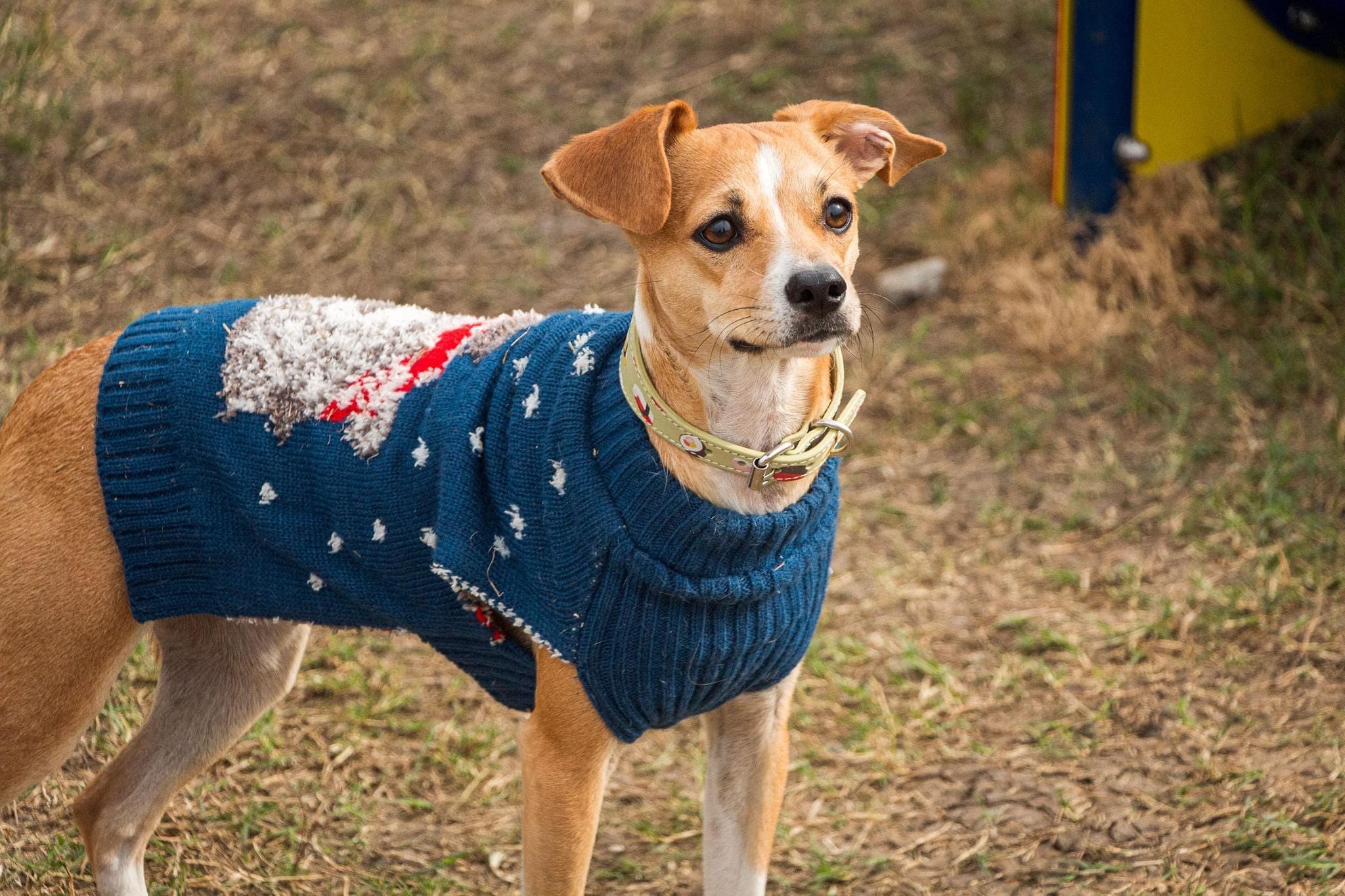
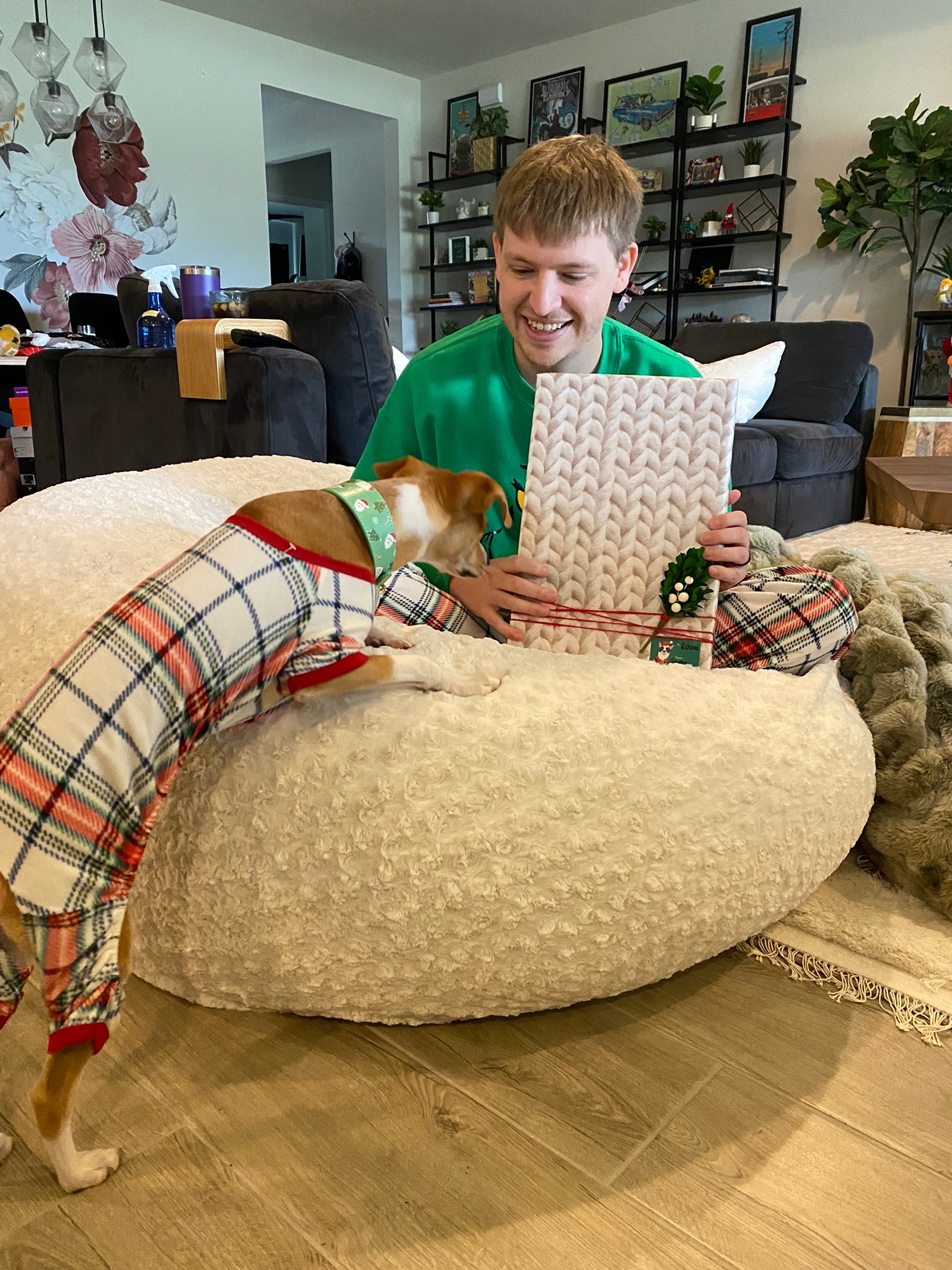
We often hear about learning lessons – but just as important is unlearning lessons. Have you ever had to unlearn a lesson?
Michael and I are so lucky to live in such a dog-friendly city like Austin. You want froyo for dogs? You can get it. Want to be surrounded by dogs while you have a beer with your friends? There are dog park bars all over the city. Don’t want your dog left at home all day while you’re at work? There are daycares in just about every neighborhood in Austin.
Any place we took Roland we were always told they would do what was best for him. That they would keep him safe. That he was their priority. That they would treat him like he was their own. And while those sentiments may have been true and said with the best of intentions at the time, good intentions aren’t enough. Loving dogs isn’t enough.
As obvious as it sounds, I had to deconstruct and reevaluate how I trusted those in the animal care industry. This meant approaching everything with a higher level of scrutiny and if I’m being completely honest, a higher level of distrust. I know it’s a jaded view to have, but that’s the cost of losing your dog and watching that daycare just continue on business as usual. To put this into perspective, it has been almost two years and we haven’t been able to trust anyone to watch or care for our dogs while we are not present.
When your dog dies in the care of a business – they are a business first and foremost and they will prioritize the business at all costs. Your dead dog just becomes another piece of collateral damage from an industry severely lacking any regulation to effectively protect our dogs.
This is a billion dollar industry that we are going up against and the lack of regulation up to this point is a feature, not a bug. It’s by design because if you apply even the smallest modicum of scrutiny, the industry would implode on itself. The lack of regulation in this space allows social media influencers to become “dog trainers” even though their training just entails yanking dogs with a prong collar to force compliance. The lack of regulation means “growing up with dogs” is enough experience for you to begin pursuing your own daycare or pet sitting endeavor.
While we continue to fight for stronger regulation, we’ve prioritized creating resources for dog parents to be stronger advocate for their dogs. So, when it comes to the care of your dogs, be picky. Push them for the answers you deserve. Advocate for what YOU expect for your dog and don’t settle. Their passion for dogs may be contagious, but if you look beneath the surface have, they done enough to keep dogs truly safe and secure in their care? If you’re trying to navigate these conversations right now, please check out our Evaluation Guides for selecting a Dog Daycare and a Dog Trainer. They’ll help arm you with the questions and topics you need to sift through the marketing and truly validate if those good intentions are backed up by action and forethought. https://www.
Contact Info:
- Website: https://www.rolandsillygoosecrew.org/
- Instagram: https://www.instagram.com/rolandssillygeese/
- Facebook: https://www.facebook.com/rolandssillygoosecrew
- Linkedin: https://www.linkedin.com/company/rolandssillygeese
- Other: https://www.bonfire.com/store/rolands-silly-goose-merch/