
We’re excited to introduce you to the always interesting and insightful Kate Nerone. We hope you’ll enjoy our conversation with Kate below.
Alright, Kate thanks for taking the time to share your stories and insights with us today. It’s easy to look at a business or industry as an outsider and assume it’s super profitable – but we’ve seen over and over again in our conversation with folks that most industries have factors that make profitability a challenge. What’s biggest challenge to profitability in your industry?
There’s a satisfying irony that colors the labor struggle for artists. During the SAG-AFTRA and Writer’s strikes, we saw just how flagrantly conglomerate entertainment companies and wealth hoarding executives attempted to cajole creatives into accepting far less than their labor is worth, for the sole and explicit purpose of exploiting as much profit for as little cost as possible. But what they failed to recognize, and hence why we found ourselves at the strike crossroads in the first place, is that the life work of artists is to tell compelling stories, to do our research and to put the right words in the right order to enact a feeling. Or in this case, a movement. Be it for a role they’re performing or a script they’re writing, writers and actors do their due diligence, and use those talents that were deemed so replaceable to execute their objectives. This fundamental misunderstanding of the value of creators is exactly what caused them to prevail in the end, that and the fact that actors and writers are social creatures at our core. We’ve been creating community out of necessity throughout their careers. Without strong social and communal bonds, we don’t have a second draft or a rehearsal process— or honestly, any money. Hence there was a force of people ready to unite and collaborate when the moment called for it. So many of my friends organized and attended picket lines. And so many of us also worked day jobs, just so that we could stay in the game as time went on. The corporations behind these projects are so quick to capitalize on that social charm and artistic skill actors and writers naturally have when it comes to marketing their films and capturing human moments on screen, but they weren’t prepared for it to be witheld from them and ultimately wielded as a tool for better conditions. Though the strikes came to some resolve, we also need to start asking ourselves as an audience what we want to pay for– and the answer might be a fund towards an independent film or webseries created by artists that are connected to the audience in a way that major entertainment corporations will never be. It can also still be that we want to pay for our streaming services to see the amazing work they often do feature, but that must come with a reverence for the creatives responsible for infusing those shows and movies with truth and poignance. The biggest challenge to profitability isn’t a lack of skill and it’s not that audiences want the fastest, showiest content. It’s that the powers gatekeeping these artists are underestimating us and trying to get away with it. And we as artists have to build that relationship with our audience by telling truthful, well-structured stories so that our audience trusts us when we need them to have our backs.
Great, appreciate you sharing that with us. Before we ask you to share more of your insights, can you take a moment to introduce yourself and how you got to where you are today to our readers.
I’m a writer and an actor from the San Francisco Bay Area. I cross through many genres with my writing: personal essays, poetry, fiction, screenplays, stand-up sets and whatever else I feel is the best medium to tell a story. I have a substack, attend as many in-person readings as possible and have many, many scribbly journals collecting in piles next to my nightstand. I am screen and stage theatrical actor and I also do VO work. I love rehearsing, discussing my characters and capturing emotional truths any way I can. Acting is a way to feel the limitations of your own voice, body and mind momentarily lift and change. Writing is a way to create the terms of that lift and change. My favorite projects are when I get to act in parts I’ve written for myself. I’ve recently began directing as well and have done short films and music videos. I try to always be “in the way” of storytelling. Exploring the different avenues through which I can do that is one of the most exciting parts of my work, and it’s also one of the more chaotic parts. For my day job I copywrite director’s treatments which involves collaborating with directors and production companies to pitch a director’s vision for anything from a music video to a commercial to a narrative film. It’s a satisfyingly challenging often very fun process that I feel lucky to do. It allows me to meet and work with amazing, accomplished artists and filmmakers while keeping my creative muscle in shape.
What’s the most rewarding aspect of being a creative in your experience?
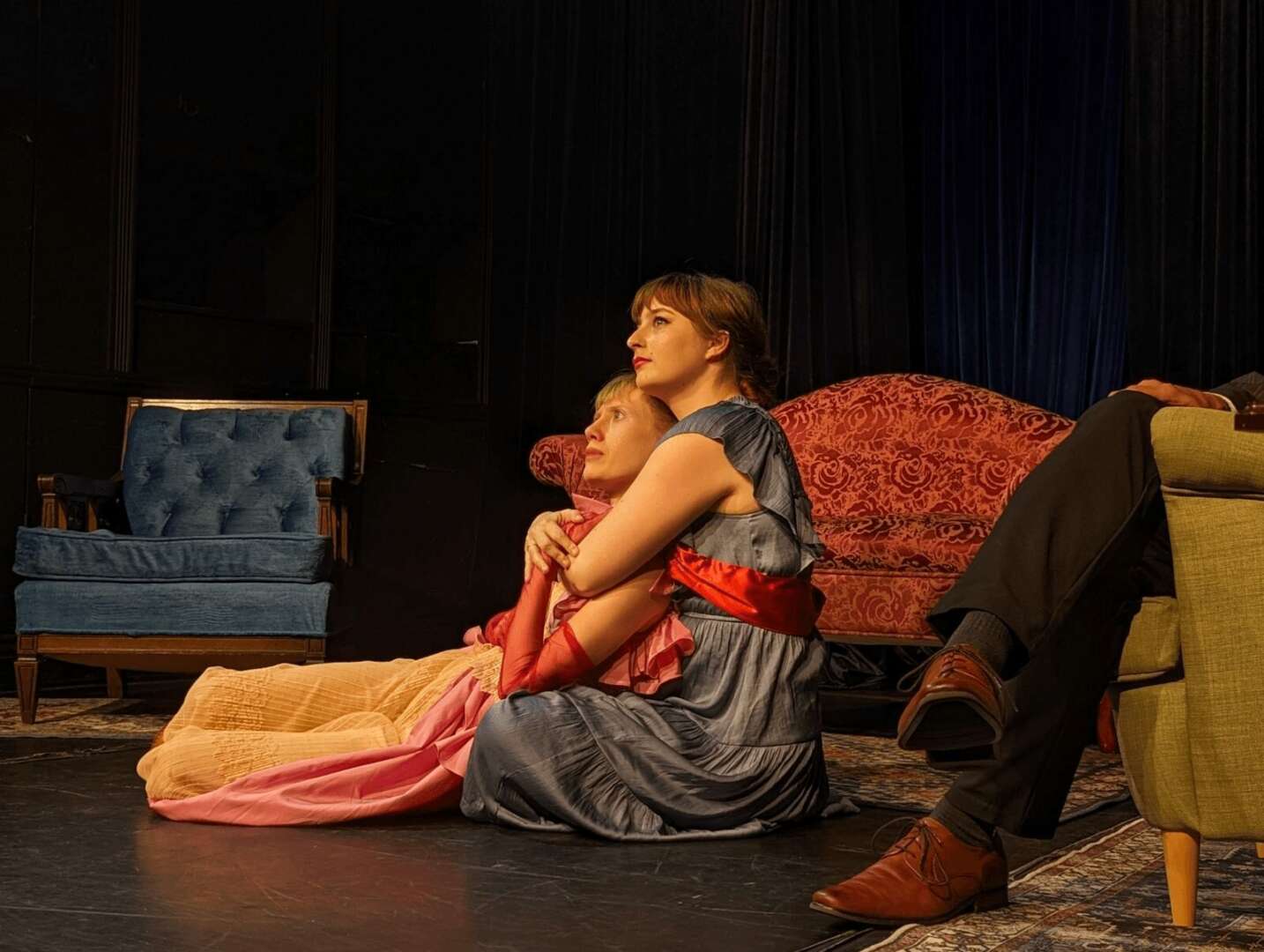
So much of being a creative nowadays is about having a full time marketing job on your own behalf. It’s constant networking, promotion, cold emails, newsletters, social media posts, events and curation of an outward image. All of this allegedly in the name of reaching your audience and being able to sustain a life with your art. It’s dizzying, often silly and disconnected from why you started this work in the first place. That’s why the best moments are always when someone unexpectedly reaches out to say that they read your piece or saw your play and it resonated with them. That’s the connective element that I think all artists are after, to feel less alone. I always assume that the people reading my work are thinking ‘This girl’s a freak! How embarrassing that she put this all out there for the world to see’. But then someone will tell me that they haven’t ever liked seeing plays but watching me pretend to be a scorned, closeted lesbian passing eternity in hell was what renewed their love of live theater. Or I’ll read a short story at an event that’s loosely based on catching an STI and afterwards the bartender will whisper “same girl” as she slides me my drink. In moments like that I feel finally arrived.
Do you think there is something that non-creatives might struggle to understand about your journey as a creative? Maybe you can shed some light?
I think my family is still waiting for me to “make it” or to have steady income and constant work. And I don’t hold it against them! It’s a whole different beast, being a creative professional, and makers for success in a creative field can be understandably extremely illegible to those outside of it. I think for the black sheep artsy kids in the family who aren’t surrounded by others that share their passions or craft, it can be hard to shed that little chip on your shoulder that says you have to prove yourself to everyone. Sometimes you enter into this kind of negotiation with your soul that’s terribly painful, just wanting to be different and to want different things because this work is so challenging and the social dynamics of it can be so isolating. I think there’s a lot of artists who wish they just wanted to be like, dentists or something normal. I think what non-creatives have to understand is that being a professional artist of any kind is like ten jobs at once that you sold your soul to and none of them pay very well. Until finally, hopefully, mercifully, eventually, blessedly one does. And then maybe you’ll finally be the star of thanksgiving.
Contact Info:
- Website: https://www.katenerone.com/
- Instagram: https://www.instagram.com/kate_nerone/
- Linkedin: https://www.linkedin.com/in/kate-nerone-99b571178/
- Twitter: https://x.com/k_nerone