

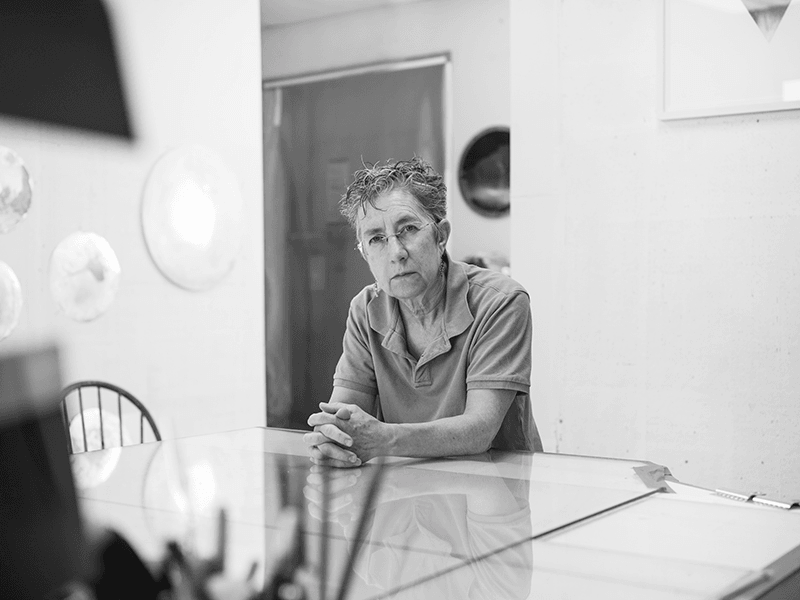

We were lucky to catch up with Karen Fitzgerald recently and have shared our conversation below.
Hi Karen, thanks for joining us today. Going back to the beginning – how did you come up with the idea in the first place?
I knew from a young age that I would be an artist.
During undergraduate school, I had some wonderful examples around me. Classes were challenging in the best possible way, and many things were gleaned outside of the school setting. I remember having a conversation with my painting teacher about his taxes. He patiently explained that I would need to set up my own business and pay taxes every year.
That began a determination to organize my studio practice in this way. The more I accomplished with this, the more I thought about how to run the studio as a small business.
As soon as I recognized that I was my own best salesperson, that’s when my sales took off.
I have never looked back!
As always, we appreciate you sharing your insights and we’ve got a few more questions for you, but before we get to all of that can you take a minute to introduce yourself and give our readers some of your back background and context?
The arts industry has many challenges. It suffers with a lack of transparency, which creates confusion and a kind of gatekeeping that intimidates many.
Selling artwork is a process that builds relationship. It expands community. While one buys an object, one is also buying something quite expanded beyond objecthood. Visual art is thought set down. Akin to a writer’s work, visual art holds ideas, expression, sometimes whole philosophies. The visual language demands a kind of attention different from words.
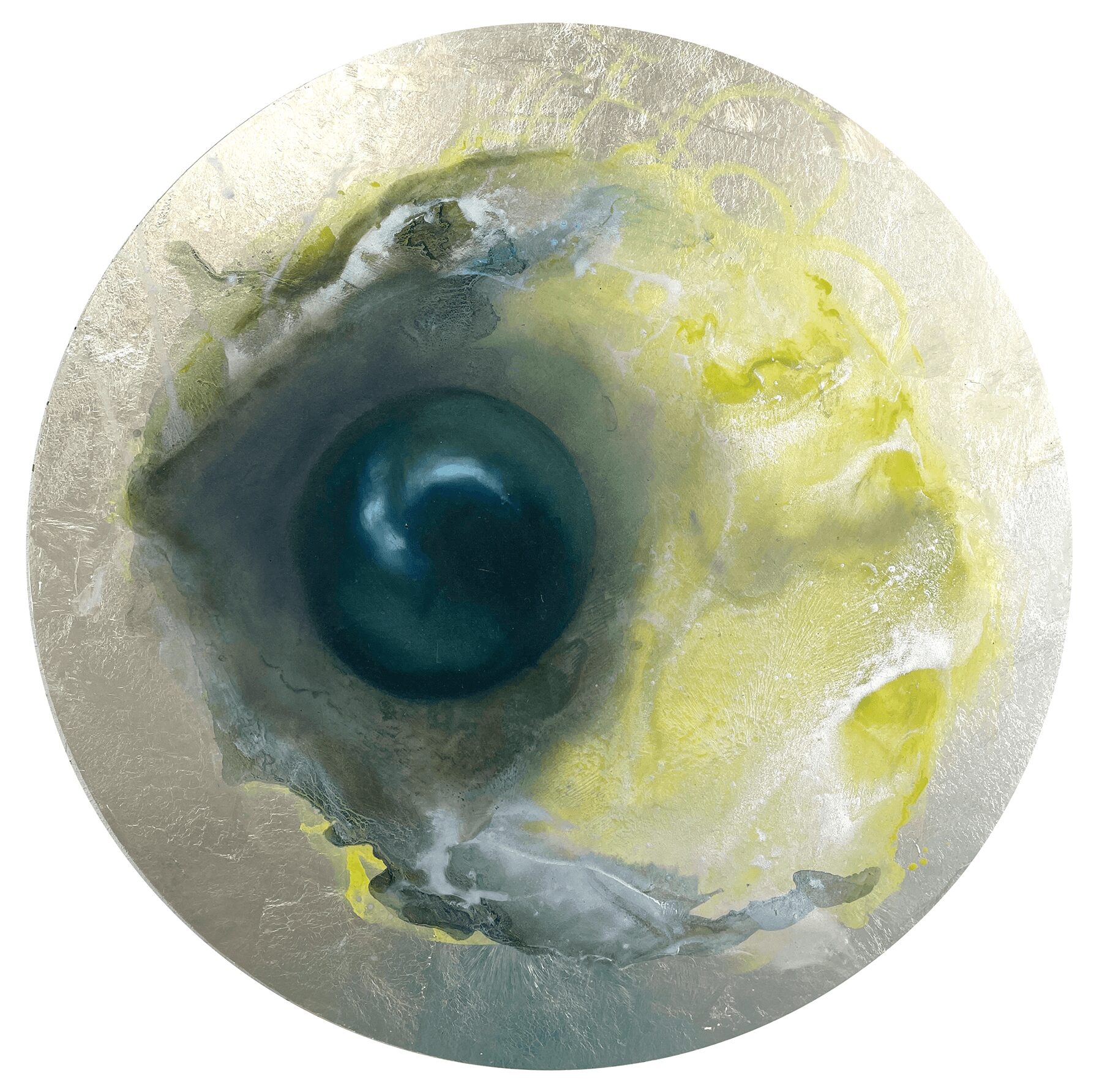
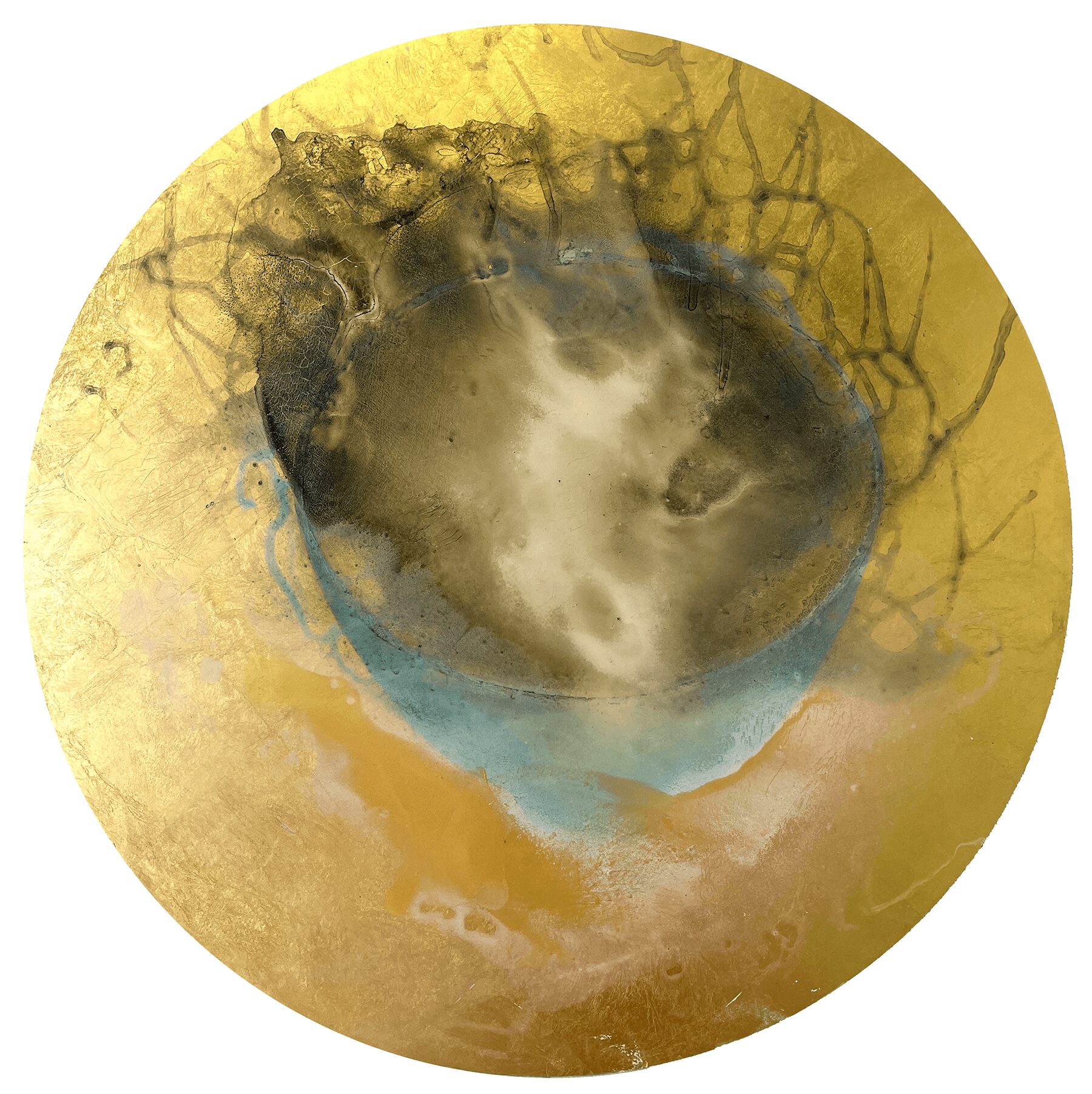
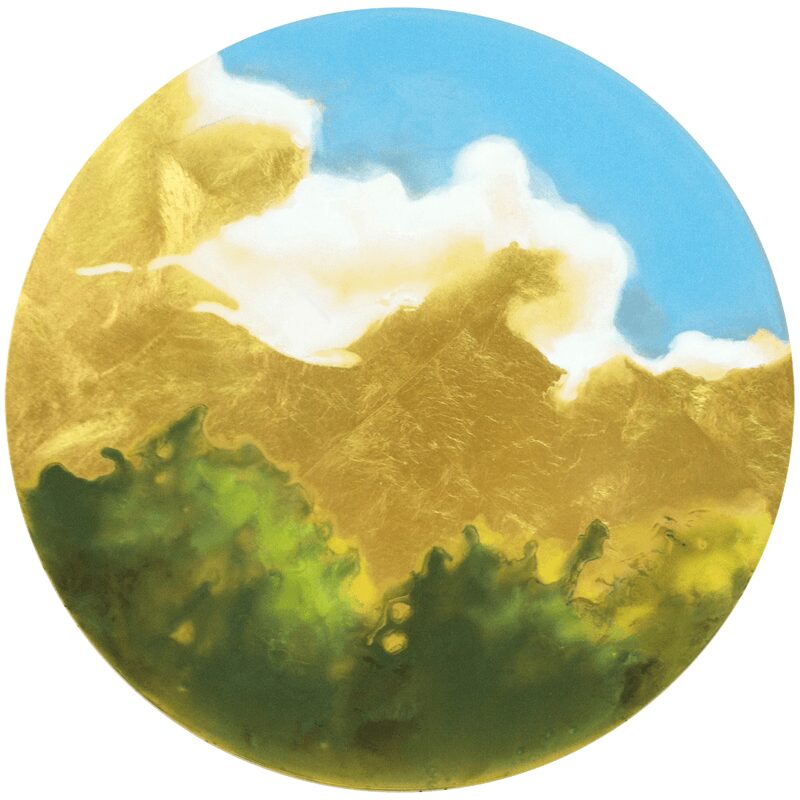
I am interested in helping people understand what the visual language holds: its multiple ways to be read and understood; it conjures an interpretive richness that is expansive. Its capacity to connect us beyond time boundaries is nothing short of miraculous. For more than 30 years I’ve been creating tondo (round) paintings. This form is essential to what I want my work to communicate. We are all energy; it is constant flux. It is sacred.
In 2006 I began to use gold leaf in my work. The dynamism of this surface is crucial to my expression of flux. Going back to old civilizations, the use of gold marked something as sacred. We see it in ancient funerary practices, and in the written word. The gilded letters of hand-made books attest to this understanding of gold.
Growing up in the natural world (I was raised rural, on a dairy farm in central Wisconsin) I sensed the unity present. I felt that everything was sacred, though I did not have language to express these ideas. This is where all my work begins, with a basic understanding of the metaphysical nature of our world.
What’s the most rewarding aspect of being a creative in your experience?
We all have both interior and exterior lives. The interior one parses our understanding of the world and ourselves within it. This interior life thinks in ideas, perceptions, determinations and relationships.
Our exterior life connects us to those around us, and to the natural kingdoms.
My interior and exterior lives are connected and activated via the visual language. My thoughts and ideas become form in the paintings I create. Without this connective process, I unravel. It is a cord that grounds me.
When I am able to have a conversation with someone about the ideas that generated a painting, I feel something come full circle. Many times I’ve created something without a clarity of what the endpoint would be. My will is not all powerful when I’m painting. This is another rewarding aspect of being in the studio. There is a stream – a wide, deep river that contains countless voices, ideas, energies, beings. When I am working, I have access to this stream. It enters my space when the door is open. When I am working, I become a part of this stream.
Learning and unlearning are both critical parts of growth – can you share a story of a time when you had to unlearn a lesson?
When I was in school we were inculcated with a view that the systems of the art industry were absolute. No one questioned them. The way gallerists treated their artists, the way access to the market was carefully controlled, it’s just the way things were.
As I grew professionally, I began to see this system as corrupt, inefficient and toxic. Especially for women, the system of gallery representation was mostly out of reach. I had too many experiences of being diminished, gas-lit, and denied.
Did this mean my work was bad; unfit for the market?
No.
I decided I needed to market my work on my own, outside of galleries. I developed many ways of doing that, while continuing to present my work professionally. I worked collaboratively and founded a collective.
Over time, I thought through what my choices implied. There are many good gallerists in this world. Yet equity and equality elude this system because it is built on an exceptionalism that money commands. In place of that, I am interested in a multiplicity of voices, the rich textures of the visual language that exclusion will never capture.
Contact Info:
- Website: https://fitzgeraldart.com/
- Instagram: @kbfitzgeraldart
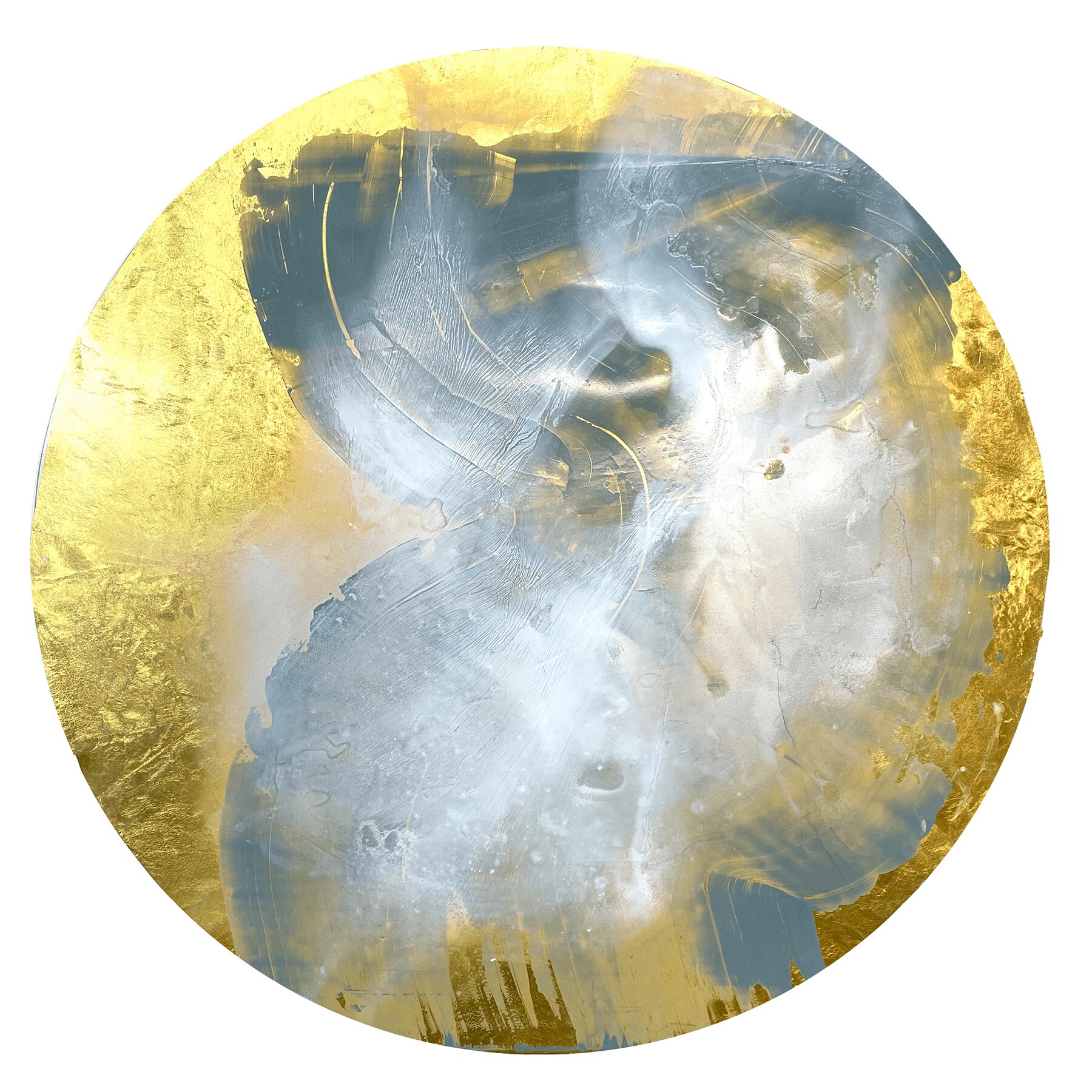
Image Credits
Portrait image courtesy of Ania Fedisz. Artwork images courtesy of the artist.