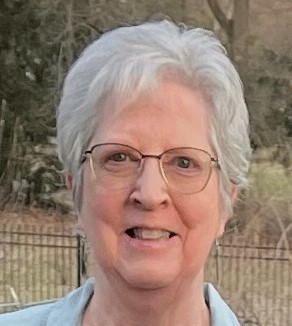

Alright – so today we’ve got the honor of introducing you to Karen Black. We think you’ll enjoy our conversation, we’ve shared it below.
Hi Karen, thanks for joining us today. What do you think matters most in terms of achieving success?
I believe learning from the experience of others is one of the first steps toward any successful venture. Armed with knowledge, having confidence in your ability to achieve your goal is another. But a passion for your endeavor and perseverance are most important.
My first dog was a German Shepherd. I loved training him and became seriously involved in dog training. After joining a dog club, I met a trainer willing to mentor me. Soon afterward, I got another dog. She became my first champion and the foundation for a breeding program for my kennel. Over the next ten years, I devoted my energy to German Shepherd dogs. With a laser focus on the goal, I absorbed knowledge from experienced trainers, took courses, and read dozens of books on the subject. Although there were ups and downs, my breeding program produced half a dozen more champions, a select champion, and a myriad of obedience titles. Determination resulted in dogs who conformed to the breed standard and were healthy, motivated, and highly trainable.
When a couple of friends and I got together and purchased a thoroughbred racehorse, our goals were to have fun, find our way into the winner’s circle, and make a little money, or at least not lose a lot. Our first horse managed a few decent races at the local track, but overall, he wasn’t a successful competitor. Over several years, I owned five more thoroughbreds, all in partnership. Different trainers, jockey changes, training routines, and racing schedules impacted the horses and many times it was frustrating. But eventually, we had our share of winners, including some who won at the acclaimed Saratoga Race Course. Winning at Saratoga had been a dream of mine. Despite some difficult years, staying the course resulted in several trips to the winners’ circle and enough money to pay for some expenses.
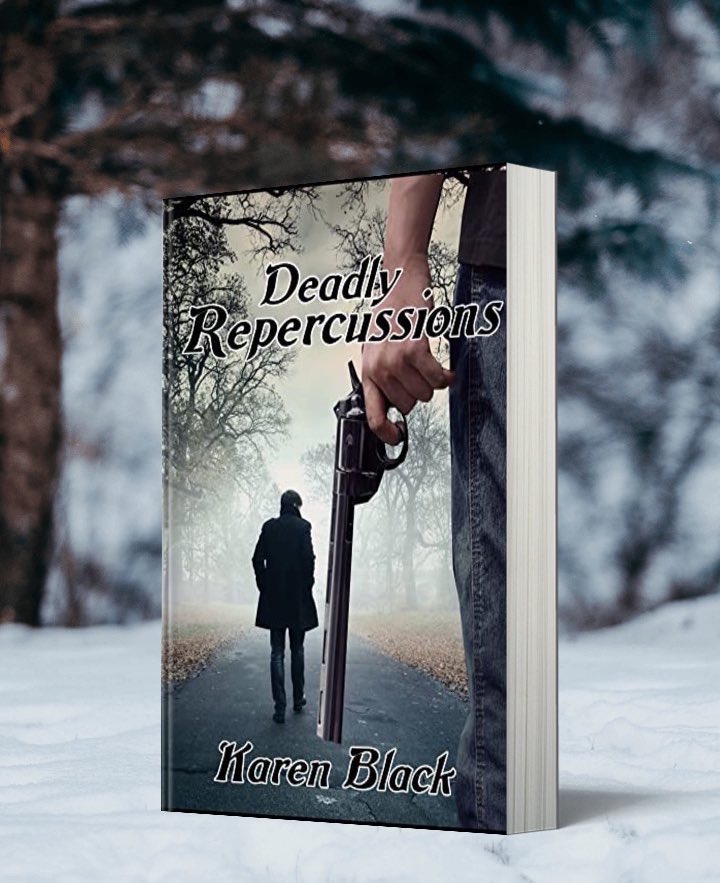
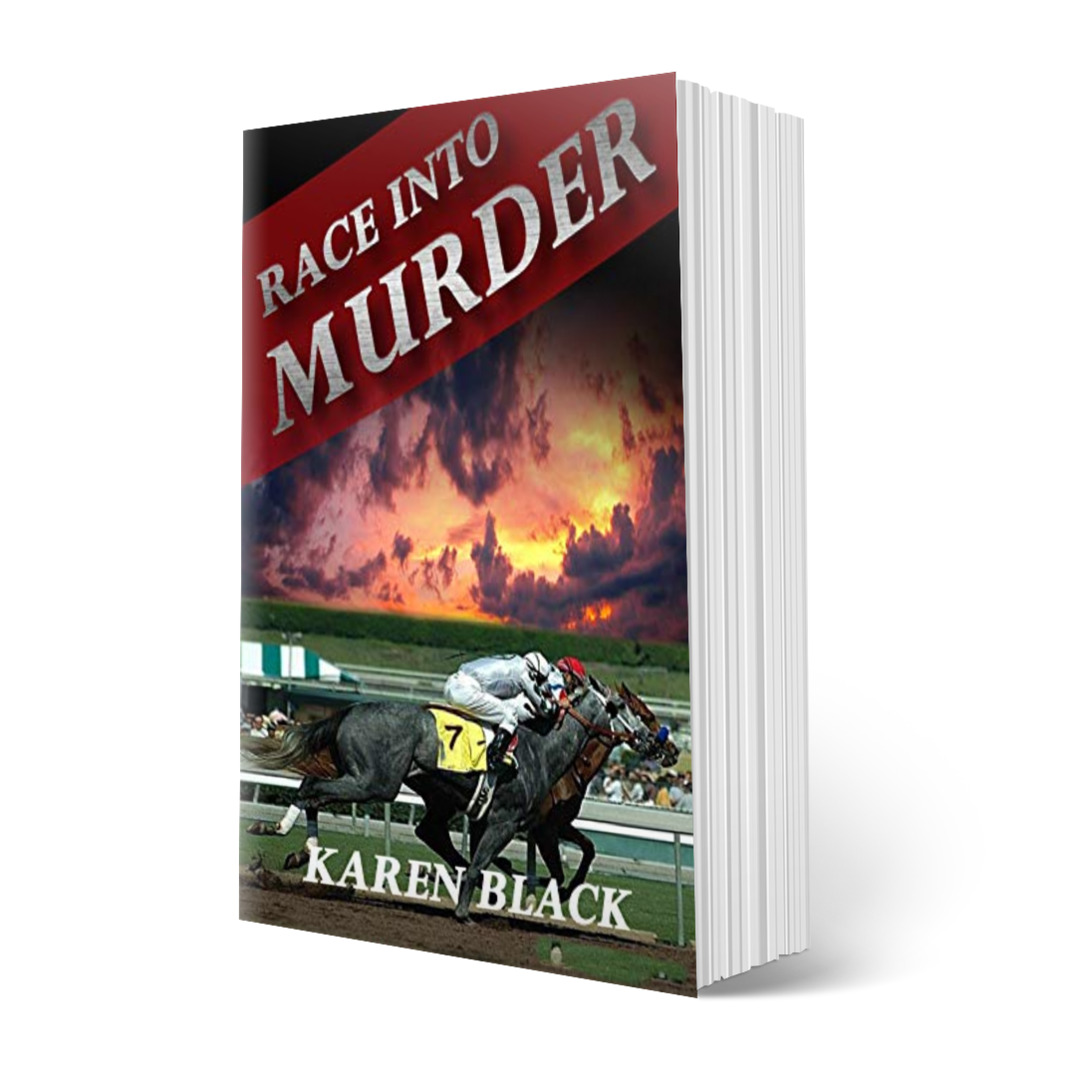
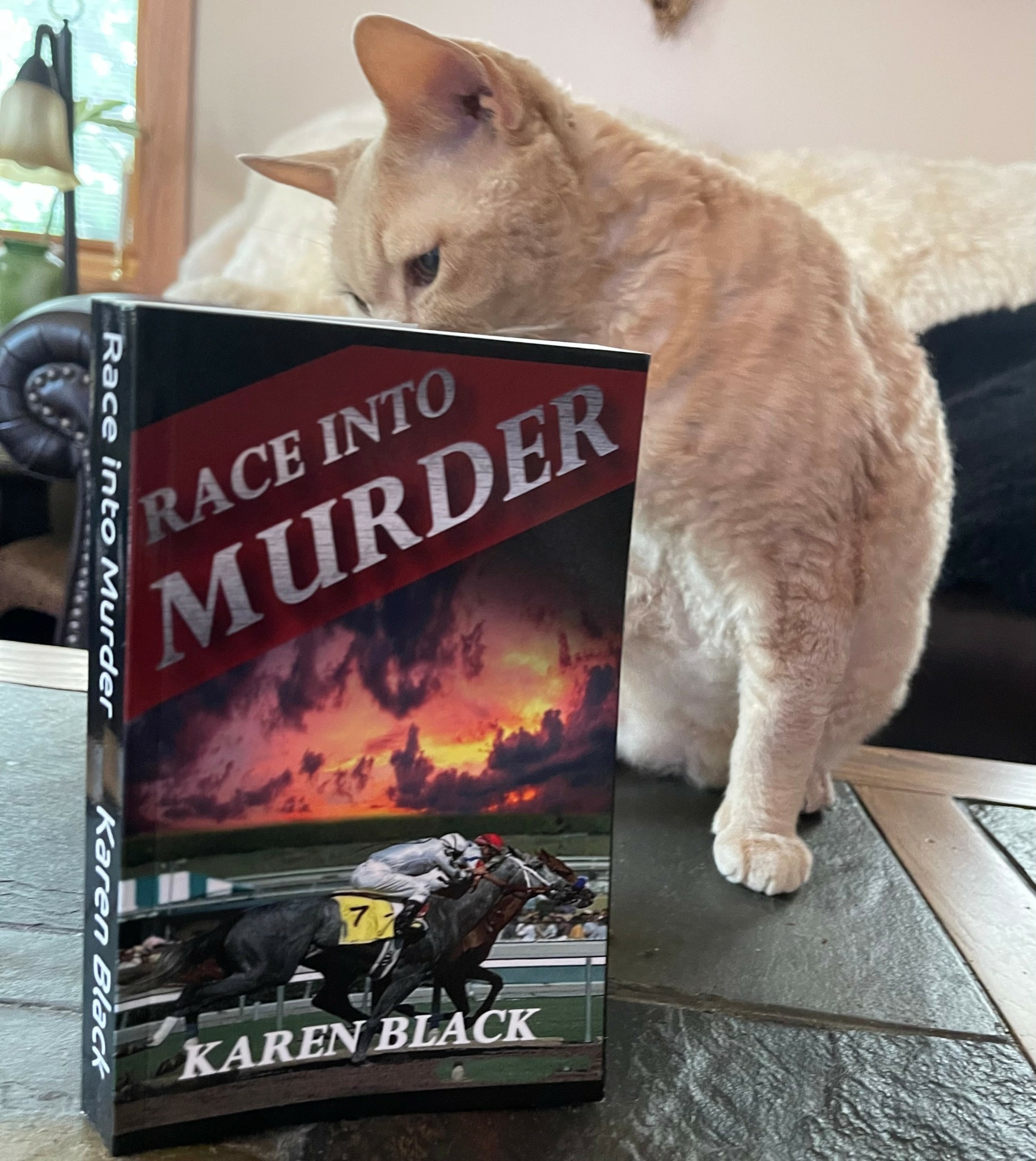
Stories by Karen is my third endeavor. I’ve drawn on what I’d learned from the first two ventures to bolster the effort. Using my experiences in horse racing, I wrote “Race into Murder.” Set at a racetrack, it delves into what goes on behind the scenes and introduces the devotion of horsemen whose lives revolve around racing. A primary character in “Deadly Repercussions” is a dog trainer. His German Shepherd also plays a major role in the plot. Although I don’t have any direct experience with pixies or elves, I’m hoping “Goldfield Forest” will make readers believe it’s possible.

Karen, before we move on to more of these sorts of questions, can you take some time to bring our readers up to speed on you and what you do?
My journey toward a writing career has been more of an evolution than a conscious decision. As a child, I created stories before I could write and I had a vivid imagination. Learning to read “Dick and Jane,” I was Jane, running with my dog, Spot. The day I got my first library card was cause for celebration and the library became one of my favorite places. Although a voracious reader, it wasn’t until I retired that I thought about writing a novel.
A fan of the late Dick Francis, I planned to write a mystery set at a thoroughbred racetrack. Horse racing is exciting, and watching your horse thunder down the stretch is thrilling. I wanted to put that excitement into a book.
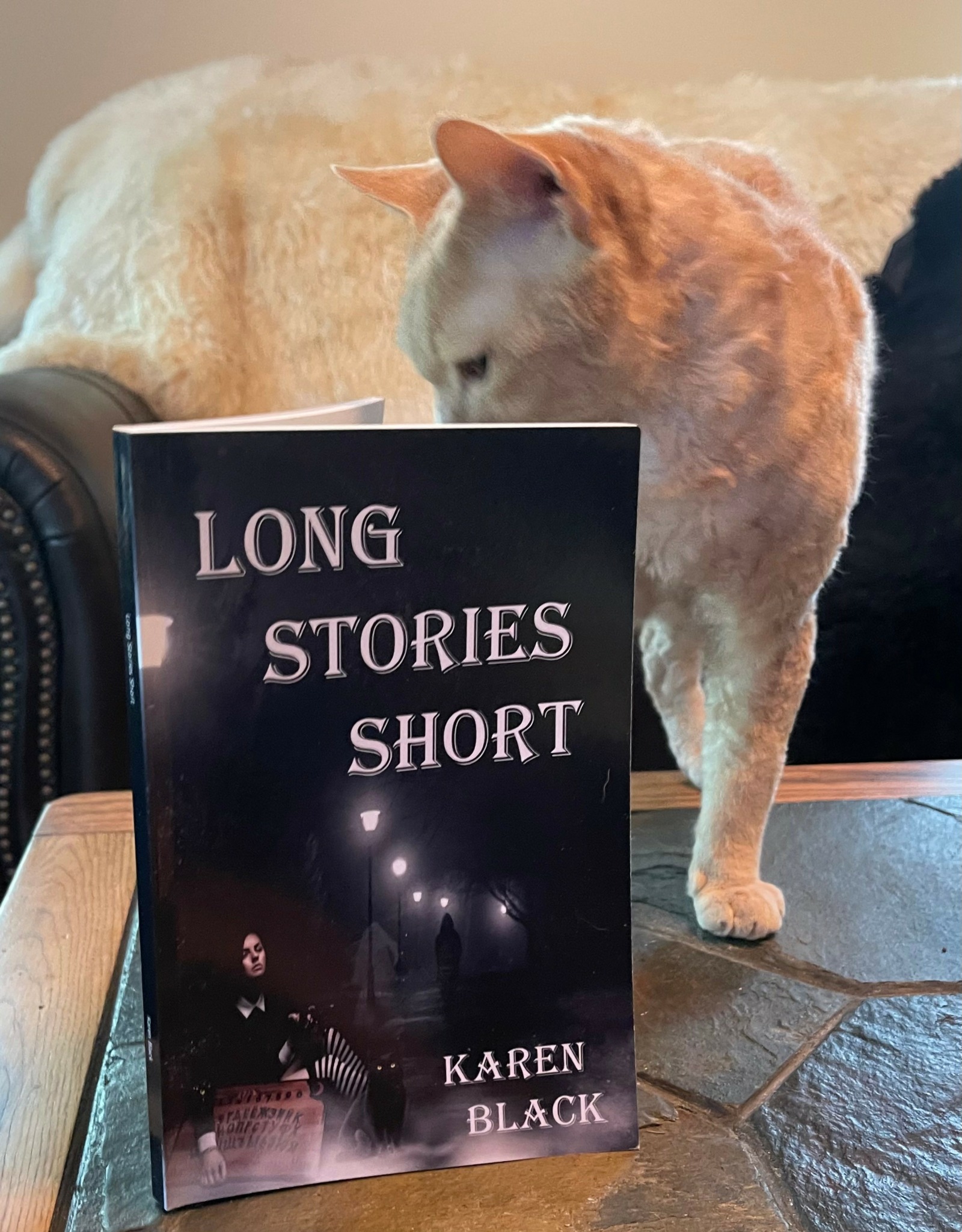
A friend had published a couple of anthologies, so I asked for his help to get started. He suggested I work on a few short stories before diving into a novel and invited me to submit a story for his upcoming collection. In 2012, “Ghostland” was published, and it included my first story, “Aftermath.” But I’d made little progress on my novel. As I struggled to put my racetrack mystery together, I learned writing a book wasn’t as easy as I’d expected. I set the manuscript aside, and for the next two years, wrote short stories. In 2014, I published them in “Long Stories Short.” Finally ready to give the novel my full attention, “Race into Murder” was published later that year.
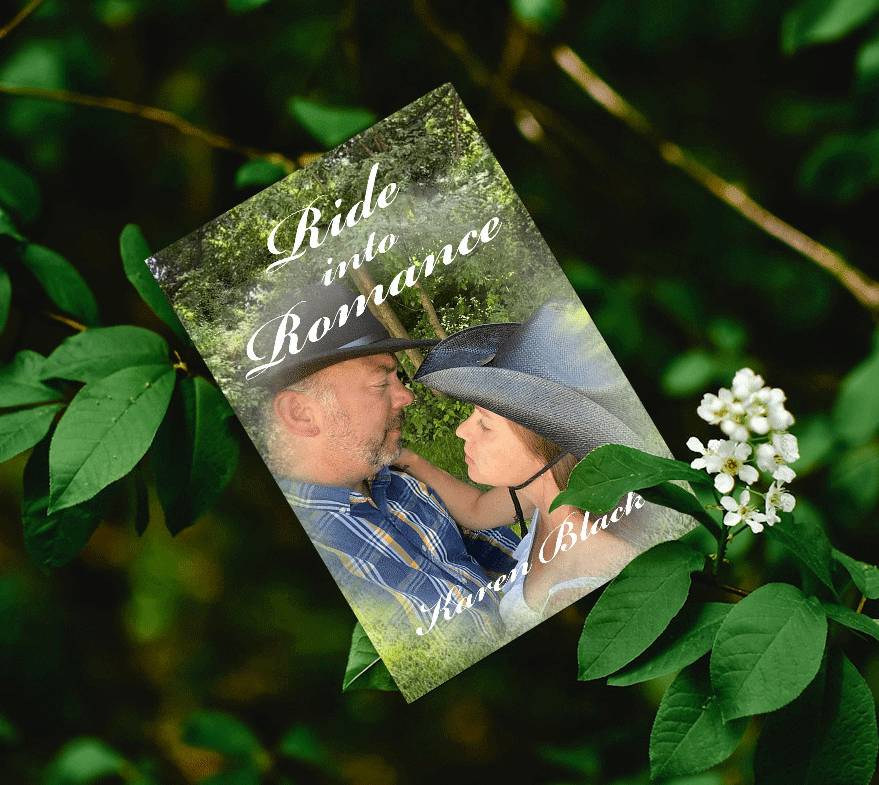
During the next few years, I wrote short stories and novelettes. Writing was a hobby. I’d complete a few paragraphs or a chapter at a time. It wasn’t until 2021, after I wrote “Close Your Eyes and They’re Gone,” that I began to write seriously. That year I also accepted the position as editor for “The Pipeline,” an online literary magazine published by Rave Reviews Book Club. After finishing a suspense mystery, “Deadly Repercussions,” I began writing “Ride into Romance,” a novel set at the same racetrack as in “Race into Murder,” which was chosen as a 2024 Readers’ Favorite Award winner. Now, I write full-time. “Goldfield Forest,” my first fantasy novel, is a 2024 release. A sequel, “Dancing Valley,” is underway.
I want my books to impact readers beyond simple entertainment. I’d like them to think about how they’d react to a moral dilemma if that’s where the plot takes them. If the situation arose, would they choose loyalty or justice over legality? Can they imagine seeing an elf or understanding their pet’s thoughts? How would they react? Could the reader forgive a romantic partner for a crushing blow? My goal is to write something the reader will remember. Although sometimes subtle, regardless of the genre, my storylines have an underlying theme of good prevailing over evil. Overall, I believe that’s true, even if it occasionally takes a small miracle to make it happen.
What do you find most rewarding about being a creative?
I find traveling from my idea for a novel to the finished work exhilarating. Entertaining a reader is what I strive for, but I also want the story to affect them. Creating a realm where the reader becomes absorbed is my goal. I am always delighted when someone enjoys something I’ve written.

What’s a lesson you had to unlearn and what’s the backstory?
When I began writing fiction, one of my biggest hurdles was moving away from the formality of legalese. For a few years, I worked as a legal secretary. Anyone who has read a legal document can attest to the formality of the language, and writing it became second nature.
I left the law firm to focus on my training and breeding kennel, which I managed until I was offered a position with AFSCME, the Pennsylvania public employee union. Writing policies, agreements, and contract proposals was a major part of my responsibility. The writing style I’d learned and used over the years was nothing like the picturesque language of a well-done novel.
In 2010, I retired and planned to write a book. But it took eight years to finish. Although I didn’t immediately recognize it, a large part of the reason for my dissatisfaction with the first couple of drafts was the lack of detail. Transitioning from writing language that included nothing but facts to painting a picture complete with atmosphere and emotion was an enormous change. It took a while to master, but now my books are recognized for their descriptive settings and character-driven plots. Unlearning can be a good thing.
Contact Info:
- Website: https://www.storiesbykaren.org
- Instagram: https://instagram.com/stories_by_karen?igshid=YmMyMTA2M2Y=
- Facebook: https://www.facebook.com/StoriesbyKaren/
- Twitter: https://twitter.com/KarensStories
- Youtube: https://www.youtube.com/channel/UCJ5vS4zSLUYI1AcRipYdXoQ
- Other: Amazon: http://www.amazon.com/author/karen.black