


We’re excited to introduce you to the always interesting and insightful Julia Gitis. We hope you’ll enjoy our conversation with Julia below.
Alright, Julia thanks for taking the time to share your stories and insights with us today. What’s the backstory behind how you came up with the idea for your business?
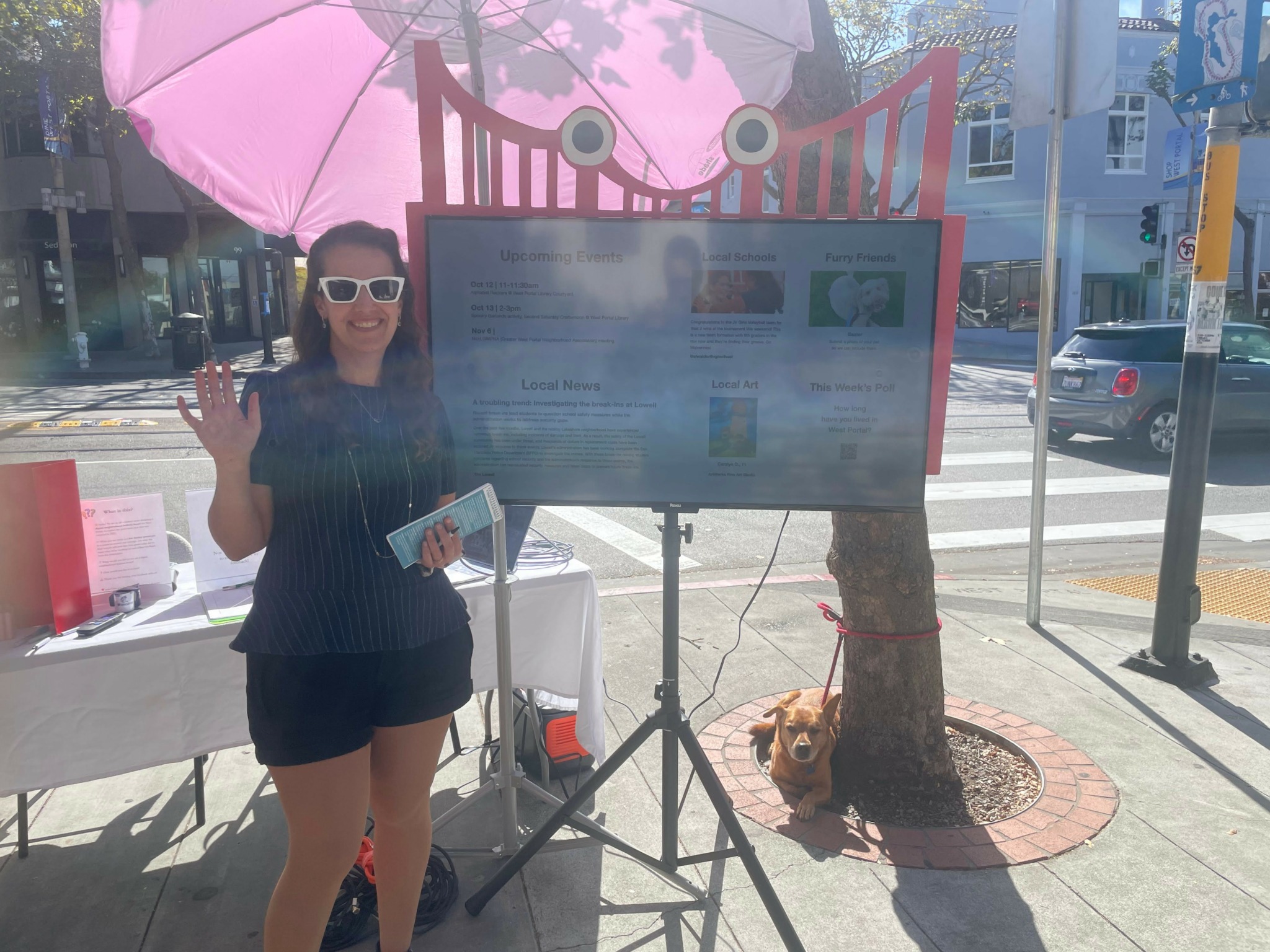
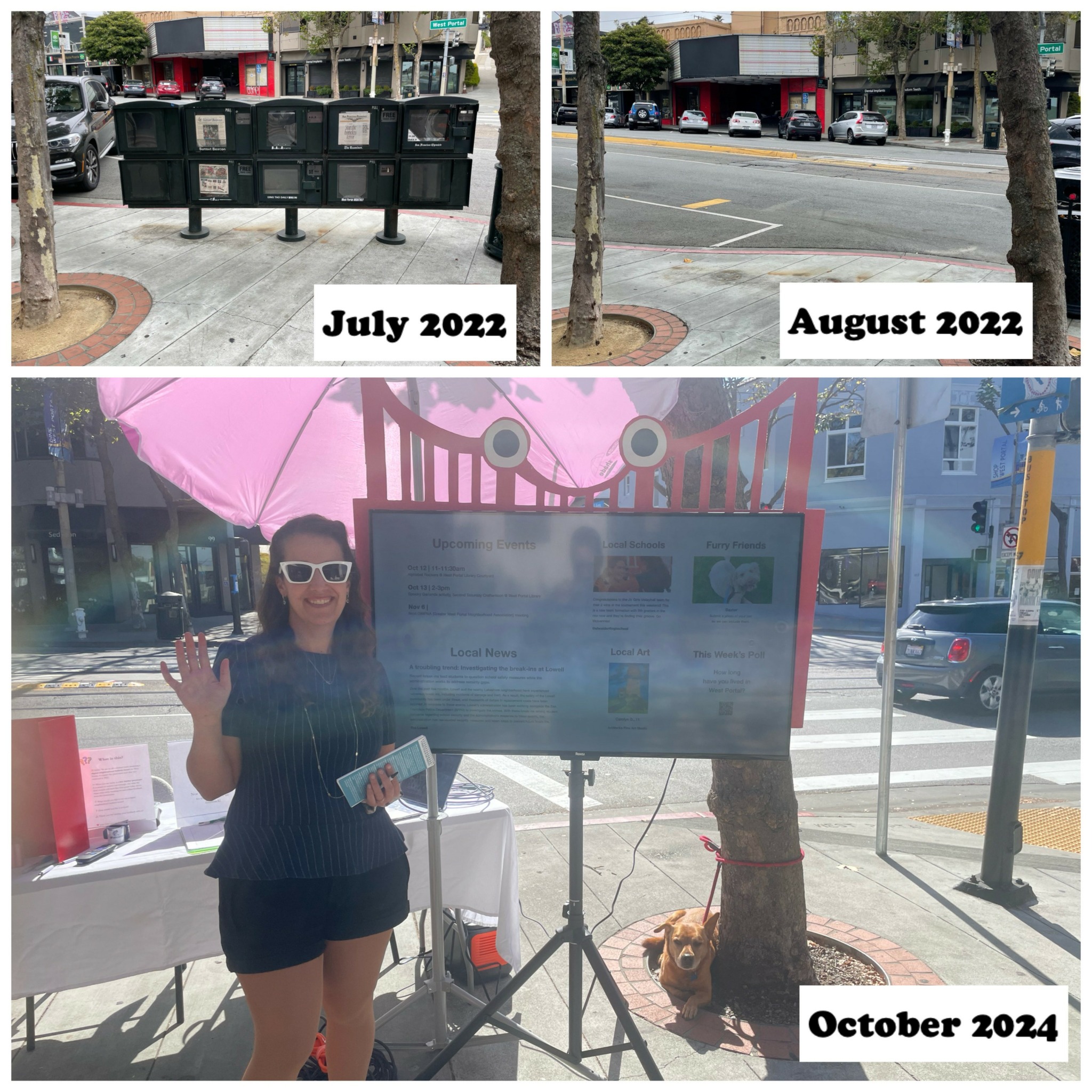
In summer 2022, I walked past the print news rack in my San Francisco neighborhood and saw it collecting dust. I thought “Oh, this is sad. Someone should really modernize this and create a digital version.” The next day, I walked by and the news rack was gone! What happened? I started to research and talk to the people who were most impacted by the removal of print news racks across the city. Juan Gonzales, founder of bilingual paper El Tecolote and journalism department chair at City College, called the sudden removal of news racks “a tragic loss for the general public.” I felt even more sure that a digital version that better served the community was the right way to go. I created a cardboard prototype, partnered with a Youth Commissioner from the Bayview, and together we started Neighborhood Feedback Days.
Julia, love having you share your insights with us. Before we ask you more questions, maybe you can take a moment to introduce yourself to our readers who might have missed our earlier conversations?
My background is in education and technology. I started out my career as a classroom teacher and later transitioned to product management. As a product manager, I worked with designers and engineers to launch new software tools. I worked at ed tech companies like Khan Academy and was Head of Product at a climate tech startup called Dashboard.Earth.
After the 2016 election I began to pay more attention to local news. I joined the board of the San Francisco Press Club and started getting to know local reporters and publishers in San Francisco. I realized that every local news outlet in SF– whether it’s a nonprofit or a for-profit– is struggling to grow its audience. At the same time, talking to everyday San Francisco residents, many people don’t feel connected to each other, their neighborhood, or the city as a whole.
I started Community News Lab to experiment with ways to bridge the divide between local news outlets and everyday San Francisco residents. I’m really proud of our first experiment, which puts local news and community information in public spaces in the city.
Have you ever had to pivot?
When I first started doing Neighborhood Feedback Days with my cardboard prototype, I basically replicated the print news rack I was trying to modernize. The print news racks only carried news, so I printed out a bunch of local news articles from local publications in San Francisco and stuck them to a piece of cardboard. We quickly learned that we needed to pivot.
At our first Neighborhood Feedback Day in San Francisco, when I showed people the cardboard prototype, the response across the board was “this is nice, but can you also add…” and they started listing a lot of other things they ultimately wanted to see on the display. Some of the most common requests were: art from local artists, community resources, and neighborhood pets (the number of people who asked to see pictures of cats and dogs truly surprised me).
The next few iterations of the prototype have all been more focused on a variety of content that meets the needs of whichever neighborhood we’re in, and it’s been validating to see the much more positive response.
What else should we know about how you took your side hustle and scaled it up into what it is today?
I recently quit my day job so I could focus on Community News Lab full time. After working on it on the side for a couple years, I realized I needed to give it my full attention in order to see it succeed.
There are many complex elements of the work, including content management, software design, hardware design, and of course, city permitting and approvals. The key milestone I’m focused on is getting city approval for a pilot kiosk to be drilled into a public sidewalk in San Francisco. I’m intent on launching one pilot, and we can scale from there.
The reason I felt confident enough to quit my job is because of the business model. Infrastructure on public sidewalks is dominated by billion-dollar ad companies. In New York City, a company called Intersection installed 9000 LinkNYC kiosks to display ads. In San Francisco, Clear Channel operates most of our public displays like billboards and bus stops. I can access the same revenue sources as a global advertiser does, and using a nonprofit business model, pass revenue back to local news outlets and community organizations. Kiosks we install in the Bayview can financially support partners like SF Bay View National Black Newspaper. Kiosks we install in the Mission can financially support partners like El Tecolote. Using the same business model as a global advertiser, while strengthening local institutions in San Francisco, is very exciting to me.
Contact Info:
- Instagram: https://www.instagram.com/communitynewslab