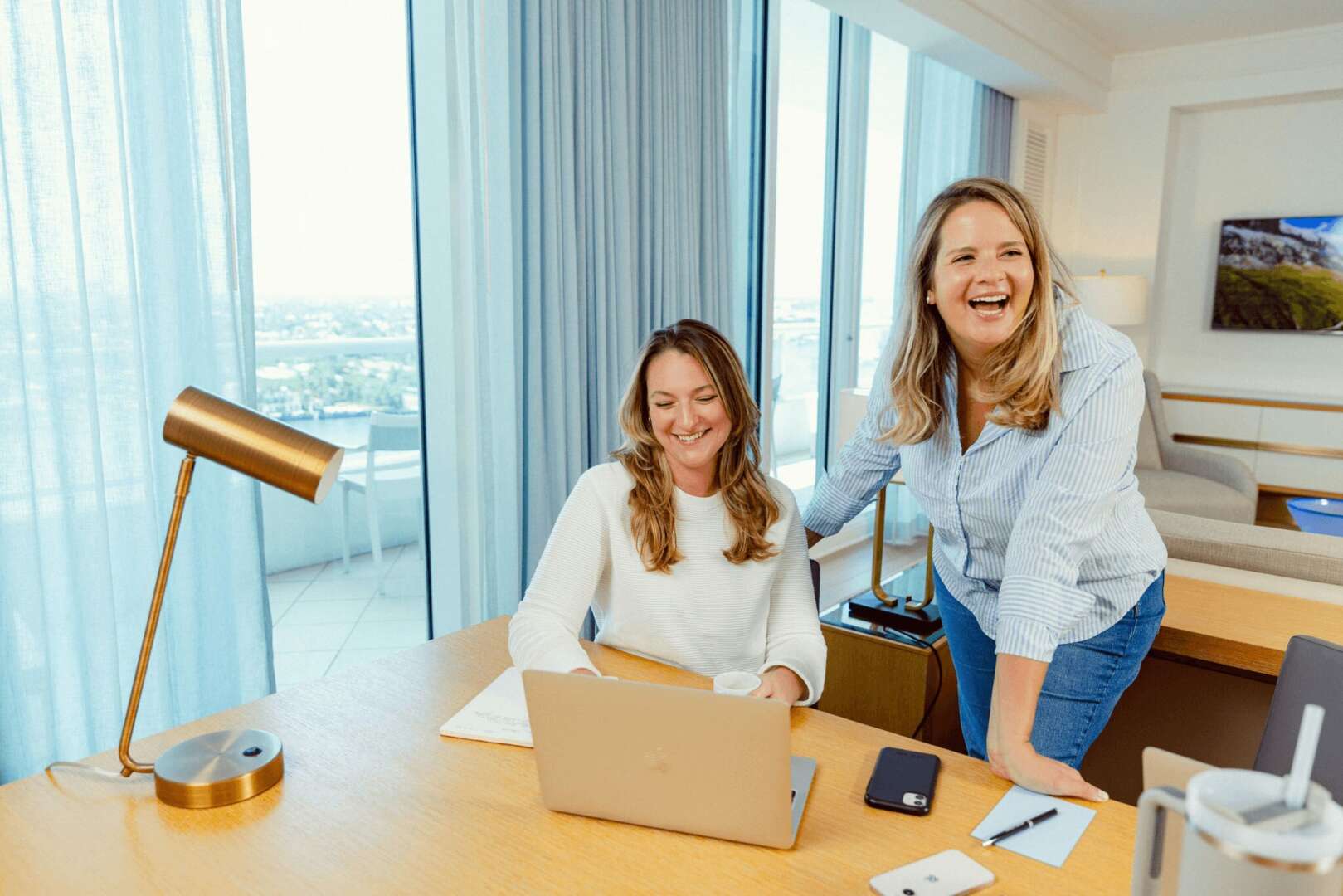

We recently connected with Julia Devine and have shared our conversation below.
Alright, Julia thanks for taking the time to share your stories and insights with us today. We’d love to start by getting your thoughts on what you are seeing as some the biggest trends emerging in your industry
In the nonprofit sector, we are continuing to see massive staff retention issues as employees are trading up or out of their full-time jobs into more flexible, autonomous roles. For employees with great skill sets, years of experience, and a strong work ethic, remote work opportunities like consulting and freelancing open up huge realms of possibility, allowing them greater control over their time, their earning potential, and their personal health and wellness. As a nonprofit professional who become a consultant myself in the last several years, I’ve thought this trend was a fabulous breakthrough after years of stagnant growth in the sector, which is notoriously known for being a late adopter for new trends.
However, I’m recently realizing that there is a flip side to this coin that is more difficult to address: nonprofit organizations that are struggling to adapt to this new, non-employee style for getting work done. I recently met with a major publication in the sector and was told that it was controversial to promote consulting as a career option because it was undermining nonprofits who were struggling to retain talent. I was shocked, because I’ve always viewed this as a win-win for both sides. Solo-entrepreneurs are offering incredible service packages at competitive rates, allowing nonprofits to access top talent without incurring expensive overhead costs. That shouldn’t be a negative for nonprofits. It turns out this view is still a bit ahead of where some factions of nonprofit leadership are in terms of hiring and staffing for their organizations.
All of this to say, I am hugely optimistic for the future of this trend in the industry. As more nonprofits become aware of the incredible amount of talent and opportunity at their fingertips, I think they will increasingly embrace consultants, freelancers, and contractors as a natural part of the annual budget, and team, working to fulfill their social impact goals. Better yet, I think it will bring an infusion of innovation and creativity to the industry, while restoring some much needed breathing room to the professionals (full-time and consultants alike) who have been carrying this sector on their backs for so long.

Awesome – so before we get into the rest of our questions, can you briefly introduce yourself to our readers.
Like most nonprofit professionals, I got into the industry accidentally – through a fundraising and development internship I secured during my sophomore year in college. Joining the organization full-time upon graduation, I was fortunate enough to receive really top-notch professional development and training early in my fundraising career. This led me from my first job as a grant writer, into major gift fundraising, digital and direct response marketing, and finally, director of development. I held this role until late 2021, when my co-founder Catalina Parker and I decided to jump into the world of entrepreneurship as consultants within the nonprofit sector.
The first two years we spent building the business (which we now refer to as 1.0) were incredibly exciting. As two young women in our twenties, we were thrilled at the ability entrepreneurship granted us to pursue creative ideas, experiment with different marketing and sales strategies, and have full-ownership over our futures. The change in pace also afforded us much-needed time to evaluate our personal lives and goals. When you’re working a full-time job, it can be easy to let months and even years pass by without much intentionality. As business owners, we realized that we were the full-time architects of our lives. It led to a lot of introspection, and personal growth, especially related to our health and relationships.
This year, in the third year of our business, we challenged ourselves to evaluate the business and look for areas we loved, and other areas we wanted to let go, in order to maximize our energy and fulfillment in the work. Teaching stood out to us as something we enjoyed more than any of the other services we were providing at the time. And with so many of our nonprofit professional friends and colleagues expressing interest in becoming entrepreneurs and consultants themselves, the seeds of our mentorship program began to grow.
Today, we are laser-focused on developing content and resources to help nonprofit professionals make the most of their careers within the sector. Our instagram account, Relatable Nonprofit, is full of jokes, memes and lighthearted commentary on the sector; and it has drawn the interest of literally thousands of nonprofit orgs and employees. Our core offer, the Relatable Nonprofit Mentorship Program, is a 12-month done-with-you business incubator for growth-minded people with nonprofit hearts. We help professionals transition from full-time jobs to full-time consultants, by building businesses and lives that they love.
I can’t express how much enjoyment and fulfillment I am getting from leading this program. Getting to know so many impressive and multi-talented nonprofit professionals, learning about their goals, and helping them to actualize their business vision, develop high-impact offers, and build portfolios of nonprofit clients has been such a pleasure and joy. The community is building itself in a way I didn’t expect, with new members taking it upon themselves to connect with one another, and supporting each other as they work together to achieve their entrepreneurial goals.
What I think makes this particular program special is that it allows for a lot of variety and range in specialities within a very niche business sector. We have accountants, executive directors, board members, fundraisers, founders, digital marketers, and many other accomplished professionals, each interested in pursuing a consulting niche all their own. But they are united in their interest in serving the nonprofit sector, and achieving social good through their work. it adds a level of dimension to our discussions and trainings, while never taking away from the overarching goal of building successful consulting businesses to support missions nationwide. We are confident this program will benefit many organizations who otherwise would not have had access to consulting support. Our goal is to serve 500 organizations with consultants from our program in the next 12 months.

Can you talk to us about how your funded your business?
When Cat and I agreed to start our initial consulting firm together, we both agreed to keep it lean to start. We opened a business bank account and each committed to contributing $1,500 to cover startup costs. This $3,000 covered the most basic administrative tools we needed to get started. A website domain, business emails and office suite, a Quickbooks subscription, and a few other project management tools. We knew we wanted to keep overhead as low as possible as we were getting started so that we could build up a cash reserve for down the road. I had already quit my job, and Cat had taken another remote job while we were building out the business, and neither of us were in a position to take on any debt.
It was tight, but thanks to support from our husbands, families, and savings accounts, we didn’t take any money from the business for the whole first year. At one year, we paid ourselves $10,000 each. As we took on more clients, and our monthly revenue increased to $15-$20K/month we continued to keep our costs low, always careful to spend less than we made that month, and continuing to take a very low salary, which we would evaluate quarterly with our accountant. In taking it slow, and delaying our salary increases for as long as possible, we built up a sizable cash reserve for the business which came in handy in years two and three when we wanted to invest in more expensive marketing projects, and products with higher overhead, like our online courses and training materials. We also had the funds to hire an executive assistant to take smaller tasks off our plates so we could continue to focus on business-growth. It also afforded us the ability to hire our first business coach, and join a PR-focused entrepreneurship community (Dreamers & Doers!) to expand our network and reach. Best of all, because it’s our own business and our own money, we get to use it to do fun things like professional development weekends where we get together in New Orleans, Charleston, or Palm Beach to sightsee, enjoy great meals, and celebrate our accomplishments.
To this day, our business is debt-free, and we plan to keep it that way. It still amazes me what we were able to do with $3,000, turning it into multiple-six-figures in revenue (and counting!). I love that we are able to share this business knowledge with new nonprofit consultants in our mentorship program. This is the great power of entrepreneurship!
How did you build your audience on social media?
For the first eighteen months of our business, we had virtually no social media presence. We were so focused on building partnerships and referral relationships, it didn’t even occur to us that social media was a lead generator. Then we learned from another business about how many online businesses use social media to cast a wide net in their market. Some of these businesses were using meme pages with especial success. We had a small meme page on Instagram at the time that was mostly for fun, but it had gained more traction than our professional instagram page for the consulting firm. Naturally, witty and sarcastic memes about working for nonprofits were garnering more engagement than conventional posts about our marketing services. So we went with it. Today the page has nearly 5,000 followers and gets consistent daily interaction. It has also helped us to generate a ton of interest in our services for nonprofit professionals.
The best advice I can give for someone who wants to build a social media presence for their business is to focus on consistency. The content is going to be a little awkward at first, but you’ll get better as you learn what your audience likes to see and hear. But nothing makes up for consistency. If you don’t post, you’ll never know what could’ve been. For us, the best way to stay consistent has been to batch content and schedule it in advance. That way, you remove opportunities for social media to fall through the cracks. It also lessens the pressure to be spontaneously creative every single day.
Oh, and don’t delete that post that didn’t get a lot of likes! Just leave it alone. We’ve gotten clients from posts that had 6 total likes, and we’ve gotten crickets from posts that have gone viral. You really never know who is watching, reading, and listening, even if they aren’t raising their hand to show you right away.
Contact Info:
- Website: https://www.relatablenonprofit.com/
- Instagram: https://www.instagram.com/relatable_nonprofit/
- Linkedin: https://www.linkedin.com/in/julia-devine-155bb3122/
- Youtube: https://www.youtube.com/@Relatable_Nonprofit