

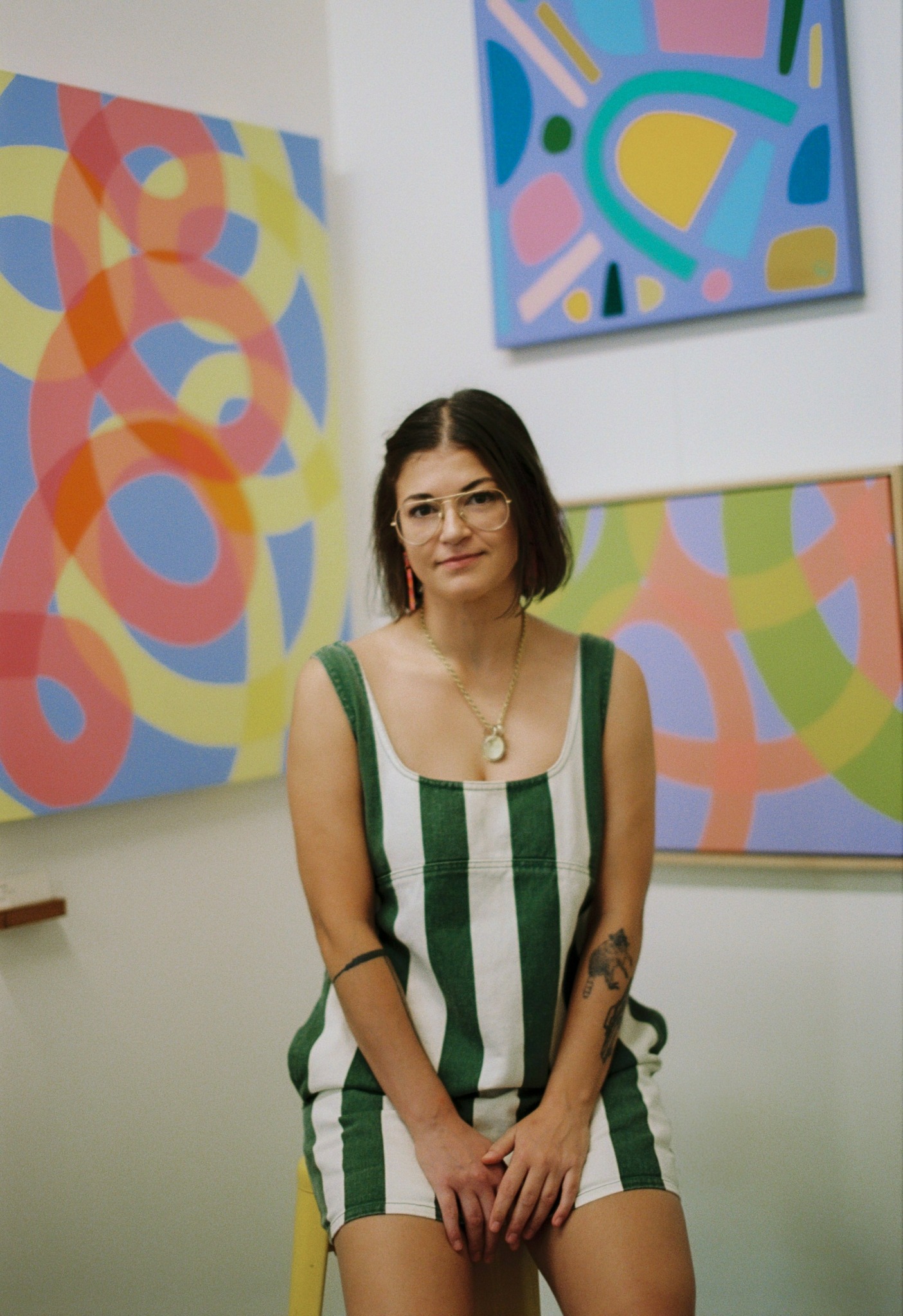

We caught up with the brilliant and insightful Julia Deckman a few weeks ago and have shared our conversation below.
Alright, Julia thanks for taking the time to share your stories and insights with us today. It’s always helpful to hear about times when someone’s had to take a risk – how did they think through the decision, why did they take the risk, and what ended up happening. We’d love to hear about a risk you’ve taken.
At the beginning of 2020, I was working part-time at a local art supply shop and painting out of a small studio at Redux Contemporary Art Center. When COVID hit, I was terrified—not just about the world, but about my future as an artist. Would art still matter when everything felt so uncertain?
Quarantine unexpectedly brought clarity. I dove into my work, reassessed my values, and by June—after being furloughed—I found myself supporting myself as a full-time artist for the first time. Around that same time, I noticed a small commercial space for lease just outside my neighborhood. Taking on that kind of overhead felt risky, but after witnessing how fragile “security” really is, I decided to bet on myself.
I put together a business plan, secured a loan, and opened a studio and collaborative retail space designed around community. I created a salon for local creatives to sell their work, an exhibition gallery for guest artists, and a calendar of workshops to make creativity accessible to everyone. The gallery booked out within weeks, and over two and a half years I hosted more than 14 exhibitions, along with events, classes, and even a small bottle shop celebrating wine as an art form.
Eventually, the model became unsustainable, and I made the difficult decision to close the space. Still, the risk changed everything. I gained invaluable business experience, deepened my connection to my community, and—most importantly—earned lasting confidence in myself as an artist and creative leader.

As always, we appreciate you sharing your insights and we’ve got a few more questions for you, but before we get to all of that can you take a minute to introduce yourself and give our readers some of your back background and context?
I’m a Charleston-based painter with a practice rooted in color, texture, and emotional resonance. My path into a full-time art career was shaped by years of working within my creative community—through studio practice, gallery exhibitions, and collaborative spaces—which has given me a deep appreciation for both the artistic and relational sides of collecting art.
My paintings are guided by color as the primary language. I’m interested in how artwork can shift the energy of a space and spark feelings of joy, curiosity, and warmth. Color relationships, texture and intentionality are central to my process, creating pieces that reward closer looking and continued engagement over time.
I create original paintings represented by contemporary galleries, along with commissions. I enjoy collaborating with collectors on custom pieces for homes and businesses, translating personal stories, places, or memories into artwork that feels both meaningful and timeless. I’m especially proud of creating work that feels accessible without sacrificing depth—art that invites connection rather than intimidation.
For collectors, I want my work to feel like something you grow with. Whether it’s a first piece or an addition to an established collection, my goal is for each painting to bring lasting joy, visual interest, and a sense of personal connection into the space it inhabits.

What do you think is the goal or mission that drives your creative journey?
At its core, my creative journey is driven by a desire to live a fulfilled life while creating joy and beauty for others. I believe art has the power to do good in quiet, everyday ways—by lifting a mood, shifting the energy of a space, or helping someone feel more connected to themselves and their surroundings.
My goal is to make work that feels honest and generous. If a painting brings a moment of delight, comfort, or curiosity into someone’s life, then it’s doing exactly what I hope it will do.

How can we best help foster a strong, supportive environment for artists and creatives?
A thriving creative ecosystem starts with community engagement. Taking the time to learn about the artists, studios, galleries, and creative hubs in your area makes a real difference. Simply showing up—attending exhibitions, openings, workshops, or markets—helps sustain creative work in tangible ways.
Supporting artists can also be as simple as shopping small and local, and valuing creative labor at all levels. Sharing your discoveries through word of mouth, social media, or personal recommendations is incredibly powerful. Visibility leads to opportunity, and that kind of support often costs nothing but intention.
When communities invest in their creatives, they’re investing in culture, connection, and a richer everyday life.
Contact Info:
- Website: https://www.juliadeckmanstudio.com/
- Instagram: https://www.instagram.com/juliadeckmanstudio/


Image Credits
Caitlin Joyce Photography
Lydia Hadley Photography
Kate Blohm Photography
Mercedes Armella Photography
Drew Somerville Photography