


We caught up with the brilliant and insightful Joyce Sherry a few weeks ago and have shared our conversation below.
Joyce, thanks for joining us, excited to have you contributing your stories and insights. Let’s start with inspirations and heroes. Are there any historical figures you look up to?
I’ve long admired Nellie Bly, the female journalist who shattered stereotypes. She spoke so passionately about women’s equality in the late 1800s that she caught the attention of a newspaper editor who hired her to write columns on real news, not just the social and arts pages. Bly put herself in increasingly dangerous situations to bring important stories to the world. Essentially the inventor of investigative journalism, she posed as a poor woman to get a job in a factory, reporting on the abuses of female factory workers; she managed to have herself committed to a “mad-house,” exposing the horrors of asylums at the time and sparking reform; she emulated Phineas Fogg by traveling around the world in seventy-two days, almost exclusively solo; and she reported from the front during World War I. She also proved herself to be fallible. After the death of her husband, she took over his container manufacturing company and quickly bankrupted it through inattention.
Nellie Bly was everything that, as a young woman, I was not. For much of my life, I have been a cautious, by-the-rules kind of person. My one great act of daring was to become a theater actor and director instead of the lawyer my mother wanted me to be. I was successful as an actor, director, and playwright, once having the great good fortune to work with Ray Bradbury on adapting one of his novels for the stage. Then I got restless and decided to try my hand at teaching. It might seem daring to leap from one career to another at the age of forty, but working at a small independent school was a cozy place to be. It wasn’t until twenty-four years later that I finally gained the courage to make the leap I’d always wanted to make. I let Nellie Bly inspire me to dare to fail. And after all, until we dare to fail, we can’t reach our dreams.
I left teaching to become a credentialed Personal Coach and to put my time and energy to doing what I’d dreamed of doing since high school: writing fiction. Within five months, I’d completed my first novel. Of course, the revision process took roughly two more years! During that time, I completed a second novel and wrote a handful of short stories, two of which have been published.
The realities of the publishing business include that the gatekeepers are looking for a narrow range of writers and subjects. Most agents and publishers aren’t enthusiastic about committing to a debut novelist already in her sixties. They want writers whose long careers will produce dozens of books. I completely understand that. But I also know that I don’t have time to continue to pound on those doors. Thanks to Nellie Bly’s example, I decided to grab the controls and create my own independent publishing house, Taylor Street Press. My debut novel will be on bookshelves (physical and virtual) in October.
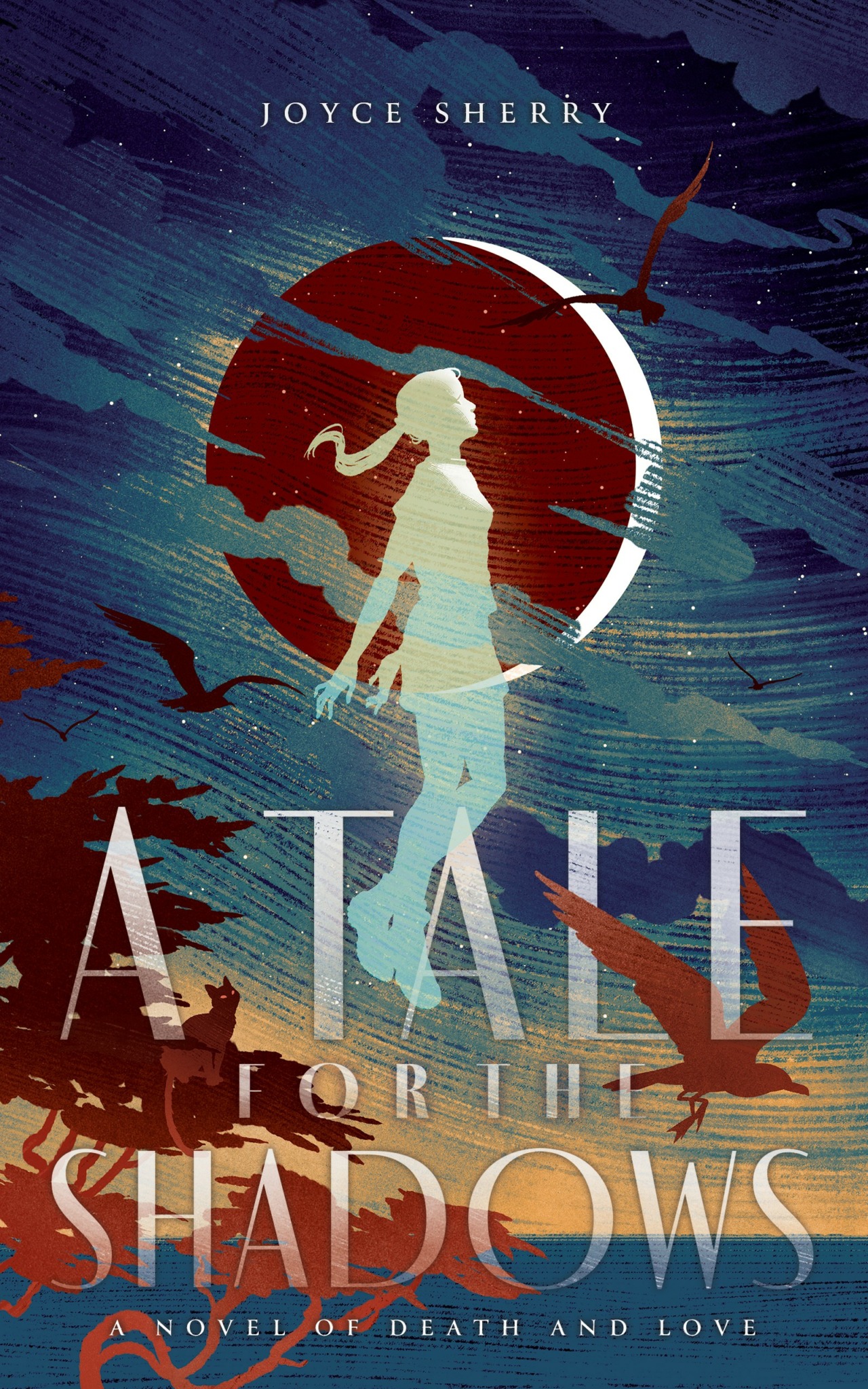
I’ve chosen to write about subjects that are dearly important to me. A Tale for the Shadows: a Novel of Death and Love reminds readers that love lingers, justice waits, and death is only the beginning. It tells the story of Senka— once a rising star until her husband silenced her forever. Now a ghost trapped in the cabin where she died, she endures years of isolation—until the night a battle-scarred vampire named Silas and his mysterious cat, Luna the twenty-third, arrive in a blaze of shadow and fire. Freed by the flames, Senka joins Silas on a journey of vengeance, redemption, and fragile hope. As their bond deepens, they confront the ancient vampire hunting Silas and the human monster who destroyed Senka’s life. With the help of a spectral community and a dying boy named Finn, Senka learns to harness her ghostly gifts—and to open her heart once more. But in a world where the dead can still hurt and be hurt, the price of justice may be eternal. A Tale for the Shadows is a contemporary fantasy that explores the courage it takes to face death—and the grace it takes to choose life after all. It’s available for pre-order through Amazon.
Great, appreciate you sharing that with us. Before we ask you to share more of your insights, can you take a moment to introduce yourself and how you got to where you are today to our readers.
I’m a lifelong lover of the strange and tender. An actor-playwright-turned-novelist, I write stories where ghosts speak, vampires brood, books are magical, and love and hope refuse to die—even after death.
When I was five, I wrote my first play: a one-“woman” show about Maleficent—that’s right, Sleeping Beauty’s nemesis—which I subsequently performed in my parents’ bedroom. As I recall, the play consisted of a lot of spooky threats and pointed fingers. It may have resembled a combination of Disney and Dickens.
Throughout my life, even as I’ve engaged in other professions, I’ve loved to write. From five years old on, I wrote poems, short stories, and plays. I was lucky enough to work for a theater company that paid me to write plays—both short and full-length— including a Studs Terkel-approved adaptation of his book The Good War, and another adaptation which I co-wrote with Ray Bradbury of his novel Something Wicked This Way Comes. I’ve worked as a theater reviewer for a local newspaper, and I’ve published a memoir, The Educated Dog, about raising a therapy dog to work with me in a high school for gifted students.
I turned to writing novels, something I’d dreamt of doing all my life, when I left the high school I’d been working at for twenty-four years. I wrote the first draft of that initial novel in five months. I spent exponentially longer revising it, loving every minute of the process. I can’t begin to express how excited I am that it will be out to the public in October 2025.
I credit my parents and older sisters, whose bookshelves were always overflowing, for ensuring that I’m an avid reader. Well, them and my Quaker grade school that made learning an adventure. From there I went on to a girls’ school where the teachers instilled the awareness that asking questions was the responsibility of a quick mind, and that my intellectual capacity as a woman would serve me well. Now, I hold a B.A. from Middlebury College and a Master’s Degree in Theater History and Literature from the State University of New York, and I attended the Neighborhood Playhouse School of the Theatre in New York City. As learning continued to call, I studied to be a Personal Coach and have become a Professional Certified Coach through the International Coaching Federation.
When I was seventeen, my father died suddenly. In my late thirties, my mother and life partner died within months of each other. My son was paralyzed in an auto accident when he was twenty-three, and his fiancée died a year later of a virulent form of cancer. Throughout these profound challenges, I’ve discovered that love carries on, providing us with the resilience and strength we need to heal. A Tale for the Shadows was born from my experiences with loss and my undaunted sense of hope.
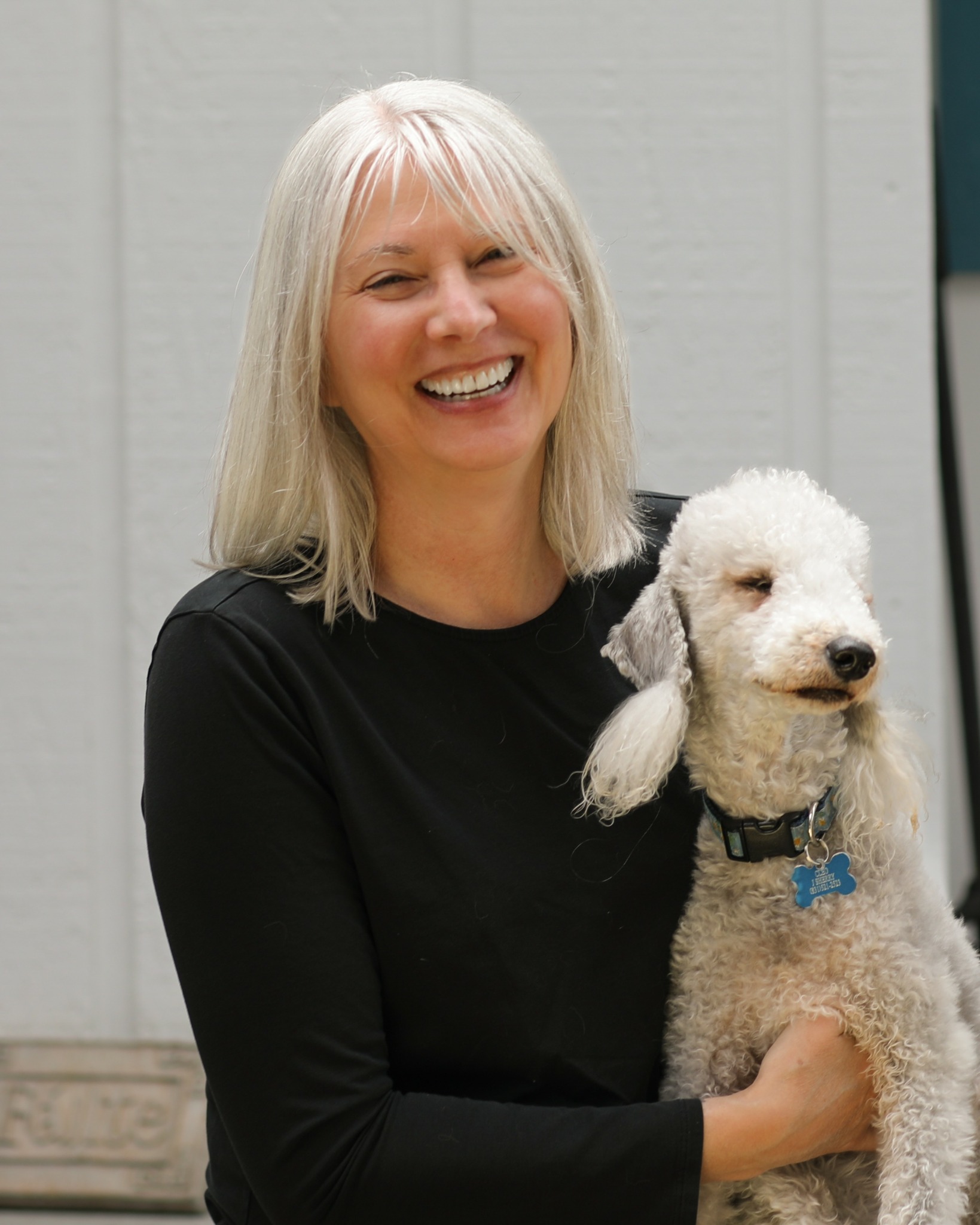
I live in the Monterey Bay area with my husband, who is an actively performing guitarist and composer; my son, a filmmaker; and his wonderful girlfriend, who is studying to become a licensed nutritionist. Our household is rounded out by my son’s service dog, our compassionate Bedlington Terrier, and two cats with diva personalities.
Do you think there is something that non-creatives might struggle to understand about your journey as a creative? Maybe you can shed some light?
First, I don’t think there are such people as non-creatives. Everyone brings a kind of creativity to their lives, whether consciously or not. There is creativity in deciding what to make for dinner, and then making it. There is creativity as we raise our children, speak to our workmates, write a brief.
But I can say a couple of things after years in the artistic life and living with other artists. Many people fail to understand the amount of work that goes into creating. I take classes all the time—classes on craft, on revising, on publishing, on so much more. I work twice a month with a writing group, honing our writing and analytical skills. With each new story or novel, I’m learning something new. One of my favorite quotes about writing is, “The only novel I know how to write is the last one I finished. I have no idea how to write the one I’m working on now.” That’s the truth of it. No creative work springs full-blown from the forehead of the artist. It is crafted through effort—sometimes joyful, sometimes slogging. It’s physically painful to cut a sentence, passage, or word you thought was perfect but now realize is extraneous. Being an artist isn’t a cushy life, but it’s a rewarding one.
My other insight comes from observation. My husband is a professional guitarist playing twenty to twenty-five gigs a month. Every few weeks without fail, someone comes up to him and asks one of two questions. The first, “Do you do this as a hobby?” The second, “How’d you find the courage to stick with guitar playing instead of doing something more mainstream?”
The questions are two ends of the spectrum, of course. To believe this accomplished musician—who practices eight hours a day, by the way—can’t possibly be making a living playing guitar is to devalue art. This speaks to the myths that salaries are made by lawyers, doctors, astrophysicists, CEOs, bankers, teachers, mechanics, plumbers. Not by musicians. And to the false narrative that art is done only for love, not to make a living. My husband is doing great, thank you very much!
The question at the other end of the spectrum implies, “How could you find the courage when I couldn’t?” That’s the sadder one, I think. When I supervised young apprentices at a theater company where I was a resident actor, I always told them, “This profession isn’t easy. If you can imagine yourself doing something else, do it.” I wasn’t trying to get rid of competition. I was telling them that you have to be dedicated to art in order to stay in the business of art. My husband could never imagine himself being anything but a musician. My son committed to filmmaking when he realized it was the only thing he’d never found himself bored with.
I stepped away from theater when it started to feel like punching a time clock. I took a break of a decade from the artistic life. And then I realized I wasn’t living. I have to write; I have stories to tell that I think will be meaningful to my readers. It’s not so much finding the courage to continue as an artist. It’s recognizing that, for some of us, life without making art doesn’t feel like a life well-lived.
And finally, it’s never too late. I don’t care how old (or young) you are. Pick up that musical instrument you’ve always wanted to play. Grab that paintbrush or shard of charcoal. Open up a brand new document and type that first line of a poem, a story, your novel. Use that camera in your phone to take a photo you find beautiful or moving or just plain intriguing. And for god’s sake, find a human teacher to interact with and encourage you.
Any resources you can share with us that might be helpful to other creatives?
I wish I’d known just how generous other writers are. I’ve never met a writer—in a class, a conference, a workshop, wherever—who wasn’t eager to encourage, advise, share leads, recommend books. I spent way too much time being shy around writers I respected. Writers recognize dedicated writers, and they want to celebrate writing with you.
Online courses are a boon. While many local community colleges offer courses that can be truly fantastic (I’m thinking of you, Monterey Peninsula College), if you don’t have a resource near you, sign up for a class from Highlights. Yes, the people who make the magazine that has kept kids entertained in doctors’ waiting rooms for decades. They are a non-profit dedicated to promoting writing for middle grade and young adult readers. All of their great instruction applies to adult fiction, as well. Search out podcasts or websites where writers provide prompts or exercises. Go to conferences or workshops that teach craft. Check out Reedsy and hire an editor to give you personalized feedback. Join your local writers club. If you live in California, the California Writers Club has chapters throughout the state. I’m sure other states have something similar. Sign up for Vocal.Media, a site that offers entertaining prompts and where you can upload your work for others to see. Writing can be a lonely business, but there are all kinds of supportive connections to be made.
Contact Info:
- Website: https://joycesherry.com
- Instagram: joycesherrywriter
- Linkedin: https://www.linkedin.com/in/joycesherry-ma-pcc
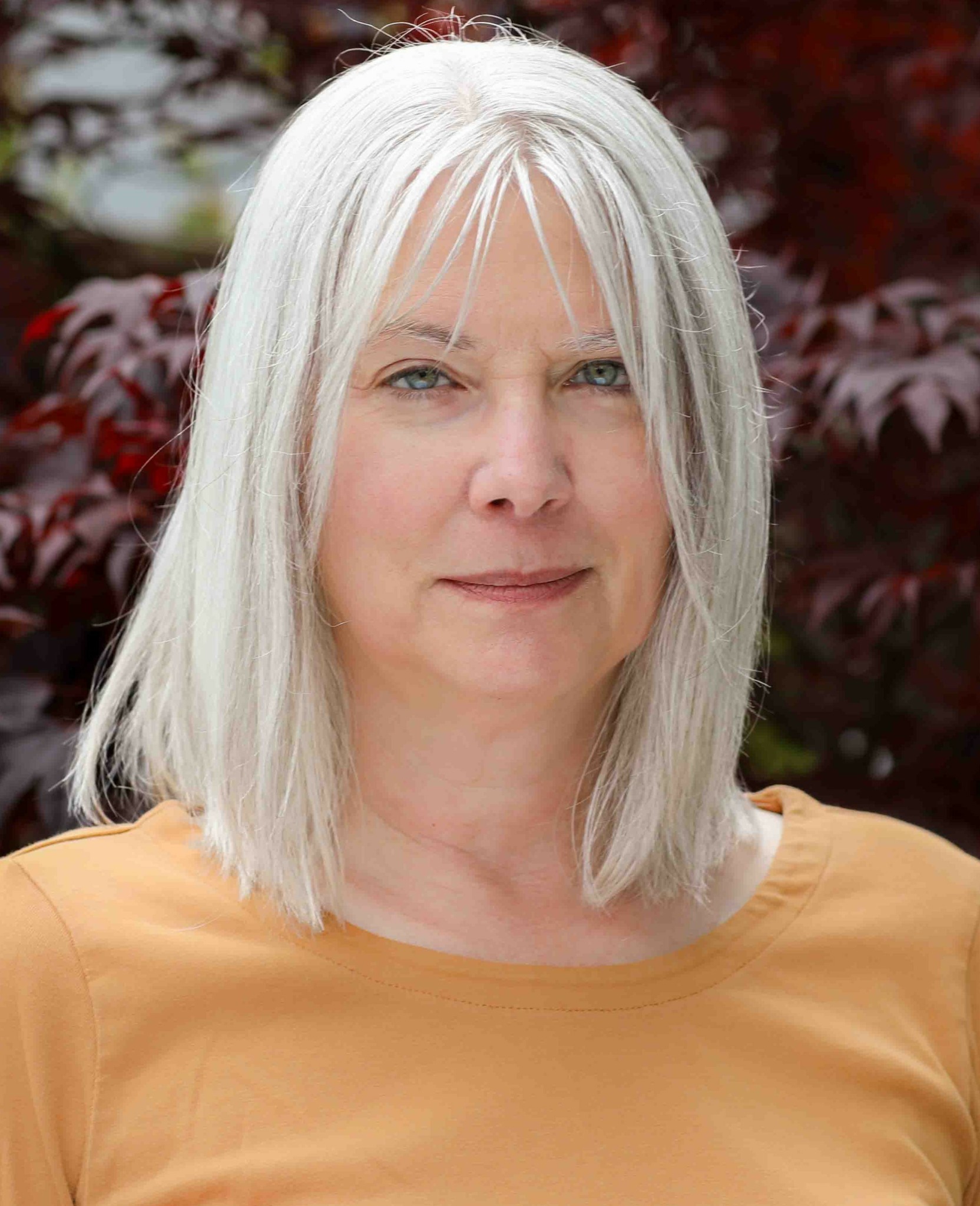
Image Credits
Cover design by Candice Broersma
Photo credits: Anthony Zoccali