



We’re excited to introduce you to the always interesting and insightful Joy Semien. We hope you’ll enjoy our conversation with Joy below.
Joy, looking forward to hearing all of your stories today. What was it like going from idea to execution? Can you share some of the backstory and some of the major steps or milestones?
In 2017, as I began my graduate studies, I delved into researching disasters and their impact on communities. It quickly became evident that there was a significant gap in how communities—especially nonprofits and businesses—communicated and collaborated during crises. Inspired to address this, I came home one evening, spread out a poster-sized sheet of paper, and sketched out my vision for a hub that would bridge these gaps and foster connections during disasters.
I was filled with excitement and optimism as I prepared to share my idea. I scheduled meetings with two academic advisors, confident they would see the potential of what I called The Hub. My vision was ambitious: a platform bringing together disaster resources, academics, policymakers, business owners, nonprofits, and communities to work in unison. However, their responses were disheartening. One dismissed the idea, saying there was no financial viability in the project. The other told me to shelve it entirely, claiming it wasn’t achievable. I left both meetings disappointed but determined. Looking at my hand-drawn plans, I resolved: I will prove them wrong.
That determination sparked a journey. I immersed myself in research, learned the fundamentals of web design and security, and began refining my concept. About a year later, I started collaborating with web designers to bring The Hub to life. The process was long, challenging, and costly—three years of trial and error and nearly $20,000 invested. But eventually, my vision became a reality: a beautifully designed platform where communities could connect, collaborate, and create real change.
As always, we appreciate you sharing your insights and we’ve got a few more questions for you, but before we get to all of that can you take a minute to introduce yourself and give our readers some of your back background and context?
I grew up in Geismar, Louisiana, a fenceline community nestled in what’s often called “Cancer Alley.” In a place where the hum of machinery and the aftermath of chemical explosions are just a part of life, I found my calling early. Living in the shadow of industry meant I understood the stakes of environmental hazards firsthand—their impact wasn’t just a distant, scientific idea but part of my everyday reality. This lived experience sparked my fascination with environmental justice and set me on a journey I could never have fully imagined back then.
After high school, I went to Dillard University and studied Biology with a minor in Chemistry, graduating in 2015. Those studies led me to Texas Southern University for a Master’s in Urban Planning and Environmental Policy, then to Texas A&M, where I finished my PhD in Urban and Regional Sciences in 2024. Over the years, my work has stayed true to that passion I discovered growing up: finding ways to help communities like mine, and others like it, face natural and industrial hazards while protecting their people.
Today, I wear a lot of hats. I’m a serial social entrepreneur, an author of 16 books, a speaker, and a scholar—roles that allow me to connect with everyone from scientists and policy-makers to local community leaders.
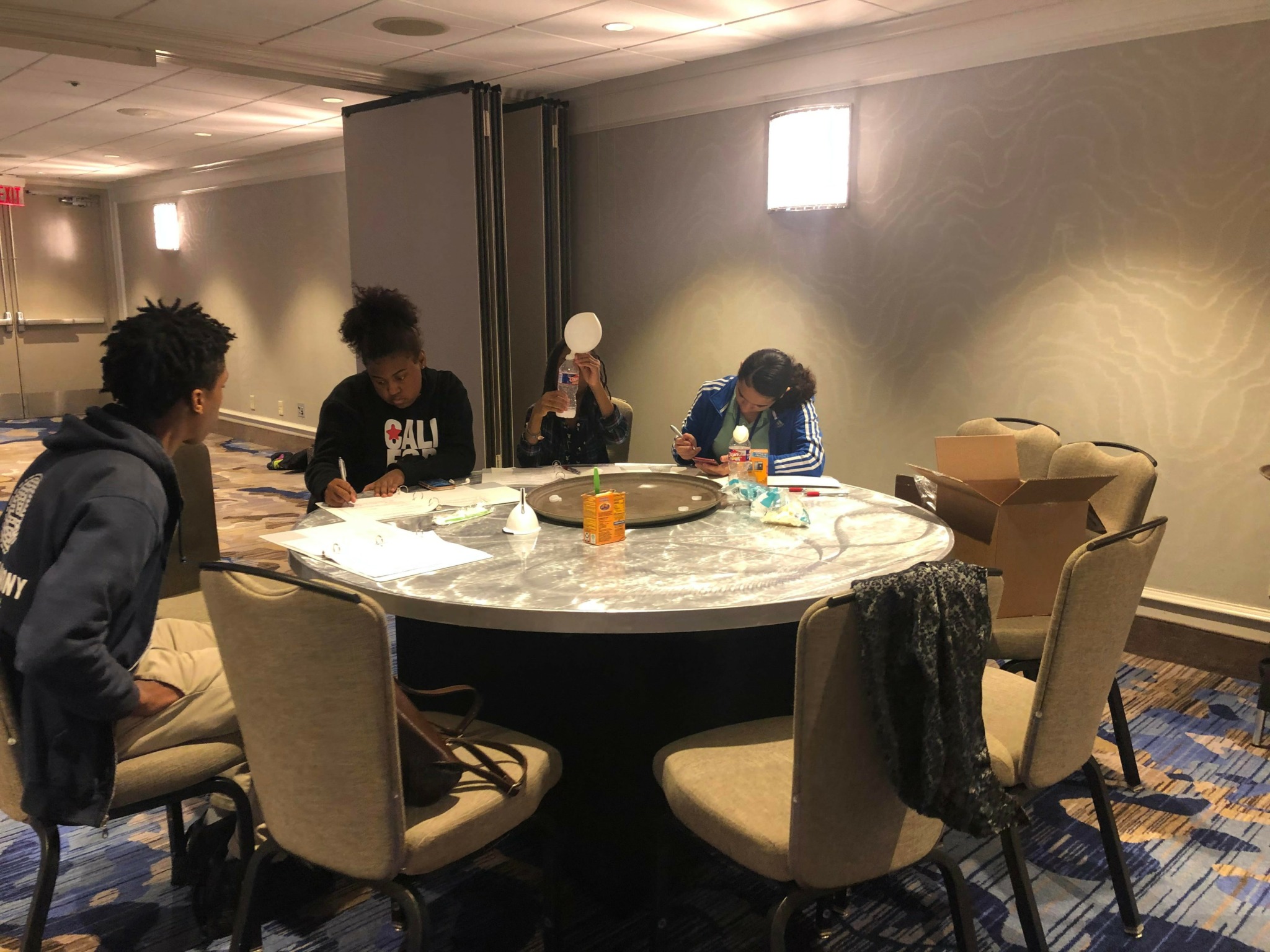
Over the years, I’ve had the privilege of speaking for groups like the United States Geological Survey and the Natural Hazards Workshop. I have spoken internationally at the United Nations Climate Change Conference in Egypt and the International Sociological Association Conference in Melbourne, Australia. Through my businesses have hosted dozens of interactive lectures and hands-on training sessions to make complex issues relatable and actionable.
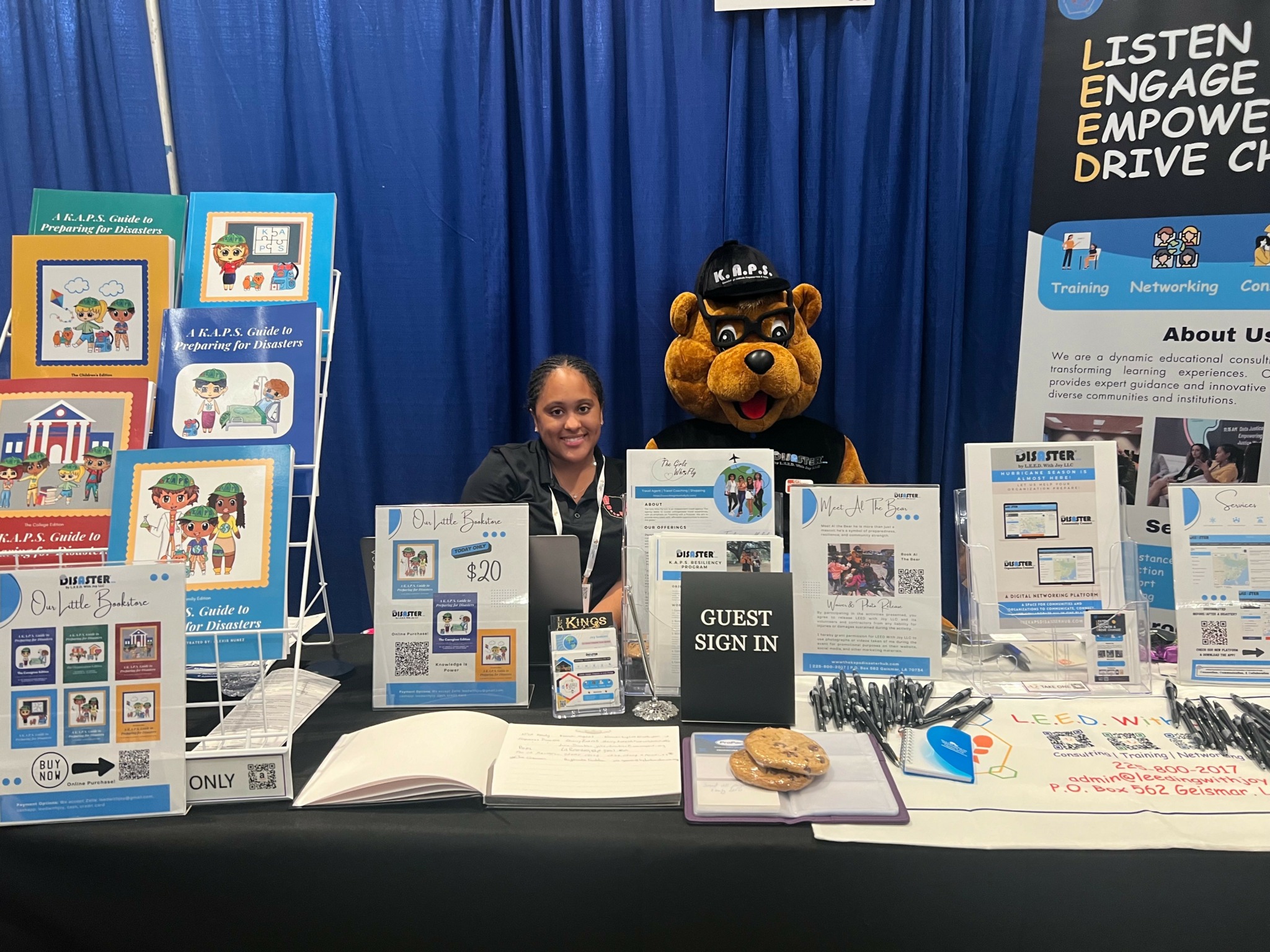
Through the organizations I’ve founded—L.E.E.D. With Joy LLC, The K.A.P.S. Disaster Hub, and Leona’s Kings and Queens Non-Profit—I work with researchers, local leaders, and policymakers to bridge the gap between research and action. Each day is an opportunity to turn data and studies into real solutions that people in vulnerable communities can use to improve their lives.

How do you keep your team’s morale high?
Managing a team and maintaining morale has been one of the most challenging aspects of owning my own business.
I typically hire contractors, a mix of people I know and those I don’t. At any point in the year, I may have 20 to 30 people working with me to complete projects. Early on, I struggled to manage the diverse personalities and work styles. Some prefer a strict 9-to-5 schedule, while others thrive working at midnight. Some respect me as a supervisor, while others see me only as a partner. Some excel in client interactions, and others simply cannot. Navigating these dynamics has been both challenging and enlightening.
In terms of building morale. As I grow, I hope to uplift those working alongside me. I don’t believe in stepping on others to rise. I strive to be inclusive, fair, and collaborative, regularly seeking input from my team. While this approach often yields positive results, it also presents challenges.
I learned at the end of the day I can’t change people, I can’t change the way they think, or what they believe. I want everyone around me to succeed and have every opportunity that I can give to them, I also had to learn that not everyone can walk with me through every project. I’ve learned the hard way that no matter how much you do for some people, they may not appreciate it. Some will misunderstand your intentions, and others may attempt to overstep boundaries.
These experiences taught me the importance of being firm, clear, and consistent—both in verbal communication and in writing. Setting boundaries was especially difficult for me because my natural inclination is to treat everyone like a friend, even those I supervise. Which of course now I know that is not the best way of running a company. I had to learn boundaries really fast and I had to set those boundaries with those working for me to prevent conflicts. I’ve also learned to stop overexplaining. If I say no, that’s it. Authority comes with its challenges, but clear communication and boundaries are key.
We often hear about learning lessons – but just as important is unlearning lessons. Have you ever had to unlearn a lesson?
I’ve had to make tough choices, such as whether to go above and beyond to ensure a project’s success or be petty and let it fail to prove a point. On some projects, I faced team members questioning my decisions, clients with unclear expectations, and even personal attacks on my character. Despite my good intentions, some people often chose to misinterpret my actions or turn against me. But at the end of the day I’ve reject pettiness and the “tit for tat” mentality, its not worth it. Its easy to say “I told you so”, “it’s not my responsibility” or “that’s not in my scope of work” and that’s not in my character. My grandmother told me if you have the power to make a difference then do it, don’t wait on others to be the change you change it.” So instead of being petty regardless of how much I may want to I do my best to focus on finding solutions, even when the situation is outside my scope of work.
One of the most important lessons I had to unlearn in business is that not everyone is your friend, and not every client will sing your praises. It’s essential to embrace those who support you and leave the rest where you found them—you can’t save the whole world. Your work and character will shine through the hatred of others. At the end of the day, God always has the last say. The hardest lesson has been learning to let go of those who don’t want to move forward with me, those who turn against me, and those who accuse me of things contrary to my character. These challenges are painful but also transformative.
At the end of every project, no matter how complex, or how many setbacks occurred, I find beauty in the outcome. Looking back at what was achieved reminds me to be grateful for the opportunity, and I often find peace in letting go of negativity. There’s freedom in releasing the naysayers and trusting God to guide the journey. At the end of the day, I know who I am and where my intentions lie, and that is what matters most.
Contact Info:
- Website: https://www.thekapsdisasterhub.com
- Instagram: leedwithjoy
- Facebook: leedwithjoy
- Linkedin: leedwithjoy
- Yelp: leedwithjoy
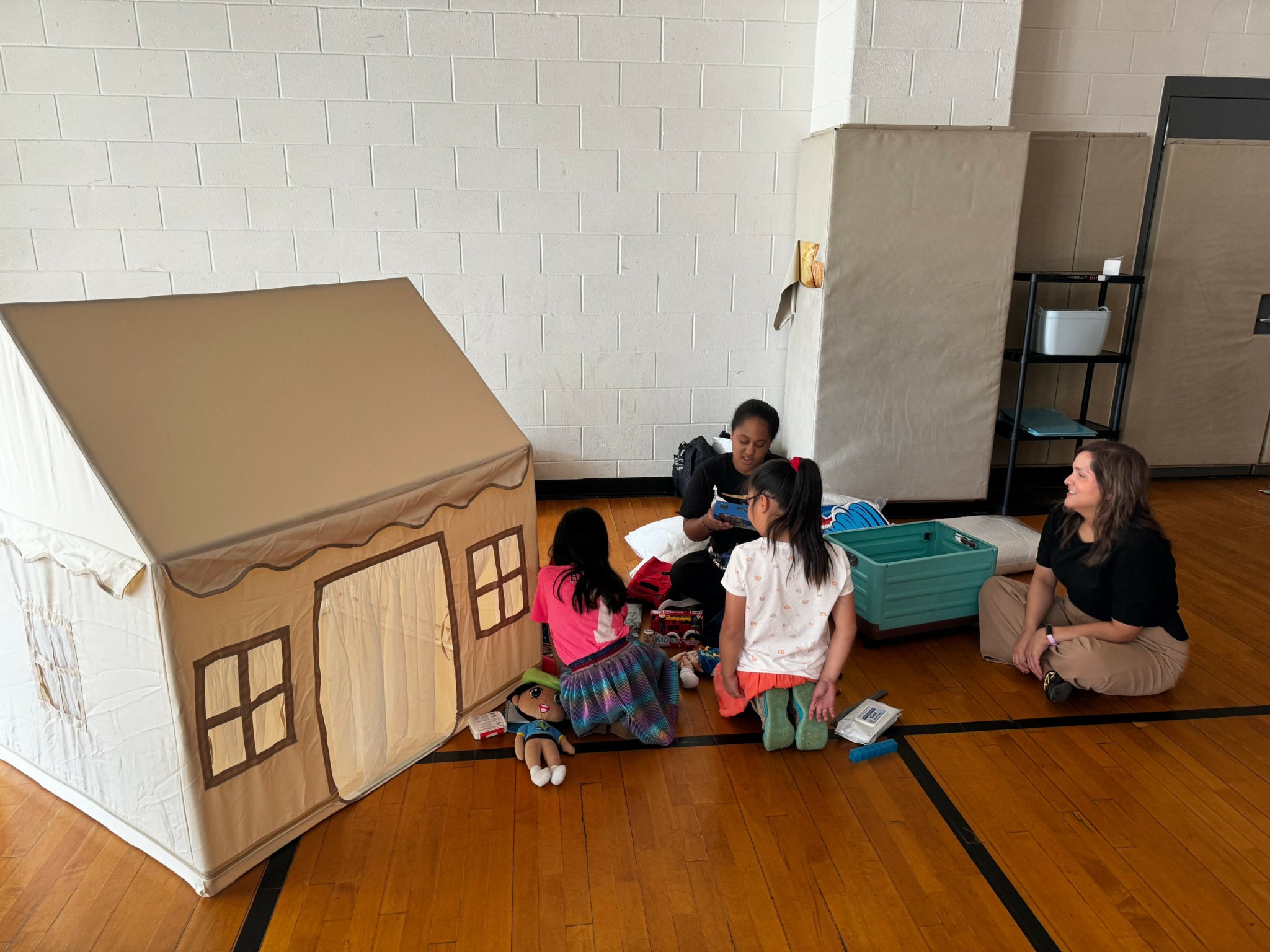

Image Credits
Joy Semien