

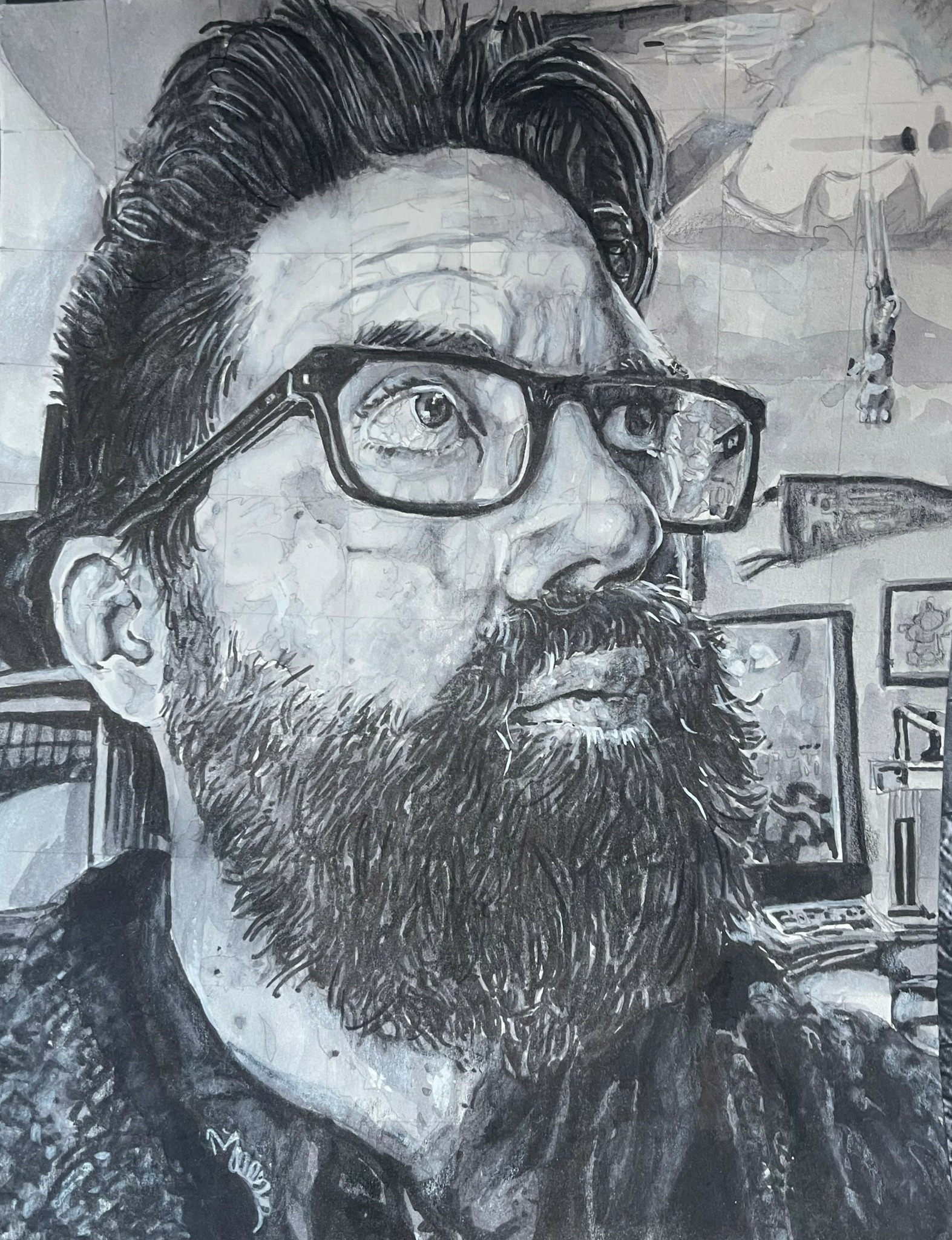

We recently connected with Joshua Kemble and have shared our conversation below.
Joshua, appreciate you joining us today. It’s always helpful to hear about times when someone’s had to take a risk – how did they think through the decision, why did they take the risk, and what ended up happening. We’d love to hear about a risk you’ve taken.
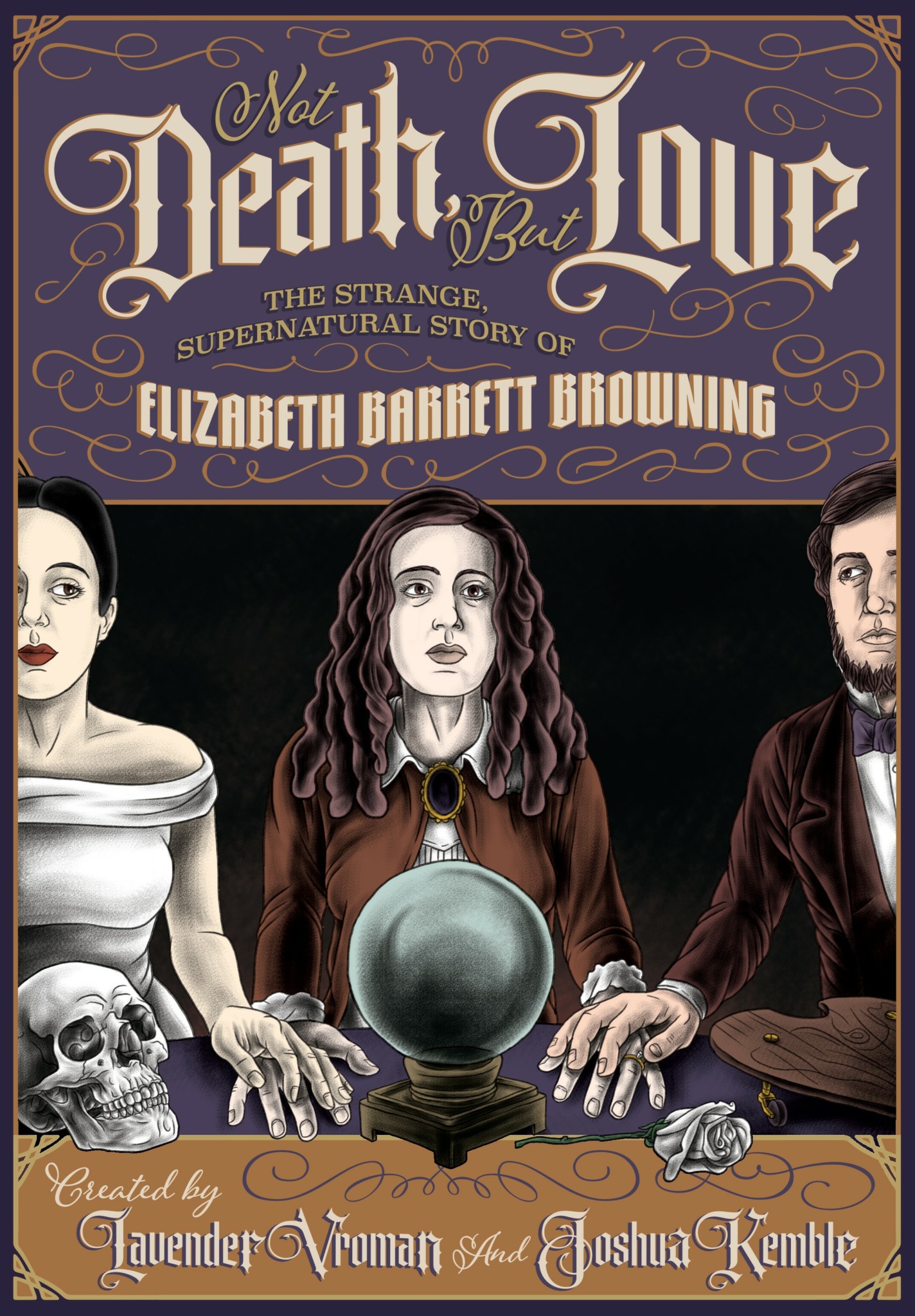
One of the biggest risks I have ever taken was agreeing to illustrate and help create a graphic novel called Not Death, But Love: The Strange, Supernatural Story of Elizabeth Barrett Browning with author Lavender Vroman.
What made it a risk was not the possibility of failure. In fact, the project already had a publishing contract with Turner Publishing based on a relatively short four-page proposal. The book deal was secured before most of the actual work existed. The real risk was time.
The advance was small, especially when compared to the amount of work required. From a purely financial standpoint, it made very little sense. I knew from the beginning that producing a full-length graphic novel would require thousands of hours of research, layouts, penciling, inking, revisions, and collaboration. What looked like a book contract on paper was actually a commitment to years of work.
At the time, I was balancing family responsibilities, teaching full-time, and pursuing other creative opportunities. Every hour spent on the graphic novel was an hour I could not spend on freelance work, other publishing projects, or simply being with my family. The question was never whether the book would make me wealthy. I knew it would not. The question was whether the story was worth dedicating years of my life to.
What convinced me to take the risk was the uniqueness of the subject matter. The book explores the strange supernatural experiences, spiritualism, illnesses, and remarkable love story of Victorian poet Elizabeth Barrett Browning. It was unlike any project I had worked on before, and I felt it deserved to exist.
Over the next four years, the project became a marathon. There were periods of excitement and momentum, but there were also long stretches where the finish line seemed impossibly distant. Revisions expanded the scope of the book. New ideas emerged. Entire sections had to be reworked. More than once, I found myself wondering whether I had underestimated the commitment. Four years is a significant portion of a person’s life, and there is no way to get that time back.
Looking back, I am glad I took the risk. The experience taught me that not all risks involve money. Sometimes the most valuable thing you wager is your time. Money can be earned again, but years cannot be replaced. Choosing to devote four years to a single creative work required faith that the finished book would justify the sacrifice.
That faith was rewarded when the book reached publication through Turner Publishing. Not Death, But Love is scheduled for release in October 2026 and is now available for preorder through Turner Publishing. The fact that readers can finally hold the finished book in their hands makes the years of uncertainty feel worthwhile.
The experience reinforced something I have learned repeatedly throughout my career: meaningful accomplishments often require a willingness to invest in something long before there is any guarantee of reward. In this case, the reward was not financial. It was the opportunity to help bring a unique story into the world, to grow as an artist, and to prove to myself that I could see a massive creative undertaking through to completion.
Awesome – so before we get into the rest of our questions, can you briefly introduce yourself to our readers.
My name is Joshua Kemble, and I am an artist, writer, illustrator, educator, and lifelong storyteller. For more than thirty years, I have worked in the creative field, producing everything from commercial artwork and graphic design to comics, graphic novels, and educational content. Today, I balance my work as a high school art teacher with my ongoing creative projects as an author and illustrator.
My path into the industry was not a straight line. I grew up in a working-class family where art was not viewed as a practical career path. Nevertheless, I was constantly drawing, creating stories, and making comics. What started as a childhood passion eventually became a profession. Over the years, art allowed me to build a career, support my family, purchase a home, and connect with audiences and students in ways I never imagined when I first picked up a pencil.
My creative work primarily focuses on graphic novels, comics, illustration, and storytelling. I am particularly drawn to stories that blend the personal with the philosophical and the fantastical. My graphic novel Jacob’s Apartment explores themes of faith, doubt, identity, and the search for meaning through a surreal narrative that asks big questions about existence and belief. Another graphic novel, Two Stories, examines the power of perspective and how people construct meaning from the narratives they tell themselves and others. More recently, I collaborated with author Lavender Vroman on Not Death, But Love: The Strange, Supernatural Story of Elizabeth Barrett Browning, a graphic novel that explores the fascinating intersection of poetry, spirituality, illness, and Victorian history.
One thing that sets me apart is that I approach storytelling from both the perspective of a creator and an educator. Every day I work with young artists, helping them develop their creative skills, solve problems, and find confidence in their own voices. Teaching has reinforced my belief that great art is not about talent alone. It is about persistence, curiosity, and the willingness to improve over time. Those same values influence my professional work as an artist and writer.
I create stories that invite readers to wrestle with ideas rather than simply consume them. While many stories focus primarily on entertainment, I am interested in creating work that stays with people long after they finish reading. My projects often explore faith, morality, relationships, mortality, creativity, and the questions that define the human experience. I want readers to leave my books entertained, but also thinking.
I am probably most proud of my ability to commit to large, ambitious creative projects. In an era where many creative works are designed for immediate attention, I have spent years developing long-form graphic novels that require patience, discipline, and endurance. Jacob’s Apartment, Two Stories, and Not Death, But Love each required years of work and a willingness to pursue a creative vision long before there was any guarantee of success. The completion and publication of these projects represent thousands of hours of writing, drawing, revising, and problem-solving.
I am equally proud of the impact I have had as a teacher. Every year I work with students from a wide range of backgrounds, abilities, and life experiences. Many arrive believing they are “not artists.” Watching those students discover confidence in their abilities and create work they never thought possible is one of the most rewarding experiences of my career. In many ways, teaching and storytelling are connected. Both involve helping people see possibilities they could not see before.
For readers, followers, and potential collaborators, the most important thing I want them to know is that authenticity matters to me. I am not interested in chasing trends or creating work simply because it is commercially safe. I am interested in telling stories that I genuinely care about and that explore meaningful ideas. Whether I am teaching a classroom full of students, illustrating a graphic novel, appearing on a podcast, or sharing my work online, my goal remains the same: create something honest, thoughtful, and memorable.
At the core of everything I do is a belief that stories matter. Stories help us understand ourselves, understand others, and make sense of the world around us. Whether through art, writing, or teaching, helping people connect with those stories is the work I am most passionate about, and it is the thread that connects every project I have undertaken throughout my career.
For you, what’s the most rewarding aspect of being a creative?
For me, the most rewarding aspect of being an artist is the act of creating something from nothing. Every creative project begins as an idea, a feeling, a question, or sometimes just a vague image in my mind. Through time, effort, and problem-solving, that intangible thought becomes something real that other people can experience. There is something almost magical about taking a blank page and transforming it into a story, a drawing, or a world that did not exist before.
What makes the process especially meaningful is authenticity. I am not interested in creating work simply because it is popular or because it follows a trend. The projects that matter most to me are the ones that honestly reflect my interests, questions, experiences, and perspective. Whether I am creating a graphic novel, teaching students, or working on a piece of artwork, I want it to feel genuine. I want it to be something only I could have made.
I also love that creative work allows me to explore ideas that are difficult to express in ordinary conversation. Through stories and images, I can wrestle with questions about faith, identity, relationships, meaning, and the human experience. Sometimes I do not fully understand what I think about a subject until I have spent months or years creating a project around it.
Of course, it is rewarding when people connect with my work, but that is not the primary motivation. The greatest satisfaction comes from looking at a finished piece and knowing that it did not exist before I committed myself to creating it. There is a unique sense of accomplishment in bringing something authentic into the world that otherwise would never have existed.
At its core, that is why I continue to create. The opportunity to take an idea that exists only in my imagination and turn it into something real, personal, and meaningful is endlessly rewarding.
In your view, what can society to do to best support artists, creatives and a thriving creative ecosystem?
I think one of the most important things society can do to support artists and a thriving creative ecosystem is to actively seek out independent and unique voices. It is easy for attention to concentrate around a small number of highly visible creators, but many of the most interesting, innovative, and meaningful works are being created by artists working outside of mainstream channels. When people make an effort to discover those creators, they help ensure that the creative landscape remains diverse and vibrant.
Support also means more than simply appreciating art. Artists need audiences who are willing to talk about their work, recommend it to friends, share it online, and help it reach new people. Word of mouth remains one of the most powerful ways independent creators find an audience. A single recommendation can introduce someone to a book, comic, musician, or artist they might never have discovered otherwise.
Financial support is equally important. Creating meaningful work takes time, and time is often the most valuable resource an artist has. Buying books, artwork, music, comics, or other creative works directly from creators allows them to continue producing new projects. Supporting crowdfunding campaigns, attending events, subscribing to newsletters, or backing independent projects can make a tremendous difference, especially for artists who do not have the resources of a major company behind them.
I also think society benefits when it values originality over algorithms. Many creative industries encourage artists to imitate what is already successful because it feels safer and more predictable. But some of the most memorable and influential works emerge when creators are given the freedom to pursue unusual ideas and take creative risks. Supporting artists who are doing something different helps create an environment where innovation can thrive.
Ultimately, a healthy creative ecosystem depends on people being willing to invest their attention, enthusiasm, and resources in creators whose work they believe in. If we want unique stories, fresh perspectives, and new ideas, we need to actively support the artists who are willing to create them.
Contact Info:
- Website: joshua kemble.com
- Instagram: https://www.instagram.com/joshuakemble
- Linkedin: https://www.linkedin.com/in/joshua-kemble-8438864
- Twitter: @joshkemble
- Youtube: https://www.youtube.com/joshuakemble