



We’re excited to introduce you to the always interesting and insightful Joshua Frederick. We hope you’ll enjoy our conversation with Joshua below.
Joshua, thanks for joining us, excited to have you contributing your stories and insights. How did you learn to do what you do? Knowing what you know now, what could you have done to speed up your learning process? What skills do you think were most essential? What obstacles stood in the way of learning more?
As a book designer, I’ve had this conversation with designers before of where to start learning how to design books. While many graphic design courses go through the principles and theories of layout and the grid, it seems that there is a gap in learning specifically about book design. Branding, packaging, and digital design have seemed to eclipse book design in popularity.
The best place to begin is the same as any other graphic design discipline, observe and copy. To practice typesetting and layout, find a book or magazine and dissect its grid and mimic it with new copy, or try to recreate it from scratch to get a grasp of the decisions that were made when designing it. To design book covers, find a short story on Reddit or on Wattpad and create a cover for that story—send it to the writer to and get their feedback! I enjoyed writing fake briefs from classic authors like Hemingway and Brontë as if they were a client as a way to practice designing covers.
The next thing to do is just to do it… a lot. I got luck early in university and worked as the layout editor my on university’s student newspaper. Every week, my team and I were creating new issues, and every week brought a new set of challenges and hurdles to jump. If I didn’t understand the grid and how to manipulate the text around it I would have never become comfortable with the software and grow in confidence to tackle other book projects. Getting thrown into the deep-end and being forced to problem solve was critical to my future success as a book designer.
The most essential skills for book design, I think, is knowing how to communicate with authors. It might seem basic or silly, but knowing what questions to ask and how to read between the lines of what they say is critical to understanding their goals and intentions for the book and translating that into something visual. Book design, many times, is translating the abstract into something concrete.
Awesome – so before we get into the rest of our questions, can you briefly introduce yourself to our readers.
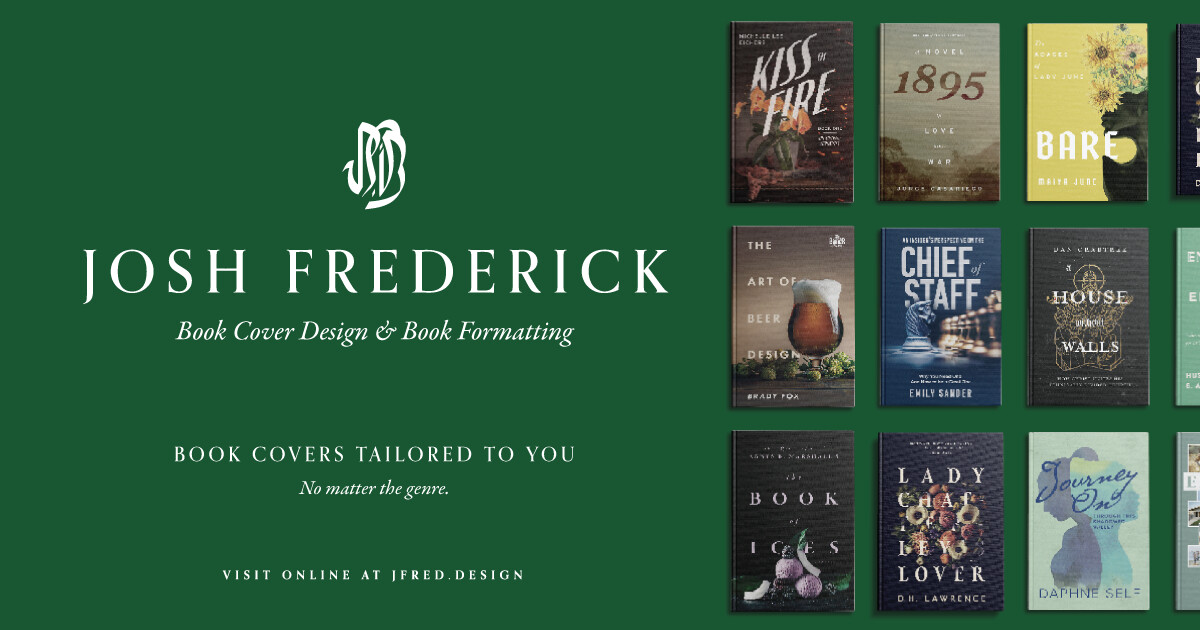
Books have always been my one love and passion, even before I discovered art & design. Bringing the two together felt like the most natural thing in the world. When I’m working on a book, it feels so natural and I know it’s what I was always meant to do. I started this journey as a full-time freelance book designer almost 4 years ago, and have never looked back. I’ve mainly focused on long and short-term contracts with independent publishing houses doing a variety of work from designing book covers and interiors to helping them problem-solve their print production and book design processes. I also focus my work on self-published authors doing full-service book design as a collaborative partner on their book.
What’s the most rewarding aspect of being a creative in your experience?
One of the things I love about book design is being able to support new writers in getting their books published. I love getting emails or calls from clients about how their manuscript feels like a real book. The other aspect of the work that I love is solving complex problems. I’ll talk with companies and they’ll tell me about a layout issue they’re having or they don’t know how to communicate a complex topic in an interesting way and to come in and help solve it is so rewarding.
Have any books or other resources had a big impact on you?
I have too many to mention! Unreasonable Hospitality by Will Guidara is a fantastic read that helped me in shaping my philosophy of how I want to work with clients. Guidara is a restauranteur that turned Eleven Madison Park from a struggling restaurant to one of the best in the world. He focused on collaboration, kindness, and attentiveness to his customer with the belief that every interaction should be an experience to remember.
A Grammar of Typography: Classical Design in the Digital Age by Mark Argetsinger is a fantastic book that brings the principles of the classical book design world of yesteryear into today’s digital environment and is a thorough documentation of book design principles through the centuries.
The Look of the Book by Peter Mendelsund and David J. Alworth is my bible when it comes to book design. They write in-depth about the theories and practices behind great book design and is a must read for any designer and book lover!
Contact Info:
- Website: https://www.jfred.design
- Instagram: https://www.instagram.com/jfred.design
- Facebook: https://www.facebook.com/jfred.design
- Linkedin: https://www.linkedin.com/in/jfred90/