

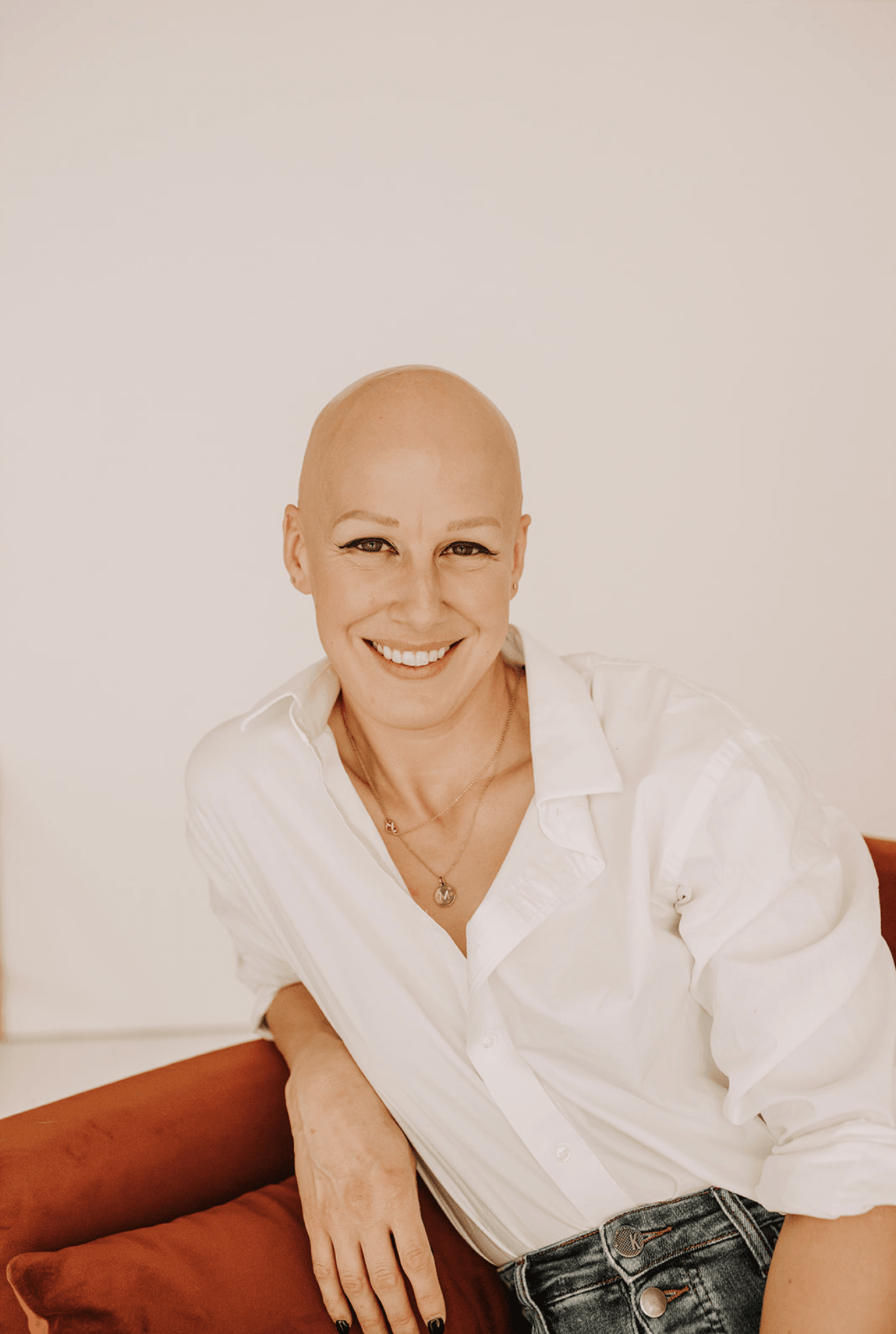

Alright – so today we’ve got the honor of introducing you to Jordan Graeme. We think you’ll enjoy our conversation, we’ve shared it below.
Jordan , appreciate you joining us today. Was there a defining moment in your professional career? A moment that changed the trajectory of your career?
A defining moment in my career came after spending nearly a decade practicing as part of the integrative medicine team in the Comprehensive Pain Center at OHSU. I had the opportunity to work alongside physicians, specialists, and trainees, helping bridge the gap between conventional and functional approaches to chronic pain. It was meaningful, collaborative work—and I truly believed I would continue building that model for years to come.
When the decision was made to eliminate integrative medicine services, it forced an unexpected and abrupt shift in my career trajectory. In that moment, I had a choice: view it as a loss, or recognize it as an opportunity to fully step into the kind of care I had always envisioned.
After a long break from health care, I chose the latter.
That transition pushed me back into private practice, where I’ve been starting to build something more aligned with where I am at currently—combining chiropractic, nutrition, and movement (including Pilates) to treat the whole person, not just their symptoms. It also reignited my entrepreneurial drive, from expanding our clinic to developing programs for equestrians as well as speaking and writing opportunities.
The lesson for me was that sometimes the most defining moments aren’t the ones you plan—they’re the ones that disrupt you. And in that disruption, you either contract or expand. For me, it was a moment of expansion: trusting my training, my experience, and my vision enough to build something even better than what I thought I had lost

Great, appreciate you sharing that with us. Before we ask you to share more of your insights, can you take a moment to introduce yourself and how you got to where you are today to our readers.
I’m a chiropractor with advanced degrees in integrative medicine, nutrition, background in movement-based rehabilitation, and Pilates certified. mMy work has always centered around one core idea: treating the whole person, not just the symptom. I spent a decade at Oregon Health & Science University in the Comprehensive Pain Center, where I worked alongside physicians, and providers of a variety of disciplines and specialists managing complex chronic pain cases. That experience shaped how I practice today—collaborative, evidence-informed, and always looking beyond a single system to understand what’s really driving someone’s pain or dysfunction.
My path into this field was driven by a desire to do things differently. I saw early on that many patients were stuck in cycles of temporary relief without ever addressing the underlying cause. That led me to pursue advanced training in functional medicine and nutrition, and later to integrate Pilates and movement into my care model. Today, I combine chiropractic adjustments, targeted rehabilitation, and nutrition to help patients move better, feel stronger, and actually understand their bodies.
Currently, I practice in both Clackamas and Newberg, Oregon, where I’m focused on building a model of care that is accessible, individualized, and performance-driven. I work with a wide range of patients—from those dealing with chronic pain to athletes and equestrians looking to optimize how they function in their sport. As a former division I athlete and my passion for all things horse, my equestrian work is a natural extension of my practice, helping riders, improve biomechanics, prevent injury, and ultimately perform better both in and out of the saddle.
What sets my work apart is the integration. I’m not just adjusting joints or prescribing exercises—I’m looking at how everything connects: movement patterns, core stability, nutrition, stress, and lifestyle. That lens allows me to create more sustainable outcomes, rather than quick fixes.
Outside of clinical practice, I’m currently writing a book focused on reinvention, resilience, and navigating life’s transitions—particularly for women stepping into a new chapter after loss, change, or starting over. It weaves together personal experience with the same functional and integrative tools I use in practice, bridging the gap between story and science in a way that’s practical and relatable. Alongside that, I’ve been expanding into public and motivational speaking, sharing my perspective on rebuilding, health, and performance—both physically and mentally.
What I’m most proud of is being able to take an unexpected pivot in my career and use it as an opportunity to be creative and build something more aligned with my vision. After the elimination of integrative medicine services at OHSU, I was devastated and lost, however it has allowed me to returned fully to private practice and expanded our clinics, leaning into entrepreneurship and innovation in care delivery. It reinforced something I believe deeply: that the best care—and the most meaningful growth—happens when we’re willing to step outside traditional silos and trust our own path.
At the end of the day, I want patients, clients, and audiences to know that they’re not “stuck.” There is almost always more we can do to improve function, reduce pain, and enhance quality of life—it just requires the right approach, the right support, and a willingness to look at the full picture.

Have you ever had to pivot?
A defining pivot in my life and career didn’t come as a single moment—it came as a series of moments that forced me to completely reevaluate who I was, what I valued, and how I wanted to move forward.
Earlier in my life, I found myself in an abusive marriage. At the time, I was functioning, showing up, making my way through college and applying to graduate school—but internally, there was a disconnect I couldn’t ignore. Leaving that relationship was my first real pivot. It required me to trust myself in a way I hadn’t before (or in a long time) and to recognize that just because something looks “stable” on the outside doesn’t mean it’s right.
Not long after, I faced another deeply personal challenge: infertility, and following birth of my child with significant hair loss. As someone trained in health and deeply invested in understanding the body, it was both humbling and frustrating. It forced me to shift from being the provider of care to someone searching for answers within her own body. That experience deepened my perspective—it made me more empathetic, more curious, and more committed to looking beyond surface-level solutions.
The most recent and professionally defining pivot came when integrative medicine services were eliminated at OHSU, where I had spent nearly a decade working in the Comprehensive Pain Center. Overnight, the career path I had built—and believed I would continue—was gone. That moment could have easily felt like an ending.
Instead, it became an inflection point.
I chose to rebuild. I stepped fully back into private practice, expanded our clinics, and created a model of care that more fully reflects my philosophy—integrating chiropractic, nutrition, and movement to treat the whole person. At the same time, I began writing a book centered on reinvention and resilience, and started stepping into public and motivational speaking to share these experiences more broadly.
Looking back, each of these pivots taught me the same lesson in different ways: you don’t always get to choose when life forces a change, but you do get to choose how you respond to it. For me, those moments became opportunities to realign, to grow, and ultimately to build something more authentic than what existed before.

Can you share a story from your journey that illustrates your resilience?
Resilience, for me, wasn’t built in one moment—it was built in the quiet, often invisible decisions to keep going when things didn’t make sense.
One of the most defining periods of resilience in my life came during a time when everything felt uncertain at once. In my 20’s I had left an unhealthy marriage and was trying to rebuild a sense of stability, In my 30’s I was navigating infertility and significant hair loss—experiences that challenged both my identity and my confidence. At the same time, I was continuing to show up professionally, caring for patients and holding space for others, even when I was still trying to find my own footing.
There wasn’t a single breakthrough moment where everything suddenly shifted. Instead, resilience looked like choosing, day after day, to keep moving forward—continuing to invest in my health, my education, and my future, even when the path wasn’t clear.
What I learned during that time is that resilience isn’t about pushing through or pretending things are fine. It’s about staying engaged in your life when it would be easier to shut down. It’s about being willing to ask better questions, to seek deeper answers, and to trust that even the hardest seasons are shaping something meaningful.
That period fundamentally changed how I show up today—as a provider, a business owner, and now as a writer and speaker. It gave me a deeper level of empathy and a broader perspective on healing, not just physically, but emotionally and mentally as well.
If there’s one thing I’ve taken from that experience, it’s this: resilience isn’t loud. It’s built quietly, in the decisions no one sees, that ultimately change everything.
Contact Info:
- Website: https://Drjmgraeme.com
- Instagram: Drjmgraeme
- Facebook: https://www.facebook.com/jm.graeme
- Linkedin: https://www.linkedin.com/in/jordan-graeme-dc-ms-dcn-mba-candidate-85aa7434/


Image Credits
Tais Federov Photography & Jennifer Alyse Photography