

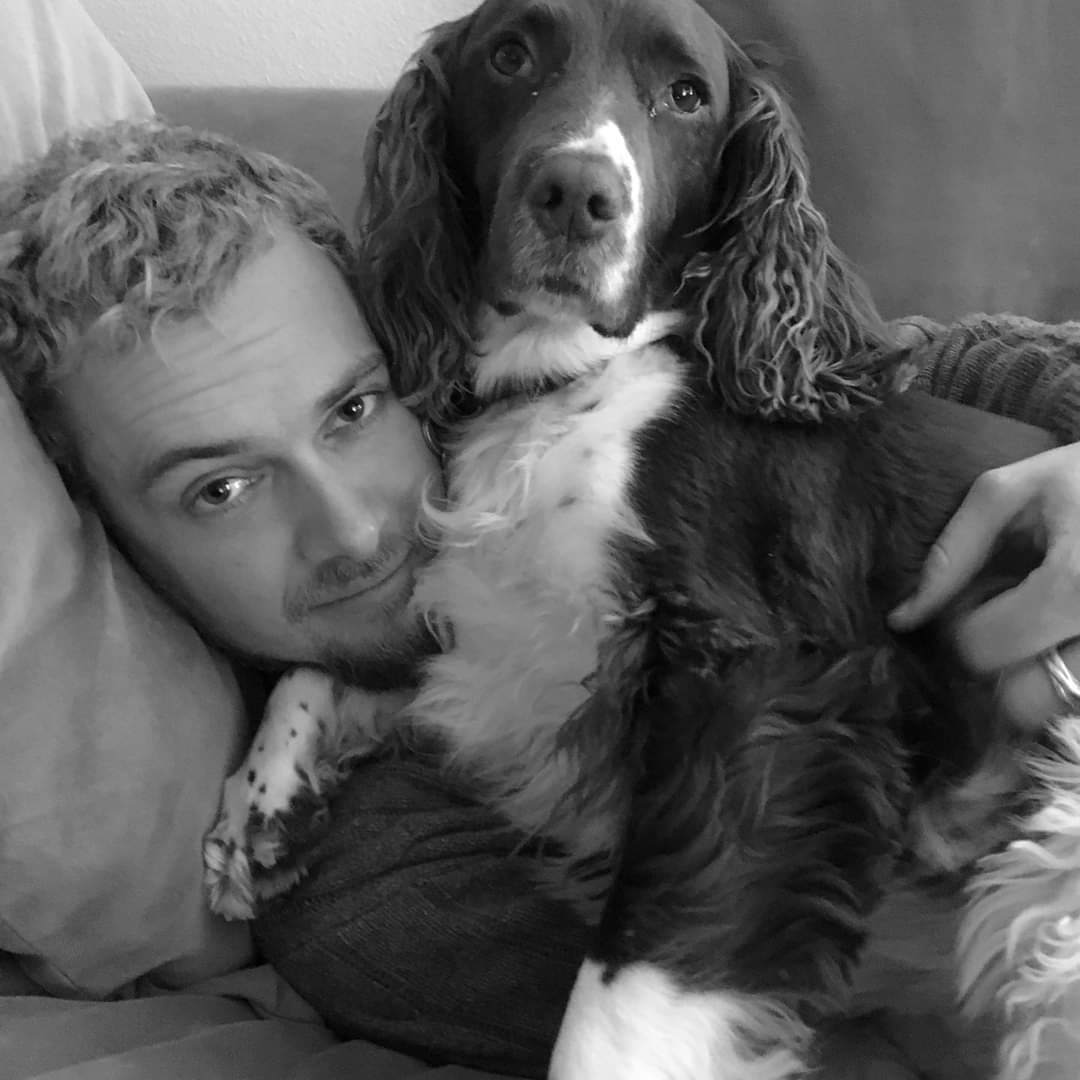

We’re excited to introduce you to the always interesting and insightful John Justice. We hope you’ll enjoy our conversation with John below.
Hi John, thanks for joining us today. So, let’s start with a hypothetical – what would you change about the educational system?
I would say the USA’s educational system is one of the worst I’ve ever known of. There are so many things about it that need addressing, but I will try to focus on some of the ones that are the most important to me. I think that we should abandon the school year’s schedule as it currently stands. That the entire summer is off for many of the students is incredibly detrimental to maintaining/retaining knowledge. It is an archaic system that was created largely because it allowed children and young adults to go home and help their parents harvest the crops. We are not a rural nation anymore, so this makes no sense. It also means that over those three straight months the youth forget so much of what they learned for the past nine. The European block style makes much more sense to me. Ending the bell system and class layout of desks that was designed to create complacent factory workers would do wonders.
Students should be given the opportunity at an early age to explore more niche fields. Perhaps not directly, but via simple exercises that might inform teachers as to what the child/young adult might be interested in moving forwards and then fostering that interest or passion to find a way to make it a constructive path for them as they grow into adults.
I loved my college experience. I wouldn’t change a thing about it. My successes and failures all taught me important lessons that have helped guide me through my life since, and any changes I would make are the result of those lessons learned, which would then rob me of important knowledge that one needs for engaging in life in a meaningful manner. However, I do believe that I have not benefitted from my graduating college. Perhaps that is because of the major I chose, but I do feel as though I was tricked into going by a generation that got some tangible value from their education; i.e. employment opportunities that would provide enough to live a life that vaguely resembles the idea of the “American dream.” I don’t begrudge those people that have accomplished it. Perhaps they have a drive that for outstrips my own, but I have seen so many people go to college for what they loved to learn about only to take jobs that strangle their prior passions. I fall into this category.
John, before we move on to more of these sorts of questions, can you take some time to bring our readers up to speed on you and what you do?
I got into the world of teaching because of my acute distaste for how the education system is failing many of the youth in this country. That, however, was a short lived life plan. I figured out too late in my college career that teaching was what I wanted to do, so I was unable to finish all the courses needed to get my teacher’s license. Reality came crashing in just after graduation. The massive student loans payments were one thing, but the idea of going back and putting myself even further into debt after seeing what my debt was, and then the idea of adding to that further, was soul crushing. I panicked and began working in the service industry. I didn’t know what else I could do to quickly start making money to help with my upcoming fiscal calamities. After years and years of just getting by and becoming more and more disillusioned with humanity, I sought a change. The tech world, right after the COVID lockdown began, seemed like the a viable path. My brother had been working in it a full-stack developer for many years, and my sister had joined that world as a UX designer. After speaking with her about what that was like, I looked into becoming a part of that world. It blended my interest in people with the tech world in such a way that I really quite enjoyed it. Discovering the needs of the user and asking the questions that shined light on those needs was fascinating. Using vocabulary in such a way that you relay to people exactly what you mean, where they can go and how they can go about it to accomplish their goals, was a delight. It mixed my love of history, and the people that created and lived through it, with the world of technology. Tiny little blips of individuals experiences, tiny little histories, small primary resources that would then guide the decision making of a company to best accommodate their users needs. What an admirable and, done honestly, simple endeavor that helps people’s lives. There is nothing that I prize more than honesty. There are, of course, manners of sculpting honesty into a productive, rather than destructive, force. In my work I always seek to be as transparent as possible and to do everything I can to make sure the client/company/individual is aware of all of the things that must be considered when using an app or a website as the medium through which they engage with whatever group it is they want to connect with.
Do you have any insights you can share related to maintaining high team morale?
Ask questions about people. Showing interest in people is the best path to building closer relationships with them, which in turn results in honest answers to difficult questions. If you are in a position of leadership/management then there is a level of suspicion or distrust that comes with that role. People may fear for their jobs, or they may not want to rock the boat and simply try to keep their heads down. There is also the very real possibility that you alienate your team. This results in micromanagement, which then turns into bitterness, which would then lend itself to a dissatisfied and divided team. People that are happy with their jobs will simply do a better job, and the first way to disarm people and get honest information is to ask them questions about themselves.
The second avenue I would say is transparency. There are many times that you may know things are done a certain way for a certain reason. If someone proposes an idea that directly conflicts with the established policies, then it is best to explain those rules before moving in to steer the idea in a different direction. People armed with all the information can craft their ideas to navigate those policies in an effective way, which encourages creativity given “artificial” constraints.
I would say that these two are the most important rules that I have used to managing a team and maintaining high morale.

Can you tell us about a time you’ve had to pivot?
In May of 2023 I had many things happening. I had just moved to Denver CO after living in Boulder CO for eleven years, I had just gotten a UX designer position at a startup company that was going to make my life much more fiscally stable, and I discovered, just days after moving in and signing the contract with the company, that I had brain cancer. It originally manifested as Grand Mal seizures caused by a tumor the size of a golfball in my frontal left lobe. I had one for sure, and I suspect two, though no one witnessed that one, and they left me with five fractured vertebrae and three cracked ribs. I had brain surgery about nine days later, which was a truly strange experience because I had to be awake for it so they knew they weren’t scooping out actual parts of my brain. Prior to this surgery I had to make peace with possibly dying during the surgery. I didn’t have a ton of time to do so, but I suppose I accomplished it with some grace that was aided by a certain amount of hopeless levity. Gallows humor might be the phrase. This event, naturally and obviously, changed my life completely. As I regained my mental faculties I began to greater understand how terrible my situation was, and I began to learn that life really doesn’t stop when life throws you a curveball. I still had to pay loans, rent, car insurance, etc. even though I was near crippled in every facet of life. I was no longer capable of the concentration that the UX design job required, nor was I able to manage my frustration with the technological hiccups that come with design work. My memory, which I once prided myself on, was no longer reliable. Thus, I had to change my approach to work as my life had been so utterly altered. I began to engage in UX auditing. I would communicate with smaller, non-profit fundraising companies who felt that their website or app was inadequate. I would then, usually over the course of a month, compile all the things I could find that broke with the UX designers handbook to best practices. I would also walk them through competitive analyses, using massive fundraising companies as the primary examples for what works best in their line of business. In this way I sought to educate smaller companies in UX design and how they could go about addressing the issues themselves rather than pay exorbitant amounts to website builders when they simply didn’t need to.
Contact Info: