

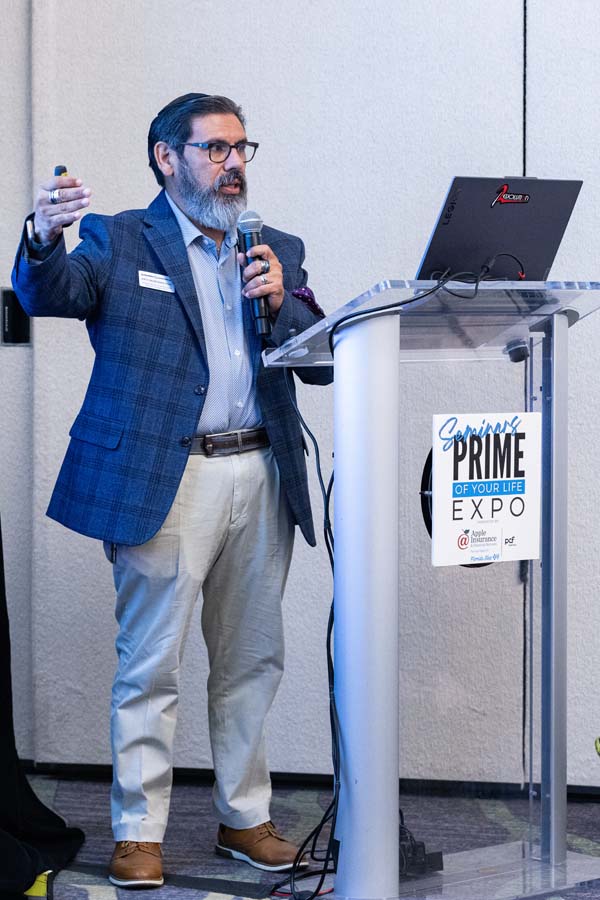

We’re excited to introduce you to the always interesting and insightful Joe Baldelomar. We hope you’ll enjoy our conversation with Joe below.
Joe, looking forward to hearing all of your stories today. We’d love to hear about the things you feel your parents did right and how those things have impacted your career and life.
One of the most important things my parents did right was teaching me the values of compassion, service, resilience, and unconditional love through the way they lived their lives. They demonstrated that caring for others is not just a responsibility but a privilege, especially during life’s most difficult moments.
My father’s battle with Alzheimer’s disease profoundly shaped who I am today, both personally and professionally. Watching him gradually lose memories, abilities, and independence was heartbreaking, but it also gave me a deep understanding of the challenges faced by individuals living with dementia and the families who care for them.
Equally impactful was witnessing my mother’s unwavering devotion as his primary caregiver. Day after day, she cared for my father with extraordinary patience, strength, and dignity. She navigated the emotional, physical, and financial challenges of caregiving while ensuring that he always felt loved, respected, and valued. Even as the disease progressed and communication became more difficult, she never lost sight of the person he was. Her example taught me what true compassion looks like in practice.
One memory that has stayed with me is watching my mother continue to engage my father in conversations, family traditions, and meaningful moments, even when his ability to respond had diminished. She understood that although Alzheimer’s was affecting his memory, it did not diminish his humanity. Through her actions, she taught our family that every person deserves dignity, respect, and connection regardless of their condition.
The lessons I learned from both of my parents became the foundation of my life’s work. My father’s experience gave me insight into the realities of dementia, while my mother’s caregiving journey showed me the critical importance of supporting not only patients but also the families who care for them. These experiences inspired me to dedicate my professional life to serving the community, particularly in the areas of dementia care and neuropsychology.
Today, my work is driven by the same values my parents exemplified: empathy, service, perseverance, and advocacy. Their influence has shaped my commitment to helping individuals and families navigate cognitive and neurological challenges with knowledge, compassion, and hope. The legacy of my father’s courage and my mother’s selfless caregiving continues to guide me every day, and it remains one of the greatest inspirations in both my life and my career.

Great, appreciate you sharing that with us. Before we ask you to share more of your insights, can you take a moment to introduce yourself and how you got to where you are today to our readers.
My name is Joe H. Baldelomar, Psy.M., and I have dedicated my professional life to improving the lives of individuals, families, and communities affected by Alzheimer’s disease, dementia, and other cognitive disorders. As a neuropsychologist, educator, advocate, and community leader, my mission is to bridge the gap between science, healthcare, and the people who need support the most.
My journey into this field is both professional and deeply personal. The inspiration behind my work comes from my family’s experience with Alzheimer’s disease. Watching my father lose his battle with Alzheimer’s profoundly impacted me and gave me firsthand insight into the devastating effects dementia has on individuals and families. Equally influential was witnessing my mother’s extraordinary commitment as his primary caregiver. Her strength, resilience, and unconditional love taught me invaluable lessons about compassion, dignity, and the importance of supporting caregivers as much as patients. Those experiences continue to guide my work every day.
Professionally, I hold a master’s degree in Behavioral Psychology with a specialization in Neuropsychology, along with academic training in Philosophy and Theology. Throughout my career, I have focused on helping people understand the complexities of brain health, cognitive aging, dementia, and caregiver support.
Today, through my leadership with the Alzheimer’s Association, I oversee community education, outreach, support programs, and partnerships that serve diverse populations across South Florida. My work includes delivering educational programs on Alzheimer’s disease and dementia, promoting early detection and diagnosis, connecting families with critical resources, supporting caregivers, and advocating for brain health and healthy aging. I am particularly passionate about increasing access to culturally responsive and bilingual services for underserved communities.
What sets me apart is my ability to combine scientific knowledge with lived experience. I understand dementia not only from a clinical and neuropsychological perspective but also as a son who watched a loved one navigate the disease and as a family member who witnessed the sacrifices of a caregiver. This perspective allows me to connect with people on a deeper level and to approach every interaction with empathy, authenticity, and respect.
Throughout my career, I have worked with healthcare providers, faith-based organizations, community groups, businesses, government agencies, libraries, senior centers, and advocacy organizations to bring education and support directly into the community. I believe that information is empowering, and that every family deserves access to accurate knowledge, compassionate guidance, and hope.
What I am most proud of is not any single title or achievement, but the opportunity to make a meaningful difference in people’s lives. Whether helping a family understand a new diagnosis, supporting a caregiver who feels overwhelmed, educating a community about brain health, or advocating for individuals living with dementia, I consider every life touched to be a success.
The most important thing I want people to know about me and my work is that it is rooted in service. Everything I do is guided by the belief that every person deserves dignity, compassion, and the opportunity to live with purpose and hope. My goal is not only to advance awareness and understanding of Alzheimer’s disease and dementia but also to build stronger, more informed, and more compassionate communities. In many ways, my work is a tribute to my father, an acknowledgment of my mother’s remarkable caregiving journey, and a commitment to helping other families navigate a path that I know all too well.

Other than training/knowledge, what do you think is most helpful for succeeding in your field?
While education, training, and professional expertise are essential in my field, I believe the qualities that truly determine success are empathy, compassion, cultural humility, and the ability to genuinely listen.
In dementia care, neuropsychology, and community service, we work with people who are often facing some of the most difficult moments of their lives. Families may be coping with a new diagnosis, uncertainty about the future, caregiver stress, grief, or feelings of isolation. Clinical knowledge helps us understand the disease, but it is empathy that helps us understand the person and the family behind the diagnosis.
One of the greatest lessons I learned came from my own family’s experience with Alzheimer’s disease. Watching my father battle the disease and witnessing my mother’s extraordinary dedication as his primary caregiver taught me that people do not always remember what you said, but they remember how you made them feel. Those experiences reinforced the importance of patience, compassion, and meeting people where they are in their journey.
I also believe that success in this field requires resilience and a commitment to lifelong learning. The science of brain health, dementia, and neuropsychology continues to evolve, and professionals must remain curious, adaptable, and open to new approaches. Equally important is the ability to collaborate with others. No one person can meet all the needs of an individual living with dementia. Meaningful outcomes occur when healthcare professionals, caregivers, community organizations, and advocates work together toward a common goal.
Finally, I believe authenticity is critical. People can tell when you genuinely care. The trust that develops from authentic relationships allows families to feel supported and empowered during challenging times. For me, success is not measured solely by professional accomplishments but by the positive impact I can have on the lives of individuals, caregivers, and communities.
At the end of the day, knowledge may open the door, but compassion, integrity, and a sincere commitment to serving others are what sustain meaningful and lasting success in this field.

Are there any books, videos or other content that you feel have meaningfully impacted your thinking?
Several books, essays, and thought leaders have influenced my approach to leadership, community engagement, and service. However, some of the most impactful resources have come from people whose work I have had the privilege of observing closely, including my brother, Dr. César “CJ” Baldelomar.
CJ’s scholarship challenges readers to think critically about education, justice, identity, ethics, and the ways we imagine and create more humane communities. His book Fragmented Theological Imaginings and his broader body of writing have influenced my thinking by encouraging me to examine complex issues from multiple perspectives and to appreciate the importance of intellectual humility, lifelong learning, and ethical leadership. His work reminds me that meaningful change often begins with our willingness to question assumptions and imagine new possibilities.
In addition to my brother’s work, I have drawn inspiration from literature on servant leadership, neuroscience, psychology, healthcare innovation, and community development. I have always been particularly interested in authors and researchers who emphasize empathy, human dignity, and purpose-driven leadership. These principles align closely with my work in dementia care and neuropsychology, where success depends not only on technical expertise but also on understanding the lived experiences of individuals and families.
Beyond books, some of my greatest lessons have come from personal experience. Watching my father battle Alzheimer’s disease and witnessing my mother’s extraordinary commitment as his primary caregiver taught me more about leadership, resilience, sacrifice, and compassion than any textbook ever could. Those experiences shaped my belief that the most effective leaders are those who serve others, listen deeply, and remain committed to helping people navigate challenges with dignity and hope.
As both a professional and a community advocate, I try to combine evidence-based knowledge with a human-centered approach. The resources and people who have influenced me most—whether scholars, authors, mentors, family members, or caregivers, share a common theme: they challenge us to lead with purpose, think critically, and never lose sight of the humanity behind the work we do.
Contact Info:
- Website: https://www.alz.org/sefl
- Linkedin: https://linkedin.com/in/jhbaldelomar
- Youtube: https://www.youtube.com/actionalz


