

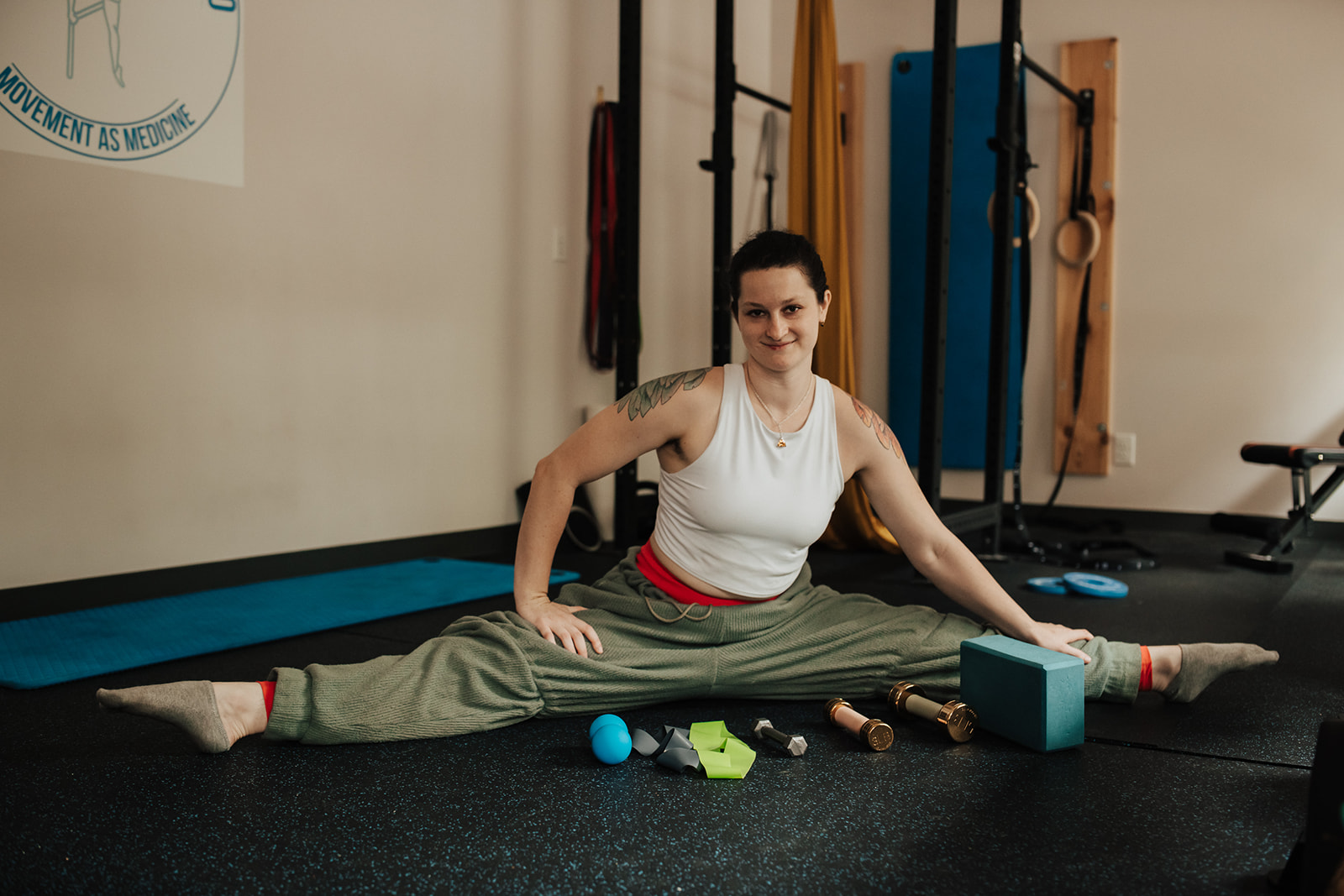

We caught up with the brilliant and insightful JJ Hurst a few weeks ago and have shared our conversation below.
JJ, thanks for joining us, excited to have you contributing your stories and insights. We’d love to hear the backstory of how you established your own practice.
I started my practice out of necessity. I was working for another cash based clinic, running a blog, their instagram, a podcast, meeting healthcare providers and networking 2x a month, and teaching 2x workshops a month at local gyms for outreach, while also providing 36 client hours a week, and once overhead the owner of the practice sharing with their business coach that with me working, they could take unlimited maternity leave.
I already felt restricted in my position; I wanted to specialize in hypermobility, because as a hypermobile human, I knew how challenging it was to get informed, quality care, but the owner of the clinic dismissed it as a population to target because hypermobility “doesn’t impact that many people” and “nobody even knows what that is.” According to them, it wasn’t very marketable. Circus specific rehab, a special interest of mine because of my own dance and circus background, was also off the table. I also wanted to offer sliding scale appointment to promote accessibility and give back to my community, but my supervisor had no interest in it. She was “running a business, not a charity.”
So many of my values weren’t reflected in the practice I was working for, and I felt deeply conflicted, because physical therapy isn’t just my job, it’s my life’s work. Teaching movement and cultivating embodiment in my clients is something I feel I was born to do, and it was heartbreaking to finally be in the field, yet not be able to fully embrace that the way I wanted to. I went to one of my mentors, talking about the conflict I felt, the love of the field, my challenge in my current situation. After a moment, he paused, and offered to let me rent his studio to treat clients and launch my own practice. He offered me an incubator.
The biggest hurdle for starting my own practice was finding space. Most professional office spaces wanted 4 year leases, and I had no idea if what I dreamed of would work, and my mentor helped me leap that hurdle by offfering me his space as an incubator, and I feel incredibly lucky to this day at the opportunity.
I jumped at the opportunity. I continued working full time at the other clinic, but there was a new fire and enthusiasm with me, a freedom to finally deliver care the way I wanted to. I built a website and a logo, and was teaching workshops specific to my own business, and forging relationships with local circus studios within the month. I was working full time at my own practice within 4 months and quit at my old position, because the demand for me and my passion was enormous. Local circus studios were excited to partner with a PT who was interested in hypermobility and had a background in circus, and I was radiating joy at finally being able to step into what I loved.
My practice bloomed, filling with circus and hypermobile humans who heard of my from word of mouth, and I quickly built a reputation by word of mouth about my quality of care, my expertise and my compassion.
My advice to folks who are considering their own practice is to pick a niche you’re enthusiastic about, and build relationships in your community with the populations you’re interested in. I was able to succeed, because not only was I incredibly interested in a particular niche, I built relationships with those communities by offering workshops at studios and teaching locally, and networking with teachers and owners of those scenes. This kind of networking and relationship will also open spaces for you; massage therapists who can rent out rooms, studios who can rent out gyms, liminal spaces that can help you bridge the gap to your own lease. I also strongly recommend focusing on providing quality care, with enthusiasm. Word of mouth referrals are an incredible resource, and if you’re good at what you do, people will find you.

As always, we appreciate you sharing your insights and we’ve got a few more questions for you, but before we get to all of that can you take a minute to introduce yourself and give our readers some of your back background and context?
This question. I actually feel a bit embarrassed about how I ended up where I am, because it can seem so archetypal. My story actually starts when I was 18, when I lost the ability to lift my right leg, which I now know was because I tore my iliacus and psoas muscles training. I struggled to walk throughout my first semester at college, with pulsing, radiating pain in my right hip that became chronic, and my memories of that fall are blurry at best. The pain persisted no matter how much ibuprofen I downed, swallowing 4 to 6 pills at a time, multiple times a day, in hopes it would abate and make it possible to sleep; it didn’t. I’m surprised I didn’t end up with a stomach ulcer, honestly. I went to the hospital, sitting in a flickering fluorescent room, and had a PA look me in the eye and tell me to go home because she was tired of drug addicts coming from opiods. She didn’t touch my leg once. I would go back 3 more times, and none of them touched my leg, just asked me questions and sent me away in less than 15 minutes.
After months, losing weight because I stopped eating and losing muscle mass because I was in too much pain to move, I dragged myself to end of my fall semester and went home. My parents were horrified when they first saw me, struggling to drag my leg around, hopping in the ways I’d adapted my life. Horrified, my mother drove me to the PT she had seen when her spine had fractured, furious and insistent that they would at least be able to solve something. I remember filling out the pain scale chart, circling the 10 and wondering if they would send me away as had happened multiple times at the local hospital.
That PT was the first person to believe me about the pain in my leg. I remember sitting on the table as he read my chart and looked up, seeking out my eyes, and telling me he believed my pain was real. I cried on the spot. He was the first person to take measurements of my leg, to touch the muscles that I would later find out were torn. I had torn my right hip flexor, making it impossible to lift my leg, and contracted it. Within an hour, with manual therapy and gentle cuing, I was able to move my leg for the first time in months, and I experienced the first abatement of pain I’d had in months.
I would be in and out of rehab for the next two years, healing, recovering, while continuing at university. I was studying genetics, working in a lab, and steadily growing to hate being locked in a room staring at a microscope for hours on end. My physical therapist at the time, who would later go onto write my letter of recommendation for PT school, asked me what I wanted to do when I “grew up.” I admitted that research wasn’t satisfying me the way I’d dreamed it would, and he gave me an appraising look in the PT gym he was training me in, and waved a hand around us. “You’d be good at this,” he said. I laughed in his face. But after another year of dragging myself to lab with dread, and literally taking runs to the PT clinic where my sessions where, I realized he was right. I recognized that if I could offer what had been given to me, if I could believe someone about their pain, and give them back their mobility just as it had been given back to me, my entire life would be worthwhile. I pivoted from my genetics research to physical therapy. It’s a very Chiron story, the wounded healer archetype, but it’s the bedrock for why I care so much. I’ve literally been there. I lost the ability to walk for 6 months, which is a really humbling experience for an 18 year old.
These days, my official title is physical therapist, but what I do is so much different than so many PTs. The start of my journey, beginning with so much pain, has become a gift, in many ways. It fostered in me a deep sense of compassion, and care for every client that comes in front of me, because I know what it’s like to be in so much pain that isn’t visible, and I also know just how traumatic it can be when a health care provider doens’t believe you. It starts with listening, and over and over again, my clients cry and weep when I set down my notes and just listen to their story. 80% of what I need to know about someone’s injury comes from what they tell me. It all starts with listening.
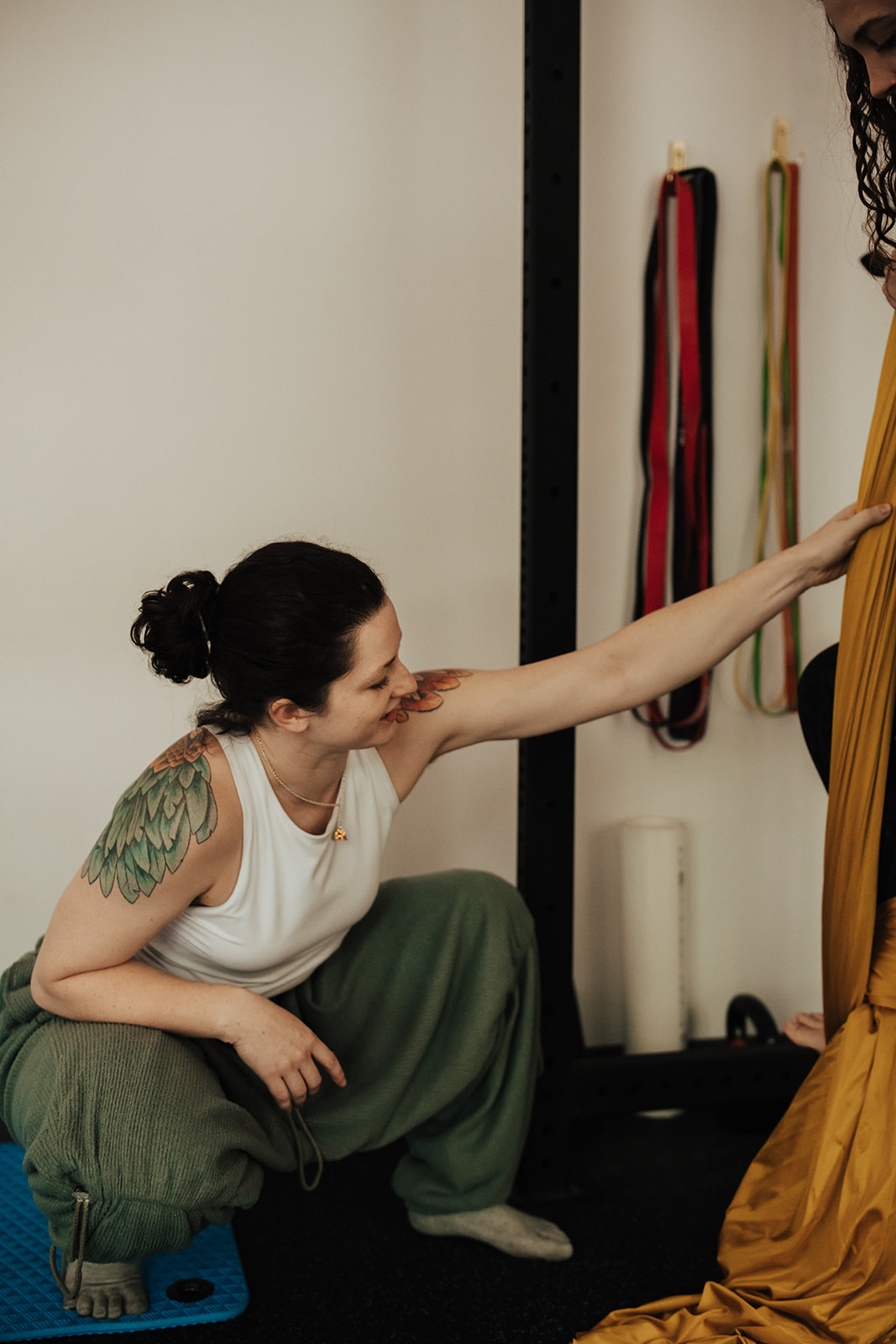
My practice is built around compassion, and the hard core science of rehabilitation and strength training. But I’m not just interested in telling people what to do. I’m too neurodivegent for that; I personally hate being told what to do, and it triggers a fight or flight response of adrenaline in my system. So I do things a bit differently; people who succeed with me are curious about what’s going on in their bodies, and I spend huge chunks of my time not just teaching folks about their bodies, but helping them *feel* the knowing of their body. It’s not just about lecturing about a piriformis muscle; it’s about, can I help you feel that muscle, put you in a position to target it, put a finger to feel it, and cue *you* to feel it working, and know the difference between one muscle and another when you’re going about you’re day to day. That’s a level of embodiment and awareness that I care about, and I don’t see many PTs attending to. I also think it’s the foundation that leads to long lasting change.
This embodiment is rooted in science, anatomy, and physiology, but also presence, and this in-body knowing is a skill that people can take with them. I’m not just trying to solve the problem in front of me. I’m trying to teaching people how to move. I joke with my clients that really, I’m just running a movement school, teaching people skills they can take with them for the rest of their lives and apply to any practice they come to next. That makes working with me more than just PT; it’s a new way of being, embodying, and movement.
I specialize in hypermobility, because it takes this level of discernment and embodiment to stabilize and engage in a hypermobile body. One of the beautiful things about hypermobility is the sheer possibility of movement patterns and styles, recruitment patterns that can show up in our hyper-elastic tissue, so with great motion, comes great responsibility. My teaching style can work for everyone, but it’s a necessity in extra bendy zebra beings, because hypermobile humans so often rarely feel the muscle groups that are “supposed” to be working during an exercise because we’re brilliant compensators. We use whatever muscle we can to stabilize whenever we can, because our ligaments are like rubberbands, rather than duct tape, so we’re working overtime to hold ourselves upright. This results in a lot of unique motor patterns, toes trying to stabilize ankles, backs trying to lift legs, and necks trying to stabilize shoulders. That means we can’t just train the movement. We have to train the recruitment; we have to change the way we move, to stabilize in the most efficient way possible. That’s what sets me apart/. I don’t care about achieving the movement; I care about how we’re achieving it, and laying a strong foundation for efficient movement that can sustain us for the rest of our lives.
Putting training and knowledge aside, what else do you think really matters in terms of succeeding in your field?
I think one of the most important things to succeed in this field, is for providers to attend psychotherapy and somatic experiencing practices.
Physical therapy is a very physical practice (it’s in the name of course), but the somatic and emotional components that are relevant during rehab are often dismissed. It’s like sailing on the ocean and ignoring the currents underneath you. More and more research shows that our emotional body is deeply interwoven with the physical, and we can’t just treat the physical body without acknowledging the emotional context that is also relevant, which makes sense. Our nervous system is literally embedded in the physical body. We can see this in the work of Stephen Porges and Polyvagal theory, where they’re starting to use physical cues for emotional regulation. They are deeply interdependent, and most PTs don’t even consider this emotional component.
Physical therapists and allied health providers must do their own personal work and healing, to be present and help others. People will get dysregulated with the amount of pain they’re in, and how humbling it can be when one’s physical capacity is limited, and having a provider who can stay grounded and be supportive is key to that path of healing. And I think, part of physical therapy is coaching someone about how to approach life, ups and downs, set backs, and successes, and being able to truly mentor someone through that process insures their success in the long run.
Have you ever had to pivot?
When I first launched my business, I was enthusiastic and offering 1-1 sessions, and my schedule filled to full time within 4 months of launching. I had over an 8 week wait list by the spring, and was up to 12 weeks the by the summer. I was working at my capacity, and had filled my schedule, yet wanted to help more people, and I was finding that no matter how much time I poured into people, we still ran into many of the same road blocks. My clients would often come in doing an exercise differently than we’d demonstrated in clinic, or were inconsistent with their home programs. Especially with hypermobility, I would get texts at 6:00 am or late at night about a sudden injury making it impossible to do rehab. It wasn’t enough, this old style of classical PT, because of the population I was working with was changing on a daily basis, and brilliant at compensating, and also needed support over a longer course of time than typical PT.
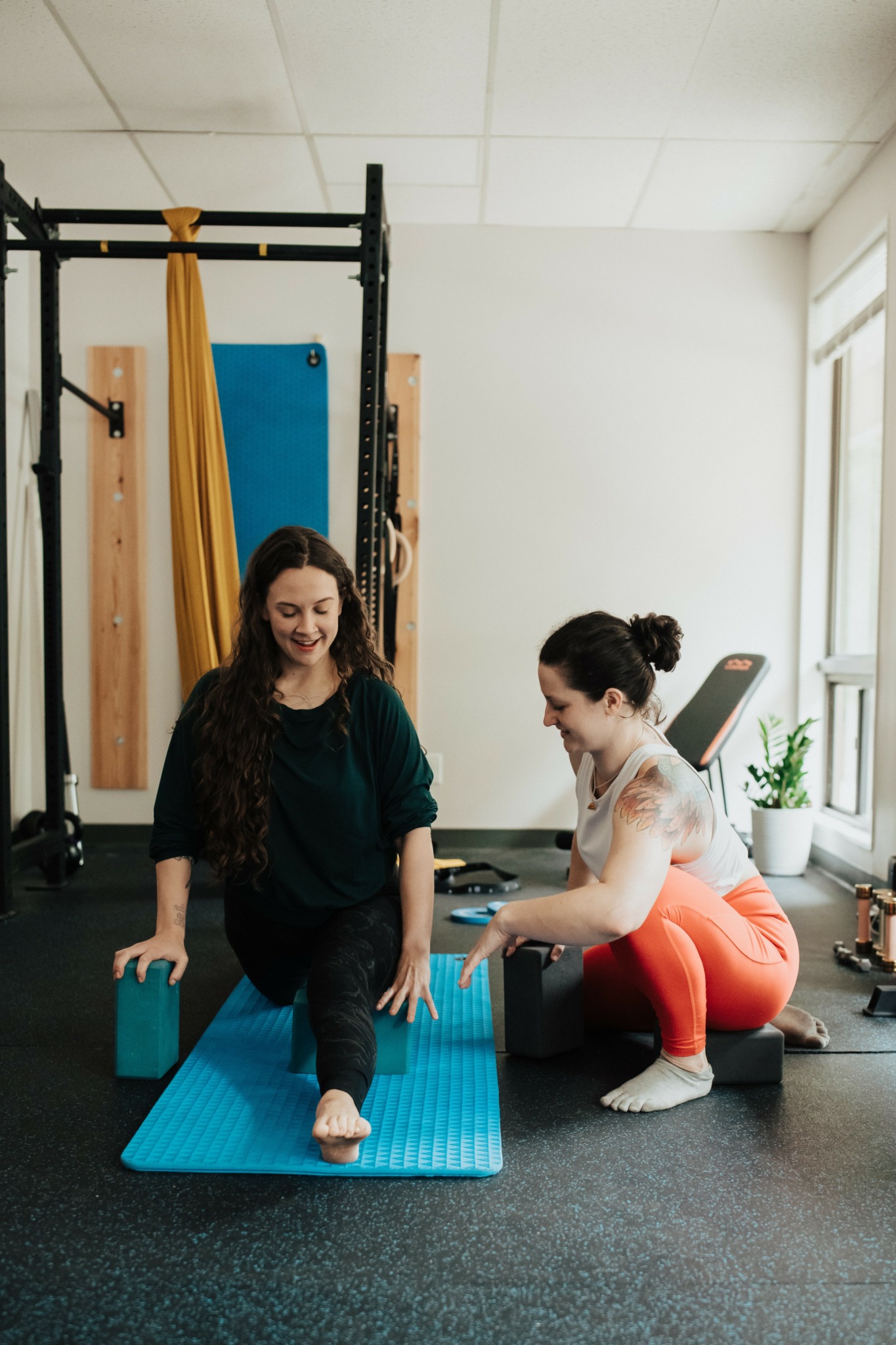
I knew I needed something different, so with the help of the Honeybadger Project (shout out to my business coach John Flagg) I created a model that was designed to support hypermobile humans, maximize their workouts at home, and also support the consistency of a home program because it’s such an absolute necessity, while also helping me create a structure that made space to stay up to date on literature review and professional development. I created a program where folks could submit videos of their exercises at home, to make sure that they’re getting the most of out their program (and not cheating), daily messaging to help with consistency, on top of in person sessions that could be spaced out as they worked on their program at home.
This pivot was a bit rocky, because I had to figure out an app based system, onboarding system, and refine frequency of video reviews and visits, and on top of changing the style of delivering care. It also required facing my own judgements about technology, and the ways that people utilize it for short cuts. But, with the system we dreamed up, the technology wasn’t a short cut, or substituting my own experience with somebody else who was cheaper. It was about maximizing useful access. I was juggling clients on the old model, and talking clients through the new system, all at once. But within months, I could tell the difference; I had more space of my schedule for emergency sessions, my waitlist had shortened, and clients were more consistent with their program and improving faster.
I had to adjust, because I had my own resistances to technology, and the amount of labor of setting up new infrastructure, but it paid off in my ability to deliver a new higher level quality of care customized to my clients.
Contact Info:
- Website: https://www.theembodiedphyzio.com/
- Instagram: embodiedphyzio
- Youtube: https://www.youtube.com/@TheEmbodiedPhyzio
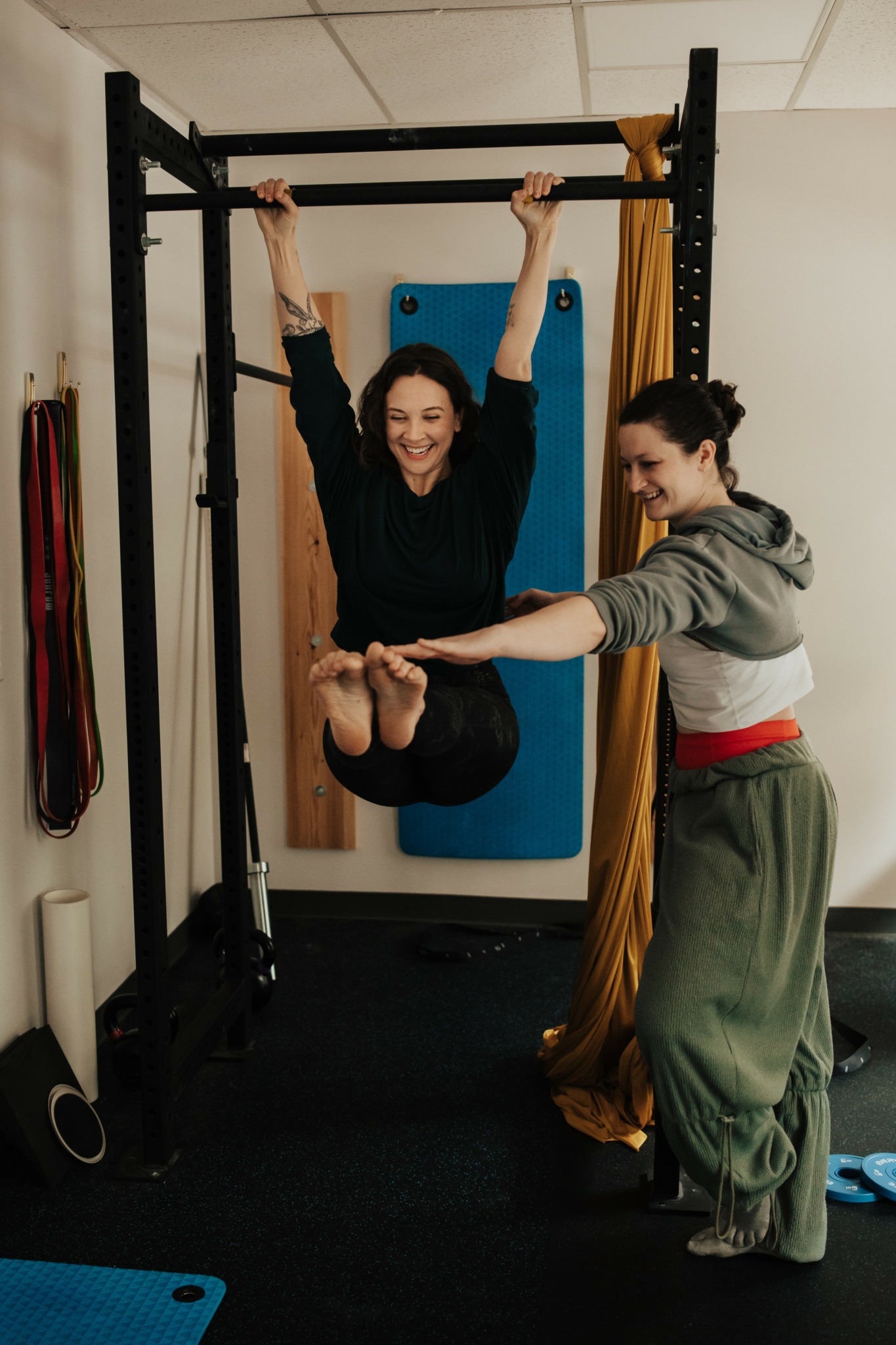
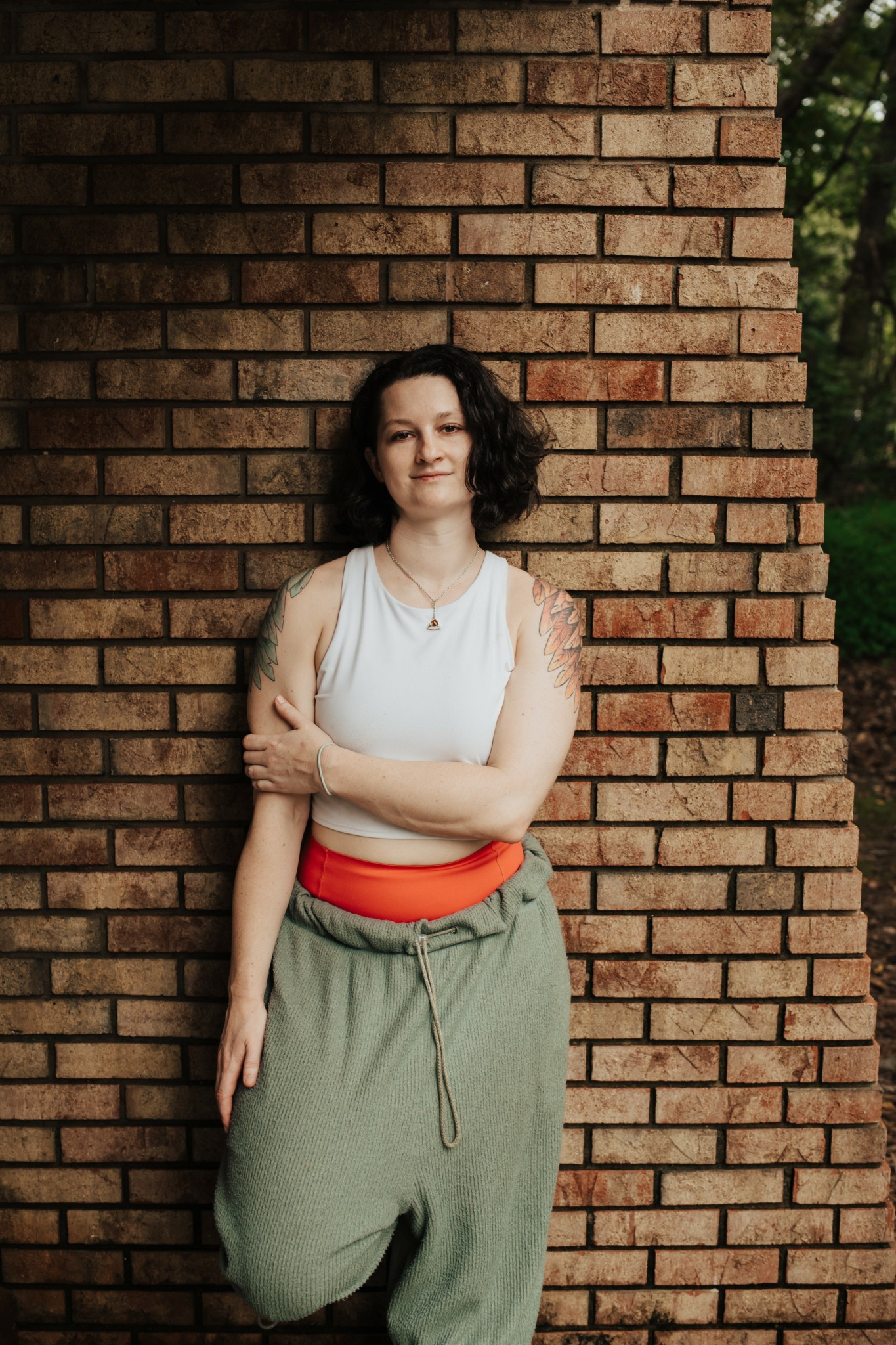


Image Credits
@Shootwtihbliss
Bliss Floccare